
“Un poco a riso”: The Joy of Dante’s Purgatorio

Last spring, in my final semester of my undergraduate studies, I covered the medieval period requirement of my literature program with a study of Dante. The Divine Comedy was a truly fulfilling way to finish out my three-year liberal arts degree. Dante’s incomparable work is a most shining example of literature’s interdisciplinary potential. One cannot study the literature of the Comedy without touching upon history, languages, philosophy, and theology. Dante, and literature in general, can be both a gateway into the other disciplines and a rewarding treasure that is available once the others have been studied in depth. Studying Dante in the semester in which I did, with a wonderfully mixed group of third- and fourth-year students, I was amazed at the beautiful intersection of all disciplines. Students majoring in history, Classical studies, or the theology buffs all brought great insight to the table because Dante has something for everyone.

I digress. Dante’s work is a rich harvesting ground for scholars, but my purpose is to appreciate his relevance for the Lenten pilgrim.

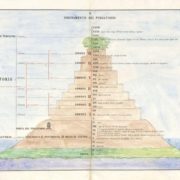
Having thoroughly enjoyed my semester with Dante, but mindful of the enduring value of the Comedy after many readings, I took up the Purgatorio again as a Lenten pilgrimage through holy purification for the soul. There is much to be gleaned from the depictions of sins and their various cures, but a few aspects of the work stood out in particular as fitting meditations in the season of Lent. The physical imagery and structure of the Mountain of Purgatory, with its seven levels – or “cornices” – corresponding to the Seven Deadly Sins, gives a wonderful and memorable visual depiction to help one tackle sin in real life.

First, and this is fitting to this Fourth Sunday of Lent – known as Laetare Sunday – Dante’s depiction of Purgatorio is touched with a deep sense of joy and peace. Be assured, there is much penitential sorrowing and prayers for mercy and forgiveness, but the attitude of the suffering souls is one of resignation to the saving work of purification, and a levity of spirit because they are assured of ultimate bliss in heaven. Near the end of Canto IV, Dante recognizes a soul among those in Ante-Purgatory (a sort of holding space before entering into the cornices of Purgatory proper) and smiles, saying, “no longer need I grieve for you” (Purgatorio IV.123). Dante has found his friend, one whose life had not been the most virtuous, in Purgatory, and this is cause for joy, despite the suffering and purification that still await him.

True, the suffering souls still yearn for heaven’s bliss; they are incomplete without it, but the souls in Purgatory are safe from eternal damnation. They may be sure that their suffering has a definite endpoint, and their deepest longing will ultimately be fulfilled. The souls one encounters in reading the Purgatorio brilliantly contrast with those of the Inferno in their willingness to undergo suffering, singing and praying to God throughout the experience. 

We, of Church Militant, might share the Suffering Souls’ joy in penitence. While our Lenten days can be tedious and painful, we can rejoice to know there is merit in suffering and that we might draw closer to God through the discomfort. We rejoice on Laetare Sunday to know that the end is in sight – that resurrection and redemption are at hand for us, as heaven is at hand for those climbing Mount Purgatorio.

Another aspect of Purgatorio which might serve one well on the Lenten pilgrimage is the use of Marian example as an encouragement against vice. Pride is combatted by the humble “Fiat” of the Annunciation; Sloth is rebuked with the reminder that Mary went in haste to visit her cousin Elizabeth; Lust is chastened with the Virgin’s words “I know not man”, to name a few. Prayer through meditation on our Blessed Mother is a powerful practice for both Purgatorial and Lenten pilgrimage. Of course, as Dante will show, mediation can also take the via negativa route, considering biblical examples of those who espoused vice rather than virtue. Both have a place – both can be beneficial in curing a soul of vice.

A final lesson one might take from Purgatorio and apply to the Lenten pilgrimage is the value of communal prayer, in union with the prayer of the Church, as a cure for human sinfulness. At each cornice of the Purgatorio, and even in the less structured realm of Ante-Purgatory, the souls are found in prayer together. In the specific cornices, the prayers are pointed and aimed towards conversion from the sin addressed in that area. Perhaps Dante’s selection of prayer for each sin could act as a meditative guide for readers fighting the seven sins represented in the purgatorial cornices! But, more importantly, Dante portrays the souls in Purgatory as incorporated into the prayer of the Church – the same prayers as should be familiar to those steeped in Catholic tradition. In our Lenten journey, much as the souls who seek purification after death, we must certainly depend upon the prayers which Holy Mother Church has handed on to us to be prayed in communion with our brothers and sisters.

So, let my encouragement to you at this mid-lent point be to take up Dante’s Purgatorio for yourself and find therein some inspiration for these last weeks of your pilgrimage. And, as writers, let us endeavor to steep ourselves in the wisdom of many disciplines, but most especially in the wisdom of our Faith, for inspiration in our writing.

May we each draw closer to God through our Lenten penitence! And, may the Souls of the Faithful Departed, through the mercy of God, rest in peace!


Copyright ©️ 2026 Maggie Rosario

Edited By Janet Tamez

The Transcendent Verticality of the Glorious Mysteries

We can read Scripture and grow in our understanding and our living relationship with its messages, but we will always remain somewhat mystified by it because Scripture contains information and insights that are revealed to us. They are not of our own human creation.

We can become more familiar with Scripture as we deepen our reading of it. We might develop convictions of knowing it, but we are reading about things that will always exceed our understanding or explanation.

The Bible is the story of a search and rescue mission performed by our heavenly Father, after we fell into sin, sickness and death by falling for the deceit of the father of lies. From Genesis to Revelation, we are told of the myriads of ways in which God has communicated Himself to humans and guided us gently back into whole union with Him.

The grand story culminates in the Gospels, when God comes in the human and divine person of Jesus to complete the revelation, to offer a mystical structure, and a living body of knowledge that will endure until He comes once again. The Gospels confront us with situations and events that we seem to understand, and perhaps even take for granted, but that are actually unknowable and unexplainable, in simply human terms, and that must be fortified by reasoning and assented to by faith.

We are quite familiar with the story of Jesus rising up out of His grave, yet we do not know how such a thing is possible – because it is only possible for God. On each page of the four gospels, we encounter supernatural occurrences that we can recount yet cannot explain. On our own, we do not know how to dispel a demon, or walk on water, or calm a storm, or raise someone from the dead.

Praying the Glorious Mysteries of the rosary is a dizzying experience for me. The five Glorious Mysteries are the Resurrection, the Ascension of Jesus, the Descent of the Holy Spirit at Pentecost, the Assumption of Mary, and the Coronation of Mary as Queen of Heaven and Earth.

We might be moved by profound love and gratitude simply by reading the list of those mysteries, yet there is not one that belongs to our human experiences. They each are a revelation of powers beyond our abilities or our grasp.

Praying the Glorious Mysteries involves supernatural vertical movements that cause a lurch in my stomach, like riding a rollercoaster. We are taken on upward and downward spiritual passages between realms we hear about and may partially experience, yet do not comprehend. Do we really know what it is like in the netherworld of death? Can we truly understand what actually occurs when Jesus rises up from that unknown place? These are not natural places or powers.

What actually happened when Jesus somehow changed from seen to unseen, from the natural world back to the supernatural reality from whence He came, at His ascension? Certainly, we cannot explain in natural or human terms what it means that the Holy Spirit of God descended in flames and empowered the apostles with new abilities, providing a mystical ecclesiastical body for us all.

We all pass from dust to dust, but not Mary. She alone was lifted bodily from earth to heaven, and was then crowned as Queen over all.

Each Glorious Mystery involves a sublime movement between natural and supernatural realities that bewilder us and elate us with their promises.

Rising up from the world of death to a new and different state of life!

Rising from this secondary created world to the original and eternal reality!

Descending from heaven to earth and bringing a new share in divine realities to all persons!

Raising our singular and universal mother to a bodily place in the blessed realm of Heaven!

Crowning Mary as the queen of angels and persons!

I sway as I prayerfully encounter these transcendently vertical supernatural experiences of the Glorious Mysteries of the rosary that elude our comprehension, yet which have been gifted to us as a living reality, and an open invitation to participate in them, now and forever.

copyright 2026 Tom Medlar

Elder is a Verb

Editor’s note: Technical issues are a nuisance, but in this case it is to our benefit because we revisit Margaret’s September column which disappeared into the ether, along with several other author’s works, due to website issues, now resolved, the latter part of the year.


“… It was not you who chose me, but I who chose you and appointed you to go and

bear fruit that will remain …”  — John 15:16

“Now is the season of the fruiting and the dying.”  — Mary Dingman, SSSF


Elder is a Verb

My long-time spiritual director, Sister Mary Dingman (1919-2017), a vowed member of the School Sisters of St. Francis, was the first person from whom I heard the words, “elder is a verb.”

Sister Mary served her order with distinction as novice mistress, postulancy mistress, Catholic high school teacher, provincial coordinator, and formation director in multiple settings, from the Archdiocese of Milwaukee to the Archdiocese of Omaha. (1)

An apocryphal story tells that while she was still a novice herself, Mary refused a demand to sit in the back seat, from her brother’s fellow seminarian who was giving her a ride back to the convent from their rural hometown.

He was afraid of being seen with a female in his automobile. Novice Mary climbed straight into the front passenger seat. She didn’t recognize any difference in moral responsibility among disciples of the Lord, only different roles to fulfill.

Sister Mary was already a recognized religious figure in her own right by the time her older brother, Bishop Maurice Dingman (1914-1992), called her back to their home state of Iowa.  He asked her to support and assist the Jesuit priests who served Emmaus Community prayer house, to extend opportunities for professional spiritual direction beyond the clergy and into the wider Des Moines lay community.

For more than twenty years, Mary Dingman, SSSF served as a spiritual director at Emmaus House, in a historic Victorian two-story home located close the inner city. She prepared daily lunches where everyone was welcomed to the feast in her beautifully set dining room, after liturgy and Eucharist were offered in the home’s cozy living room. Mass was celebrated there for many years by one of the Jesuit or diocesan priests, as simply and profoundly as the earliest Christians celebrated in the catacombs. Later, centering prayer groups and holy day dinners joined the schedule as the Emmaus community grew.

Sister Mary hosted Catholic and Protestant clergymen, vowed religious, and laypersons for private retreats in the small bedrooms upstairs, providing three excellent meals a day along with plenty of quiet time and peace to enjoy the gardens that surrounded her home. She was still driving, by herself, around the state to provide directed retreats at monasteries and convents, into her late eighties.

Sister Mary Dingman fulfilled her commission as an apostle proclaimed by Jesus in the Gospel of John: to bear fruit that would last.

Emmaus House maintains its commitment to Ignatian Spirituality and community fellowship in the Diocese of Des Moines, even to this very day; offering educational conferences, group and private retreats, as well as personal spiritual direction, now from a new home that is better-equipped to utilize modern technology. (2)

What about us?

As the Autumn Equinox arrives this Monday, September 22, where do we find ourselves? Probably most members of the Catholic Writers Guild are attending Mass regularly, and making strong efforts to educate their families in the faith.

We might not want to think too much about our own deaths, but are we still living our faith to its fullest?

According to the United States census, all members of the United States “Baby Boom” population, people who were born between 1946 and 1964, will not reach the current “retirement” age of 65 until 2030 (3).

“Independent living communities” for “senior citizens” have been popping up like mushrooms all over the country for decades, and many have long wait lists as well as hefty fees. Busy families with active young children and teenagers are too often forced to beg, in some places, to find a single bed available in a skilled nursing home with adequate facilities to help them care for aging parents.

How many devout and aging Catholics do we know, who are facing difficult choices for their final years?

The Oxford English Dictionary gives three parts of speech for the word “elder”:  noun, adjective, and verb – which is offered third in order, after the noun and the adjective, because it is the least common usage.

“1. verb trans. With it, to play the elder. rare. …”

“2. verb intrans. Become older, begin to show signs of age. colloq. and poet. …”

“3. verb trans. Make a request to or admonish a person …” (4)

But none of these were what my friend Sister Mary meant, nor how she lived her own life. She spoke with an active verb, and went about “eldering” with her whole self.

Are we thinking too much about the leaves falling and dreading winter? Are we approaching our own “autumns” as fates to “die” rather than to “fruit”?

Many older people in our society are struggling to afford food on limited social security payments. Children in schools often need surrogate grandparents to listen to their reading and tell them stories, when parents may be too busy or too overwhelmed.

Families, parishes, and dioceses offer plentiful opportunities to help with food pantries, assist the ill or handicapped, offer constructive personal attention to children.

Perhaps most important, “Baby Boomers” who have already retired and those who will retire over the next three decades are the last generation on earth who will remember a culture, and a quality of human life, before demands and consequences of administration by computer.

We can leave an imprint of real experiences in direct and human interaction with the generations that will follow us.

The saints in heaven watch over us as we drag ourselves out of bed, perhaps groaning with arthritic pain. They listen to and intercede for our prayers on behalf of our ancestors, neighbors, children, and grandchildren. They see us picking up our glasses, hearing aids, keys, canes, or walkers, putting on our coats and boots, going out to take care of our daily business.

No matter our circumstances, we can move forward into this autumn of 2025 — even as our earthly weather starts progressing towards winter – carrying the fruits of love, hope, and genuine encounters that endure.


© 2025 by Margaret King Zacharias

Feature photo: First Color in Iowa – Photo Credit Margaret Zacharias. Published with permission.

Inset photo: Autumn Rainbow to Heaven – Photo Credit Charles Zacharias.  Published with permission.


Notes

  1. https://www.barrmemorialchapel.com/obituary/4352175
  2. https://www.theemmaushouse.org/about-us
  3. https://www.census.gov/library/stories/2019/12/by-2030-all-baby-boomers-will-be-age-65-or-older.html
  4. Shorter Oxford English Dictionary, Fifth Edition, Volume I A-M, Oxford University Press, Great Clarendon Street, OX2 6DP, Published in the United States by Oxford University Press Inc, New York, 2002, p. 801.

Powering Down and Listening Up

Nature imparts the most beautiful noise to lull us into sweet silence. A leaf gently falling through branches to land softly among other leaves. The crunch of sparkly snow under a footfall. The snoring of your dog, curled up in his bed, during an afternoon nap. The early coo of the Mourning Dove and unexpected “chip, chip, chip” of a Cardinal all soften the edges of daily noise.

It’s the ugly noise we all want to escape: the sirens, the gossip, the nagging of bosses, the tattling of employees, the earsplitting horn of the driver behind you, the whining of children you don’t even know, the cursing for reasons that have nothing to do with you, the unceasingly shrill blabbing from all types of media … on it continues like demons on both shoulders yapping into your ears.

You just want to hear the silence. You just want to hear God’s voice.

Mother Teresa said, “God is the friend of silence.”¹ “We need to find God, and He cannot be found in noise and restlessness,”¹ she said.

If we spend all year wondering why God doesn’t answer our questions with clear direction and guidance, why do we expect to hear it during Lent by attempting to give up a vice and meat on Fridays? We don’t hear God not because He isn’t speaking to us, but because we can’t hear Him in the noise. Simply being in Lent isn’t going to cut it.

How can we overcome the noise and the restlessness to get to the point of hearing God speaking to us?

The desert mothers, ascetics of the early centuries, wrote and spoke of the value and necessity of silence and understood very well the demons that impede the goal. We have many steps to take to achieve the sweetness of silence. “Desert spirituality understood that the inner journey was one of warfare. Any weapon might be used against the seeker.”²

Know your demons.

We are all fighting demons. For some it’s substance abuse. For some, it’s dependence on others. Some need to shop  or be the center of attention. Others live in some kind of fear. That cold bottle of soda with its refreshing bubbles can be mighty stress-relieving during tense moments. Regardless, we are all fighting a greater fight.

Stop being the noise.

Unless you are in court, you don’t need to defend yourself. If you are in court, you pay lawyers to do so. Amma Theodora, a desert mother said, “A devout person happened to be insulted by someone, and replied, ‘I could say as much to you, but the commandment of God keeps my mouth shut.'” ² Do you need to contribute to every discussion? When a smile and nod will suffice, don’t add anything more.

Find the rhythm.

Have you ever fallen asleep to a loud movie? It isn’t necessarily because you’re so tired you can sleep through anything. Your body, on some level, has found the rhythm of the movie that the director created through the actors’ cadence, storyline flow, sound effects, and other nuances. Did the commercials wake you? They have disturbed the movie’s rhythm for you. Comforting sounds don’t come just from nature. Our bodies attune to a familiar pattern. We don’t hear the hum of a computer or the refrigerator’s motor until it stops or changes its sound. We turn on the fan in the summer, not just to keep us cool, but because its continuous whirring makes for a soothing composition. Lent comes early this year. Ash Wednesday falls on February 19 (Easter is April 5.)  Begin now. Practice filtering out the noise and finding the rhythm that moves us into silence and hearing God’s voice.

1. Hetzel, Whitney, “Why Silence Should Be Your Priority This Lent.” Good Catholic
(blog). Last modified January 14, 2025. https://www.goodcatholic.com/why-silence-should-be-your-priority-this-lent/.

2. Laura Swan, The Forgotten Dessert Mothers: Sayings, Lives, and Stories of
Early Christian Women. (New York/Mahway, NJ: Paulist Press, 2001), 48, 66.

Feature AI Image Created in Adobe Firefly by Mary McWilliams

© Copyright 2026 by Mary McWilliams


Edited by Rietta Parker

The Virtuous Center

“Four pivotal human virtues: prudence, justice, fortitude, and temperance. The human virtues are stable dispositions of the intellect and will that govern our acts, order our passions, and guide our conduct in accordance with reason and faith.” Catechism of the Catholic Church, 1804.

Have you read Sense and Sensibility by Jane Austen? If not, get it right away and do yourself a kind favor: read it with deep curiosity and be rewarded with deeper insights.

Jane Austen is a genius who writes with a penetrating focus on the moral dimensions of human behavior. She is often misunderstood, and simplistically considered by some to be writing drawing room dramas. Her novels, though, illuminate the moral underpinnings of human actions, and portray how moral choices cause pain and alienation, or bring joy and peace to relationships.

Her novel, Sense and Sensibility, is centered on the four cardinal virtues, and on the one character who exemplifies them. Elinor Dashwood is the heroine of the story, the virtuous center, the figure around whom all others are seen as possessing or lacking in virtue. Elinor Dashwood demonstrates in her everyday actions those stable dispositions of intellect and will that govern, order, and guide our conduct according to reason and faith, as described by the Catechism of the Catholic Church.

In Plato’s Symposium, Agathon speaks in praise of love by referencing the four cardinal virtues: prudence, justice, fortitude, and temperance.

In The Four Cardinal Virtues, Joseph Pieper says, “The precept of prudence is the ‘permanently exterior prototype’ by which the good deed is what it is; a good action becomes just, brave, temperate only as a consequence of the prototypical decree of prudence.”
In his reference to the permanently exterior prototype of prudence, Pieper highlights the objective and autonomous pattern that we should strive to adopt in our everyday conduct.

Some might wonder if the cardinal virtues still hold relevance for our modern lives. Right acting, according to objective and eternal standards, cannot lose relevance but we can fall away from awareness of or commitment to such standards.

In his book After Virtue, Alasdair MacIntyre said, “It is her uniting of Christian and Aristotelian themes in a determinate social context that makes Jane Austen the last great, effective imaginative voice of the tradition of thought about, and practice of, the virtues I have tried to identify.”

Elinor Dashwood is the moral center of the plot of Sense and Sensibility, and the central figure whose moral choices bring to light the ethical essence of the other characters. She serves this role due to her consistent embodiment of the four cardinal virtues: prudence,
justice, temperance, and fortitude.

The words prudent or prudently are mentioned 14 times, and the words imprudence, imprudent, or imprudently are written 15 times in the novel. Justice or injustice is mentioned five times. Fortitude is referred to eight times, and temperance once in the novel. In which other novel could you even find these words, let alone a story that portrays their essential role in our personal lives?

The ethical qualities, or character, of each figure in Sense and Sensibility can be observed and judged according to the presence or the absence of the cardinal virtues in their conduct. The crucial pivot point in the story is not the resolution of a romantic relationship. Instead, it is the moral awakening of Elinor’s sister, Marianne, to her own imprudence and want of fortitude (pages 221 to 223).

Elinor reveals how she has suffered silently for four months, and Marianne wonders how she has borne it. It has “been the effect of constant and painful exertion,” Elinor says.

The cardinal virtues are human-sized objective moral standards that we are to grow into through persistent and prolonged personal efforts. The virtues are autonomous, not changing fashions. We are measured, like the characters in Sense and Sensibility, by the presence or the absence of the four cardinal virtues in our daily exertions at right living and deep loving.

Elinor Dashwood is the virtuous center of the novel, Sense and Sensibility. For whom do we serve as the virtuous center? Do we practice the cardinal virtues in our daily lives and our personal relations? Does our conduct awaken anyone else to their want of virtue? This story, and the character of Elinor Dashwood, will inspire you to better conduct.

I believe Plato would have loved Sense and Sensibility, and I’m certain you will, too, when you read or reread this illuminating novel.


After Virtue, Alasdair MacIntyre, Third Edition, University of Notre Dame Press, page 240.
The Four Cardinal Virtues, Joseph Pieper, University of Notre Dame Press, page 7.
Sense and Sensibility, Jane Austen, Penguin Books.

copyright 2026 Tom Medlar

Review of The Miracle Book by Anthony DeStefano

We all need a miracle at some point. In the “season of miracles” here is some guidance
on asking for one.

“What matters is that you desire something badly. And
this time it’s serious. This time you mean business. This
time you need supernatural assistance, and you need it
now.” – (DeStefano 2025, 2)

We often hear Christmas described as the “season of miracles,” and it is. The birth of our Savior was the greatest miracle in history until His Resurrection. The Holy Family’s survival from threats, obstacles, and dangers at the time of His birth was guided only by angels and the hand of God. But that’s not what the commercials refer to when a little girl opens a beautifully wrapped box to find the doll she’s begged for all year. It’s not the snow coming down on a perfectly decorated Victorian inn on Christmas Eve in the typical holiday Romcom. Miracles, like angels, have been sentimentalized and trivialized in popular culture and oftentimes, God is taken out of the whole scenario. It’s only appropriate to attempt to right that ship this time of year.

In his 2025 release, The Miracle Book: A Simple Guide to Asking for the Impossible (Sophia Institute Press), Anthony DeStefano tackles the topic. The author of 30 titles that address, among other subjects, getting to heaven, handling anxiety, and navigating Atheist thinking, he has also produced some of the most beautifully written and illustrated faith-centered children’s books on the market that, quite frankly, could be enjoyed at any age. Anyone who has read Mr. DeStefano’s books or listened to his interviews knows he states his case clearly.

He’s a no-nonsense kind of messenger.

In this book on asking God for a miracle, which is devoid of touchy-feeling sentimentality and superstition and filled with reason and spirituality, he looks the reader in the eye, takes him by the shoulder and sits him down to tell him what’s what. The author reckons that anyone reading his book needs something that is beyond their reach, and they are looking to God for some hefty help. He also assumes that, on some level, everyone believes in a miracle; it’s not a Catholic or Christian thing. Atheists and agnostics all need and ask for miracles at some point in their lives.

But what guidance can you realistically give about asking for something so abstract and supernatural? And so big. Surprisingly, some practical advice imparted in a highly pragmatic manner.

First, you need to understand what you are asking for – what is a miracle, what isn’t. The author offers three perceptions of a miracle. Understanding his perspective is the key to following Mr. DeStefano’s process. You can muster up all the faith and fervor within you, but God’s will may not be in line with your expectations. Still, he believes you can strengthen the possibility but understand, “… obtaining a miracle is both easy and difficult and that it involves a mysterious, divine paradox …” (DeStefano 2025, 4).

He returns to the concept of paradox throughout the book, tying it into the miracle premise. You must, however, put in the work and that involves being spiritually fit, for which Mr. DeStefano is your coach. Remember, he wants you to succeed because it’s not just about God giving you a miracle. It’s about the intimacy you and God ultimately share. It’s about Him knowing just what your soul longs for beyond your immediate request. It’s a certainty on your part that He’s there living inside of you and taking care of you. Coach DeStefano is on the outside, toning your spiritual muscles. His approach is as simplified as it possibly can be without losing any depth. He explains and encourages by referencing miraculous events and citing Scripture, such as the “miracle promises” God makes in the person of Jesus Christ in nine passages from the Gospels (DeStefano 2025, 34-36). He counsels you, when you are tired and afraid, of the truth that God is with you and wants to help you. He warns you of potential pitfalls and how to avoid them, digging into anxiety and feelings, how they can get the better of you, and how that can derail your progress.

Regardless of their unpredictability, moods and emotions can open a window for Satan to come in.

“Don’t underestimate the devil’s grasp of this phenomenon. He’s very adept at exploiting our feelings. Indeed, one of his most effective strategies is to convince us to act based on our emotions rather than on reasoned decisions” (DeStefano 2025, 88).

When it seems like you’re hitting a wall, he reminds you of the Mass and the Eucharist and of the intercession of the Blessed Mother. When you’ve completed your basic training, he sends you off with more prayers and the hope of good things to come. If this sounds too lighthearted for your miracle, you would be wrong. Remember, Mr. DeStefano said at the beginning that if you are reading his book, you or someone you love has a deep and heavy issue. He presents some hard examples: the death of a little girl who had countless prayers, and even his own prayers for his ill father. With his help and trust in God, you begin to have a glimpse of your request from the perspective of the Divine, rather than your own limited vision. And you begin to understand and trust that God will provide.

Featured image AI generated in Adobe Firefly with Google Gemini Nano Banana
© Copyright 2025 by Mary McWilliams


Edited by Rietta Parker

The Cookie Burn

“Look,” I said, holding my pointer finger. I showed my four-year-old son a small burn I had gotten from baking cookies the night before, hoping to get one of his sweet kisses on my boo-boo. Instead, the first words that came out of his mouth were, “I told you not to bake cookies.”

In reality, he didn’t. But what shocked me wasn’t the lie; it was the way he echoed back my own words toward him. This “I told you so” reaction was a morning wake-up call I wasn’t expecting. It made me come to grips with how I am raising my children. Instead of offering a kind or compassionate word, his “I told you so” showed me that I was doing a bad job raising compassionate kids.

As parents, it can be easy to default into authoritative mode; to reprimand every fall, mess, or mistake a child makes instead of offering an encouraging word or a compassionate hug. When I replayed all the “I told you so’s” I say in a single day, I realized that if someone kept a tally, it might be the main form of communication I have with my children all day. What starts as a habit can quietly become a disposition.

It reminded me of my years as a middle school teacher, dealing with coworkers who were unable to turn off their “teacher voice”. After spending eight hours as an authoritarian, saying phrases like, “Raise your hand. Stay in your seat. Spit out your gum. No, you may not go to the bathroom. No talking. No running in the halls,” they were unable to turn it off. They were condescending to colleagues, parents, and other adults in the school building. 

I decided in that moment to do my best to break this habit. This meant not only reflecting on my communication with my children, but also in other areas of my life. It meant looking at how I spoke to my spouse, how quickly I judged strangers, how I reacted to inconveniences, even the tone in my writing. Children absorb everything – the way we yell at drivers (“What is this guy doing?” “Use your signal!”), our impatience at the grocery store, the way we rush past the elderly in an aisle, or neglect to hold a door.

As parents, we need to understand that we are shaping our child’s inner voice. Just as my son gave me an “I told you so” instead of the little wet kiss I was hoping for. We often hear that today’s parenting style is too soft, that kids these days need discipline. Instead of arguing between the old and new schools of parenting, we should use Jesus as our example. Jesus formed, not dominated, the disciples. He told stories, not lectures. Jesus led with love and mercy, not law and punishment.

I work at a Catholic university, and part of my job is to lead like Christ. This is why I was surprised when a student told me about a bad experience she had with a professor. She was two minutes late to class, and the professor told her to leave. I have been an educator for over ten years, and I totally understand setting the tone and respecting the class. But in this case, the student was a college freshman. It was her first day, and she was late because she got lost trying to find the room. Moments like these are when we should ask ourselves: Do I correct more than I connect?

As Catholic writers, we should think about the tone and message in our writing as well. Are we correcting or truly connecting with our audience? Do we slip into an authoritative voice? How are we evangelizing with our storytelling? 

That burn on my “I told you so” finger was a reminder, almost like the scarlet letter, of what I was becoming—a harsh mom. Unlike Hester, I don’t have to wear my burn forever. In fact, it’s already healed and barely noticeable. But my son’s words are pressed into my mind like a cookie cutter. His silly scolding — “I told you not to bake cookies” — showed me that my own words were lacking compassion. His comment was the little dash of truth my cookies and I needed. Mercy isn’t something you’re born with. It’s something you practice, just like baking. Next time, I won’t be baking, not because my son “told me”. Instead, I’ll just pick up a neat little box of ladyfingers — the perfect treat for a mom whose fingers clearly need spiritual formation. 😉

copyright 2025 Janet Tamez

I AM the Light of the World

 “All things came to be through him, and without him nothing came to be. What came to be through him was life, and this life was the light of the human race; the light shines in the darkness, and the darkness has not overcome it.” (John 1:3-5)


Jesus is the light of the world, the light of the human race.

Jesus is I AM. He is in the Father, and the Father is in Him, and the Holy Spirit emanates from them both. Jesus is wholly human and wholly God.

The human person of Jesus is endlessly attractive, enigmatic, and compelling. Never will we comprehend him completely.

The divine Son of God is comprehensively beyond our ken. All that we know of Him comes from what He has told us about Himself.

Being did not emerge from nothingness on its own; creation cannot be its own creator. The Logos of light ignited the night in a reasoned plan of creation. The universe burst out into being at the illuminated word of the Word.

Without Jesus who is God, who is Logos, there is no light – basically because there would be no universe of limitless celestial lights. But if we imagine, for the sake of the following argument, that the universe was called into being, yet that Jesus had not come into the world, we can see that all persons would be dwelling in uninterrupted darkness with no hope: all tunnel and no light at its end.

Now, before creating the world, God created the order of spiritual beings. Lucifer was the most lucent, yet so enamored of his brightness that he identified with the light and forgot that it was created by God and was only a gift to him.

Angels, you see, are not cute, winged children. They are vast and awful in power, endowed with capacities of intelligence and will beyond those of human beings. Lucifer descended into demonic darkness, yet he did not – not yet – lose his power to deceive, to seek to draw others away from the light of God and into the black hole of non-being.

Adam and Eve surely knew better. Adam would have known the devious and corrupted nature of Satan when he first saw his shadowed slithering intrusion into the immense gardens of the Lord. He would have named him, and I assume Adam at first opposed him and sought to drive him from the blessed fields, and from his wife. Adam had access to resources more powerful than the prodigious preternatural abilities he had been given. He had access to the greatest angels, and to the Lord who walked in person in the fields and woods with Adam and Eve. But, alas, he fell, like Satan, and like we continue to do. Adam fell into infatuation with the great yet limited powers he wielded, and he imagined himself capable of and deserving of more, yet only, I suppose, because his resolve had been eroded by the darkening deceit of the evil one.

Jesus came gradually into the world following the disaster in Eden. He slowly prepared ways for us to recognize Him, and the difference between the true light that enlightens everyone and foolish darkness that proudly struts about as if it were illumination.

Without the divine person who is Jesus we would have had no Bible, no Old or New Testaments, no Hebrews and no Christianity. Aristotle would have been lost because there would have been no European Christian monastic tradition that kept alive awareness of his writings. With no Jesus there would be no Augustine, no Aquinas, no Catholic Church, no Eucharist. There would be no world-wide system of university education if it had not been initiated early on by Christendom, therefore no systems of science. The darkness in which we all would dwell if there was no Jesus is too terrible to imagine.

But that does not stop or slow the headlong rush of humanity from trying to ignore the true and objective light that is an expression of divine love, and to seek to replace He who is the light of the world with the prideful self-deception of thinking there is no objective standard, no divine creator, just us flexing our imagined self-created freedom – a farce of freedom which is simply a fetter of shadowy links – sinking us lower under the control of the evil one who never has stopped parading as a substitute for the genuineness of the human and divine one who is the real and true light of the world.

Jesus draws all persons to the light of love in endlessly individual and creative ways, and his calling is not limited to Jews or Christians but is communicated to all of His children who journey through the tragically wounded and dimmed landscape of a world ruled by the prince of darkness. But fear not! Darkness is only an absence, and there is no absence in Jesus – His light shines in the darkness.

copyright 2025 Tom Medlar

Edited by Sarah Pedrozo

A Nod from God

I would give a million dollars for a crystal ball that revealed the path God has planned for me. It would be thrilling to get a glimpse of the future, to know all the hurdles I will have to overcome, and even identify things I could avoid entirely. I chuckle at this thought, realizing how silly God must think I am for even entertaining the idea. But what if God did give us small hints to show that we are moving in the direction of His will? How could we identify them? How would we respond?

Several terms can help us recognize God’s communication in our lives, such as “God moments,” “God winks,” and “God incidences.” I would like to introduce another term: “God nods.”

A nod from God is just as it sounds; I envision Him looking down with an approving expression, signaling that I am on the right track with whatever task or decision I am engaged in. Receiving God’s approval can deepen our faith and affirm the work we are doing on His behalf.

An example of a God nod might be something as simple as a room filling with your favorite scent—a scent that reminds you of a happy moment in your life. Another example could be the sight of a butterfly landing on your mom’s favorite flower at a time when that sighting is exactly what you need to feel her closeness. I don’t want to describe too many scenarios because a true nod from God will be an experience unique to each individual. I have had many moments where God showed up in unexpected ways, revealing that He was with me and that we were working together toward a common goal.

Recently, while I was on vacation, I felt a strong nod from God. He revealed to me that the decisions I made regarding our accommodations, event planning, and even dinner locations were all part of the path He intended for us. During our trip, I received a very unexpected nod from God in the form of a monetary gift. An affirmation that our vacation was truly inspired by divine guidance! I found myself asking, “Who does this? Who goes on vacation and connects with a total stranger on such a deep level, to the point that my ministry is blessed?” The answer is simple: it’s a nod from God, confirming that I am following His will. It’s a nod indicating that my ministry is alive and thriving. It’s a confirmation that God sees what I am doing and has given His stamp of approval.

Once you have answered the call and recognized the nod, it’s time to respond. I didn’t hesitate to praise God for His kindness in showing me His approval in such a wonderful way. It is a true blessing to be in alignment with God and to receive His acknowledgment. God desires our excitement just as much as He expects our praise. The act of praising God brings us closer to faith, prayer, and God Himself. It also ignites our passion to continue sharing God in the ways He has called us to.

My experience ignited a passion in me, prompting me to donate my books to local Christian bookstores before I left the town we were visiting. I never would have had the courage to do something like that before. With God’s approval, I felt determined to continue spreading the message.

Although we may not have a crystal ball, staying attuned to the spirit working in our lives and maintaining a consistent prayer life allows us to notice God’s gentle signs of approval. This is something to be cherished, developed, and shared with others.


Copyright 2025 Kimberly Novak

Edited by Janet Tamez

Window Glimpses

Window Glimpses

An old friend and author recently retired. When I first met Susi, her passion for God’s marvelous creation magnetically drew me in, focusing on His boundless wisdom and love as manifested in nature’s beauty all around us. She offered me a guest column, “The Poet’s Voice,” on her now-retired website, “Catholic Stewards of Creation.”

Susi Pittman understands the fundamental truth spoken by William Shakespeare: “The eyes are the window to your soul.” Her mentorship fostered in me the confidence to begin writing publicly. Through her eyes, I became hyper-aware of nature, animals, and beauty in general—all glimpses of God.  

The eye is the body’s lamp. If your eyes are good, your body will be filled with light. . . .” —Matthew 6:22

I am humbled when thinking about how God views His creation. He gazes at us with immense love and sees us through the lens of His beloved Son, Jesus. How can anyone not know our Creator exists and loves us when He reveals Himself daily to us in this part of the universe called Earth? What we see here is such a small representation of God’s magnificence—as St. Paul said, “Now we see indistinctly, as in a mirror. . . .”—1 Corinthians 13:12. 

Susi awakened me to abundant glimpses of God, and we can be glimpses of Him for others when we let ourselves be filled with the light and beauty of His creation. I say, “Open wide the windows!”


“Window Glimpses”

by Paula Veloso Babadi


It’s only a glimpse of

one sunbeam of light

one moment of love

one troublesome blight

one twinkling star

one glow in the morning

one wearisome sigh

one gasp of warning.

It’s a thread in the tapestry

one tear on a cheek

one piece of the puzzle

one thought that I speak.


It’s only a glimpse—

nose pressed to the pane—

one reflection returned

of one move in the game.

It’s a portion of me,

one part of the whole

it’s a glimpse through the window

to my soul.


Copyright 2025 Paula Veloso Babadi

Edited by Gabriella Batel