The Shepherd’s Pie: Faith and Remembrance

The Shepherd’s Pie: Faith and Remembrance

“A slice of hope to raise faithful kids.”

This uplifting, ecumenical show uses engaging conversations and fun entertainment reviews to offer positive insights and media resources for families and youth leaders. We discuss current issues that impact young people at home, in school, and in the world today.

In this episode of The Shepherd’s Pie, Antony Barone Kolenc speaks with Father Jonathan Torres about his journey as a priest-author, and how the theme of remembrance is central to the Christian faith, and we discuss his fantasy novel, Blinding Dawn.


(info about this episode, get that here: https://anchor.fm/the-shepherds-pie )

Check out other episodes of The Shepherd’s Pie.

"The Shepherd's Pie: Faith and Remembrance" by Antony Barone Kolenc (Catholic Writers Guild blog)


Copyright 2025 Antony Barone Kolenc

Do Books Have a Soul—and Can They Save Us?

Do Books Have a Soul—and Can They Save Us?

The Power of Books to Pull Us Out of Isolation

I recently finished reading the book The Cat Who Saved Books by Sosuke Natsukawa. In the novel, we meet Rintaro, a high school student who refers to himself as a hikikomori. A hikikomori is a Japanese term for adolescents or young adults, mostly males, who stop going to school and retreat from society. The book translator left a note at the end of the book for readers about why she kept the original term in Japanese and did not translate it. And how the number of hikikomoris in Japan skyrocketed after COVID-19. The book acts as a PSA for hikikomoris and how books can pull them out of their dark hole. 

Rintaro is grieving the loss of his grandfather and preparing to shut himself from the world when he is visited by a talking cat who prompts him on a hero’s journey through four labyrinths that magically appear at the back of his grandfather’s used book store. 

Tiger the cat asks for Rintaro’s help in saving books from being mistreated. Each labyrinth teaches Rintaro a lesson about how readers should enjoy books. Ironically, the answer that pulls Rintaro back to his community is in the power of books. 

What Makes a Healthy Relationship with Reading?

The first labyrinth warns readers of rushing through a book and not savoring it. Readers need to read sentences twice and let the book sit with them to get to the heart of its message. The second labyrinth criticizes abridged versions of books and challenges readers to persevere through tough books. The message is that difficult books make us think and learn something new. It is equated to climbing a mountain: 

“Reading can be grueling… Of course, it’s good to enjoy reading. But the views you can see hiking on a light, pleasant walking trail are limited. Don’t condemn the mountain because its trails are steep…”

“If you’re going to climb, make it a tall mountain. The view will be so much better.”

“Reading isn’t only for pleasure or entertainment. Sometimes you need to examine the same lines deeply, read the same sentences over again. Sometimes you sit there, head in hands, only progressing at a painstakingly slow pace. And the result of all this hard work and careful study is that suddenly you’re there, and your field of vision expands. It’s like finding a great view at the end of a long climbing trail.”

Building Community and a Culture of Reading Through Books

Throughout the novel, Rintaro recalls his grandfather’s wisdom. The third labyrinth warns publishers and readers about chasing after bestsellers. It warns publishers of the dangers of making profit the main criterion for publishing books: 

My grandpa used to say, once you got thinking about money, there was no end to it. If you have one million yen, then you want two. If you have one hundred million, then you want two hundred. So better to stop talking about money and better instead to talk about the book we read today.

 Readers shouldn’t base their reading choices on the latest or trending book. There are great books out there that aren’t bestsellers.

Also, society should make it a habit of talking about books; that’s how to solve the problem of declining reading rates. 

People have become so preoccupied with worries that they find it difficult to sit and read a book. Or even consider it worthwhile. Countries that face poverty function like this. When I moved to Mexico, all I wanted to do was find a library or local bookstore. Then I realized that there were no public libraries in Mexico. The only libraries they have access to are school libraries. I discovered it was a culture that didn’t read much. Bookstores are few and far between. I mentioned this to my hairdresser as I sat in her chair, and I asked her if she read a lot and if my observation was accurate. She confirmed and confessed that she wanted to read more, but that she found it hard to read because her mind was always filled with concerns, bills that needed to be paid, and that she couldn’t slow her mind to concentrate on what she was reading. 

When Books Take on a Soul of Their Own

The novel culminates with a message that books have a soul:

A book that sits on a shelf is nothing but a bundle of paper. Unless it is opened, a book possessing great power or an epic story is mere scraps of paper. But a book that has been cherished and loved, filled with human thoughts, has been endowed with a soul.”

Rintaro realizes that the tabby cat is actually a character from a beloved children’s book his mom used to read to him when he was a child. The cat tells him, A cherished book will always have a soul. It will come to its reader’s aid in times of crisis.” Rintaro’s beloved children’s book character arrived in a time when he was at his lowest. Rintaro was set to move in with his aunt after his grandfather died. He doesn’t object and goes through life passively, not caring about his life or anyone. The cat teaches him to be courageous and take control of his life.

Characters and quotes in a book, in this sense, do become friends that help us get through trials. For example, I remember how Esperanza from The House on Mango Street by Sandra Cisneros helped me deal with the emotions of feeling ashamed of growing up in poverty and wanting to escape. 

Books and Empathy 

On Christmas Eve, on his last journey, Rintaro has an epiphany that the true power of books is empathy and states:

“Books are filled with human thoughts and feelings. People suffering, people who are sad or happy, laughing with joy. By reading their words and their stories, by experiencing them together, we learn about the hearts and minds of other people besides ourselves. Thanks to books, it’s possible to learn not only about the people around us every day, but people living in totally different worlds.”

“I think the power of books is that—that they teach us to care about others. It’s a power that gives people courage and also supports them in turn.”

If Rintaro hadn’t learned the lesson of compassion, he would have remained a hikikomori, stuck in the bookshop with his nose in a book, still ditching school. Instead, he embraced his friendship with Sayo and his classmates. For book lovers, it can be easy to shut yourself away with a good book. But the novel’s message is about experiencing life and connecting with our community.

 “It’s not true that the more you read, the more you see of the world. No matter how much knowledge you cram into your head, unless you think with your own mind, walk with your own feet, the knowledge you acquire will never be anything more than empty and borrowed.”

“Books can’t live your life for you. The reader who forgets to walk on his own two feet is like an old encyclopedia, his head stuffed with out-of-date information. Unless someone else opens it up, it’s nothing but a useless antique.”

Conclusion: How Books Save Us

In a digital world where it’s easy to retreat from the real world and interaction with people, reading, ironically, can bring you out of isolation and into the arms of a true friend.

Communities should talk about what they’re reading. Especially in a world where worries, like money, so often occupy our minds, discussing books is a healthy pastime. If you haven’t joined a book club, consider it. And if you can’t find one, start your own. That’s been a dream of mine for a while, and this novel has only encouraged me to go for it.

We should also challenge ourselves with deep, thought-provoking works that stretch our minds and perspectives. But, it’s the simplest stories—like a beloved children’s book—that stay with us forever and somehow take on a soul of their own. Characters and quotes live on in our hearts, becoming companions through life’s trials. However, in the end, it’s real-life companions that matter most. Books help us channel compassion and call us to reach out to others and the community around us. Ultimately, that’s how books save us.


Copyright 2025 Janet Tamez

Edited by Gabriella Batel

The Shepherd’s Pie: Forgiving Ourselves

The Shepherd’s Pie: Forgiving Ourselves

“A slice of hope to raise faithful kids.”

This uplifting, ecumenical show uses engaging conversations and fun entertainment reviews to offer positive insights and media resources for families and youth leaders. We discuss current issues that impact young people at home, in school, and in the world today.

In this episode of The Shepherd’s Pie, Antony Barone Kolenc speaks with Doralyn Moore about the importance of learning to forgive ourselves to progress in our own faith journeys, and we discuss her novel, Caused to Triumph.


Check out other episodes of The Shepherd’s Pie.


null


Copyright 2025 Antony Barone Kolenc

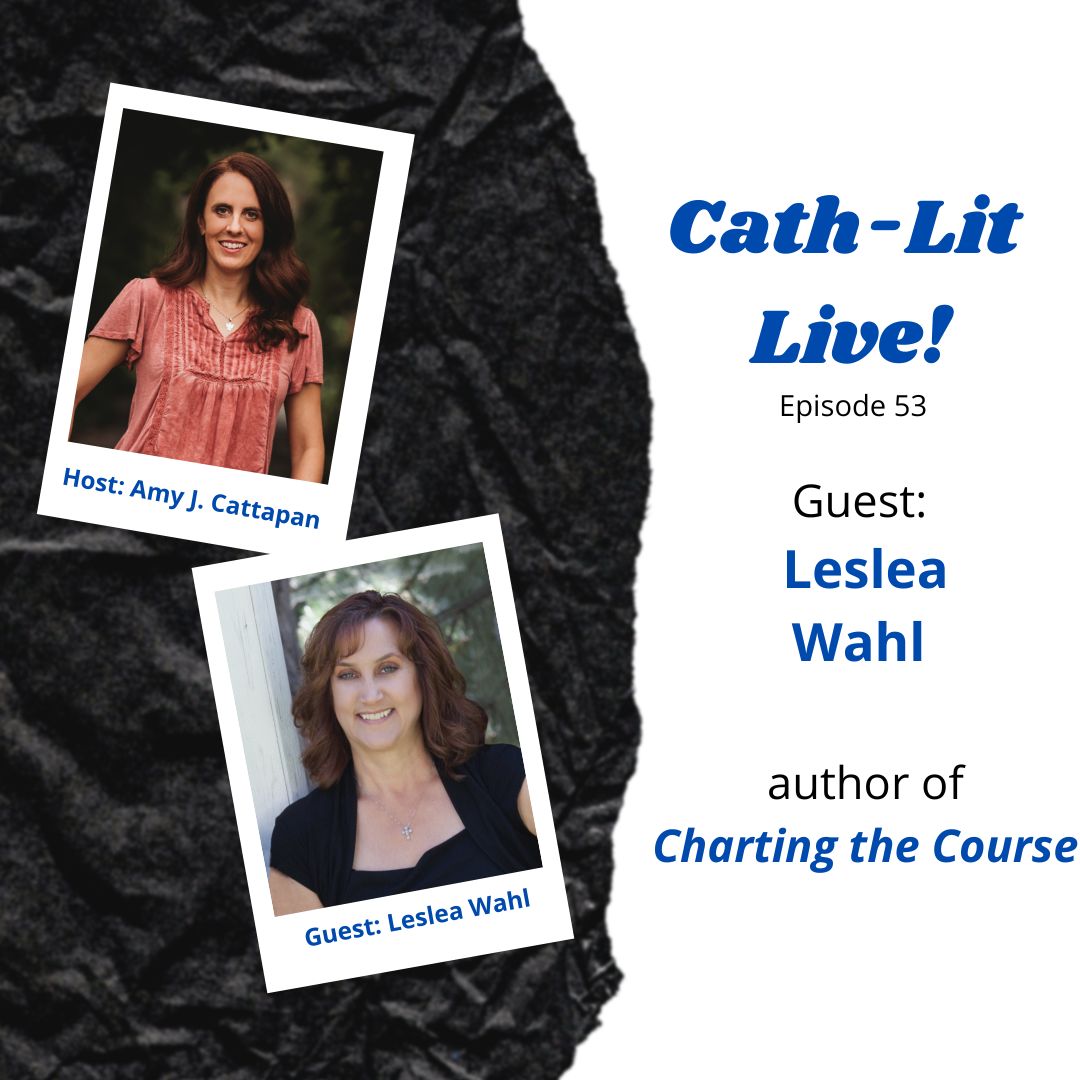
Cath-Lit Live: Charting the Course by Leslea Wahl

Cath-Lit Live: Charting the Course

“Cath-Lit Live!” features brief interviews with Catholic authors who are releasing new books. Hosted by Catholic author and speaker Amy J. Cattapan, “Cath-Lit Live!” gives viewers a glimpse into the latest Catholic books while getting to know a bit about the author as well.


null


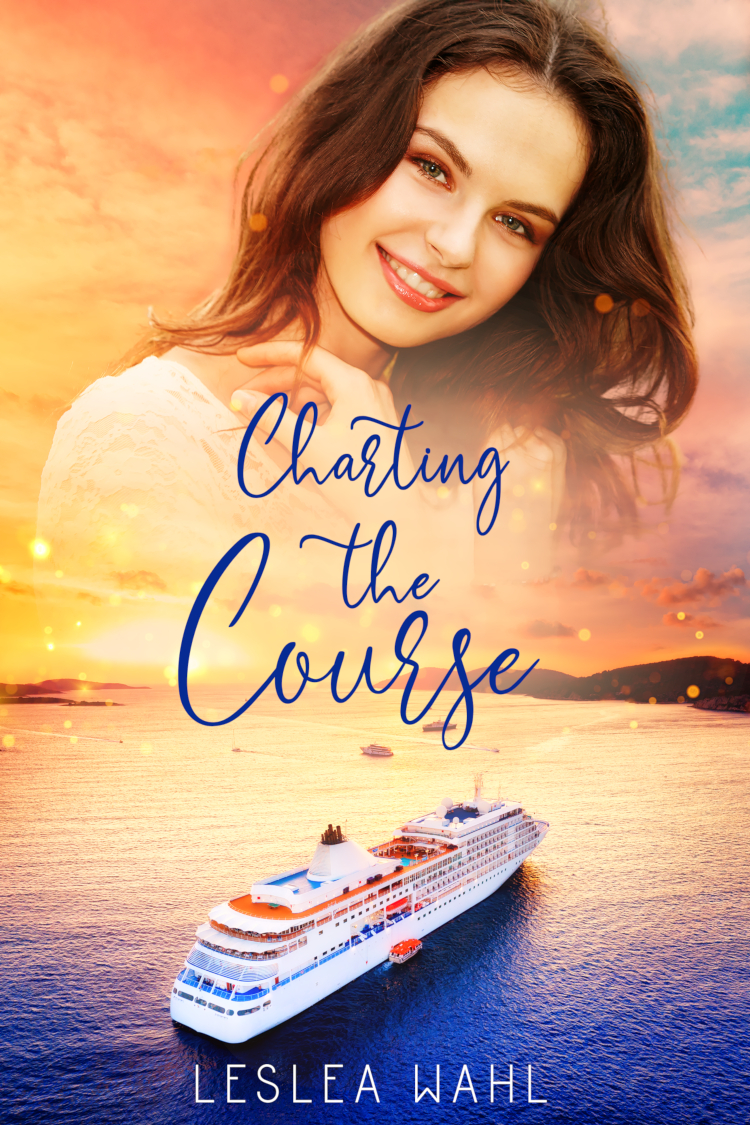
Charting the Course by Leslea Wahl

Stuck on a ship with her estranged father for this high school reunion – not a merry way to spend the holidays. But could an onboard mystery and a cute boy be the course correction Liz needs? Set amid the beauty of the Caribbean islands, Charting the Course delves into the topics of fractured families, generational high-school dramas, taking responsibility for your actions, and focusing on faith to keep us anchored. The twists and turns in this high-seas adventure will keep the reader bracing for the next wave of intrigue. 


null


About the author: Leslea Wahl lives in beautiful Colorado and is the author of several award-winning teen novels. She strives to write stories that encourage teens to grow in their faith through fun adventurous mysteries. Leslea is often inspired by her family, their travels, and real-life adventures. She particularly enjoys including the furry, four-legged members of her family in her novels. Besides writing, Leslea also reviews faith-based novels on her website and is a founding member of CatholicTeenBooks.com. 


You can catch “Cath-Lit Live” live on A.J. Cattapan’s author Facebook page. Recorded versions of the show will also be available to watch later on her YouTube channel and Instagram.


null


Copyright 2023 Amy J. Cattapan
Banner image via Pexels

Cath-Lit Live: Grieving Daughters’ Club

Cath-Lit Live: Grieving Daughters’ Club

“Cath-Lit Live!” features brief interviews with Catholic authors who are releasing new books. Hosted by Catholic author and speaker Amy J. Cattapan, “Cath-Lit Live!” gives viewers a glimpse into the latest Catholic books while getting to know a bit about the author as well.


null


Grieving Daughters’ Club by Andrea Bear

Two years after the death of her mother, forty-year-old Frankie Waters reluctantly joins a parish book club to prove to her family she is coming out of her grief-like state. While engaging with the eclectic women who drink wine and never finish their readings, she encounters Olivia, a young, single mother who has a secret that could be life altering. As the weekly book meetings progress, Frankie’s desire to help Olivia and the other women starts to lighten her pain. But good intentions aren’t always enough. Could Frankie’s intrusiveness push Olivia to make a horrible decision, or worse, cause Frankie to regret and return to her cocoon of grief?


null

About the author: Andrea Bear believes God calls us to share the stories from our heart. In 2018, she lost her mother to cancer and began to channel her grief and faith through writing. That same year she attended a Bible study where the women in her group shared personal and inspirational testimonies which prompted her to write her debut fictional novel Grieving Daughters’ Club. In addition, she is a contributing writer for Catholicmom.com, Queenofpeacemedia.com, and Her Life Magazine. Outside of writing, she is a high school history teacher in Stockton, California, and has been married to her husband Kevin for close to 20 years. You can follow her work on Instagram or Facebook at andreabearauthor or visit her website at AndreaBearAuthor.com.


You can catch “Cath-Lit Live” live on A.J. Cattapan’s author Facebook page. Recorded versions of the show will also be available to watch later on her YouTube channel and Instagram.


null


Copyright 2022 Amy J. Cattapan
Banner image via Pexels

Karina Teaches Worldbuilding – Final Lesson

Over this year, Karina is going to share some of her writing seminars on the blog, with the lessons and references for further study. We’ll be posting these once a month. There’s no assigned homework, but if you have questions, please ask them in the comments. Her first workshop is worldbuilding. This is Lesson 7. Here are the links to Lesson 1, Lesson 2Lesson 3, Lesson 4, Lesson 5, and Lesson 6.

Don’t tell me the moon is shining; show me the glint of light on broken glass.   –Anton Chekhov

Now you’re well on your way to building your world! You’ve got–or have plans to get–all this great history, know everything about the orbital mechanics of your solar system, even know why your Grimphani part their hair on the left. Now, it’s time to tell your readers, right?

NO!

Don’t tell us about your world! Show us!

Everything we’ve done so far is background. Some of it may never come up. (Remember what I said in a previous lesson about the writer who has written an encyclopedia or game manual rather than a story?) Now you can use those elements, but don’t tell us about them!

So how do you avoid that?

Keep in mind point of view–even if you are using an omniscient narrative (i.e., the reader sees more than the character), do your best to describe things as they impact or are applied to the character or characters. For example, say I wanted to write a scene in The Miscria III: Hero Psychic, where there is a wild rainstorm that Tasmae (who controls the weather) has decided to allow to happen. I could just say it:

Joshua and Sachiko came in soaked from the storm. When Joshua saw Deryl, he asked, “What’s with the rain? Can’t Tasmae control the weather?”

 Deryl shrugged, though it was obvious he found Joshua’s soaked status funny. “The land is parched. Tasmae decided to let the storm come.”

 “She couldn’t have given us a warning?”

Or, I can show it:

 Joshua and Sachiko entered the city at a run, and the doors closed at their heels, shutting off the howling of the winds. As they stood there, shaking their heads and wringing out their clothes, Deryl strode toward them. “And where have you been?”

 Joshua gaped then pointed at the door. “Has your wife looked out the window lately?”

 Deryl shrugged, a smile tugging at his lips. “Tasmae said we need the rain.”

Of course, showing is sometimes easier said than done, so here are some tips:

  • See it through your character’s senses and experiences. Will your character know that the general is wearing the traditional (but itchy) dress of the Galvatin Space Fleet, with the braiding denoting his bravery in the Karu Nebula Encounter and the still-brass buttons that have been part of the uniform since 345 GT? Or will he just note that it’s impressive and traditional–but kind of gaudy?
  •  Use the detail that matters. If your hero is dodging a swinging blade, that may not be the time to note that it’s the Sword of Barnana, with rosewood hilt bearing the tiger-eye stones once stolen from the Kitcherie temple and which bears the curse that its wielder must kill a werewolf every full moon and how it has been highly polished yet has nicks. He may notice the crazed, possessed eyes of its bearer and how he pants, “Must killmustkillmustkill.” Once your hero defeats the swordsman, he may note some of these details–or he may be running like fun away from the scene. You decide how important the sword is at that point.
  •  The more it matters to the plot, the more detail you need. If you don’t intend to run across the Sword of Barnana again in the story, it may be enough to note that it’s a possessed sword. If it comes back later, you might want to note the odd tiger-eye jewels. If it becomes the focus of the quest (and hence the story), more background is needed.
  •  If you need to explain, let characters do it–but avoid lectures or extended Q&A.

Here’s Vern explaining his scratch marks on the local buildings to a member of the Los Lagos Beautification Committee. It’s a central point to the entire story, which is less than a thousand words.

“I understand you’ve… scratched some of the buildings in the area.”

“Yesssss….?”

“Well, you’re defacing the exterior!”

“Yesssss…..?”

“It simply won’t do!”

“Anybody complaining?”

“The Committee–”

“Anybody around here complaining?”

“No.”

“Those ‘scratches’ mark the area as under my protection. My Territory.”

“I realize it might be an instinct thing–”

I threw back my head and snorted. She jumped but didn’t back away. Score one for guts. “Do you know the crime rate around Territory?”

“Unacceptably high. That’s why the Los Lagos Beautification Committee wants to foster a more pleasant environment–”

“–Do you know the crime rate within Territory?”

“I don’t–”

“People don’t mess with places I’ve marked. They’ve got a stronger motivation than beauty. Me.”

For More Reading:

http://www.tarakharper.com/k_show.htm Great examples.

http://www.sfwriter.com/ow04.htm

Karina Teaches Worldbuilding – Lesson 5

Over this year, Karina is going to share some of her writing seminars on the blog, with the lessons and references for further study. We’ll be posting these once a month. There’s no assigned homework, but if you have questions, please ask them in the comments. Her first workshop is worldbuilding. This is Lesson 5. Here are the links to Lesson 1, Lesson 2Lesson 3, and Lesson 4.

To seek out new life and new civilizations…  –Star Trek

Worlds are more than physics, and stories are more than settings. The most interesting thing about a world and the usual spot for conflict lies in the society that inhabits the world. Whether you have an intergalactic civilization with a history longer than the entire existence of the Earth or a small exploration group on an uncharted asteroid, you need to know how that society runs.

How much do you need to know? It depends on your story, your universe, and your own plans. David Weber has a complex and detailed universe for his Honor Herrington novels, and it shows. A short story, however, may only need a couple of important facts; the rest is immaterial. I once chatted with an author whose novel was unmanageably long because he was including every detail, right down to the history and construction of the blades used in a swordfight. One chatter suggested he was writing the world’s encyclopedia or an online game manual rather than a story.

Dream up as much of the background as you can and wish to, but don’t let it interfere with the story. Here are some things to consider:

 History:

  •   How did your country/world/empire come to be?
  •   Who were the major historic figures? (soldiers, statesmen, explorers, workers for peace, famous criminals, scientists, religious leaders, people not in power who do major things)
  •   What inventions changed their world?

Always start with those that affect your character, story and setting. For example, in the United States, every child grows up learning about George Washington, the Revolutionary War, and Pearl Harbor. In Colorado, however, kids will be more familiar with the explorer Zebulon Pike, while in Fredericksburg, VA, students learn about the apothecary and General Hugh Mercer.

 Military:

  • Are there a lot of wars on your world? Over what?
  • How does your society feel about war and the military? How does your character feel?
  • Does your character belong to a conquering “nation” or a conquered one? Or does his nation avoid battle, preferring negotiation or neutrality?

If needed, you can map out some of the major battles. Think not only about the ones that forged the civilization(s) you’re writing about, but also the area. In a real-world example, Fredericksburg, VA (where we used to live) was the site of several important battles in the American Civil War. Thus, you can’t walk for a block downtown without seeing something from that era – whether a statue of General Lee, a historical marker, a souvenir shop, or a Confederate Flag proudly displayed next to the Stars and Stripes. My husband has a Civil War sword that his neighbors dug out of their back yard.

 Economic:

  • How do people acquire things? Not all societies have a cash or barter system. In my world of Kanaan, people work for the joy of creating or performing a service and freely give away their wares. Lesser enjoyed duties (laundry, dishes, trash) are shared.
  • What are trade relations between systems, countries, etc. like?
  • How many resources does the average person have at their beck and call? Can they afford to throw food away? Broken or no longer wanted objects? How important is recycling?
  • What are the major industries, crops, etc? How do they affect the society and policies of your world?
  • Do you have big businesses or small conglomerates? How are they run? For example, in Rob’s and my Rescue Sisters novel, Discovery, we have a major space conglomerate, ColeCorp, which has its fingers in everything from universities to spaceship construction. It runs like a standard American business for the most part, but in the asteroid belt, it has a cooperative relationship with the small, independent mining companies.

 Political:

  • What kind of government does your world have? What are the variations? For example, you may have a monarchy, but instead of the crown passing to the firstborn son, it goes to whichever child demonstrates the strongest arcane ability at 16. Each child’s score is recorded, and when the monarch dies, the crown is passed to the most skilled.
  • Politics is more than governmental, however. How are decisions for groups made? How does this reflect society’s values?

 Inventions:

  • What inventions have transformed society? Think more than just commercially. Take the washing machine, for example. On the surface, it makes it easier to clean clothes, but look deeper, and you see it has changed our standards of clean, the amount and type of clothing the average person owns, and sparked the need for a whole slew of new industries, from detergent manufacturing to diaper services.

For More Reading:

Where do you come up with ideas for these things? Read about Earth! Read a history, political system or economics. Then ask yourself how you can adapt elements of this to your world.

Karina Teaches – Lesson 4

Over this year, Karina is going to share some of her writing seminars on the blog, with the lessons and references for further study. We’ll be posting these once a month. There’s no assigned homework, but if you have questions, please ask them in the comments. Her first workshop is worldbuilding. This is Lesson 4. Here are the links to Lesson 1, Lesson 2, and Lesson 3.

Worldbuilding 101, Lesson 4: Your People

On the last day, God created Man (male and female), but we’re going to do it on Lesson 4.

For some of you, this won’t be too hard–you’ll have basic humanoids with some special quirk that makes them unique.

As you’ve already heard me say–and everybody join in this time–you need to think about the impact of the differences you make on the rest of your world. For example, for my novel Discovery, my husband Rob and I have postulated a race of creatures that are more patterned after starfish–radial symmetry rather than the vertical symmetry of humans. This introduced a whole slew of interesting questions:

–Do they have a sense of right/left/forward/back?

–Are certain digits devoted to walking and some to handling tools? Or are they ambidextrous?

–Where are their eyes? How do they see?

–How do they eat, sleep, procreate?

–What would their homes, vehicles, and equipment look like?

Fortunately for Rob and me, we will be dealing with humans exploring a long-dead spaceship, possibly abandoned, so we have some wiggle room for unanswered questions. We could concentrate just on the things that directly apply to the space ship, its design and especially its life craft. If we take our humans to this planet in another book, we’ll need more answers!

Even if you’re doing fantasy and are going to use some of the time-honored “aliens” like vampires, werewolves, etc., you still need to decide their biology, needs and how they are different. Is vampirism a disease, a genetic defect or a choice? Why can’t they come out into the sun? How does it really affect them–sunburn, allergic reaction or the good ol’ burst into flames? Do werewolves have to change in a full moon, or can they only change in the full moon? What happens to their clothes?

I’ve had a lot of fun playing with the usual clichés of fairy creatures in my Dragon Eye, PI universe. (www.dragoneyepi.net). For example, my elves are very long-lived. Well, when you live to be 500-600, your biology should slow down a bit, and so does your sense of time. Thus, while elves are able to interact with humans, they are also infuriatingly slow. Their language, for example, is full of prerequisites–to apologize for bumping into someone requires you recognize their social status and that of their family and tribe as compared to yours, the nature of the offense, the impact of that offense on the relationship and the relationship of their people… As my dragon detective Vern likes to complain, “It can take them half an hour to ask where the bathroom is.” (And, thanks to their changed biology, they do have half an hour before the need is urgent.)

Keep in mind, too, that the more that quirk is part of their nature, the more effect it will have on their civilization–but that’s lesson 5.

For more reading:

http://www.amazon.com/Essential-Guide-Alien-Species-Star/dp/0345442202/ref=sr_1_1/104-5069618-1512745?ie=UTF8&s=books&qid=1189371773&sr=1-1 The Essential Guide to Aliens (Star Wars) by Ann Lewis and RK Post. It’s amazing what people have come up with for creatures. Contains their history, biology and sociology. Great for ideas.

Dragon Magazine: Although out of print, each issue had a bestiary with incredible detail about certain kinds of creatures.

Dungeons and Dragons Players Handbooks or Monster Manuals: Pick a fantasy creature and these writers have thought of everything from how they react in an adventure to what they wear as pajamas. Forget the dice and the stats and just play with the ideas.

Real life creatures: Google a species that may have traits you want – like starfish or manta rays or birds. Even if you aren’t looking for a full creature, you might learn something. For example, if your alien has wings and can fly, you will want to study what else is involved – do they have feathers or skin like a bat? Do they fly or just soar like a flying squirrel? How does their anatomy support the wing structure?


Transitions – How to get your character from here to there

MC900434910[1]One area of writing craft that doesn’t get a lot of attention is that of writing transitions. You’ve gotten to the end of a scene, or maybe just to the middle, and the characters need to move to a different location, or perhaps some time must pass. How do we accomplish that in a way that moves the story forward and also keeps the reader’s interest?

I admit to hitting spots like this and getting stumped. I know what is coming up, but can’t quite figure out how to make it happen on the page. Sometimes I just skip the transition, leave a space or type “needs something” in red, and go on. When I come back, the answer is often clear and I can add, then revise and move on.

Deconstructing transitions can help. Ask questions of yourself or the characters. What needs to happen next? What is a logical way of getting there? How can I as author make the “getting there” part compelling? Can I reveal characterization? Can I set a tone? Can I use an active verb? What word choices will help me create the imaginary situation that I hope my reader pictures and feels? How can I do this in an unobtrusive way?

A simple solution for time shifts is to double space between scenes. In more complex time situations, a timing cue may be necessary, i.e., a day, date, or time as a header at the beginning of a chapter. As in any literary technique, get the most bang for your buck with each word.

For instance, in Hijacked, my first novel, the female protagonist is a pilot. I purposely used weather cues that a pilot would notice to alert the reader to the time shifts. The setting became a vehicle for those transitions: A thunderstorm to indicate that summer had arrived, the brilliant color of fall foliage as seen from the air to denote autumn, the sight of malls (again, from the air) engulfed in oceans of cars just before Christmas. I used those opportunities to deepen the heroine’s character, i.e., how she felt about what was going on in her life at each of those seasons, and to move the story forward, i.e., her musings about past events or how to proceed with relationships. Is there a unique aspect of one of your characters or your setting that might serve to assist with transitions?

In more complex time situations, a timing cue may be necessary, i.e., a day, date, or time as a header at the beginning of a chapter. I used this technique in Unholy Bonds, the sequel to Hijacked. Create a timeline outside of the book as a reference; it will help keep things straight. This idea is especially helpful in creating tension in a novel of suspense. Conversely, it can indicate the passage of long periods of time and slow the pace of a more introspective novel.

Within a chapter or scene, your goal is to move the characters around without creating a sense of plastic figures being manipulated by the author. Describe their movements in terms of their personalities and within the context of the emotion felt or displayed at that moment. Give them reasons, valid ones, for going where they need to go. Use transition words (then, next, after, etc.) if you need to, but keep them to a minimum or the story begins to read like an instruction manual.

Avoid the “grocery list” approach. Too many details getting the character from one spot to another risks losing the reader’s interest. Keep only the details that move the story forward or reveal something about the character. If they need to get out of the kitchen, into the car and down the street before the next interesting thing happens, try to get that done in a sentence or two—not six.

For instance: He dropped the milk carton on the counter and sprinted to the door, grabbing a coat on the way to his vintage Harley. A roar of noise and black exhaust carried him away from safety and into the unknown of danger. Where is Patty?

Okay, I know that’s sort of hokey, but I established a whole lot of stuff in a few sentences and got him out of the house and down the street. Our hero drinks milk and rides a vintage Harley (potentially contradictory and character revealing information.) His bike belches black smoke, so it might need some maintenance. He’s leaving a place of safety and heading into danger, which makes him brave or impetuous – or both. And as he’s moved from one place to another, he’s (hopefully) kept our interest and created a sense of urgency, both on the page and within the reader, who now needs to keep reading.

What we avoided was: He picked the carton of milk up and sniffed it, but then set it down. It wasn’t sour, but a thought crossed his mind. He hadn’t heard from Patty yet, and she had promised to call him when she arrived at work. Where was she, anyway? Concerned, he walked quickly down the hall where he picked up his keys and his coat, then checked his pocket for his wallet. Satisfied that he had everything he needed, he stepped out of the house, closed the door and locked it, then took the three steps from the porch to the sidewalk. His motorcycle was parked on the driveway, and he walked over to it, then picked up his helmet and put it on. (Are you bored yet? I am! And it’s so painful I’m not going to write any more! But I bet you get the idea!)

Many times, the transition doesn’t need to be exact.  Sometimes you can simply start the next sentence or scene with a thought in the character’s POV that indicates a change has taken place, then move on from there. Flashbacks followed by “leap forwards” can work, too, but use caution. Overuse or poor execution of flashbacks cause more problems than they solve.

This is a good time to get out your favorite novel and read a bit of it, paying close attention to how the author treated transitions. How do you handle transitions? Do you have suggestions beyond what I’ve addressed here? Please share! 

Cheerleading! Mutually Beneficial Author Support

Cheerleaders Doing Routine --- Image by © Royalty-Free/CorbisThere are a lot of us out there. Authors. With great books to share. Too often, though, we feel alone in our endeavors, trying to get readers to notice us in the roiling sea of other great books. This is a great time to be a writer! It’s more possible than it has ever been to publish a book. But that means that all sorts of other people are doing the same.

Whether you are independently publishing your work, under contract with a traditional publisher, or working with a small, online press, the business of marketing one’s work falls more and more upon the shoulders of the author. “But I just want to write,” you say. Hey, I’m with you. Me, too. But that’s  not our reality anymore.

How do we get “out there” where someone might notice?

First, write a quality book, no matter the genre. If you’re publishing independently, surround yourself with an expert team of editors, formatters, and cover artists. First impressions matter. Don’t give the reader a reason to skip past your book; give them a reason to stop and look at it, really look at it. Hopefully, they’ll be intrigued enough to click the ‘buy’ button.

Then, the meat of this post: Network. Before you ask people to spread the news about your book, make sure you’ve nurtured relationships with them, and have crowed about their successes. You can do this well before you are ready to publish your own work; in fact, that’s the best time to create these relationships. Have you gone to Catholic Writers Conference Live? Or participated in the online CWG conference? How about the Writing Retreat? Or any other writing focused activities? What about the CWG Facebook page? Have you interacted with other writers in any of those venues? I hope so, because that’s crucial for the next step, which is:

Celebrate with them! Post their new releases or awards on your Facebook page. Use your blog or Twitter to let your followers know there’s something available that’s worth their time. If you’re on Twitter, find and follow some entities that reflect your interests; they may reTweet for you and expand your reach.

Buy and read your friends’ books, and then review them on Amazon and Goodreads. *Caveat: Always say something nice, or don’t post a review. This does not mean you can’t be honest, but be honest in a kind manner. Personally, I never give a review with less than four stars, and even if I didn’t like everything about the book, I focus on what I loved about the book—or, if it’s in a genre that’s not  my favorite, focus on what readers of that specific type of book will enjoy about this particular one.

Here’s an example of how this might work. A few weeks ago, Erin McCole Cupp contacted me because I’d done a cover reveal on my upcoming release, Hijacked, on CWG’s Facebook page. Would I like to trade read and reviews with her? She’d recently published Don’t You Forget About Me, a cozy mystery. I said yes, and posted reviews on Amazon and Goodreads. She upped the ante and asked me to be an interviewee on her blog the week my book comes out. I said yes (!), and then tagged  her on a My Writing Process blog tour/relay. With any luck, some of my readers will be interested in her work and some of hers readers, in mine. That’s just with two authors! Imagine what can happen when more get in on the fun!

(And did you notice what I just did? I linked Erin’s website and the Amazon link to buy her book to this post. I purposely do this for everyone I mention on both my CWG and personal blogs. What goes around comes around…)

Join writing organizations and establish relationships with authors you respect. Be a cheerleader for them, and hope they’ll return the favor when it’s your turn. Yes, it’s time consuming, but it is well worth the effort—not just because they’re going to help you sell books, but because they are wonderful people and their friendships enrich your life.

Are you feeling a little less alone now? I hope so! If you’ve had success in the arena of networking, please share your story! What are the elements that contribute to that success?