My Best Writing Advice

My Best Writing Advice - Sarah Anne Carter at Catholic Writers Guild Blog

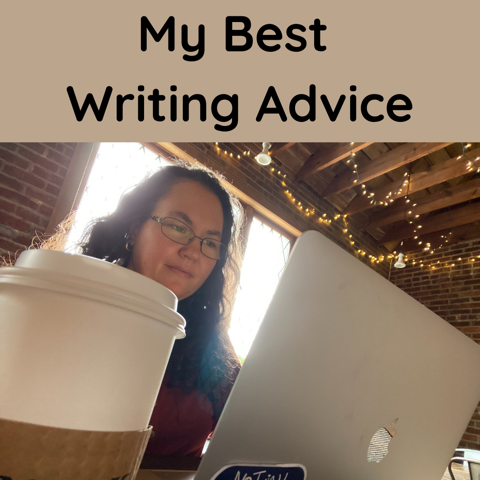
Writing as a mother of four is hard. I was recently asked what my best piece of writing advice was and it took me barely one second to decide on what it was: Write consistently.

Consistency can be hard to achieve when you have a busy life, but it is truly worth making a priority in your writing life.

I learned this lesson the hard way. The very first book I wrote was written in bits and pieces here and there. Some weeks, I would open it up to write three or four times a week and then other times, weeks would go by between my writing sessions.

When the draft was done, it was a confusing mess of swirling timelines, inconsistent names, and repetitive sections. I had to edit and edit and edit some more to get it to a good draft. It took a lot of work – most of which could have been saved if I had been more consistent in my writing at that time.

Now, I write at least five times a week. I aim for about 500 words a session, but even if I only have 10 minutes to write and only add 173 words, I moved the story forward and – most importantly – I know where I am in the story.

If I take too much time off between writing, I lose track. If that happens, I make sure to take the time to read back and refresh my memory instead of pressing on.

I also now take notes as I go along, making sure to note the characters’ names, ages, physical traits, and any dates so I can keep the timeline straight. It’s much quicker to check those notes than to read back in the story and find those details. 

So, how do I find the time with everything else on my plate as a wife, mother, homeschool teacher, and all the other things that crowd my attention?

I know I only need a 20-30 minute block of time to write about 500 words. I don’t consider my day complete until those words are written. I often look at my planner in the morning and pick a time where I will aim to do my writing. 

(I’m writing this at the ice skating rink while my youngest has her weekly lesson. I wrote 739 words for my current novel and now I’m writing my draft of this.)

There are pockets of time in everyone’s day, and I make it a priority to take one of those pockets and use it to write. It’s not selfish, because I feel it’s a talent God gave me, and I want to follow His calling for my life in this area. 

Your pocket of time may be in the morning before the work day begins. It may be at night as soon as the children are in bed. It may be during nap time one day and at the soccer field the next. It doesn’t matter how and where you write, but that you write. 

How do you find time to write consistently?


Copyright 2022, Sarah Anne Carter

When Picking up Your Pen Is Picking up Your Cross

By Janice Lane Palko

How do you regard your writing career? Perhaps you’re like me. I’ve been putting words on paper for more than 20 years, and I’ve always regarded my propensity to write as a being a blessing and as a calling of sorts. I wrote last month how God and, to a lesser extent, we humans can take something meant for harm and turn it into good. My writing has been a blessing wrought from misery.

I’m a natural-born worrier. Some families seem to pass on the proclivity to become addicted to alcohol, drugs, or gambling while others seem to be prone to divorce or commit suicide, but my family’s fatal foible is to fret. We are world-class worriers. After my third and last child was born, now nearly 25 years ago, I began to experience panic attacks. At first, I didn’t know what was happening to me, but as a worrier, I, of course, assumed it had to be something catastrophic like a brain tumor. After consulting my family doctor and a visit to a therapist, it became apparent that I was under too much stress—a lot of which I was putting upon myself. In addition to having three small children at the time and getting no sleep and experiencing several family health crises, I have a vivid imagination. As such, I realized through some introspection and prayer, that I was using my God-given imagination to terrorize myself. For instance, if I saw a carjacking on the news, I would cast myself as a victim and play out the scenario in detail in my mind of what it would be like to be taken captive and held by brutal criminals.

Through prayer, reprioritizing my things in my life, and discovering that I could terrorize people on the page through writing instead of myself, I found a happier, more peaceful, and more productive life. That’s why I’ve always viewed my writing career as a blessing in my life. It refocused my mind on more productive things.

During this Lent, however, I’ve come to another perspective–one that seems contradictory since I love writing so much. I’ve become aware that writing may also be my cross. Not to trivialize Jesus’s passion and death by comparing it to the life of a writer, but when you are a writer, life is not all sunshine and roses. There is suffering. How many of us could paper the walls with rejection slips? How many of us have had a piece you’ve sweated over fall flat? How many of us have looked at a paltry royalty check and wondered if it’s all worth it? How many of us have watched as books like Fifty Shades of Grey soar to the top of the bestseller’s list while our writing attempts to edify and inspire bump along the bottom of the Amazon charts? How many of us have put in a full day’s work or spent all day taking care of a home and children only to use what little “me time” there is to eke out some writing?

In writing this piece, I did some research on what it means for Catholics to “take up their cross.” It seems that passage of scripture is often difficult to define, but I like this thought on it that Saint Pope John Paul II gave during World Youth Day in 2001.

“As the cross can be reduced to being an ornament, ‘to carry the cross’ can become just a manner of speaking. In the teaching of Jesus, however, it does not imply the pre-eminence of mortification and denial. It does not refer primarily to the need to endure patiently the great and small tribulations of life, or, even less, to the exaltation of pain as a means of pleasing God. It is not suffering for its own sake that a Christian seeks, but love. When the cross is embraced, it becomes a sign of love and of total self-giving. To carry it behind Christ means to be united with him in offering the greatest proof of love.”

Like the proverbial double-edge sword, I’ve come to see my writing as both a blessing and a cross much as Jesus’s cross is both a curse as it spelled suffering and death and yet, at the same time, was the greatest sign of His love for us. Suffering and love are always intertwined.

Therefore, as we come to another Easter, I’m going to dwell less on the suffering endured as a writer and strive to be more like Jesus and take up my cross and offer everything I put on the page as a great proof of love.

Who Do You Say That I Am?

By Janice Lane Palko

You’ve seen those Ancestry commercials about people who believe they are one race or nationality and then take a DNA test and find out they are not who they thought they were. My husband could be featured in one of those commercials.

This past Christmas, I bought him a DNA test because my parents had had their DNA tested as a gift for me and my siblings. Hence, I thought testing my husband would give our children a clearer picture of their genetic heritage.

My parents’ tests confirmed what my great-grandparents and grandparents had always told me—that I was predominantly Irish, with a splash of English, Welsh, and German. My hubby has always believed that he is half Italian and half Slovak. Imagine our surprise then when I opened the Ancestry email two days after Christmas and learned that he was 29 percent Italian, 25 percent Slovak, and, faith and begorrah, 19 percent Irish! Where did his green roots come from? We still have no idea.

My mother, whose maiden name is Hughes, registered 11 percent Irish and 50 percent Great Britain. Technically, my husband was more Irish than my Irish mother. The target of good-natured jokes from my family over the decades for not being Irish, my hubby now is one of the clan. He has taken great delight in his newly found heritage, lording it over my family, prompting him to don his “Who’s Your Paddy?” T-shirt reserved only for St. Patrick’s Day wear. The axis of our world has shifted a bit, and now I will have to throw away the “Honorary Irishman” button I gave him 36 years ago when we were first dating.

Accompanying the DNA test came a free month’s subscription to the Ancestry website, and I took full advantage of it. I discovered some things along the way. I learned that one paternal great-grandfather, James Lane, had a mother named Mary, a sister named Mary, two wives named Mary as well as a daughter named Mary, which made keeping all the Marys straight very difficult. I learned that a maternal great-great grandfather, who the family had been told had died when my great-grandmother was very young, most likely skipped town to take up with another woman in Colorado. I also learned that my English great-great grandmother who owned a bar, smoked a pipe, had a tattoo, and a pet parrot (I must have descended from sea captains.) and had 13 children was not widowed as had been reported by my late grandfather. She had divorced her husband as her marriage license to her second husband, my great-great-grandfather, stated because of “cruelty and barbaric abuse.” She went on to have a set of twins, one of whom was my great-grandmother. While Catholics dominated my heritage (hence the myriad Marys), I did find some Welsh Baptists and Cornish Methodists among the lot.

However, the most stunning discovery was that I had a fifth great-grandfather, Martin Short, (not to be confused with the comedian and actor), who came from Dublin in 1750 to the U.S. and fought at the battles of Bunker Hill and Yorktown and crossed the Delaware with General George Washington.

In addition, I learned some other, more important things. First, life matters. Although in this day and age, we treat it rather cavalierly, why, if life were not so important, would our ancestors have taken such pains to record births and deaths and chronicle who we have descended from?

Second, as writers, we provide a link to the past. I taught memoir writing for a number of years, and I always urge everyone to write their life story. What we put on paper today may one day offer clues, insights, or inspiration to someone yet to be born.

Third, you are dead for a very long time. My searches revealed a few relatives who died days after birth or as young children and one centenarian. However, no matter how long any of them lived, most have now been dead longer than they were alive, and with each passing day, they are even “deader.”

We will all eventually be dead longer than we have been alive. Therefore, plan accordingly. Make the most of your time on stage. Dream big, write beautifully, love with passion, leave a legacy. And all the while, prepare for your eternity. What you do now will determine where you will be later.

Finally, whether you think you are one nationality or ethnicity and you find out that you are not, or whether you find heroes or scoundrels or just common housekeepers, coal miners, railroad laborers, or shopkeepers in your background or not, it really doesn’t matter. Jesus posed this question of his disciples: Who do you say that I am? We should also ponder the converse. Who does He say that we are? What is our real identity? What He tells us is that we are His fallen creation, who He reclaimed for Himself on the cross so that we could become His beloved children and live with Him in eternity.

While it is interesting to know where you’ve come from, it’s more important to know where you’re going. That supersedes any knowledge of our earthly identity. Cling to your heavenly heritage because it’s the only one that truly lasts.

Pick up the Orange

By Janice Lane Palko

Some people receive profound promptings from the Holy Spirit. Me? I get messages like “pick up the orange.”

A few weeks ago, I walked into my local grocery store and saw a woman select some oranges and put them in a plastic bag. As she walked away out of the corner of my eye, I saw an orange fall from the display and roll across the floor.

You should pick up the orange, said that still small voice.

Instantly, I began rationalizing. I didn’t dislodge the orange. Why should I pick it up? They have stock boys to do that. I’ll look stupid, like I have OCD or something, if I pick it up and put it back where it belongs. Let somebody else do it.

Then my better nature joined the debate. Will it kill you to pick up an orange? Geez, Mother Teresa picked up dying people from the streets, and you’re freaking out over an orange. How shallow are you? Who cares what people think? Someone may trip over it. You will be doing a good deed, no matter how insignificant.

So, I pushed my grocery cart over, picked up the orange, and put it back in the display. But then something else happened.

As I was about to press on with my grocery shopping, I caught a glimpse of a woman to my side bend and pick up another orange, one that I hadn’t even noticed had escaped with the other orange, and replace it in the display.

I was astounded. This woman was following my example.

That little interlude set me to thinking about life, and for those of us who write, about what our toils to turn a phrase may mean in the big scheme of things.

Several months ago, fellow CWG member Cathy Gilmore posted an article from the Catholic News Agency titled The Catholic Church Desperately Needs Artists by Mary Rezac. It detailed how the world so sorely needs creative people who can bring beauty and truth to the culture.

I don’t know about you, but I’ve been writing for more than twenty years, and the monetary return on my artistic endeavors has yet to land me a summer home at the beach, a six-figure deal, or a stint on Oprah.

I attend a weekly Bible study, and shortly after the orange incident, our leader asked us to share our all-time favorite inspirational books. One woman recommended He and I by Gabrielle Bossis, a French, Catholic woman who lived from 1874-1950. He and I chronicles the interior conversation she and God shared. When she was putting these conversations on paper, Bossis didn’t know that after her death, they would be published, translated into many languages, and cherished by so many readers.

At times, it may be frustrating when we think of how much time and effort we put into our literary endeavors compared to the remuneration we receive in turn. However, I don’t, and I’m sure many of you don’t, write solely for financial gain. Then, take heart, fellow creatives. Though we may never know the extent of our influence, like Bossis, our work may do good long after we are gone.

I don’t know if God intends for me to be a best-selling author or not. But what I do know is that I’ll be fine with whatever magnitude of success I achieve. I’ll continue to write and strive to bring beauty and truth to the world through my work with the hope of glorifying God.

I may be only a stepping stone for someone who comes after me, a toehold for another writer on their climb to achieving loftier success in reviving what has been a hallmark of the Catholic Church throughout its existence: excellence in artistic expression for the glory of God.

Therefore, as this new year begins, I’m going to pick up that orange and keep on writing. I urge you to do the same. You never know who is watching us or reading works or being inspired by our example. We don’t know who may decide to follow us, who may bend down to pick up that orange we didn’t even realize had also rolled away.

Why Attend an Online Conference Like CWCO2016?

CWCOiconCWCO2016 is almost here! It’s set for March 4-6, and all the terrific details are at https://catholicwritersconference.com. It’s $40 for nonmembers,  $25 for CWG members. Drop by the website and register soon. Registration ends Feb 27 or when we get 200 attendees.

It’s been a long haul for Laura Lowder and I. We’ve been recruiting speakers for months, working on the new webinar software and putting together a huge amount of publicity and training materials we’ll be sharing with attendees. We have 24 presentations and 6 pitch sessions with Catholic and secular publishers.

I’d like to share with you why I feel so strongly about this conference.

In 2007, I attended my first writing conference. What an experience! I sharpened my skills as a writer and was introduced to the then-new world of internet marketing. I sold my first novel to a small press publisher. I – an introvert who seldom socialized – attended a huge party and laughed for hours. To top it all off, I made connections that have pushed my publishing career forward and made friends that I can still depend upon for help or companionship.

But the most amazing thing? The conference was completely online!

Have you ever wished you could attend a conference, learn from the writers who had been there/done that and succeeded, meet publishers and make friends who identify with your passion for words?

Have you ever had to push that dream aside because live conferences don’t work for you? They may be too expensive, involve travel that takes you away from work or family…or maybe it’s too far beyond your comfort zone to talk to complete strangers.

I’ve been there. I know how much easier it is to correspond, where I can think about my responses and not whether I’ve spilled something on my shirt or if my face “looks wrong.” My husband, Rob was working at the Pentagon, which meant LONG hours, so I could hardly leave the four kids for several days. Plus, we had enough bills without plane tickets and hotel fares. That first online conference changed my life and career. I wanted to do that for others.

But with the help of the Guild, I could do that. Ann Lewis and I started the first online conferences, and when she began the live ones, Laura Lower stepped in to co-chair the online ones with me. With Laura’s influence, we’ve given the conference a greater Catholic identity. Not only do we have excellent workshops on writing and marketing fiction and nonfiction, but we have presentations with a Catholic angle including theology, prayer and fellowship that is uniquely for our faith.

Our 2016 CWCO is coming March 4-6, and this year, we’re entering the 21st century with webinar presentations. If you can watch YouTube or use a chat like Facebook Messenger, then you have all the skills you need to participate. We have presenters covering all aspects of writing, faith and literature.

Are you ready to take your writing to the next level? Let us help you! Sign up for the CWCO 2016 today!

https://www.anymeeting.com/PIID=EC51DE87844F3B

Onward & Forward into 2016—‘Laughing Still Allowed’

by Larry Peterson

I had written sporadically over the years but I really started my ”prolific,” overzealous writing career in earnest about seven or eight years ago. I had taken C.S. Lewis’ advice and grabbed onto his quote, “You are never too OLD to set a new GOAL or to dream a new DREAM.” So I pulled out the old work I had squirreled away and before I could sharpen a pencil my expanding internal dictionary of adjectives was stopped in its tracks. I had to be operated on for prostate cancer.

The recovery process was a bit tough (part of that included having 30 staples plucked out of my forbidden zone, which was not pleasant, nor was catheter removal) but, no problem—the cancer was gone and still is seven years later. God obviously was not ready for me. So, I headed back to the keyboard and mouse. I thanked Him then and I have thanked Him every day since.

Then Martha was diagnosed with Lymphoma. Onward into the world of chemotherapy cycles which included her losing her hair, not once but twice. The second time she asked me to just shave her head and get it over with. I did and we laughed as she turned into cue ball redux. Then her memory began to produce  strange and forgetful behavior. I thought it was “chemo-brain” but it wasn’t. During that time I managed to have a children’s book published, followed by my novel.  (That publisher went out of business—another story for another time).

Ratcheting up my caregiver duties, I still completed another novel called “Destination Homeless.” That was about two years ago and all I have “left to do” is a final edit. I also have my latest novel almost done; it has a publisher and is already out on Amazon in volume form. Plus, over the years, I have written over 600 blogs. I had written more than I thought, which surprised me because it seemed like I was never getting anything done.

Anyway, a year ago I wrote an article for the CWG blog titled, “Celebrating Our First Christmas with Alzheimer’s Disease: Laughter Allowed.” Martha’s cognitive problems had started about a year and a half prior to that time so, as we march onward into 2016, we are about two and a half years down the Alzheimer road. Things are not the same as they were even a year ago. (Alzheimer’s Disease is one illness that cannot be cured, stopped, or even slowed).

Last year’s blog had in its title the words, “Laughter Allowed.” Well, for the past three (maybe four or five) months my writing has seemingly run into a major obstacle. There was a large brick wall in front of me and I was unable to type past it. The blogs became fewer and the novel was stuck in neutral. I was actually getting a bit freaked out about it and beginning to worry that I was turning into sludge. I was probably being a bit hard on myself because when you take care of an Alzheimer’s patient and do the shopping, the cooking, the daily distribution of various meds 4X a day, deal with all the doctors  (scheduling, visits, weekly blood draws, port flushes etc.), do the bill paying, home maintenance, etc., and then try to find “quiet” time to fit writing into the equation, that is when you can suddenly go blank. I did. Then came Thanksgiving.

The family all got together at Larry Jr’s. My three kids were there and my seven grandkids and we all had a grand time eating all the traditional Thanksgiving foods, watching football and hanging out together. On the way home Marty said to me, “What are we having for dinner?”

Actually, for a moment, I thought she was making a joke. But she wasn’t you see. She did not remember. I said, “Are you kidding me? We just had turkey and all the fixings for Thanksgiving. Don’t you remember? We just left Larry’s house five minutes ago.” Then the reality of the moment hit… Damn, I do hate Alzheimer’s Disease. Anyway, she looked at me and I at her and we both began to laugh. As ridiculous as it sounds it was a great moment for both of us.  Then I remembered—“Laughter allowed.”

Christmas is now over and I am writing this and I am extra thankful for Thanksgiving 2015. That day helped me snap back to the words in the title of last year’s blog. Laughing freed me up and I have actually spent some time on the final chapter of the Demons of Abadon. As for my dear wife, Martha, she is somewhat content in her own convoluted world. She does not remember Christmas Day. However, strange as it may seem, everything is okay. That is because on Thanksgiving Night, 2015, our unexpected and improbable friend, Laughter, returned. (I like to think it was a Christmas angel sent from above to help us out).

Once again I have relearned something I already knew and let slip by—no matter what is happening, when you have faith—laughing is allowed. It is God’s pressure relief valve and He installed one of these valves in each of us. More people need to let it go off once in a while. That’s it for 2015. Happy New Year, happy writing and God’s blessings to you all.

©Larry Peterson 2016

The Bible Has the Best Writing Prompts

by Larry Peterson

As a cradle Catholic who went to twelve years of Catholic school “waaaaay” back in the ’50s and ’60s, I can say without hesitation that my education in the Bible and about the Bible and of the Bible was almost non-existent. The Catechism with its nays & yays and right & wrong dominated the conversation. However, over the past ten years or so I have come to honor and respect the Bible. It took me all those decades to realize how profound and so magnificently in our faces with truths this book, written so long ago, is. The seven Wisdom books alone are worth more than all the jewels on Pharaoh’s crown.

Back to the ‘truths’ I mentioned. The other day, August 26, the gospel reading was from Matthew 23: 27-32. I believe this gospel actually references today’s world and the egotistical and self-centered mindset that so many people have embraced. Countless people have stomped on the goodness within God’s creation by choosing to grasp onto  the secular banner of “meism.” The Bible has their number–literally. It had it then and it has it now.

It follows that, as writers, the Bible also has the best writing prompts…especially if you are having trouble getting the words to flow from your brain to the screen or paper. The Gospel reading from August 26 did it for me. It was from Matthew 23: 27-32. (I’m just using 27 -28.) Here it is:

“Woe to you, scribes and Pharisees, you hypocrites. You are like whitewashed tombs, which appear beautiful on the outside but inside are full of dead men’s bones and every kind of filth. Even so, on the outside you appear righteous, but inside you are filled with hypocrisy and evildoing.”

There are actually seven “Woe to you” paragraphs in Chapter 23. I quoted number six  because it was part of the Gospel reading for the day. Anyway, the first thing that came to mind was Planned Parenthood. Think about it: “beautiful on the outside but inside are full of dead men’s bones and every kind of filth. Even so, on the outside you appear righteous, but inside you are filled with hypocrisy and evildoing.” I immediately thought of the people destroying the lives of babies and joking about it. I thought of all those defending  this organization and insist that those vilifying it are taking away women’s health protections. There are many in high places that certainly appear beautiful on the outside and, since I do not get to look inside, I can only imagine. I do know this: abortion is the Holocaust of the last four decades.

In America, marriage between a man and a woman is being denigrated by the beautiful, sophisticated, upscale and highly civilized secular community. Same-sex “marriage” is hailed as a right and the enhancement of freedom. Rejecting one’s God-given sex and deciding to change to the opposite sex is hailed as heroic and courageous. Legalizing euthanasia has taken root in Europe and in America. In Belgium they now permit childhood euthanasia. I could go on and on but you all know what has and is happening. And many of those who proclaim Catholicism as their faith  approve of these practices.

I am amazed that it has taken me so long to realize the magnificence and  page-to-page wisdom the Bible holds. So much of Scripture defines the present. It describes us and our world. It tells us how and where are journey began, where it has taken us, and where we are going. It is a great gift and I shall never ignore it again. It is also the one and only book I will reference when seeking out writing prompts. The Bible has it all.

©2015 Larry Peterson-All RightsReserved

From the President’s Desk – Failure Leads to Success

iStock_000017739645XSmall“Has it ever occurred to you that a life without failure is a dead life? Because you learn by failing. If you don’t try things, you’ll never learn anything. You’ll never accomplish anything.” Catherine Doherty, Foundress of Madonna House

Thomas Edison tried and failed on hundreds of attempts to create an electric light. Without failing, he would never have succeeded.

When it comes to writing, failure is necessary to succeed. I took writing courses in college, and I was a court reporter for many years, but I had no experience writing fiction, aside from the creative writing exercises in college. It should come as no surprise that when I first started writing fiction 14 years ago, I had no idea what I was doing. I just sat down and wrote. I remember thinking, This isn’t so hard. When I asked my husband to read part of my work in progress, he said, rather bluntly, “You’re not going to let anyone read this, are you?” I was crushed and felt like a failure but, in retrospect, my husband was absolutely right. That first attempt was terrible. So I trashed that manuscript, bought a few books on writing fiction, outlined the story, wrote character studies, then waited until summer so I could have uninterrupted writing time (I was homeschooling my five boys at the time). I went to adoration on the days I was writing and took my time drafting the novel.

Four months later, I shared it with my spiritual director and a few close friends. They gave me some helpful feedback. Later, I hired an editor (thinking she was a copy-editor, but she was actually a developmental editor). She eventually offered me a nine-page critique: half a paragraph on what was good with the manuscript and eight and three-quarters pages on what was in desperate need of improvement. There was an edge to her tone and by the time I reached the end of the nine-page critique, I was in tears. I was convinced that I was a failure at writing novels.

My husband, seeing how upset I was, suggested that I put the critique away for a few days. Then he recommended that when the initial shock wore off, I should go back and try to humbly discern if there was any merit in the editor’s suggested changes. When I eventually stepped back and considered all the changes, I ended up agreeing with most of her suggested edits. It took another year, but when I finished implementing the changes and sent it back to the same editor, she praised the manuscript and my edits and encouraged me to keep writing.

I learned a lot from that first experience with an editor. I learned that I need to be humble in accepting criticism. I learned that I need to have a thick skin when someone criticizes my writing. I learned that I will not agree with every piece of criticism. I learned that the editor is not paid to make me feel good, she is being paid to make my manuscript better. Although I initially felt like a failure, these are things I never would have learned without “failing” in the first several attempts at writing fiction.

A few months after that first book was published, the acquisitions editor of a Catholic publishing company read it. I received an email from her asking if I’d like to have a critique of the book. “Sure,” I said, confident that she wouldn’t have much to say, given all the feedback I had from a professional editor and friends. Instead, she shared with me that the book suffered greatly from “telling and not showing.” She advised me to write future manuscripts like they were a play and describe everything that was happening rather than telling the reader. Rather than “He was sad,” say, “His shoulders slumped and his eyes stared at the ground.” She gave me a few other pointers, then encouraged me to keep writing Catholic fiction.

Again, I felt like a failure. However, after humbling stepping back and reading the critique from this editor, I realized that she was right and I began changing the way I wrote.

My next book went on to win the Gold medal in the 2010 IPPY Awards for Religious Fiction, the first Catholic novel to win this award. All of my novels have been on bestsellers lists (Stealing Jenny, my third novel, was #1 in its category for 180 days of 2012). My newest book, A Subtle Grace, has been in the top 30 of Christian Historical Fiction and Christian Historical Romance for over a month and was in the top ten of six categories for two weeks. As of today’s date, the combined downloads of all my novels have just topped 585,000. Many look at those numbers and see “success.” However, without the previous “failures,” I would never have seen this “success.” And I am now also a busy fiction developmental editor and book coach.

For those of you who are still working on novels or non-fiction books, don’t give up! Don’t be afraid to “fail.” Failure can certainly lead to success.

One way to increase your chances of success is to become more active in the Guild (there are many resources within CWG), get to know your fellow CWG members and/or volunteer with the Guild. We could use volunteers for two committees: The Catholic Arts and Letter (CALA) Committee and the Membership Committee are in need of volunteers. If you’re interested, please contact me: president(at)catholicwritersguild(dot)(com).

We have new chairpersons for the CWG Blog: Kathryn Cunningham and Dennis McGeehan. Thank you, Kathryn and Dennis, for stepping forward! Special thanks to Jen Fitz, who was blog chairperson for many years!

Catholic Writers Conference Live: Registration is open for the Catholic Writers Conference Live, to be held July 22-24 in Somerset, NJ. Please consider joining us. There’s much to be learned from our varied speakers. And you will probably enjoy networking and fellowship with other Catholic writers, along with Daily Mass, Rosary and Confession.

Catholic Writers Retreat! Mark your calendars! CWG writing retreat coming soon! Prayer, reflection, writing, critique. What more could a Catholic want in a writing retreat? Oct 25-29 in DeWitt, MI.

As always, if you have any comments, questions or concerns, feel free to email me: president (at) catholicwritersguild (dot) (com).

In Jesus and Mary,

Ellen Gable Hrkach
President, Catholic Writers Guild

(Image purchased from iStock)

10 Steps to Indie Publishing

Printing pressThese are the best of times for authors—and possibly the worst of times! The changes in the publishing industry over the past five years are nearly as significant as the advent of the internet. In fact, the two developments are intertwined and build on each other.

We all know traditional publishing has undergone tremendous upheaval. It’s still difficult to find an agent. Same goes for a publishing home, doubly so when entire houses fold or get bought out by another entity. Authors are taking to the waters of Amazon and related ponds by the droves, flooding the markets with their manuscripts.

What are some advantages to independently publishing your work? Total control is the one most often mentioned. You work directly with a cover artist to produce the best one for your story. You can replace it if you decide it’s not working. You can set your pricing, then change it at a moment’s notice if needed.

Total control is also the disadvantage to indie publishing. Marketing is incumbent upon you, no one else. Make no mistake: this is a big responsibility.

Given this environment, if you are interested but have yet to dip a toe into the pool, how do you go about what has become known as indie publishing?

1. Know your goals. Do you want to get something in print form for family and friends? Skip down to items 4 through 7 and ignore the rest. Do you want to reach readers who don’t personally know you? Start here and slog through every step listed.

2. Hone your craft. Write the best book possible, run it by critique groups and/or beta readers and/or enter it in contests to get unbiased feedback. Then hire an editor and revise. Yes, this will cost money. Yes, you must do it. Do not fall prey to the delusion that your book is the best one on the planet or the only one not in need of professional editing. It’s not. You can always make it better. Believe me, if your critique partners/beta readers/editors say it needs work, it does. Fix it. If you don’t, the whole world will be privy to the lashing you will get from Amazon and Goodreads reviewers. So make it the best possible book before you put it out there. At least no one will be able to say “poorly written/edited!”

3. Buy books on the process. Let’s Get Digital and Let’s Get Visible  by David Gaughran are great resources, they are cheap, and they are fairly up to date. He is a proponent of the Amazon-only model. If you are comfortable with reading advice by savvy romance writers, The Naked Truth About Self-Publishing by The Indie Voice is another great resource.  This group is a proponent of getting your work out to every venue possible; why limit yourself to one vendor? These three books come to less than $15 and lay an excellent foundation for understanding the nuts and bolts of self-publishing.

4. Explore publishing options. Amazon’s self-pub arms are KDP for ebooks, Create Space  or print on demand, and ACX for audio books. Ingram Spark is another option. Barnes & Noble, Apple, and Kobo have platforms for uploading books; I have not gotten that far and do not have information to share. I’m sure others can contribute to the conversation here!

5. Utilize the tutorials on each publishing site. They provide a wealth of information. My experience with customer service on each site has been exceptional. If your budget allows for additional services, pretty much anything you need is available .

6. Remember that nothing is set in stone. If you make a mistake, all you usually have to do is replace the file. For ebooks on KDP, the old one will still be available for sale until the new one goes live. With Create Space, the title will not be available during the changeover, typically twelve hours or so. That said, some mistakes require taking the book down and reissuing it. Call customer service if it looks like something you can’t address on your own.

7. Mistakes: You will make them. The earth will not stop rotating. You will fix them. A week later, you will probably have forgotten the details. Moral: Be nice to yourself when you demonstrate your humanity. Even better, laugh!

8. Connect with your writing community. Ask for help, share insights, cheer each other on, and promote each other’s work. There are enough readers out there for all books. Amazon gave a presentation at a conference I attended recently. Their statistics show a dramatic rise in books sold since the ebook became widely available. More titles, more sales. Readers are voracious. There is enough success to go around; it’s not a finite quantity.

9. Adapt. There is no right way or wrong way to do this. The only given is the quality of the product you put out. Beyond that, much of the process for individual books is trial and error. Try something and see if it works. If not, try something else. Be persistent. Realize that marketing is part of the authorial journey these days, whether you are traditionally or independently published.

10. Remember this is a business for the long haul. It may take years to build a following. Meanwhile, keep improving your craft and writing new content. That is the one action you can take to improve visibility of your books, and visibility translates to sales. Continue to interact with readers, either online or in person, so they remember you and look for your books as you write them.

Questions? Discussion? How about suggestions of books or other resources you’ve found? Please share!

Catholic Writers Conference, July 29-August 1, 2014

EWTN Bookmark interviews at the CWG Booth

EWTN Bookmark interviews at the CWG Booth

Headed for Catholic Writers Conference next week? Are you excited? You should be! Take a look at this photo to get a sense of the energy and opportunities that await! What an opportunity to rub shoulders with industry professionals, to put names and personalities to folks you’ve met online, to renew friendships, and to network. This is a once in a lifetime experience; make the most of it. There will never be another gathering of exactly the same people at this point in their faith and writing journeys. Truly you are in Chicago, Illinois, because God has called you to be there!

Each of you has a specific reason for attending, a goal you hope to accomplish. If this is your first conference experience, the coming days are likely to be a roller coaster of euphoria juxtaposed with self doubt. Be assured that you are not the only one grappling with these feelings. I hope this knowledge translates into a greater sense of ease in a new and sometimes intimidating environment. Here are some words of advice (of wisdom, too, hopefully!) for both newbies and veterans, for authors, for agents, and for editors, geared toward making this conference the best it can be for everyone:

1) Everyone’s goals are the same, ultimately. Editors want to find the next diamond of a manuscript to publish. Agents want to discover the next author whose career they can guide to new heights. Authors want to find a publisher and/or agent to promote their awesome work. And in this particular setting, all of these people want to serve God with their talents and gifts in the way that pleases Him the most.

When viewed through that prism, competition loses the edge of greed and rejection loses its sting. We’re all on the same side, and God’s looking out for the good of each person’s life and career. This doesn’t mean you should fail to promote your product, just that there is no need for fear. Which brings us to the next point.

2) Be confident. You have something no one else does: your voice, and your work. These are gifts that God has given you, gifts that you have honed with hard work and prayer. No one can duplicate your contribution. Take heart in that fact, and know that your work will find its home. Maybe through this conference; maybe not – which leads to…

3) Don’t take rejection personally. Sometimes it just isn’t a good fit for the publisher or agent. Imagine a library with thousands of books. You have three days to find the best two. You will have to create a system to sort and discard the ones that aren’t suitable for your purpose. Do you see that many wonderful, deserving books will be overlooked? This does not reflect on the worthiness of each one, the same way it does not reflect on your particular project. And in today’s climate, many options are available. So…

4) Be open. There are many possibilities that we may not recognize in our limited, human view. Be open to new ideas, new directions, new options. You may discover a brand new path, or even a calling! You may discover it through…

5) Networking. This is the whole purpose of a conference. Meet people! Ask them what they write, who they want to represent, what they want to publish. Have a brief answer ready when others ask you these questions. (I write ____ and my current project is about ____.)

This is a remarkably small community, and the contacts you make in the next few days will serve you for your entire career. Do not discount the importance of these interactions. They are crucial for your success. But remember…

6) Be nice. This should go without saying, especially in this setting, but we are human and sometimes we need to be reminded. Keep your comments positive; you never know who might overhear or repeat something you said in a frustrated or disappointed moment. Again, this is a remarkably small community even though it may not seem that way.

Also, restrict your interactions to appropriate venues. Don’t try to pitch to an agent or publisher in the restroom, or shove your manuscript under the door of the stall. I have seen the first and have heard of the second, so these are not as far-fetched as they seem. Be considerate of folks. If the target of your interest has a headache or gets a pained look on their face when you approach, be brief. Introduce yourself and say you’d like to send them a query if that is acceptable; believe me, they will remember and appreciate your kindness. And that goes a long way. Which leads to the last point…

7) Be yourself. This may call for leaving your comfort zone, though. If you tend to be shy (many writers are!) push yourself to be more sociable. It’s not hard; smile and ask people around you about themselves. You’ll be glad you did. If you are an extrovert, recognize your tendency to overshadow the more timid among us and let them shine, too.

8) Use social media to keep the non-conference-goers among us updated! There’s the CWG Facebook page and your personal Facebook/Twitter, etc. accounts. The ripple effect can be unlimited. Share the love!

I hope each one of you has a wonderful experience at the Catholic Writers Conference! And… Oops! I forgot the most important words of advice! HAVE FUN!

Stay in the Know

Join Our Newsletter

Members and supporters can get the latest on CWG news and events by signing up for our newsletter.

Please wait...

Thank you for signing up!

Catholic Writers Guild
P.O. Box 77
Eaton, IN 47338