Follow Me to Little Jesus: Part 3


Follow Me to Little Jesus:  Part 3


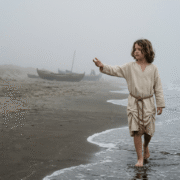
Bart revealed the first message of the Little Jesus vision.

“‘Follow me,’ he said the first week. Only Amie heard him.”

“Catholics aren’t required to believe in private revelation,” Maeve said impatiently.

“Right you are, Miss,” Mel agreed. “But I would challenge you to tell that to anyone who’s been to Medjugorje. And not everyone on that day believed. Some saw and just went about their business. If you recall, folks didn’t much take to the visions of Fatima and Lourdes at first. Or to St. Faustina and the Lord’s message of Divine Mercy.”

Maeve blushed and looked down, examining her hands. Her cousin experienced healing at Medjugorje, one Maeve believed.

“You said the first week, Bart. Did he come back?” Ross was captivated by the story and images.

The sequence showed people kneeling around the little boy.

“Indeed, he did,” Mel said like an animated docent giving a tour. For two more Sundays. He came to the shore, each time walking out from the early morning fog, delivering his message to Amie, then disappearing back into the mist.

“What were the other messages?” Maeve asked, surprised by her sudden interest.

“His second message was ‘Fear not.’ Just like Jesus said so many times in Scripture,” Mel said.

They moved to another sketch. The people in the image were kneeling like the other, but the focal point was Amie and Little Jesus. Amie was also kneeling, with both arms outstretched toward him, looking as though she were pleading with him.

“She didn’t want him to go,” Bart said. “She begged him to stay. ‘We need you, Little Jesus, please stay!’ Before he left, he said, ‘I am with you always.’ Until her dying day, Aunt Amie cried when she told people that part.”

“Bart, what did the people think the vision was trying to tell them?” Ross asked.

“As I said, it wasn’t much of a Christian community. You might say it was downright heathen. The only catechesis Amie and her family had was from a missionary priest who got lost trying to find the city. He stayed for a week, preaching and teaching, and baptizing. He left Bibles, rosaries, crucifixes, and a Baltimore Catechism. Amie took it all to heart and believed.”

“What did she think about the vision?” Maeve said. She couldn’t even feign disinterest at this point. Still skeptical, she also wanted to know more.

“Amie thought it was a call to conversion. She essentially became the community’s spiritual leader – at only 13 years old — because she read all of it, over and over, and talked about it all the time. On the night of the first vision, she began leading rosaries at her home for the community. They were out the door, on the porch, and in the yard, praying. Some thought the catches would improve again. But Amie believed the vision wasn’t about them. She said it was about Jesus, and he was calling them.”

Ross continued to scrutinize the sketches. “The messages are eternal,” he said thoughtfully. “Amie must have known that to record everything so meticulously.”

Leo ran over to his parents and held out a plastic statuette of the boy.

“I think Little Jesus is about my age,” he told them. “He grew up to be a carpenter, but he must have loved to fish.”

“Most people had to back then, Leo,” Maeve told him flatly. “But Jesus Christ’s childhood is a mystery to us, other than for a few events recorded in Scripture.”

Bart showed them to their table and took their pie orders. When he returned with the slices, Leo peered at each one and lowered his face to sniff each flavor.

“Mine’s chocolate, but I like the fruit pies too!”

“Sure you do, Son,” Ross said, taking off a large corner of his cherry pie and putting it on Leo’s plate. Maeve did the same with her blueberry. Leo tried those first before his chocolate. He finished his pie quickly without leaving a crumb on the plate and asked to be excused to pick out a statue or picture for their priest, Fr. Ted.

The brothers laughed, delighted by the boy and the closeness of the family. They continued with the history of their little community.

“Around 1930, the catches started to dwindle, and no one knew why. Little by little, it died away,” Mel said. “When the Little Jesus appeared, they were already feeling it. By 1935, there wasn’t enough shellfish to keep a family in stew for a week. Generations had lived off the bay, but now they had to go to the city to work in factories. Times were dire here. Decades later, we learned a rare disease killed off marine life.”

“It killed life around here, too,” Mel continued. “Folks had to leave to survive. Our little spot wasn’t worth anything to anyone but us.”

They remained silent until Leo burst into the dining room.

“Hey, Dad! Dad! Jesus was a little boy just like me! He was eight years old once. I never think of him that way. I just think of him as a grown man on the cross. But he had friends, and went to church and to school, played baseball, and helped his mom set the table, and made his bed. If I lived during ancient times, we might’ve been friends. We could’ve gone fishing together and played on the same team. Boy, that’s a guy who’d never let you down!”

“I think you’re right, Son,” Ross said, pleased. “But how did you come to these theories?”

“I just kept looking at the picture on the wall, Dad, and thought about it, and it just came to me! I’m gonna see what else I can find out!” Leo ran off again to study the picture. Bart and Mel also left to greet more guests. The dining room was filling up, but Maeve noticed no one else was getting the same attention as the little family.

Once they were alone, Maeve leaned in toward her husband and spoke quietly.

“Well, this has been interesting,” she said.

“You say that like you think they’re crazy,” Ross said. “I’ll admit it’s a little far out, but fascinating. I’d love copies of these drawings. Amie had some natural talent.”

“It’s just that Leo seems so taken with this idea. And they’re giving us so much attention. We don’t know these people; we’ve never heard of this vision. We live 30 miles from here. I go to the diocese for meetings a few times each year, and I’ve never heard anyone speak of it.”

“How often do people talk about the 1930s, Maeve? Whether or not it’s what they say it is, they seem sincere. Each of us needs to address it with the discernment God gave us and take it to Him in prayer and Confession. And discuss it as a family with Fr. Ted.”

Ross reached over to Maeve’s plate and used his fork to cut a bite of her blueberry pie. He chewed the pie piece slowly, and Maeve pushed her plate toward him to finish the slice.

“Do you want to know what I’m taking from this?” Ross continued between bites. “Did you hear how Leo talked about Jesus? Like a friend. Like someone he wants to spend time with and someone he knows he can count on. Maeve, if nothing else, this day has shown Leo who Jesus is. My concern is that, as sports and hormones take over his life, he’ll start to forget that. Our job is to make sure he doesn’t.”

The family was late heading back from their outing. They drove home silently in the dark, exhausted from what started as a search for pie. Maeve noticed the whole car smelled like pie. Not just the beef pot pie in the box they were bringing home, or the extra slice of chocolate for Leo. It was like a harmonious blending of many pies. It was just … heavenly? How could the aroma be so overwhelming? Maeve inhaled the homey scent. Is this what Jesus smells like, she thought and laughed to herself.

She glanced at her husband, who was wide awake and alert, determined to get his family home safely. She looked back at her son, peacefully asleep. Two heads peeked out from his jacket pocket—the statuettes they had bought for Leo and Fr. Ted. She reflected on her husband’s quiet and steadfast faith that she saw today, and her son’s joyful and innocent faith. She thought about the dedication and perseverance that stemmed from Mel, Bart, and their sister, Amie’s faith.

Follow me. Fear not. I am with you always.

But did she? Lately, she felt like she had been following fear more than God. Afraid of Ross losing his job since his company was bought by big corporate. A lack of trust in his ability to start his own business. Did today have a special message for her? Maeve sighed and put her head back on the seat. The old car’s engine sounded quieter than usual tonight. Or maybe it was her anxiety that was calmer. For the first time, she didn’t feel the need to keep watch during a night drive. She relaxed back in the seat, content to see how this day would rest on her family in the morning.


Read Part 1

Read Part 2

Author’s note: The Biblical references noted are inspired by the following Scripture passages:

  • Follow Me: Matthew 4:19
  • Not all who saw believed: John 22: 26-28
  • Fear Not: Acts 18:9
  • I Am with You Always: Matthew 28:20

© Mary McWilliams 2026

Banner Image generated in Adobe Firefly Gemini 3.1 (with nano Banana 2)

Edited by: PV Babadi

Crabbing with Granddad and Grandpa

Crabbing with Granddad and Grandpa

Since then, I’ve lived on Maryland’s Eastern Shore, right across Chesapeake Bay from the area where I grew up in Southern Maryland. There are three things these two regions have in common: a slower pace of life; a summer patchwork of yellow corn, green soybeans, and golden grains; and life on the water. I don’t think I could ever call anyplace home that wasn’t connected to water or didn’t contain memories of crabbing with Granddad.

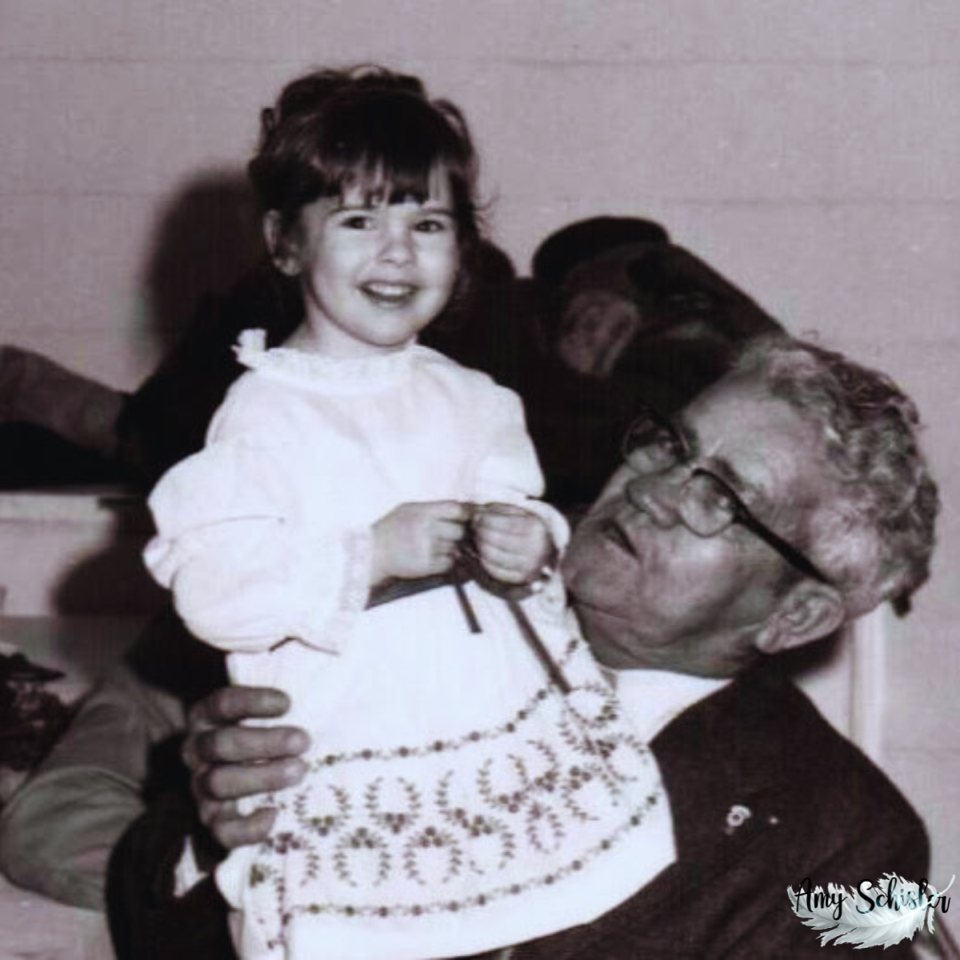
From the time I could walk until I was eighteen, there was no place in the world I wanted to be other than at my grandparents’ house, particularly out on the boat with Granddad. Our mornings spent pulling up crab pots were the inspiration for my children’s book, Crabbing With Granddad. Those days were some of the best of my life.


Wanting to Stay

I have vivid memories of being about three or four years old, holding onto Granddad’s legs for dear life, begging him with tears in my eyes, “Please, Granddad, don’t let them take me. Don’t let them take me home.” Of course, there was no choice. At some point, I had to return to my parents, who were and still are the best parents ever! There was just something magical about being at Granddad’s house.

Alas, I grew up, and my grandfather passed on when I was eighteen and away at school. I was already unhappy. No, I was miserable. I hated the college I’d chosen. I was never a drinker and have never had any desire to do drugs. My parents were not rich, and I wasn’t worldly. Trying to fit into a place where everyone was the child of somebody — and by somebody, I mean a Congressman or Senator or actor or owner of a famous Korean technology company — where everyone drank and did all manner of drugs, was hard enough for me. Add to that the fact that, somehow, they all knew I was the “scholarship kid,” and my first semester was off to a bad start before the month of October had even rolled around.


Saying Goodbye

Around the beginning of that month, my grandfather was diagnosed with lung cancer. Along with being a waterman, he was a tobacco farmer, and he smoked as much as he grew. He’d been smoke-free for about five years by this time, but the cancer was already stealthily invading his lungs, a predator ready to strike without warning. On October 19, American Lit was nearly over when I suddenly felt like I couldn’t breathe. My eyes welled with tears, and I felt like I was choking. Though the doctors had promised chemo would do the trick, and Granddad would be just fine, I had this dreadful, inexplicable sense that he was gone. I left class and went to my job in the campus library, but my roommate was waiting for me. At the sight of her, I collapsed into tears. My mother had called the hall phone with the news I already knew was coming.

The rest of the week remains a blur to this day. I was devastated and knew I would never again experience that one-of-a-kind love that made my heart swell with joy. I didn’t know how I would go back to school and continue as normal; and I didn’t, not really. I didn’t get out of bed for the next three weeks. I was failing my classes, and I had fallen into despair.

In those days, nobody talked about depression. Nobody sought help from therapists or counselors. I was drowning in sorrow and didn’t know how to rise to the surface to catch my breath.

One night, when my roommate was home for the weekend, I was awaken by a bright light shining onto my bed. I blinked as my grandfather came into view. He told me I needed to get on my life, but I told him I didn’t know how to do that without him. I told him, what bothered me the most, was that I never got to tell him goodbye. He said to me — and I remember this like it was last night — “Why do you think I’m here?” I felt my whole body relax, and my heart somehow felt whole again. I blinked again, and he was gone.

I stayed at the school until the end of year, but then I transferred to the college where my best friend from childhood attended, and I made a new life for myself without Granddad in it. A few years later, after I graduated, I met a young man who also attended that same school. He had plans to attend law school, but at the time, he was a waterman, crabbing every morning at the crack of dawn to pay for college and law school. There was something special about Ken, and I often found myself comparing him to Granddad. Fourteen months later, we were married.


Returning Home

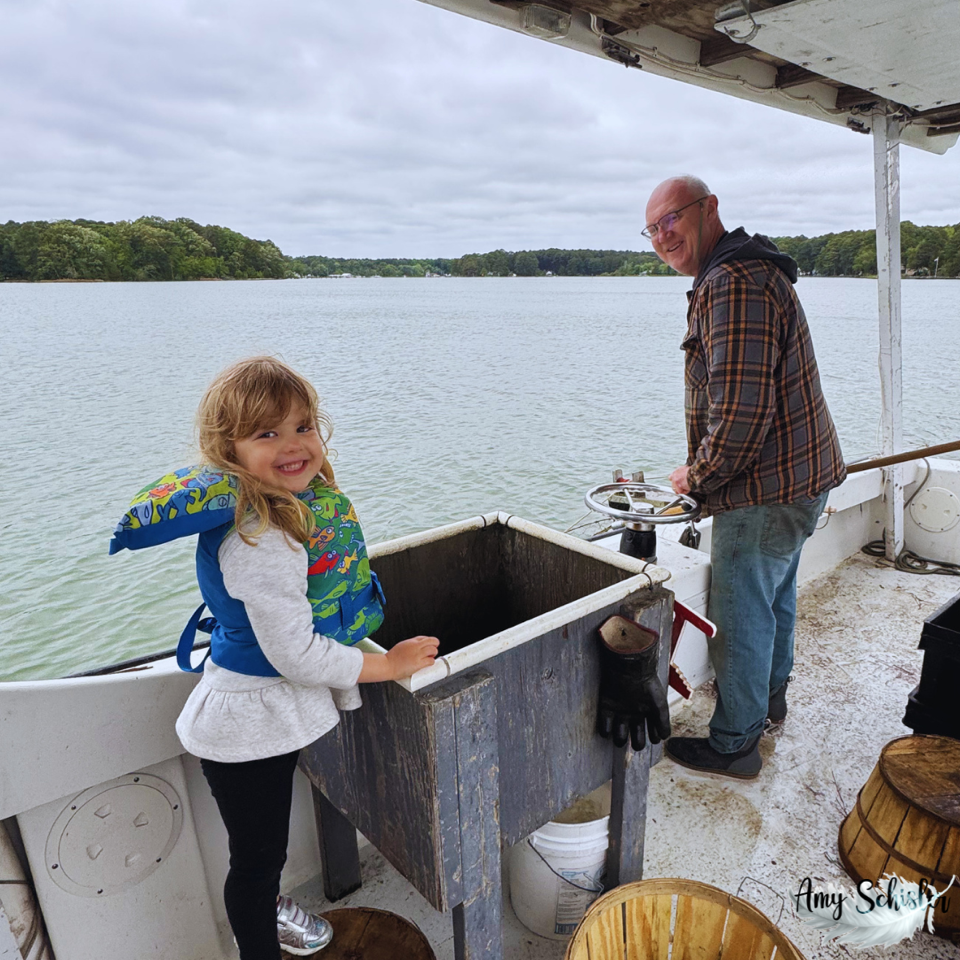
This past Memorial Day weekend, we had great plans with our children and grandchildren to spend the weekend on Ken’s boat. Of course, that included crabbing. Unlike Southern Maryland crabbers, my husband and others on the Shore run a trotline instead of pulling pots. Last year, when she was two-and-a-half, our granddaughter, Evelyn, dipped from the line for the first time. She was instantly hooked. She’s talked about it for the past year, and we couldn’t wait to get her out there again.

Unfortunately, Memorial Day weekend here in the Mid-Atlantic was a soggy mess. I was certain the kids were all going to cancel, and Ken and I would be alone over the holiday weekend. Evelyn would have none of that. She’d been counting the days to be at Grandma and Grandpa’s house and go crabbing, and there was no way her parents could tell her she couldn’t go.

I snuggled in bed that Friday night, contact and happy. All three of my girls — including Katie, who lives just ten minutes away — were asleep under my roof. Evelyn and her baby brother slept peacefully in the next room. All was well, and the world was quiet until …

4 AM – “Grandma, is it time to get up yet?” I quietly took her back to bed.

4:30 AM – “Grandma, where’s Grandpa?” “He’s out crabbing in the rain. Let’s go back to bed.”

5 AM – “Grandma, can I go with Grandpa?” “It’s raining, Evelyn. Let’s go back to bed.”

When I went downstairs at 7:30, I looked around and didn’t see Rebecca or Evelyn. I asked my son-in-law where they were. “Evelyn woke Rebecca up at 6:30 and asked to go crabbing with Grandpa.”

A couple hours later, they returned, and Evelyn told me all about their morning. Of course, she caught the biggest crab, and all the crabs went to school and had a party on the boat. What mattered most, though, was that Grandpa had come to get her at the dock and took her (and Mommy) on the boat with him.


Always Together

The weekend went so fast, and Monday morning arrived too soon. Once the car was packed, and Evelyn was told to put her shoes on, she looked from Ken to me, and her eyes filled with tears. She ran to me and threw her arms around my legs. She cried as she begged, “Please let me stay here with you and Grandpa. I don’t want to go home.”

Later, Morgan — who stayed an extra day — said to me, “I bet you love that Evelyn never wants to leave here.”

With tears in my eyes and a heart filled with joy, I nodded and told her, “You have no idea how that makes me feel.”

God works in mysterious ways. We never know what life had in store for us, but here’s what I learned. Life is a cycle that includes love and loss, but nobody leaves us forever. My grandfather has been gone for almost forty years, but he lives on in my heart and in the relationship between Evelyn and her grandparents. And I live every day knowing there’s someone in Heaven smiling down on me and on the little girl who idolizes her grandfather and continues the love story we shared so long ago.


Copyright 2026 Amy Schisler
Photos copyright 2026 Amy Schisler, all rights reserved.

Miles and Milestones

I’m sitting at a hotel lobby waiting for my Uber, and there’s this boy speaking loudly, saying his name over and over, with some other sounds, and his mother is shushing him. It brought me back to a night in Mexico when I was sitting at a park bench. Kids play late in Mexico, like there is no school the next day. Our children were playing together, and she asked how old my son was. I told her, and she got teary-eyed. She said her son was roughly the same age, but that she thought he was autistic. Quietly, she had been comparing their developmental milestones. What could I say? What word of encouragement could I offer this woman? 

“Don’t worry,” I said, “Your son is going to live a happy life.” I don’t know why I spoke like a prophet. I guess I wanted to speak it into existence, to give her hope and peace of mind for her son’s future. The woman loved her son dearly, I could tell by how patient she was with him, how she let him run freely and bravely on the soccer pitch even with the drop off, and how she rushed to him when he was too close to danger. She let him test his boundaries.

It made me think of a short story I once read with my sixth-grade students, called Raymond’s Run by Toni Cade Bambara. The story starts with a spunky girl from Harlem named Squeaky introducing herself and her main job in the family: taking care of her special needs brother, Raymond. Throughout the story, Squeaky is preparing for a race and has her brother tagging along as she travels through her neighborhood, stretching, doing breathing exercises, and even confronting her challenger, Gretchen, and her friends, who try to tease her brother. On the day of the big race, Squeaky notices how her brother mimics her: “bending down with his fingers on the ground,” getting in place. At first, she wants to yell at him, to correct him, but realizes it would waste too much energy before the race. She takes off and sees Raymond running beside her along the fence, “in his own way,” and thinks that he is a mighty fine runner. At the end, she doesn’t know if she won because of the commotion, but that doesn’t matter anymore; she starts to think of training Raymond. She believes he could carry on the family tradition, since their father is a runner, too. She realizes all her medals and ribbons don’t amount to anything if Raymond could win his own medal. 

Like the mother in the lobby who shushes her child, or Squeaky who first wants to yell at her brother when he sets in place for the run, we can box people into how we think they should behave. Or literally put them in a baby swing to stay put, like Squeaky did to Raymond, so she could run her race. But Raymond got out; the story never says how, and suddenly he is running along the fence, beside her. 

When I step outside to meet the Uber, the boy passes me, now holding his dad’s hand. He is smiling, looking up at the sky. It’s his dad’s love that speaks to me now. I watch him walking alongside his father, and I don’t worry about him or his future because he is loved. 

I guess that is what I was trying to say to that mother in the park. To tell her that her love was bigger than a baby swing and wider than a soccer pitch. That it had the power to travel past miles and milestones to where I am now, pulling me into her story and toward the frustrated mother across the room, running beside me in its own way.  


copyright 2026 Janet Tamez

Follow Me to Little Jesus: Part 1

Follow Me to Little Jesus: Part 1

Leo checked the license plates of every car that passed them on the highway.

He’d seen Pennsylvania, Delaware, South Carolina, North Carolina, and Nebraska.

“Dad, there goes Alaska!” Leo cried out. “I’ve never seen an Alaska plate before!”

“That’s pretty cool, Son. They’re probably in the Coast Guard here.”

“I think that makes seven, right, Mom? Did you get them all down?”

“I did, Leo, and that makes eight,” his mother corrected.

Leo bit his lip and sat back in his seat, trying to recall the state he had forgotten.

“Oh, right! South Carolina. The Palmetto State. I can never remember that one.” Leo hit his head with his hand.

“Just remember the palm trees outside the church we attended when we visited Myrtle Beach last year,” his father reminded him. “And we talked about the palms on Palm Sunday.”

“Oh, right,” Leo said, looking out the window, watching for a new plate. Suddenly, he sat up.

“DAD!” he shouted. “Dad, you have to follow that car! That little gray car!”

“Leo, what are you talking about?” His mother turned slightly from the front seat to face him. “Your father can’t just chase after cars.”

“No … please …” Leo begged. “It had a bumper sticker I’ve never seen. It said, ‘Follow me to Little Jesus.’ We have to follow that car to see what the rest of the bumper sticker says. We have to find out where the Little Jesus is!”

Leo’s parents, Ross and Maeve, looked at each other and shrugged. Sunday was family day. After church and breakfast, they usually went on some kind of outing — to a fair, ballgame, or historical site. Today was their drive to nowhere, to see what they could see and go where they could go. They had stopped at a couple of car dealerships to look at used cars. They were a one-car family, and their hatchback, nearing 180,000 miles, was also beginning to limit their family outings. Today’s journey began to push it. Other than that, they had no plans. Why not find the Little Jesus?

“Maybe it’s a shrine,” Ross said. “I wouldn’t mind visiting it.”

“Well, I’ve never heard of it,” Maeve said, some resentment in her voice.

Leo thrust his arm between the two front car seats. 

“There’s the car! It’s the only car on the road older than ours!” His mother said nothing but glanced side-eyed at him. His father pressed the accelerator a bit harder.

“Ross, I don’t think you should force the car to go that fast,” his wife cautioned. Within seconds, they were close enough to read the bumper sticker:

Follow me to Little Jesus

The most divine pie café and gift shop on earth

Rt 12 & 4th St., Heavens Gate

“What? It’s a pie café?” his mother said in disbelief. “Is that blasphemous?”

“I don’t know,” Ross laughed. “I didn’t think Heavens Gate was a real town. I just thought it was a section some people really liked. It’s in the middle of nowhere.”

“Yeah, nobody wants to go there. But we are approaching the exit,” Maeve said, checking the directions on her phone. “Isn’t that a coincidence?” She was becoming impatient. But Leo leaned forward anxiously, waiting for his parents’ final decision.

“I could go for a slice of cherry pie,” his father said. “What harm is there in checking it out?”

“Okay,” his mother sighed, looking out the passenger side window. “What else have we got to do?”

“Oh, thank you!” Leo cried out.

Next Month:  Maeve remains skeptical as she, Ross, and Leo meet the family of the visionary behind Little Jesus.


© 2026 Mary McWilliams

Edited by Paula V Babadi

AI Image created in Adobe Firefly

When a Frog Interrupts Your Day

It’s Friday, and time has flown by. I feel a bit disappointed because the stuff I wanted to do during my spring break didn’t happen. This whole week I had off for spring break, from teaching at the university, and I had planned to use the time to have the house to myself, enjoy a nice morning tea, and write. But that is not what happened at all. My mother-in-law came to visit, and since I was the one off from work, I was the one entertaining her while my husband worked. I found myself feeling irritated with the just my luck type of attitude. Just when I could get a good momentum on my novel, I’d have to sit away from it for a week, and then return to work, only to be pulled away again by my normal day-to-day hustle.

Originally, I had plans to visit my son in Mexico, but it turned out that he was actually going to be in the United States for a training camp instead. Well, let’s say I had a taste of my own medicine. When I went to visit my son at training, he was perturbed because he felt my presence had distracted him from his routine. He had to “lock in,” he said. He had his schedule worked out, and none of it had time for banter with mom and the family. We drove two hours to see him each way, and he complained that we affected his performance. He had plans for what to do with his spare time: read the bible, hit the gym, and do more training (whatever he believed would bring him success at the training camp).

I can relate because, as a writer, I felt the same thing with my mother-in-law’s visit. I would rather have been typing away my chapters than taking her shopping at her favorite bargain-priced stores like Burlington, Ross, or Costco. I hate shopping and driving. But I prayed for grace to be hospitable because I remembered once reading that we should treat guests as if they were a visit from Christ.

Because I wanted to lecture my son about hospitality, I began to research where I had learned this from. I didn’t know if it was taken from scripture or from a saint’s biography I had once read. Turns out, it came from Benedictine philosophy that says visitors should be treated as if Christ himself is visiting you.

Then some scriptures popped up supporting the idea of hospitality and holiness. In the Gospel of Matthew, Jesus’ Sermon on the Mount, it says, “I was a stranger, and you welcomed me.” And in the Book of Acts, Jesus advises the apostles how to visit a person’s house, how to bless them with peace, and how to go and dust your sandals if you are not received well. 

I wanted to tell my son that a visit from his parents brings blessings, and likewise, I didn’t want to get angry at him for rejecting our visit. I wanted to dust my sandals off and move on. But he’s my son, and I felt like I did wrong, like I raised him wrong, like I should have taught him how to receive visitors. It’s not just mom nagging him about his rudeness; it’s what Jesus taught us about welcoming others.

So, I have prayed for a good attitude while my mother-in-law is around. I pray for the grace to enjoy her presence and see the blessing she brings in her visit.

If you think about the story of Mary and Martha, and how Martha was worried about her chores that she didn’t get to enjoy the visit from Jesus. Jesus had to tell her that Mary was doing the right thing. So, I must do the same. I mustn’t think about how much writing I could have gotten done, but about doing my best to be Christlike and put my Christian hospitality in action.

If I think about stories as a reader, it’s always a lovely surprise when a new character steps into the scene. In mysteries, a visitor often sets the story in motion, like in Sherlock Holmes. They are the ones who knock on the door, present the problem, and voila, Sherlock’s got himself another case. New characters entertain and intrigue readers as they navigate who is who in the mystery. 

I also think of Frog and Toad, a childhood favorite of mine. Toad is often grumpy, and Frog’s visits always bring him out of his mood, showing how their friendship complements each other. Sometimes we need a frog to pull away from our day-to-day routine. In the chapter “Spring,” Frog is actually the one who ushers in the spring. He goads Toad out of his hibernation and rips off the calendar pages so that it is May. If only I could rip the pages off my calendar to usher in an early summer break.

For my four and six-year-old children, my mother-in-law’s visit is a visit from Grandma, which means toys and candy. For my teen daughter, it means shopping and Grandma cleaning her room. For my husband, it means a partner to watch his crime shows with. My mother-in-law’s visit has given me a reality check. It has shown me how I can be just like my teenage son, trying to “lock in” when I write. I don’t ever want to make someone feel rejected or unwelcome, especially after a long travel. 

When we go out shopping, I notice new things too, like a mother peacefully turning a vase around in her hands, looking for a crack, while her toddler snores in his stroller like a baby chick, his head hung forward. I smile to myself; I know that victory. I had forgotten about the small joys and victories of a mom going shopping with a toddler. 

The aisles are filled with Easter baskets and pretty pink tulle, and I start to feel guilty that I haven’t begun filling up the Easter baskets or even started looking for an Easter dress for my daughters. 

My mother-in-law’s words over a cup of coffee offer new insight into my situation. She’s letting me know my lease is up, I should start looking at apartments soon, my transmission sounds bad, I need to get it fixed, and all these things I wouldn’t have paid attention to because I’m preoccupied with my writing projects. I tell her how bothered I am by my son’s behavior. She tells me that athletes are weird creatures; they have unique superstitions. Perhaps she’s right. I remember my English Composition class of freshman football players and their essays. One student wrote about a lucky chain he wore under his uniform, and another about a pair of lucky sneakers he wore on the court. Even if it is superstitions or some distorted perception of things, I’d like my son to know what Jesus says about welcoming others. 

And I need the reminder myself. I, too, can be a grumpy toad when someone interrupts my writing. Sometimes it takes a visit from a Frog (or a mother-in-law) to pull me away from my computer and take a break… a spring break. An invitation to step outside and see “what the world looks like in the spring.” 

copyright 2026 Janet Tamez

A Rainy-Day Remedy for the Soul

My kids have the flu, and I think I do too. It’s exhausting caring for sick children while feeling sick yourself. Yesterday was the first day of the spring semester back at the university where I adjunct teach. I wanted to call out, my body needed rest, and my kids needed a mother’s TLC. But since it was the first day of school, I didn’t want to set a bad example by calling out on day one, so I mustered what I had and showed up anyway.

My high school daughter took one for the team and stayed home to help watch the younger kids while I went to work. By the end of the day, she wasn’t feeling well either, and the house was a disaster. I don’t know if I made the right choice because after a full day at work, I came home exhausted. I got into bed and didn’t have the energy to get up and keep up with the Tylenol, Motrin, and cough medicine doses. Instead, my four-year-old son came to my bed with his silly blue plastic toy glasses, a doctor kit, and a jar of Flintstones vitamins to make me better. I didn’t even ask how he got them in the first place, yet I dreadfully knew, it involved climbing on top of the cabinet.

I find myself wishing for a retreat. A writing retreat. A spiritual retreat. Time away to rest, pray, and be alone. I think about Jesus. I wonder how He found the energy to speak to crowds, day after day. Did His voice grow hoarse? Did He feel tired and weary?

We know He sought solitude. We know He withdrew to pray, to the desert, to the sea, to quiet places away from the crowds. We know He also spent time with friends who restored Him, like Mary, Martha, and Lazarus.

Even wishing for a retreat shows how far I have to remove myself from my life and responsibilities to get rest. I don’t make rest part of my lifestyle, even on Sundays. The Sabbath is supposed to be part of our Christian way of living. And yet, who truly unplugs? Who really stops? On any given Sunday, you’ll find me doing laundry for the week, finally tackling the dishes, decluttering the house, grocery shopping, catching up on everything I didn’t get to during the week.

There are weekend things that lift my spirit: attending Mass, going to the library, and taking a walk. I used to volunteer at a Respect Life center and at a horse rescue ranch. I realize now that volunteering felt easier than resting because I was still doing something. It’s actually doing nothing that I need to work on.

So, what’s the problem? Why is rest so hard?

We feel guilty lying down when work remains undone. Doing nothing feels irresponsible, especially for mothers. Lying sick in bed reminds me of O. Henry’s short story, The Last Leaf. Johnsy is sick with pneumonia and convinced she will die, when the last leaf falls from the vine outside her window. Her friends come together to care for and encourage her, but Johnsy has already given up. She has decided that her life no longer has value. Could it be from her bedridden state? Does she feel useless, a burden to her friends?

An old artist named Behrman paints a leaf on the wall during a storm, which ultimately costs him his life. Johnsy never sees the sacrifice. She only sees the leaf that made it through the storm. That quiet sign of beauty and resilience restores her will to live.

Behrman’s sacrificial act is Christlike. His final masterpiece teaches Johnsy that the world around us is a gift from God, that we should seek the meaning of life in the beauty God gives us. He restores us with flowers, birds, a breeze, and love.

Today, my kids are in the living room watching Disney shows while I rest in bed. It’s raining outside. The house is a mess. The dishes need to be done. And yet, because we’re all sick, I’ve given myself permission to stop.

That’s the part that unsettles me.

Why does it take being incapacitated for me to rest? 

I still have far to go in trusting God with unfinished work, sick children, and a life that doesn’t always look productive. For now, I’ll accept this rainy day as a small gift from God, a remedy for my soul.

copyright 2026 Janet Tamez

Buried Treasure

Buried Treasure


When I enter my house, I shall find rest with her, for companionship with her has no bitterness, and life with her has no pain. – Wisdom 8:16


As Mom’s life was fading, we kept vigil by her bedside. Adjacent to Mom’s hospital bed sat the king-sized bed, which allowed me to rest comfortably overnight.

During the day, Mom’s faithful aide was present and hospice staff sifted in and out – the nurse, social worker, hospice aide, chaplain. There was a grief counselor on call, who promised availability for an entire year after Mom died.

With a tiny syringe, we administered medication and water, squeezing them into the corner of Mom’s mouth. I could hear her swallow the liquid. Also given were strong painkillers to ease her moments of agitation and restlessness.

In the afternoon came a lull as Mom slept. Feeling weary, I stretched out beneath the bedspread of the king-sized bed and closed my eyes.

My daughter entered the room and sat quietly at the bedside of her beloved “Gigi.” After a time, she approached the king-sized bed and lifted the bedspread. Then, my daughter climbed in beside me. We spoke not, but just lay beneath the cover, our mutual grief providing a blanket of comfort and support. She remained there with me for an hour or more as I recalled times she’d spent as a child with Gigi – playing, painting, eating popcorn, and for six months as a teenager, living in one of the bedrooms here. Deep within all of us, gentle transitions were taking place.

Thank you, Lord, that amidst the loss of a loved one there can be relational gain.

Reflect: Think of your loved one’s family members, whether they live near or far. If there is any discord, pray for healing.


The above selection is Entry #51 in Part V: The Final Season of Minding Mom: A Caregiver’s Devotional Story by Lisa Livezey (© 2024, En Route Books and Media)

Minding Mom: A Caregiver’s Devotional Story by Lisa Livezey | En Route Books and Media

Featured Image: (photo courtesy of Bronwyn Livezey)

Bed Climb

Bed Climb

He lay down to sleep, resting his head on a stone.  – Genesis 28:11 (GNT)


When Mom and Dad became empty-nesters, they hired a contractor to renovate the spacious attic area of their home, raising the roof and adding large windows, closets, and a small bathroom.  The result was a master bedroom that felt like sleeping in a treehouse.

After Dad’s death, Mom continued climbing the six steps to this attic-level bedroom for both her afternoon naps and overnight sleep. I found it a pleasant place to help Mom each morning. After her shower, I would place a chair by the window and blow dry Mom’s hair using a round brush.  She had naturally wavy and full hair, so my styling efforts yielded nice results.

With Mom’s needs increasing, I struggled to attend to her in the small bathroom. A bigger bathroom, located on the middle level, connected to a large blue bedroom. I started directing Mom to that bedroom for afternoon naps and she obediently complied, but at night insisted on the attic bedroom.

Rather than fight, I placed the two massive wooden dining room table inserts atop the bed in the attic room thinking this would deter Mom. You can imagine my surprise the next evening when, after tidying up the kitchen, I headed upstairs to find Mom lying atop the table inserts!

The next day, my husband replaced the attic bedroom doorknob with a lockable knob.  When Mom tried the door and found it locked, she compliantly turned and went into the blue bedroom.

Help us and our loved ones to adjust, Lord, as we adapt to their changing needs.

Reflect: What changes have you made recently to accommodate your loved one?  Ask the Lord for extra grace amidst the changes.


The above selection is Entry #46 in Part V: The Final Season of Minding Mom: A Caregiver’s Devotional Story by Lisa Livezey (© 2024, En Route Books and Media)

Minding Mom: A Caregiver’s Devotional Story by Lisa Livezey | En Route Books and Media

Featured Image: (www.freepik.com)


From Grief Through Mourning

Last year, I could not do it. This year I did.

In the Catholic Church, the month of November begins with two consecutive liturgies that honor our beloved dead, The Solemnity of All Saints and the Commemoration of All Souls.

We always hope that departed family members and friends might be celebrating the first feast with us, already among the saints in heaven. We trust that our prayers will help to console and sustain any loved ones who might, this year, still remain in purgatory.

It takes most people a long time to establish their ‘new normal’ after a family member’s or close friend’s death.

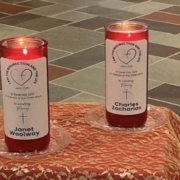
In my parish, one of these opportunities is a Mass of Remembrance offered each year on the Saturday morning before All Saints Day. A candle is provided for each family to place around the altar when their loved one’s name is proclaimed, and these candles are lit for each mass through the month of November

Last year, the 2024 Mass of Remembrance was scheduled just ten days after my husband’s funeral. With a sincere intention, I had placed his name on the list.

But when that Saturday morning arrived, I found myself still too exhausted from his sudden, unexpected death, the need to transport his remains from another state, and managing to stay functional — with help from close family and friends — for the funeral.

Last year, another dear friend stepped up to carry Charles’ Mass of Remembrance candle for me. This year I was able to carry it myself.

***

Beyond Catholic parishes’ roles in helping to organize funeral liturgies and hospitality, many also offer valuable longer-term support options, to help families survive devastating grief and manage the psychological challenges that always accompany any great loss.

We are all unique creations of God, and every person’s grief process is unique. So, I want to briefly share two more long-term support options offered by the grief ministry in my parish.

What has served me best might not be right for you. Likewise, parts of these programs that did not most resonate with me, might be just right for you.

I include them here because I believe they offer a range of valuable options to meet a variety of needs for different mourners.

The first is a year-long series of booklets, +/- 40 pp. each, written by Kenneth C. Hauck and published by Stephen Ministries in 2004. Entitled  A Time to Grieve, Experiencing Grief, Finding Hope and Healing, and Rebuilding and Remembering. These were mailed to me quarterly after my late husband’s funeral, as gifts from my parish.

Because I am an introverted person who normally reads and writes alone, I appreciated the freedom to digest these words of wisdom privately, and on my own schedule. The quarterly mailing time frame felt just right, too.

For those who feel more enthusiastic than I do about watching videos and participating in weekly discussion groups, another excellent support option offered by my parish is titled Grieving with Great Hope.

Meditation Journal written by John O’Shaughnessy, Sandy O’Shaughnessy, and Fr. John Riccardo,
part of the Grieving with Great Hope parish program, published by Good Mourning Ministry, Inc.

This program includes a series of videos, and small discussion groups with fellow mourners from your own parish. Ordinarily, those who join this program are in closely similar time periods after a loss.

The program includes a journal published by John and Sandy O’Shaughnessy, with Contributing Writer Fr. John Riccardo, as part of Good Mourning Ministry, Inc.

Of the resources offered by this ministry, I’ve personally found silent meditation and private writing, with the suggested journal

reflections, to be the most helpful. But I have also witnessed the benefits gleaned by others, from watching the videos and participating in discussion groups.

***

At the Mass of Remembrance on October 25, 2025, my deceased husband’s date of passing was the longest elapsed. I had been prepared beforehand, by our deacon’s gentle and compassionate wife, to hear his name called first and to face the empty altar alone.

As I bowed before the altar I tried to discern, among all the candle holders so lovingly arranged, where might be Charles’ place. The Holy Spirit led me to a place on the side by my accustomed pew, when I sing with the funeral choir, near the altar and close under the crucifix.

While a total of almost forty names were called, I prayed for each soul, and watched each family approach the deacon to receive their candles.

Charles’ light had to hold his mountain alone, for a long time. I began to wonder, who will God send, to occupy that spot beside him?

About three-quarters of the way through the list, I heard the name of a dear friend, mentor, and fellow funeral choir member. She and her late husband had coordinated our county-wide nursing home citizen-visitor ministry throughout their long retirement years. I had been a part of that ministry.

I watched Janet’s four children — none of whom I had ever met — come up to receive their candle, and bow. I could feel them doing their own discernment.

When they came over, to place Janet’s candle next to Charles, I could almost hear her saying, “Don’t worry, Margaret. I’ll look after him myself.”

***

Wherever any of you may be in your own grief journeys, no matter who you might be mourning this November, please know that I am

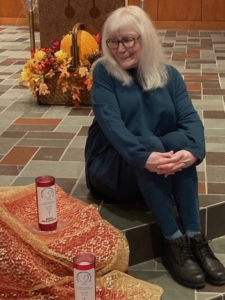
Author meditating on the candles, after Mass of Remembrance at St. Theresa of the Child Jesus Catholic Church, Des Moines, Iowa, October 25, 2025.

praying for you.

I ask your continuing prayers for me, too.

This will be my last CWG column for a while. I need a brief sabbatical; to continue dealing with the massive changes I’ve experienced

over the past fourteen months, and to discern where my own ‘new normal’ life will lead.

May the compassion of Our Lord’s most Sacred Heart, the love of Mary’s Immaculate Heart, and the wisdom of the Holy Spirit remain with you, as well.

Blessings, always,

Margaret


© Copyright 2025  by Margaret King Zacharias

All photos from author’s personal collection; used with permission by the author

Featured photo: Candles lit for Mass of Remembrance, St. Theresa of the Child Jesus Parish, Des Moines, Iowa, on
October 25, 2025. Author’s personal photo, published with permission.


This Magic Moment

This Magic Moment


And he vanished from their sight.  – Luke 24:31(NRSVCE)


Our youngest son, Trevor, entered the world when I was forty-three. Creative, talkative, and strong-willed, he brought much delight to my parents in their later years. When Trevor was three, Mom nicknamed him “The White Tornado” from the way his platinum-blonde, bowl haircut whirled about as he raced through their house.

Trevor was age eight when Dad died, and the grief he suffered at the loss of his beloved grandfather continues to this day. The year prior, Trevor had started teaching himself card tricks, eventually advancing to simple illusion-type magic tricks.

Always eager for a new audience, Trevor practiced his magic acts on Mom in her last days and on the hospice staff that came to the house. The nurse manager especially enjoyed his antics, and she dubbed him “The Great Trevini.”

After every trick, Trevor would ask, “Do you know how I did it?” Despite his delight at presenting magic, he also enjoyed divulging the method behind the trick. What’s harder to explain in words is the magical effect that his moments of fun brought to a home where Alzheimer’s was ravaging a loved one’s body and brain.

Dear Lord, thank you for Your mysterious ways, such as how you returned to heaven through the clouds. Thank you, also, for the mystery of the way child’s play can bring comfort to those around him.  

Reflect: Is there a child you know whose young spirit can bring a fresh moment to you and your loved one? Pray about having that young person stop by to visit.


The above selection is Entry #42 in Part IV: Summer Daze of Minding Mom: A Caregiver’s Devotional Story by Lisa Livezey (© 2024, En Route Books and Media)

Minding Mom: A Caregiver’s Devotional Story by Lisa Livezey | En Route Books and Media

Featured Image: The Great Trevini (photo:Lisa Livezey)

Stay in the Know

Join Our Newsletter

Members and supporters can get the latest on CWG news and events by signing up for our newsletter.

Please wait...

Thank you for signing up!

Catholic Writers Guild
P.O. Box 77
Eaton, IN 47338