Do Whatever He Tells You by Maria Riley

I love meditating on the Wedding at Cana. Attending a wedding seems like such an ordinary event for Jesus and his friends to attend. I imagine them laughing and enjoying themselves, much the way I do when I attend weddings, which helps me remember that Jesus was fully human too.

Another reason that I love the Wedding at Cana is that Jesus, as an adult, remained obedient to His mother. As a mom myself, I love this. His obedience also is a significant part of our understanding of Mary as the great mediator. She brings each of us closer to Christ by bridging the gap between us and Him. She tells Jesus that the wine has run out, and despite Him telling her it’s not yet His hour, Jesus obeys His mother (cf. John 2:3-4). Jesus’s first public miracle happened through the intercession of Mary.

Recently, while I meditated on this mystery, my mind didn’t focus on Jesus, His friends, nor His mother. Instead, my thoughts lingered on the servants, those who assisted Jesus in His first miracle. These servants aren’t even named in the scripture, yet by following the advice of Mary and obeying Jesus’s command, they partook in a beautiful miracle that all Christians know about.

They did whatever He told them (cf. John 2:5). And here’s the amazing thing—all He asked them to do was fill some pitchers with water. That was it! Jesus basically said, “Just go grab some water, and then leave the rest to me.” Because of the servants’ obedience, a miracle ensued.

Sometimes I think I’m not doing enough to live out my faith. I think I need to live in more drastic poverty or pray for hours every day. But maybe, just like the servants, Jesus is actually asking me to do something simple and well within my abilities, training, and current life situation.

When I stop to listen, this is what I hear Jesus say to me: “Fill this cup of milk, then graciously clean the spilled milk for the eighth time today. Write this story. Feed this family I have given you. Read aloud with this child.”

These commands, doing whatever He tells me, may not be as complicated as I think. Easy? Not always. Almost every day He reminds me, “Love your husband, and forgive him for not being perfect. In all things, selflessly love the way that I love you.”

If I humble myself and accept these charges from Him, then I open the door for the miracle to happen. If I do my small part, no matter how insignificant it may seem, I am honoring the will of God.

I’m not in the business of turning water into wine. But filling pitchers with water? I can do that.
The Path Late Taken

The Path Late Taken

Thy word is a lamp to my feet and a light to my path.”  Psalm 119:105

I am one of those people who let life happen to me rather than setting an intentional course for my life.  But it is never too late to learn. As I look back over the years, I now see where turning to God for guidance through prayer and scripture at a young age might have led me to different destinations. No regrets. I wandered where I did and in the process of getting lost and finding my way back, I learned ask for and seek God’s light on all my paths. He is the lamp by which I write.

I have been writing since childhood. When high school rolled around, like most kids, I considered what I might want to do with my life. Journalism sounded appealing as I joined the school newspaper, but so did Library Science – a means to be immersed in a world of books. I thought about majoring in English.

It turned out; I became a nurse. My parents advised I’d always be able to find work. The manager at my first job said I would make a great nurse. I had two partial scholarships: one to Rosary College in Chicago where there was a library science program and one to Barry College in Miami where I had every intention on majoring in English. When an uncle told me Chicago was so cold in the winter, students walked through underground tunnels to get to classes, I swayed toward staying in Florida with the sun and beaches. The safe path.

At orientation, along with the crowd of freshmen being directed to meeting rooms, “English majors over here,” “Nursing majors, this way.”  I heard the voices of people I loved and respected and headed in the direction for Nursing.  It was the early seventies when there was a glut of teachers and jobs were hard to find.  The hasty detour.

In that split second decision, at age seventeen, I set the course for my life over the next twenty or so years. I lost sight of a few important road signs.  Number one, I loved words. Would I love tending to the human body and its maladies as much? I forgot about an impressionable moment in senior advanced English creative writing class with the editor of The Liguorian, a popular Catholic magazine.

The priest who talked with our class about writing, did so with a smelly brown cigar, wafting smoke into my brain pushing out any ability to hear or comprehend what he was saying.  I vividly remember after more than fifty years the growing ash at the tip of his cigar, teetering, clearly close to dropping on the linoleum floor.  Did he not notice? Didn’t anyone notice?  Were they so engrossed in his lecture or so not bothered by the odor that they ignored the possibility of a soon-to-be- scorched floor or possibly even a fire?

Behind him the jalousie windows were closed.  I couldn’t wait any longer and politely got up and turned the handle on the glass louvers, pointing out that now he could tap his cigar outside.  Oh, the fresh air! I forgave his odorous affront when he promptly told the class, “Now there is a good writer.”  Why did I not remember his statement during freshman orientation day? Again, no regrets, just a reminder to myself to look for the lamp to light my way.

So here I am more than fifty years later, writing. The path between college and retirement included stops as a Navy nurse and a long stint in the insurance industry with small detours down the creative writing alley. As retirement draws near, I’m paying closer attention to the road signs leading me to my dream of being a writer. As for that priest, I don’t remember anymore the smell of his cigar or even one word of his lecture, but I cling tightly to his singular statement, “Now there’s a good writer.” I’ll leave it to you to decide if I’m a good one or not. It’s never too late.

Copyright 2022 by Paula Veloso Babadi

(Mis)interpreting God’s Will

(Mis)interpreting God’s Will


About eight months ago, my husband was laid off. Thankfully, he was given a three-month severance, so we were not immediately strained. However, I’m a stay-at-home-mom with our four daughters, and the reality of not having an income felt overwhelming and stressful. Even if we don’t worship money and make it our priority, we still need it to pay the bills.

Before he was let go, my husband had started really struggling with his job, and had actually already started looking for work elsewhere. This layoff, we thought, was a beautiful gift from God to allow him to spend more time applying and interviewing to find the right position for him. We both felt confident that he would secure a new position before the severance expired.

As the first three months drew to a close, with not a single job offer despite more than fifty applications submitted and countless interviews, our hearts started to listen for God’s will taking us in a different direction. Maybe, I suggested one day, we could look into long-term missionary work. My husband, surprisingly, didn’t disagree.

I began researching companies and found one that seemed to be the right fit. We submitted an application, completed the initial interview, and began the official discernment process. We thought we had figured out the meaning of his job loss. God wanted to clear the path so we could become full-time missionaries.

It didn’t take long for us to realize that four kids who would be between 13 and 9 would not thrive in that environment. At this point, I fell into despair. If my husband didn’t lose his job to find a better one, and not so we could become missionaries, what was the meaning of it all? Why, God? We felt entirely ready to do His will, but for the life of us, we just couldn’t figure that out.

Then, with his newfound free time, my husband agreed to help support me in the endeavor of self-publishing my first children’s chapter book. The process has been arduous. As it turns out, the writing is actually a very small portion of publishing. But with my husband’s encouragement, accountability, support, and technical know-how, I am now a published author with more books for the series in the pipeline. My book is a special piece of my heart that I’ve written for my children, and I know that God has willed it into existence.

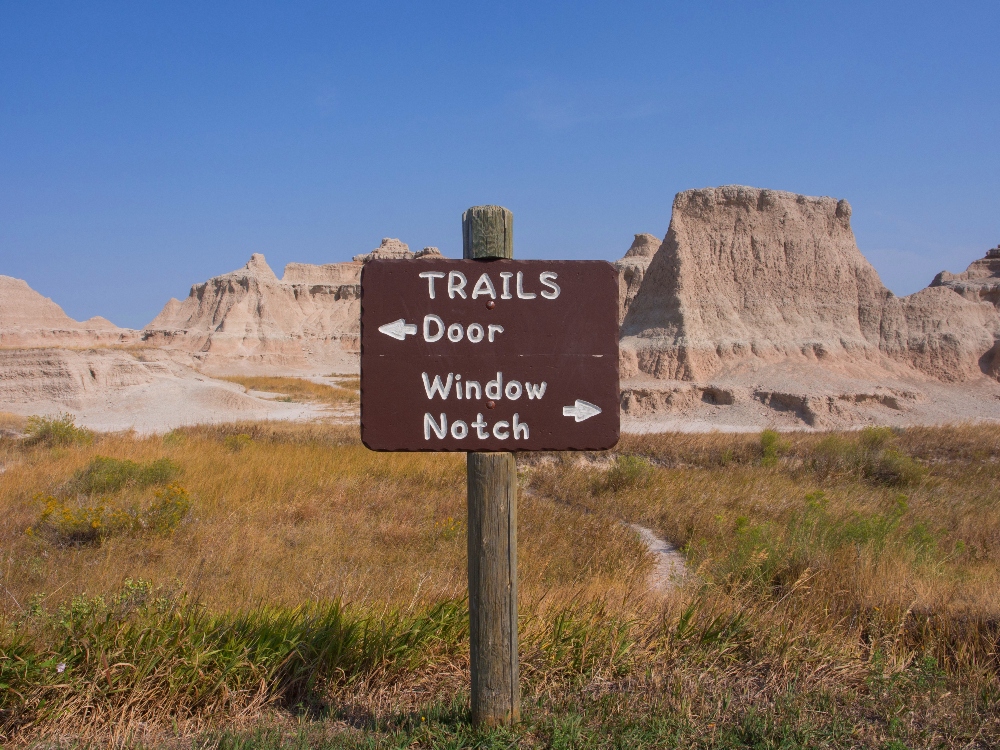
A year ago, being a published author was a dream I hoped might happen in three to five years―if ever. Today, I’m autographing books for kids across the county. Yet this book won’t pay the bills (they rarely do), and I honestly don’t know what the future holds for us. For today, I’ve stopped trying to figure it out. I don’t know what doors will close and what windows will fly open. All I know is that God will take care of us.


null


Sometimes I get so caught up in understanding the meaning of everything and wanting to know the future, that I forget that God is the present. When He spoke to Moses, He said “I AM” (cf. Exodus 3:14). He didn’t say, “I WAS.” He didn’t say, “I WILL BE.” God is always and forever the present tense. Today, we have a roof over our heads, food in the pantry, and more to rejoice over than there are minutes in the day. Today, I will write as I am commanded, and do whatever He tells me. And if I can do that again tomorrow and the day after, He will continue to provide.

I’m sure I’m not done misinterpreting God’s Will in my life. Each time, I pray that I will recognize my folly and recenter myself in His present will. I pray I continue doing today what is asked of me, and trusting that even though I have no idea what tomorrow will bring, I have nothing to fear.


Copyright 2022 Maria Riley
Images:Uoaei1, CC BY-SA 3.0, via Wikimedia Commons; Eekim, CC0, via Wikimedia Commons.

There Are So Many Books…

Today, I went to a used bookstore and a library.

There were so many books.

I picked up a children’s book, written with care and published 80 years ago, that is now just sitting in a used bookstore, gathering dust. I would bet very few people know about this book, let alone remember its story and its author.

It’s enough to make me wonder why—why do I write? Why am I adding books to this plethora of stories that already exists? What do I have to add?

I closed my eyes and sighed, but then I felt a sense of peace fill my heart.

God has called me to write. He gave me a gift, and it’s meant to be used. He puts the stories in my mind and knows they will reach who they need to reach.

There have been many times in the past few years that I have felt a small desire to get a job. It would let me get out of the house, interact with other adults, and have a sense that I’m accomplishing something. However, every time I tried to picture myself at a job, God would give me a vision of myself sitting at our home office desk, writing. That vision would give me peace with where my life was at that moment and where it is now.

Writing is something I can do while I stay home to homeschool my children. In fact, writing is something I can do just about anywhere, and I have. Home, coffee shops, restaurants, hotels, cars, libraries, park benches—the list of locations where I have worked on my books is long.

I was listening to a podcast on creativity and the guest being interviewed mentioned that creativity is important whether it is seen or unseen because it is seen by God.

God sees the first, second, and third drafts. He sees the sections I wrote that never get printed. He sees the time I spend daydreaming scenes and characters. He sees the piles of ideas scratched out. I need to remember that.

God knows about that children’s book author. He knows what it took to write that story and get that book published. He knows who read it and how it affected him or her. He remembers. He knows about every one of the thousands books I saw today and the work that went into each one. He also knows about every book that hasn’t been published. The sentences still in laptops, in notebooks, or lost forever to us through fires and decay. He knows about the ideas the come and then flit away.

We always have an audience and, because of that, even if it never gets printed, our work is worthwhile.

God sees it.

Copyright © 2022 Sarah Anne Carter

Branch Out: Have You Considered Writing THIS?

Branch Out: Have You Considered Writing THIS?

A few years ago, while I was going through the discernment process to find my charisms, I was challenged to test my “writing charism” to see how I could live into it more fully. I’ve always been a writer, but I didn’t feel like I had ever found my niche in the writing world. I’d worked hard to identify my voice and hone my craft, but I still had work to do to determine where I really fit in this world of books and publishing.

Before I could narrow down the type or types of writing that felt both fulfilling and impactful for me, I needed to branch out and try some brand-new methods and projects. The result was that I not only understood myself and how God created me uniquely to touch the world much better, but I also felt invigorated and creatively inspired!

Not every endeavor was a success. I’m not good at every kind of writing that I attempt. But the process was absolutely worth it, so I thought I’d share some of the different writing styles/activities I tried. Use these as a way to spark your own creativity or embark on a new writing venture. I’d love for you to brainstorm even more ideas in the comments.

Writing Adventures to Consider:

    • Volunteer to write for or edit the newspaper for your diocese. You could cover a local event or group, write about something on the liturgical calendar, share a story about how a Saint has touched your life, etc. I was on the editorial board of my diocesean newspaper for a year, and I wrote on a variety of themes.
    • Try poetry. Even if you’ve never written poetry before. You don’t need anyone’s permission to enjoy writing or reading poetry, and it’s a style of writing that lends itself to experimentation and growth. If you’re new to poetry, here’s my guide to getting started.
    • Offer to critique a friend’s work. This activity flexes different writing and creative muscles and can be a great learning experience. Challenge yourself to write out your thoughts in a cohesive critique letter, and remember to sandwich your negative feedback between words of encouragement. We’re all in this together!
    • Submit to a magazine or literary journal. There are monthly, quarterly, and annual journals and magazines for every interest you can imagine. Brainstorm about your areas of interest and expertise. Don’t limit yourself to theological or writing craft topics. Do you enjoy talking about parenting? Fine art? Gardening? Outdoor sports? If you’re looking for Catholic resources, check out Dappled Things or Parables Magazine. Many periodicals pay for chosen submissions, so that’s a nice perk!
    • Review a book or movie. You could do this just for yourself and post it on your blog, social media, or YouTube channel, or you could submit it somewhere. But challenge yourself to write it out so you can organize your thoughts.
    • Try a completely different genre. Every genre has a unique set of tropes, themes, and reader expectations. Studying a new one may lead you on a surprising adventure. And even if it turns out to be just a writing exercise, deconstructing and learning the ins and outs of a new genre might get your wheels turning.
    • Write a short story. For even more of a challenge, write flash fiction! Shorter isn’t easier! Being forced to choose words economically for the greatest impact is often maddening, but it can lead to other things like…
    • Copywriting. A learned skill, for sure. Think about well-written book blurbs, social media posts, and marketing campaigns. Some people get good at capturing attention with concise, descriptive sentences. Listen to some online lectures or take a course to hone your copywriting skills.
    • Write a personal essay. Penning a mini-memoir is a great way to process your thoughts. Consider taking a theme or issue and sharing your experience with it in a way that connects to your readers (rather than just recounting events sequentially). In that case, you have great material for a personal essay that you can try to get published in a relevant periodical or online.
    • Participate in NaNoWriMo. November is National Novel Writing Month. Writers from all over the country choose to try and “win” the NaNoWriMo challenge by writing 50k words in one month. Usually, people choose to draft a new novel, but you can use the resources, and community NaNo provides to knock out any project you have on your plate. 1,667 words a day… and go!

You don’t have to wait until you have the dreaded writer’s block to give something from this list a try. Consider it creative procrastination—I mean, a brain break! And keep an open mind to what you may learn about yourself and your writing affinities.

Copyright 2022, Anjanette Barr

Creating a “Social” Social Media Presence

Creating a “Social” Social Media Presence

During last month’s Catholic Writers Conference Live in Chicago, I was blessed to offer a presentation on the importance of creating a truly “social” social media platform. Flat posts that bombard followers with “salesy” type content does not help build the loyal readers most writers desire when launching a social platform. Since forty-five minutes is never enough for this verbose girl to share all that’s in her head on the subject, and for those who could not attend, I’ve decided to do a little series of posts on some best practices and fun tips.

A well-crafted and curated social media presence begins with deciding which platforms best suit your intentions, personality, and potential audience. Great news—no, seriously!—you do not need to be on all of the social platforms; you don’t even need to be on more than one. Pick one, do that fabulously (or even haphazardly), and you’ll not only find it less stressful but might even (gulp) find you really enjoy social media! For many of us, it is striking that balance between building credibility, being authentic, making friends, and protecting our privacy, all while not becoming too salesy or burning out.

Let’s Start With Setting Boundaries

Prayerfully decide what you feel comfortable sharing, especially if what you share isn’t yours to share, aka your children’s stories.

Don’t give into pressure to follow all the trends. Yes, be aware of what social trends are increasing reach and engagement, but if you don’t feel comfy following them, don’t! For instance, I love Reels. I see the very clever ones where words pop up, and people point to them while jazzy music plays in the background. This method is not for me! So, I’ve experimented with different Reel techniques, and while maybe I don’t get millions of views or followers, I know I’m staying true to myself and trusting the Holy Spirit to guide the message I’m portraying to whomever is meant to see it.

Be You! Always be you. Don’t create an avatar version of yourself. People will eventually see right through that and drop off following your posts. Readers want to know the authors. You know; you are readers as well! Turn the tables and consider your favorite authors. Do you NOT check out all you can about them? Website, bios, social? Whatever you enjoy discovering or engaging in as a reader, try to provide that same experience for your current and potential readers!

To be seen or not to be seen is an important question. If you need separate personal and business platforms, that’s fine, but make sure your public platforms are public! If you are using social media to be discovered, to invite others to share your materials, and to interact and be social, then make sure people can find and follow you easily! This is super important if you are writing for any online publication that wishes to share your posts and tag you, such as CatholicMom.com. As their Social Media and Digital Specialist, I get so frustrated when I am trying to help one of our contributors by sharing their awesome articles but either can’t find their social platform, or when I do, permission to tag is not granted.

Post as often as fits your schedule, and don’t stress when you can’t. Like loyal friends, your followers will still be there two days (or weeks) from now!

Next month, I’ll share the importance of discerning your motivations and weighing the benefits of launching or maintaining a social media presence. Social media may not be for everyone. Many people have to (or want to) step away from Facebook, Instagram, and Twitter and may be weary of exploring TikTok. They may be looking to maintain a website only. I can respect that. However, let me leave you with one question to ponder: How will potential readers find that website?


P.S. Don’t miss the fabulous Catholic Writers Conference Online on February 24-26, 2023!


Sometimes There Are No Words …

There are some days when the words won’t come—and that’s okay.

It can be because of hard times. It can be because of good times. It can just be.

The best cure when the words won’t come is rest.

This life we live calls us to daily find a balance of the 24 hours we are given. A writer who is committed to writing 500 words daily may find days where it doesn’t happen—and that’s okay.

I’m one of those writers and the words haven’t come for about a week now. I’m writing this a week before you’ll read it and by then, I know I will be back to getting words written in my novel.

Tomorrow, though, my friend will bury her 11-year-old who died suddenly and tragically. My focus has been on that tragedy—dealing with the heartbreak and helping where we can. Tomorrow there will be no words— written or spoken—and that will be okay.

It doesn’t take a tragedy to take away words. It can be a bad headache, a terrible cold, a financial burden that must be solved.

It can even be wonderful things that take away words. It can be a day at the beach, a family member’s birthday or a day-long hike.

While writers make commitments and need to write, we also need to find rest and balance. (I know my last blog post was on writing consistently, but bear with me.)

Being a Catholic writer gives a purpose—a higher calling. Knowing that and resting on that gives a writer the leeway to be okay on the days when words won’t come. That day can still be used for God’s glory and good, but perhaps the writer is needed to be used in other ways than with words.

If a day comes with no words, take time to rest. Take time to be present. Mull over your story in your mind. Pray. Spend time outside. God made us more than to be just a writer—first we are His children.

Don’t make up the words the next day or beat yourself up because you’re “behind.” You are right where God wants you to be that day. He knows that awful or wonderful or just plain day is a day where the words won’t come.

After the days when words won’t come, there will be days when they do.

If you’re stuck, here’s a prayer from St. Frances de Sales on writing:

Ah, sweet Jesus, my Lord, my Savior, and my God, behold me here prostrate before your Majesty as I pledge and consecrate this writing to your glory. By your blessing give life to its words so that the souls for whom it has been written may receive from it the sacred inspirations I desire for them, in particular that of imploring your infinite mercy in my behalf to the end that while I point out to others the way of devotion in this world I myself may not be rejected and eternally condemned in the other, but that with them I may forever sing as a canticle of triumph words that with my whole heart I utter in witness of fidelity amid the hazards of this mortal life: Live, Jesus! Live, Jesus! Yes, Lord Jesus, live and reign in our hearts forever and ever. Amen.

What do you do when you have no words?


Copyright 2022 Sarah Anne Carter

Confessions of a Journal Writer

Journal writing entered my life when I received a pastel tie-dye-covered diary for my ninth birthday. The diary came with two dainty little keys, which I guarded with my life, though a sharp pair of shears could have gained anyone entry. That summer, I discovered my aptitude and affection for reflective writing. My first musings revolved around friendships, the unfair punishment imposed by my parents (however, to be fair, each was totally deserved), and I even took a whirl at penning poetry.

I still journal over 40 years later, albeit there is much less personal angst and much more spiritual contemplation. The joy of pen to paper, sorting through the full range of human emotion, connecting random thoughts, and wrestling with questions of theology—continue to bring great satisfaction and moments of remarkable clarity. While some people think out loud, I have learned that I think with a pen. My ideas come to a fuller understanding and bloom to maturity as I scrawl them out.

Muddled ideologies and bumpy spiritual awakenings are smoothed out as they are scratched out in red, purple, or green bold point across the smooth glistening writing surface. As my thoughts come fast and furious, my pen frantically toils to keep up, and there is no longer a need for a key to keep prying eyes from discovering my deepest thoughts. For it would require an expert in hieroglyphics as the words fly across the page, seemingly taking on a language of their own—my grandmother would call what remains chicken scratch.

Yet, I know I can return to these glorious pages and recall every word, every emotion. I decided long ago that the words I can no longer decipher or remember are simply not important or meant for anyone other than me. It is akin to those fleeting thoughts which float in and out of our consciousness, dismissed as inconsequential. The messages God wishes me to relay, I can attest, He repeats and reiterates through various situations and from myriad voices. In the end, I’m confident that what I publish for others to read not only comes from Him but always glorifies Him.

As time progresses, the purpose of my journals has evolved, less of capturing the memories of childhood and more of retaining the highlights of my journey of faith reversion. How the Catholic faith can be lived fully in everyday, ordinary moments of life, which I shared through my non-fiction writing. Between the pages of my collection of journals, one finds contemplation on the Scripture, catechesis on the tenets of the faith, mixed with my own struggle to believe, not lose faith, and cast-off doubts.

Spurred on to share because I’ve recognized, after years of conversations with others, that I am not the only person walking in the same wobbly steps, stumbling on these same rocks.

The journey is humbling, overwhelming, exciting at times, and heartbreaking at others. Yet, I know this is my call: to scribe the spiritual, spending endless hours in prayer, reading the scriptures, and participating in the sacraments. All to stay as close to Him as I can, and I’ll joyfully persist because it is on these pages I feel the closest to my God.

Copyright 2022 Allison Gingras


My Best Writing Advice

My Best Writing Advice - Sarah Anne Carter at Catholic Writers Guild Blog

Writing as a mother of four is hard. I was recently asked what my best piece of writing advice was and it took me barely one second to decide on what it was: Write consistently.

Consistency can be hard to achieve when you have a busy life, but it is truly worth making a priority in your writing life.

I learned this lesson the hard way. The very first book I wrote was written in bits and pieces here and there. Some weeks, I would open it up to write three or four times a week and then other times, weeks would go by between my writing sessions.

When the draft was done, it was a confusing mess of swirling timelines, inconsistent names, and repetitive sections. I had to edit and edit and edit some more to get it to a good draft. It took a lot of work – most of which could have been saved if I had been more consistent in my writing at that time.

Now, I write at least five times a week. I aim for about 500 words a session, but even if I only have 10 minutes to write and only add 173 words, I moved the story forward and – most importantly – I know where I am in the story.

If I take too much time off between writing, I lose track. If that happens, I make sure to take the time to read back and refresh my memory instead of pressing on.

I also now take notes as I go along, making sure to note the characters’ names, ages, physical traits, and any dates so I can keep the timeline straight. It’s much quicker to check those notes than to read back in the story and find those details. 

So, how do I find the time with everything else on my plate as a wife, mother, homeschool teacher, and all the other things that crowd my attention?

I know I only need a 20-30 minute block of time to write about 500 words. I don’t consider my day complete until those words are written. I often look at my planner in the morning and pick a time where I will aim to do my writing. 

(I’m writing this at the ice skating rink while my youngest has her weekly lesson. I wrote 739 words for my current novel and now I’m writing my draft of this.)

There are pockets of time in everyone’s day, and I make it a priority to take one of those pockets and use it to write. It’s not selfish, because I feel it’s a talent God gave me, and I want to follow His calling for my life in this area. 

Your pocket of time may be in the morning before the work day begins. It may be at night as soon as the children are in bed. It may be during nap time one day and at the soccer field the next. It doesn’t matter how and where you write, but that you write. 

How do you find time to write consistently?


Copyright 2022, Sarah Anne Carter

When Picking up Your Pen Is Picking up Your Cross

By Janice Lane Palko

How do you regard your writing career? Perhaps you’re like me. I’ve been putting words on paper for more than 20 years, and I’ve always regarded my propensity to write as a being a blessing and as a calling of sorts. I wrote last month how God and, to a lesser extent, we humans can take something meant for harm and turn it into good. My writing has been a blessing wrought from misery.

I’m a natural-born worrier. Some families seem to pass on the proclivity to become addicted to alcohol, drugs, or gambling while others seem to be prone to divorce or commit suicide, but my family’s fatal foible is to fret. We are world-class worriers. After my third and last child was born, now nearly 25 years ago, I began to experience panic attacks. At first, I didn’t know what was happening to me, but as a worrier, I, of course, assumed it had to be something catastrophic like a brain tumor. After consulting my family doctor and a visit to a therapist, it became apparent that I was under too much stress—a lot of which I was putting upon myself. In addition to having three small children at the time and getting no sleep and experiencing several family health crises, I have a vivid imagination. As such, I realized through some introspection and prayer, that I was using my God-given imagination to terrorize myself. For instance, if I saw a carjacking on the news, I would cast myself as a victim and play out the scenario in detail in my mind of what it would be like to be taken captive and held by brutal criminals.

Through prayer, reprioritizing my things in my life, and discovering that I could terrorize people on the page through writing instead of myself, I found a happier, more peaceful, and more productive life. That’s why I’ve always viewed my writing career as a blessing in my life. It refocused my mind on more productive things.

During this Lent, however, I’ve come to another perspective–one that seems contradictory since I love writing so much. I’ve become aware that writing may also be my cross. Not to trivialize Jesus’s passion and death by comparing it to the life of a writer, but when you are a writer, life is not all sunshine and roses. There is suffering. How many of us could paper the walls with rejection slips? How many of us have had a piece you’ve sweated over fall flat? How many of us have looked at a paltry royalty check and wondered if it’s all worth it? How many of us have watched as books like Fifty Shades of Grey soar to the top of the bestseller’s list while our writing attempts to edify and inspire bump along the bottom of the Amazon charts? How many of us have put in a full day’s work or spent all day taking care of a home and children only to use what little “me time” there is to eke out some writing?

In writing this piece, I did some research on what it means for Catholics to “take up their cross.” It seems that passage of scripture is often difficult to define, but I like this thought on it that Saint Pope John Paul II gave during World Youth Day in 2001.

“As the cross can be reduced to being an ornament, ‘to carry the cross’ can become just a manner of speaking. In the teaching of Jesus, however, it does not imply the pre-eminence of mortification and denial. It does not refer primarily to the need to endure patiently the great and small tribulations of life, or, even less, to the exaltation of pain as a means of pleasing God. It is not suffering for its own sake that a Christian seeks, but love. When the cross is embraced, it becomes a sign of love and of total self-giving. To carry it behind Christ means to be united with him in offering the greatest proof of love.”

Like the proverbial double-edge sword, I’ve come to see my writing as both a blessing and a cross much as Jesus’s cross is both a curse as it spelled suffering and death and yet, at the same time, was the greatest sign of His love for us. Suffering and love are always intertwined.

Therefore, as we come to another Easter, I’m going to dwell less on the suffering endured as a writer and strive to be more like Jesus and take up my cross and offer everything I put on the page as a great proof of love.