The Secret About the Catholic Writers Conference Live

I saw the advertisements, read the testimonials, and took the plunge: I signed up to attend the Catholic Writers Conference Live (CWCL) in July 2022. This decision felt monumental for many reasons, but most significantly because it signified the first time I invested financially in my new aspiration as a Catholic writer. 

As promised, the sessions were relevant, educational, helpful, and intimate. The subjects included things like spiritual writing, the benefits of traditional publishing, and social media guidance; and every session included opportunities to ask questions. 

The CWCL was one available track during The Catholic Marketing Network’s Conference and Tradeshow: Momentum ‘22. This meant two things for us writers. First, we had access to browse the tradeshow floor and check out all kinds of cool merchandise and companies in the Catholic world, and second, though the entire conference was large, the writers track stayed small enough that by the end of the three days, I recognized every face–even if I hadn’t learned every name. 

This community and their support, both from the professionals presenting and leading the conference as well as from my fellow attendees, is what really made the trip to the Chicago suburb worth it. Sitting in those rooms, surrounded by others who find themselves sharing my call to spread the love of Christ through the written word, was the most at home I’ve felt beyond my own family and local parish. 

I expected relevant topics and to take a lot of notes. I expected to connect and network with others in this field. But here’s what they don’t tell you: the Holy Spirit joins us in those rooms. 

The Catholic Writers Conference Live is a place where more than two are gathered in His name, and His presence is felt. I personally felt touched by the flame of the Holy Spirit as I was sent out, back to real life, to continue to pursue my vocation. Life is full of uncertainties, but this I know: attending the CWCL gave my soul the boost it needed to take my writing career to the next level.

I can’t wait to go back next year. I hope to see you there. 

© Maria Riley

Creating a “Social” Social Media Presence

Creating a “Social” Social Media Presence

During last month’s Catholic Writers Conference Live in Chicago, I was blessed to offer a presentation on the importance of creating a truly “social” social media platform. Flat posts that bombard followers with “salesy” type content does not help build the loyal readers most writers desire when launching a social platform. Since forty-five minutes is never enough for this verbose girl to share all that’s in her head on the subject, and for those who could not attend, I’ve decided to do a little series of posts on some best practices and fun tips.

A well-crafted and curated social media presence begins with deciding which platforms best suit your intentions, personality, and potential audience. Great news—no, seriously!—you do not need to be on all of the social platforms; you don’t even need to be on more than one. Pick one, do that fabulously (or even haphazardly), and you’ll not only find it less stressful but might even (gulp) find you really enjoy social media! For many of us, it is striking that balance between building credibility, being authentic, making friends, and protecting our privacy, all while not becoming too salesy or burning out.

Let’s Start With Setting Boundaries

Prayerfully decide what you feel comfortable sharing, especially if what you share isn’t yours to share, aka your children’s stories.

Don’t give into pressure to follow all the trends. Yes, be aware of what social trends are increasing reach and engagement, but if you don’t feel comfy following them, don’t! For instance, I love Reels. I see the very clever ones where words pop up, and people point to them while jazzy music plays in the background. This method is not for me! So, I’ve experimented with different Reel techniques, and while maybe I don’t get millions of views or followers, I know I’m staying true to myself and trusting the Holy Spirit to guide the message I’m portraying to whomever is meant to see it.

Be You! Always be you. Don’t create an avatar version of yourself. People will eventually see right through that and drop off following your posts. Readers want to know the authors. You know; you are readers as well! Turn the tables and consider your favorite authors. Do you NOT check out all you can about them? Website, bios, social? Whatever you enjoy discovering or engaging in as a reader, try to provide that same experience for your current and potential readers!

To be seen or not to be seen is an important question. If you need separate personal and business platforms, that’s fine, but make sure your public platforms are public! If you are using social media to be discovered, to invite others to share your materials, and to interact and be social, then make sure people can find and follow you easily! This is super important if you are writing for any online publication that wishes to share your posts and tag you, such as CatholicMom.com. As their Social Media and Digital Specialist, I get so frustrated when I am trying to help one of our contributors by sharing their awesome articles but either can’t find their social platform, or when I do, permission to tag is not granted.

Post as often as fits your schedule, and don’t stress when you can’t. Like loyal friends, your followers will still be there two days (or weeks) from now!

Next month, I’ll share the importance of discerning your motivations and weighing the benefits of launching or maintaining a social media presence. Social media may not be for everyone. Many people have to (or want to) step away from Facebook, Instagram, and Twitter and may be weary of exploring TikTok. They may be looking to maintain a website only. I can respect that. However, let me leave you with one question to ponder: How will potential readers find that website?


P.S. Don’t miss the fabulous Catholic Writers Conference Online on February 24-26, 2023!


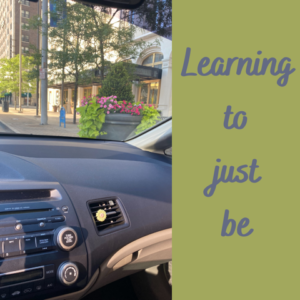
Learning to Just Be


Our lives are often rushed. This summer’s calendar has been packed fuller than any before—trying to get household things done while running children here, there, and everywhere has me feeling rushed and a bit frantic some days. (Leave it to high gas prices to teach me a lesson about slowing down.)

Our daughter has dance class 30 minutes away and, for the past few weeks, to save on gas, we’ve been taking turns staying down near her class instead of driving back home and back again. At least 12 hours of driving has been saved, but that meant we had to find something to do for the two and a half hours while she was in class. My husband and I took turns “experiencing” the nights away from home.

On my first trip, I visited the downtown library that I had never been to yet. It had an underground free parking garage where I could eat my dinner in my car. I took my laptop into the library, but I spent the first 10 minutes wandering around the three floors to see the different areas the library had to offer. There were so many tables near the windows that faced either downtown or a small park. I found one and wrote for almost an hour. I still had time to kill, so then I read the local paper. While I hadn’t brought my water into the library, I noticed food and drinks were not taboo there.

My husband found a metro park where he could sit and eat his dinner and read while watching the fountains and the people. He encountered families, runners, hip hop dancers, and other people just taking breaks from work. During this time, he started reading a book I had already started and ending up finishing it before me because he had so much reading time. It’s the first time that’s ever happened since I’m the faster reader!

One night, I ate at the metro park, but since it was hot, I went into the local coffee shop to spend some time writing. For an hour, I got to write while listening to some great music from the ‘90s. The barista even offered me water to go as I was leaving and was impressed that I was an author. I definitely will go back there.

Another night, I went to Panera right down the street and wrote and wrote and wrote. Then, one night, I was tired and didn’t feel like pulling out the laptop, so I went to a bookstore and browsed.

My husband spent one night reading some, but also listening to the live music they had downtown. Turns out there’s a free concert every Thursday night in the summer.

Through all the nights I spent downtown, I found myself forced to slow down, to find a place and just stay there for a bit. I spent most of my nights away writing. I focused on just doing or enjoying whatever was in front of me. A quiet dinner outside let me focus on the tasty BBQ beef sandwich. A library let me focus on the plot of my novel. You should see how focused I am at a bookstore.

Those nights helped remind me to be where I am, and I started to apply it more at home. I often move from task to task, or even multitask a lot. But I don’t have to rush from one thing to another. I can enjoy making dinner. I can spend time looking at my daylilies. I can sit and listen to a child’s joke. I can just be.

Copyright © 2022 Sarah Anne Carter

Three Different Types of Editing (and why the title “Editor” is confusing!)


“I sent it to an editor and it came back with so many errors!” 

“My beta readers said I really need an editor, but I had it proofread,
so I don’t understand what they mean!”

“My manuscript is completely finished and now
I just have to get it into the hands of an editor who will publish it!”


Maybe you’ve heard writer-friends say things like the above? If you’re thinking that it sounds like these hypothetical authors all have different concepts of what an
editor is and does, you’re spot on, and if you are new to writing and publishing, it can be very confusing! Before I started working at a literary agency, I worked for an editing and design company, helping authors take the necessary steps to self-publish or find a publisher for their books. I received emails all day long from people who needed help sorting through their editing options.

I’m going to outline the primary types of editing for you below, but if you’d rather listen to me speak on this subject than read about it, you can also find a loose reproduction of the text here on my YouTube channel, The Book Barr.

THREE TYPES OF EDITING

  1.       Developmental Editing

Most manuscripts need to start here. Developmental editing can be formally done by an industry professional or informally by a critique group or beta readers. This type of editing looks at the big picture — plotting, organization, pacing, dialogue, character development, worldbuilding, etc.

Both fiction and non-fiction authors need developmental work, and they need it long before they are ready to move on to the other types of editing that focus on more minute details like spelling and grammar. So much can change in a manuscript during developmental editing! The goal is to take a step back and look at the work as objectively as possible to increase readability and maximize impact.

People often assume that when you “hire an editor,” you’ll get both high and low-level help, but commonly, you’ll find editors gifted in one or the other, but not both, types of editing. Most of us are either concept people or detail people, right-brain or left-brain thinkers, highly creative or highly meticulous. Editors are no different. I’m sure you can think through the wide range of personalities and giftings God has given us and see why some people are going to lean more toward proficiency in developmental editing than what comes next, which is…

  1.       Line Editing

This kind of editing is also sometimes called copyediting, though there are subtle differences between the two. Because these terms are used interchangeably, it’s very important to determine what exactly you’re paying for when you hire any editor.

Line editing looks at grammar and syntax, line-by-line. A line editor looks at each word used and whether it conveys the intended meaning, is redundant, or sometimes even whether or not it’s offensive or archaic. A line editor may make suggestions about the paragraph-level organization, but not usually on issues that span the whole chapter or manuscript.

If a line-level editor makes a distinction between line editing and copyediting, what they usually mean is that copyediting is where very specific mechanical rules are examined. This is especially important in non-fiction when academic style guides like MLA or the Chicago Manual of Style are used. Fiction authors have a lot more leeway, and a line editor will be the one to make sure house-style (the preferences of a particular publishing house) is followed and grammar rules are consistent—whether or not to use an Oxford comma, for instance. (The answer is yes, by the way.)

  1.       Proofreading

Proofreading is the very last (and usually the cheapest) step. A manuscript should be as “done” as an author can get it before it goes to proofreading. Proofreaders look for misspellings, repeated words, missing words, incorrect punctuation, and other things that are easy to pass over when you’ve read something many times.

Proofreading is not the discount version of line editing. Proofreaders can get justifiably frustrated when they are paid a lower rate to clean up a very messy manuscript. Most of us in this industry love words, and no one wants to see a book go out into the world unpolished. So be kind and hire the right kind of editor to ensure they are getting paid to do the job they signed up for.

PUBLISHING HOUSE EDITORS, BETA READERS, AND BEYOND

To further add to the confusion, the primary contact for authors at a publishing house is also called an Editor. These are not freelancers that you hire, though they may be talented as developmental or line editors and may even do some of that work on the side. These Editors are the professionals who see books through from acquisition to publication. They are the ones you have to impress with your polished manuscript – which very well may mean you need to hire an editor before you can approach an Editor (capitalization is mine, but useful for thinking about these roles).

And as I touched on before, there are other ways to approach editing. You may have a group of writer friends read and give you feedback or hire someone for a brief manuscript critique. Your literary agent (I wrote a post about who needs one here) may also act as an editor to get your project as ready as possible to land that book deal.

Writing is usually done in solitude, but really good writing almost always involves a team. Don’t be afraid to add editors to your roster!


Copyright 2022, Anjanette Barr

Cath-Lit Live: A Garden for Mary

“Cath-Lit Live!” features brief interviews with Catholic authors who are releasing new books. Hosted by Catholic author and speaker Amy J. Cattapan, “Cath-Lit Live!” gives viewers a glimpse into the latest Catholic books while getting to know a bit about the author as well.


A Garden for Mary by Neena Gaynor; illustrated by Bernadette Gockowski

A Garden for Mary is a lyrical children’s story that gets to the root of devotion to Jesus’s mother through sacred prayer and scripture. With classic watercolors of vibrant blooms, buzzing bees, and curious chipmunks, families seeking an introduction to the rich catholic tradition of Marian Gardens will find a treasured resource to enjoy and pass down from generation to generation. Complete with an illustrated appendix of flowers associated with Our Lady, A Garden for Mary will inspire readers to grow bouquets for heaven and deepen their love for our heavenly mother. (TAN Books)


About the author: Neena Gaynor is a Kentucky wife, mother, and beekeeper. She’s spent much of her adult life living out of a suitcase with her husband, Wade, a former professional baseball player. Throughout the 30 changes of address, the stresses of moving a young family, and working many of those years as a nurse, she learned to embrace the peace that only comes from Christ. Now, Neena and her family are small farmers, raising chickens, sheep, bees, and two little boys. She is an adult ministry leader at her parish, the writer behind the Words Like Honey column, which is carried by many secular and religious publications, a frequent radio guest, and the author of the Catholic novel, The Bird and the Bees, and the newly released children’s picture book, A Garden for Mary. Find more at WordsLikeHoney.com


You can catch “Cath-Lit Live” live on A.J. Cattapan’s author Facebook page. Recorded versions of the show will also be available to watch later on her YouTube channel and Instagram.


Copyright 2022 Amy J. Cattapan

Even Scraps, Received in Faith, Bring Healing

The woman was a Greek, a Syrophoenician by birth, and she begged him to drive the demon out of her daughter. He said to her, “Let the children be fed first. For it is not right to take the food of the children and throw it to the dogs.” She replied and said to him, “Lord, even the dogs under the table eat the children’s scraps.” Then he said to her, “For saying this, you may go. The demon has gone out of your daughter.” When the woman went home, she found the child lying in bed and the demon gone. ~ Mark 7:26-30


How many demons do we need Jesus to drive out? Do you struggle with insecurity, anxiety, uncertainty, maybe addiction, a difficult relationship, or financial crisis? How remarkable that even the smallest grace from Jesus, the scraps, has the power to transform our life.  Imagine the possible freedom awaiting us if we embraced even a tiny bit of the blessings Jesus has to offer us.  The gifts available from heaven are abundant, meaning we do not need to settle for the crumbs, yet if that were all we allowed ourselves to dine upon we’d still be filled.

Our lives would not be perfect or free from those things that worry, concern, or pain us, but there would be a sense of inner peace and hope that can only come from heaven.  The woman came to Jesus prepared to be persistent, humble, and assured.  Persistent in her begging; humble enough to address Him as Lord and take whatever scraps He offered; and surely she believed what He said was done because she left for home at His command. When was the last time I approached Jesus in that way—begging for some assistance, humbled by His majesty and glory, and yet completely sure that I would, in some way, receive a blessing? Confident in Jesus’ answer to my prayer, regardless of what I sought, accepting the scraps falling from the heavenly banquet?

So, what holds us back from being fed by Jesus? Feeling, perhaps, unworthy of even the crumbs from His table? How can the Syrophoenician woman’s example encourage us to approach Jesus for assistance in whatever demons we are trying to eradicate from our lives?

Jesus, I believe that you have so much more to offer me than I am ever able to accept. Lord, I thank you for calling me to your banquet, and whether I put myself at the table for the feast or at your feet for the crumbs, help me to be always assured I will never be without your blessing and grace.

Let Jesus In

Discernment can be a difficult task, and as Catholic writers, this includes our discernment for our writing. I have found that the only way to find clear directions, regardless if we write fiction or nonfiction, is to invite Jesus to be our guide.

I long to do the will of God, but at times I am caught by paralyzing fears of inadequacy and ineptitude. I do not have a formal Catholic education, and in my weak moments I start to believe that I do not have anything to offer or contribute to the world of Catholic writing. Even though that I have family members, friends, and even my priest cheering me on, I fall prey to these vicious inferiority thoughts.

I read Saint Thérèse of Lisieux’s Autobiography, The Story of a Soul. for a project I’m working on. I highly recommend it! She wrote it as a response to a request from her superior in the convent, and it reads like a letter written to a friend. I felt like Thérèse wrote it directly to me.

Thérèse’s life on earth outwardly seemed unremarkable (she became a Carmelite nun at age 15 and died at age 24); but thanks to The Story of a Soul, people like me have been learning about her profound yet simple way to heaven for more than 100 years. It is not written eloquently, but its message has changed countless lives. Because of this journal-style book, she has been named one of only four female Doctors of the Church.

Many phrases and ideas struck me, but none more so than her open confession to not being educated by traditional means. She tells us that she struggled with understanding deeply theological books, but that Jesus gave her the knowledge and understanding directly. She says, “Jesus has no need of books or doctors of the Church to guide souls. He, the Doctor of doctors, can teach without words.” (Martin, Thérèse. The Story of a Soul. Translated by John Beevers. Image Books, 1989).

I reread those words many times to let them fully sink in. The concept of being taught by Jesus directly makes so much sense, even though I never realized it before. I now know, if I will let Him, Jesus will teach me too. I do not need extra letters after my name to have something valuable to contribute to the world, because my words are not my own when Jesus is my guide. As long as I am inviting Jesus in, His will can and will be done through me.

© 2022 Maria Riley


Seal of Approval, Second Quarter 2022

The Catholic Writers Guild recently conferred the Seal of Approval on the following books:

  • Breastplate of Righteousness, Theresa Linden
  • Lucia of Fatima, Kathryn Swegart
  • Eyes of Fire, Mina Ambrose
  • Van Horn, Jim Sano
  • A Saint in the Family, Corinna Turner


The purpose of the Catholic Writers Guild Seal of Approval is to help Catholic bookstores and venues in their determination of the Catholicity of a work. This reassurance from a professional organization can assist authors in marketing and promoting their works. Books are also judged by their editorial integrity as well. Books that are not professionally edited or publication-ready are not eligible for the Seal of Approval.

Authors looking to reach a Catholic audience, but whose books do not qualify for an imprimatur (like fiction), or authors who do not have access to the process to get an Imprimatur, can submit their book for the SoA. It provides a tangible reassurance to readers and bookstore owners that the book does support Catholic beliefs and values; and in the case that it does not, it gives the author some useful feedback.

Readers can be assured that SoA books will not offend their faith and have a certain level of editorial quality.

Store owners can be assured that they can stock the book on their shelves, host the author for a signing, etc. without compromising their appearance or mission as a faithful Catholic apostolate.

Get more information on the Seal of Approval, including when and how to apply, at CatholicWritersGuild.org/seal-approval.

Five New Marketing Ideas To Try

Once you have a book, most authors need to do some of their own marketing. The typical means are usually websites, blogs, social media and ads. The world is constantly changing, though, and new ways to market books and writing are coming all the time. Here are some “newer” ideas you might want to try.


Use a Cricut

Are there any items you could make that go well with your book? Mugs? Bookmarks? T-shirts? Bags? While you don’t necessarily need a Cricut to make items that complement your book, it can make it much easier. I was at a book fair and noticed other authors had bookmarks, coloring pages, t-shirts and bags for sale in addition to their books. I decided to make mugs, bookmarks, and a coffee sugar scrub to go along with my books when I sell them at a market or fair. It catches people’s eyes, gives them something to buy if they’re not a big reader, and gives you the option to sell packages of items.


Think about the Homeschoolers

Homeschooling has increased substantially over the past two years. If your book is for children or young adults, can you develop worksheets that can go along with the book? You could sell them with or without the book or even offer one or two freebies to get parents interested in using your book at home with their children. If your book is for adults, look at creating discussion questions that could be used with a book club. You could even offer to show up via Zoom.


Offer to do a School Workshop

Schools are opening back up to pre-Covid activities and they are often looking for enrichment opportunities to catch kids up who have fallen behind. Offer to teach a writing workshop and have a flyer the children can take home that lists your Web site and how to buy your books. You can also do these writing workshops at a library. Some schools and libraries pay the author a small fee and some don’t.


Podcasts

There are a plethora of podcasts out there now, but that also means there are many looking for guests to talk to on their shows. Going into a podcast platform and searching for key words related to your book or writing style should give you a long list of podcast hosts to contact about going on their show. If this is something you are highly interested in doing, it might be worth investing in a microphone or headset to increase the quality of your audio. Some podcasters also do video and post it on YouTube or other channels. If that’s the case, check your camera and lighting, too.


Substack/Patreon

Substack and Patreon are two new platforms where people can offer content for different pay levels. I honestly haven’t used either much yet (I just signed up for Substack), but I’ve heard them talked about on writing podcasts and they sound promising. You can use it as a blogging platform or put new content on it, like the serials in old newspapers. You could tease new chapters or books, too. (I’ll probably do a blog post on Substack after I use it more.) They sound like they’re worth checking out, though.


Have you come across any newer ways for an author to market their writing? Share them in the comments!


Copyright 2022 Sarah Anne Carter
Image: Photo by Karolina Grabowska (Pexels)

Do Catholic Authors Need Literary Agents?


The publishing world is constantly changing. It responds to new technologies (ebooks, print-on-demand), new cultural norms (demands for equal representation, trendy subject matter), and new opportunities for growth (higher literacy rates, more affluent readers, more authors to choose from). The status quo is never static for very long.

The role of literary agents continues to flex and change as well, and most writers are aware that, in some cases, agents are left out of the publishing process altogether. However, when you attend larger writing conferences or read writing advice, it might sound like a foregone conclusion that all authors desire or even require an agent to be traditionally published. What about Catholic authors? Is this true in our little corner of publishing?

What Literary Agents Do

Let’s begin by clarifying the role of a literary agent. Simply stated, a literary agent is an advocate for authors who assists them in securing advantageous publishing deals for their books in exchange for a percentage (usually 15%) of the profits. An author who is “represented” by an agent can expect to receive support in the form of career coaching, developmental editing, a foot in the door at publishing houses they plan to pitch to, help with contract negotiations, and management of financial and legal issues related to publishing.

Literary agents are go-between support, not affiliated with a particular publishing house. They are not paid up-front for their services but rather on commission. (Some agents have side jobs in other areas of publishing, and just recently, the industry rules changed to make it easier for them to make money as freelance editors and the like, but you should never pay for representation.)

Catholic Publishing

In the publishing world, the majority of titles that come out each year are considered “general market.” Publishers in this category have fairly standard expectations and procedures that include the use of literary agents. There are smaller niches within the larger market with slightly different needs and rules.

Religious publishing is a niche that runs the gamut from “Big Four” deals for titles that make it to the shelves at every Barnes & Noble to tiny presses marketing only to clergy. Catholic publishers are on the smaller end of the spectrum and, like many small presses, have a wide variety of acquisition methods that are not always aligned with the standards of the rest of the industry.

Who Needs an Agent?

These days, all but the smallest imprints of Big Four publishing houses require agent representation for their authors. Publishing houses like Simon & Schuster, Little Brown, St. Martin’s Press, and even Tor Books do not allow authors to pitch them directly. They would receive so many manuscripts that they’d never see the bottom of their pile if they didn’t use agents.

Editors at these big houses value literary agents as scouts who send them only quality manuscripts that fit their brand and who will help with communication and managing expectations with their authors so that everything runs smoothly. Catholic authors who write (fiction or non-fiction) for a general audience may very well find that getting a literary agent on your side is a necessary first step.

However, many independent publishers and most religious publishers, including all the Catholic publishers that I’m aware of, accept unsolicited and unagented manuscripts. Their submission load is small enough that they do not need agents to filter the flow, and they publish only a few titles per year so that contract negotiations aren’t a huge burden.

So does that mean anyone publishing with a Catholic publisher should keep their 15% and do away with literary agents?

Not a Need, but Maybe a Want

When I decided to pursue a career in literary representation, it wasn’t because the pay is lucrative (did I mention agents aren’t paid until after the book sells?) or because I’m power-hungry and want to decide who gets published. Agenting appeals to me because I love the process of book creation. I love seeing ideas fly out into the world and seeing readers and authors find the soul-deep connections that books magically facilitate. And, I know books.

All of the literary agents I have met are quintessential “book people.” Like editors and almost everyone else in this business, agents absolutely love coming alongside authors and helping them get polished manuscripts into the perfect reader’s hands. They are also serious about standing up for the rights and benefits of their authors. This service isn’t necessarily needed because publishing houses are exploitative (though there are some bad apples out there) but more so because publishers have their bottom line to consider and may not always offer their best deals to authors without some back-and-forth. Having an agent handle the gritty details spares the editor and author from uncomfortable conversations and helps ensure everyone is happy at the end of the day.

And even if having an agent doesn’t end up meaning a better deal (some smaller houses may not have the resources to compete for a title but might still be the perfect fit), it does mean having a partner. In a vocation that can feel isolating, having someone rooting for you can be priceless.


Copyright 2022 Anjanette Barr