
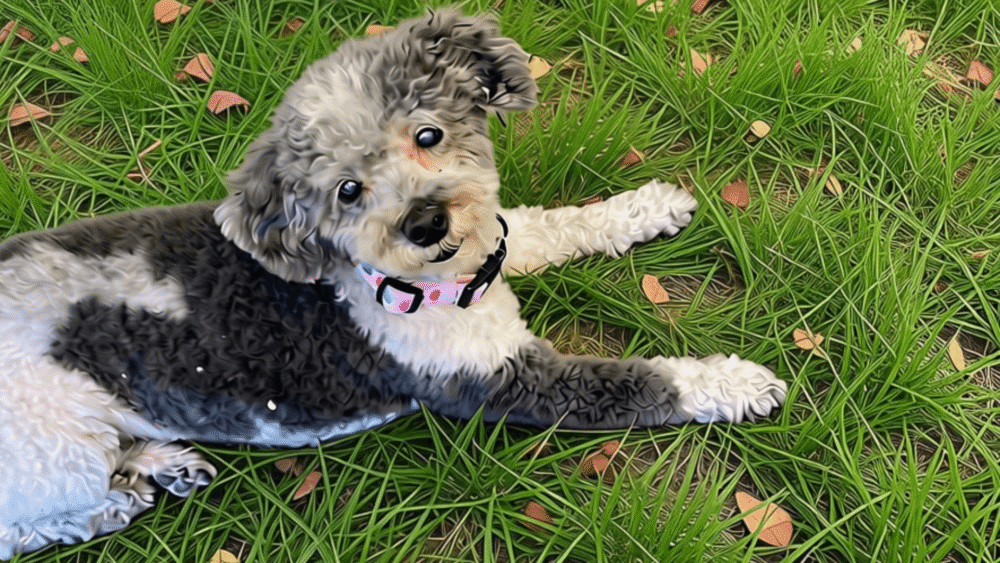
Lessons I Learned About Listening, From My Dog
One of the most important aspects of my work as a spiritual director is the art of being present in listening. I must have ears that can pick up the tiniest subtleties when a directee describes a prayer moment or dialogue with God. If I miss even one cue, it can affect the Holy Spirit’s direction and the session’s outcome. However, I admit that it’s often hard to listen intently, and I am comforted knowing the Holy Spirit will find other ways to direct the session.
Equally important is having a listening presence within the home. Recently, my family and I have found ourselves in uncharted territory. Our nearly fourteen-year-old Poodle Bichon, Shiva the Diva, is dealing with hearing loss. At first, I felt okay with the situation because she follows us around like a shadow anyway. I didn’t have any initial fears, knowing she would always be right behind us. Recently, however, we’ve learned by observing her behavior that it’s not just hearing loss; it’s distorted hearing.
If we cough or sneeze, it sends Shiva into a terrified state, tucking her tail and shivering. Thus, we try to take every precaution and quickly vacate Shiva’s space so that we do not send her into a frightened state. Earlier this week, as I prayed in a quiet room, I noticed Shiva listening intently for any sound. She stared at me, waiting to see if I would move or open my mouth; when I did, she heard my voice as if it were coming from another part of the house and looked in the opposite direction.
Watching Shiva struggle to hear my voice made me reflect on my own struggles in prayer and how difficult it can sometimes be to recognize God’s presence. I can tell you for certain there are times when I listen for His voice just as closely, but other times I give up, wondering why He didn’t show up. Shiva’s experience reminded me that, even when I struggle to recognize God’s presence, I can trust that He is with me.
I also began to wonder whether anything in my life is distorting God’s voice. In the Discernment of Spirits and A Retreat for Daily Life, St. Ignatius names things that take us away from God as “disordered attachments.” This type of attachment can harm us physically and spiritually; it can be something seriously harmful, or it can be as simple as a television show that moves your thoughts away from God. One of my disordered attachments is choosing sleep over prayer. Too much sleep can harm my body, but I feel it affects my spiritual life even more. I love the quiet time I have with God in the early morning, and on the days I sleep too long and can’t fit it in before work, I cringe.
Ironically, not making time for prayer is an obstacle most spiritual directors hear from their directees when asked how their prayer life is going. A commitment to prayer should be easy, but life, and all of its disordered distractions, tend to distort the voice of God calling us toward Him. On the flip side, we’re not only trying to hear God’s voice, but He is also listening for ours.
God waits for us even when we choose sleep over prayer, and constantly listens for our voice calling to Him. I know morning isn’t the only time I can pray, and on days I miss my structured prayer, I slip in brief moments of dialogue to stay engaged. God will send special moments, or “Holy Moments,” letting me know He has heard my voice, and I, in turn, continue to listen for His.
Looking back on Shiva’s fearful morning and considering how God reaches out to me, I am reminded that listening for God simply demands trust in His steady presence. When I quiet my heart and eagerly wait to be with Him, I can rest assured that He will gently call my name.
©️ 2026 Kimberly Novak. All rights reserved.



 Let me begin, then, by saying that I never intended to become “the chicken lady” of my neighborhood. When my husband called from work one day, saying that a colleague had no further need of 4 unhatched baby chicks and did I think we could take them in for a while, I said “Sure” simply because I like animals and couldn’t stand the thought of those little chickies being – literally – thrown away. That was about the extent of my thinking.
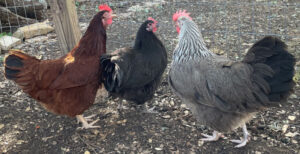
 My little flock did not choose each other, but they’ve formed themselves into a community nevertheless. Although they are all different types of hens, they get along. Yes, there is certainly a pecking order (Sandy is at the top) but there is still room for everyone, despite their various temperaments. For example, Pebbles, our black Australorp, tends to get broody and take over the nesting box, while Pepper, a light Brahma and the smallest of the five chickens, likes to make up for her small size by being feisty and pecking everyone, including the dogs. Occasionally there are some ruffled feathers but most of the time there are contented, chatty clucks and check-ins, and at the end of the day they all go into the hen house and sleep peacefully together. If I’ve had a hard day with a difficult person, I really notice their ability to not hold a grudge and to let bygones be bygones. It reminds me that I might not always want to spend a lot of time around a certain person or persons, but I don’t have to take everything personally and I don’t have to carry resentment with me every day. (And I’m always somewhat flabbergasted that the hens consider our two pitties part of their community!)