The Power of a Heartfelt Prayer

The Power of a Heartfelt Prayer

As a spiritual director, I know the power a prayer can harness.  All types of prayer, ranging from prayers of the heart, spontaneous prayers, and those prayed over a group, when prayed with a heart of faith, pack the same punch.

Shortly after becoming a spiritual director, a woman diagnosed with a terminal illness reached out for assistance. At the time, she wanted to rekindle her walk with God and face the imminent future with a heart of faith. During the looming diagnosis, we talked about her relationship with God through the years and how important it was at this particular time. Our sessions were sometimes difficult for both of us, especially as the diagnosis timeframe was ticking away. When we first met, I wondered why God had given me such a difficult assignment so quickly after graduation. I didn’t feel confident enough in what I was doing. However, I was more than willing to allow the Spirit to take over all of my senses in the hopes of being guided. When the words became difficult, we prayed silently in the company of one another. On days when panic, fear, and anger were present, we went against one of the rules of how a spiritual director should behave, and allowed the occasional hug to comfort us both.

In preparation for one of our sessions, I began to write a prayer specifically for this woman. I intended to share it with some prayer warriors and give a copy to the woman so she could share it with friends, family, and those at church. To write this prayer, I researched other prayers that contained scripture for healing and miracles.  Once I had a handful of ideas, I placed them all together and moved them around until I felt like I had the perfect structure. On the first read-through, the prayer felt right. It flowed gently and got right to the point.

I wanted to help this woman in any way I could, and being a strong proponent that you can pray away anything in life, I was determined to do just that. After all, I had nothing to lose and the power of God’s love to gain.

Not long after I presented the prayer and began lifting the need daily to God, I received a note that her recent tests showed all evidence of the illness gone. I firmly believe that the power in this prayer offered in true faith “prayed away” the sickness. I offered gratitude to our Heavenly Physician and tucked the prayer into my bible for safekeeping.

Years passed before another situation surfaced, requiring powerful prayer for a friend’s spouse. I shared the prayer with the family and began praying daily. It was not two weeks before I received news that the fatal diagnosis was an error. Perhaps, aligned with God’s Will, we prayed it away.

In more recent months, a family member received news of an illness and without hesitation, I began the healing prayer.

As I reflected on these instances, I wondered why I was keeping this powerful prayer a secret all this time. I had offered it to those involved who needed the healing work of our Father, but past that, the prayer remained in my bible. Today, I know in my heart that the prayer was written with the leading of the Spirit, and I am called to share it with as many as I can.
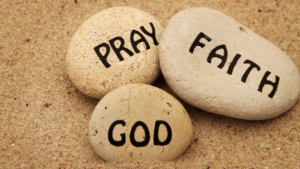
I offer this healing prayer so you can enlist your prayer army and in the hopes of aligning with God’s Will, pray away the difficulties life sometimes dishes out. As you pray, replace N. with the name of the person for whom you are praying.

God’s word says the prayer of faith shall heal the sick. I come to you, God, in faith and ask that You heal N. from sickness. Jesus, I want Your word to penetrate the depths of ­­­­N.’s heart. Thank you that Your word brings life and healing to ­­­­N.’s whole body. Jesus, I ask that you open N. up today to Your blessings, healing, and miracles. Let all worries leave his/her heart. I know you are a God who cares, who loves N. deeply, and will never let him/her go.  In Jesus’ name, I pray, Amen.


Copyright 2023 Kimberly Novak
Images: Canva

Fall into Pieces or Peace in a Storm?

Fall into Pieces or Peace in a Storm?

When you face the storms of life, which do you cling to—pieces or peace? We’re all going to face adversity—life’s storms and earthquakes: illness, being “the other,” not fitting in… But how are you going to react? Fall to pieces? Or slide into peace?

Two stories come to mind.

Elijah was on the run. He’d wiped out all the false prophets of Jezebel, the queen of the land, and she was out for blood—his blood. Elijah realized he was doomed and ran for the desert. No one on earth could save him, so he laid down and prayed for death.

Fast forward.

Forty days later, Elijah was in a cave when God asked him, “What are you doing here? Go stand on the mountain [don’t hide in a cave] and watch me pass by.” Elijah saw all the worst things of life go by: wind, tornadoes, lightning, storms, earthquakes, fires. But God wasn’t in them. No. It wasn’t until Elijah heard the quiet, peace-filled, almost inner whisper and focused on it, that he realized he was in the presence of God.

Jump to the New Testament and Jesus walking on water. Jesus had faced a very long day. He had preached to thousands, fed them with only five loaves and two fish, healed them, expelled demons, and was pooped by the end of it! He sent his followers across the water to the next port of call while he recharged his batteries by praying alone. The disciples, like Elijah, grumpily faced great winds, storms, and lightning. Then, they saw Jesus, as if a ghost, walking perfectly calm on the water toward them, saying, “Don’t be afraid.”

Peter, pure reactionist, challenges Jesus and asks to join Him. Jesus calmly says, “Come.” Peter, now focused on Jesus, does exactly that. He hops out of the boat, not thinking, just reacting to Jesus’s call, and begins to walk on the water. When Peter’s focus on Jesus wanes, the storm, the lightning, the wind, and the inconceivable fact that he was walking on water overtake Peter, and he begins to sink back into his perceived reality, the crashing waves of unimportant things.

These stories are perfect for you and me today! What wind, storms, lightning, earthquakes, and fires do we face every day? Deadlines, family drama, self-made situations that eat our brains and spirits? People who “have it in for us.” Knowing “I should do this and that, but I just don’t feel like it.” Noticing a lump, discoloration on your skin, or little aches and pains you didn’t have before. These are the things we allow to take away our focus on what’s important. Listening to God’s whisper, listening to Jesus’s “Come.”

What did Elijah and Jesus do? They found time alone. They took time to pray, be quiet, and be alone with God. What did God do? He replied, “Be not afraid. I’m here. I got you. Now get outta the boat, focus on me… and walk on water!”

So, what will you choose? To fall to pieces or to find peace? The choice is yours.

Copyright 2023 Ben Bongers

The Greatest Gift

The Greatest Gift

We live in an age when there are a lot of misconceptions about love. Some people seem to think that love is primarily about emotion, about warm feelings toward another person. And it’s no wonder that they think that, when so many contemporary novels, songs, movies, and TV shows tend to portray love in this way. In contrast to these popular depictions of love, Hans Urs von Balthasar, the brilliant Roman Catholic theologian from Switzerland, offers us a far more demanding (but also far more fulfilling) definition of love: Love is the selfless gift of self, given and received.

The gift of self: if you’re married, that’s what your spouse wants from you: your spouse wants you; your self; your heart. Ideally, your spouse reciprocates your gift of self with his or her own gift of self to you. If that’s not where your relationship is at right now, make a change. No, don’t change spouses. Change the way you’re treating your spouse, and watch how those changes can improve and strengthen your marriage. Make a genuine effort to be more giving, more generous, more sacrificial, for your spouse’s sake. Hopefully, sooner or later (hang in there if it takes a while), they’ll notice the change in you, and they’ll become more willing to reciprocate with their own sacrificial gift of self. Be the change you want to see in your marriage instead of just wishing for a better relationship, and you can help bring about that change.

The gift of self: if you have children, that’s what your children want from you, too: you; your self; your heart. Of course, your children want and need many other things from you: food, clothing, shelter, education, etc. But what your children most need from you is…you. That’s why it’s so important that you spend as much time as possible with your kids while they’re growing up. It’s a cliché, but it’s true: you never get the years of their childhood back, so make the most of them while you can. Your kids need as much of your time and attention as you can give them. They want to get to know you (at least until they’re teenagers, when they may think they have you all figured out already anyway), and they want you to get to know them. When your young child excitedly asks you to look at the picture he or she just drew, they’re not just looking to share a picture; they’re trying to share themselves – their talents, their interests, etc. They’re not looking for just a nod and a perfunctory “That’s nice”. Yes, they’re looking for your affirmation and your approval, but they’re also looking to connect with you. They want you to take a genuine interest in their work, and thereby, an interest in them. Put the cell phone down and really look at the drawing (and at your child!). Give them the chance to talk about what they drew, why they drew it, etc., because that gives them the chance to tell you about themselves, to share themselves with you. It’s one of the ways they’re trying to tell you they love you. By giving them your undivided attention and by taking a real interest in the picture they’re trying to share with you, you’re not only opening yourself up to receive the gift of self your child is offering you; you’re also giving them the gift of your own self in return.

The gift of self: if you’re a human being, that’s what God wants from you. God wants you; your self; your heart. And God doesn’t ask for anything that he hasn’t already given. Jesus Christ is God’s self-gift to the world. God wants to be united with each of us forever. We were created for union, union with God and our fellow human beings. The Son of God became one of us to make that union possible. Jesus is God’s gift of his heart to the world, the gift of his heart to each and every one of us. And God’s hope is that we will respond to his gift of self with our own gift of self in return.

* This article is an excerpt from Rick’s latest book, The Book of Love: Brief Meditations (https://enroutebooksandmedia.com/thebookoflove/)

Photo by Lina Trochez on Unsplash

Copyright 2023 Rick Clements

A Writer’s Vision

A Writer’s Vision

I watch a robin nestled upon the branch of my backyard tree singing. As it flies away, I feel wonderment. Perhaps the robin is seeking a better view or its next meal. The breeze picks up ever so lightly and I am transported to the wings of a butterfly.

Most would not give a second thought to these events. As a writer, it is these simple, everyday moments that spur my creativity.

There were times in my writing journey when I turned a simple lawn weed into a complete book chapter. Most would view the yellow dandelion as an irritant and nuisance. In contrast, I saw it as something friendly and a great jumping-off point in my story. Many things feed my creativity, especially in nature. However, over the years, I have learned that my imagination goes into overdrive when I add God to the mix.

Every summer for the past four years, I have attended a retreat focused on painting. It is important to note that I have no talent in that realm, yet that particular retreat has been a favorite of mine. I was a bit intimidated, to say the least, when I first attended, but God quickly showed me why He had sent me there.

Something happens in my brain when I focus on things with a crafty nature. I believe God uses this medium to draw things out of me for His greater purpose. Over the years, the masterpieces I have created in this retreat have looked fabulous in my eyes but not so much to anyone else. I see the exhibits through the eyes of the Spirit, who fed me during each brush stroke.

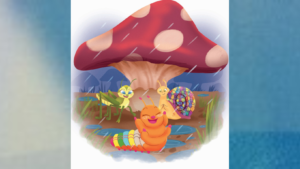
I’ve learned a lot and have had many inspirations through this faith-based activity. Mostly, I have been able to break through barriers that may have kept me from doing something to which God has called me. Using the skills taught during this retreat, I have brought a creative depth to my writing. I drew inspiration from a mushroom while walking the dog that turned into a colorful, giant umbrella for a snail and caterpillar in my book, Bella’s Beautiful Miracle: A Caterpillar’s Journey.

Due to other events this summer, I was forced to miss the art retreat, and I thirsted for a flicker of creativity. This topic arose in a recent conversation, and I quickly realized why I longed for such a spark. As a writer, I see the beauty and majesty in everyday things that most people take for granted. In the hustle and bustle of the summer and planned and unplanned life activities, I had not allowed myself to bathe in God’s beauty in this way.

It is not only the art retreat that fuels creativity. The combination of nature and faith life are significant components. To rejuvenate my creative side, I ventured outside with my laptop and noticed the little robin in minutes. As I looked upon the little bird, all I had to do was place my hands on the keyboard, close my eyes, and allow the Spirit to lead.

By basking in God’s glory of nature, colors, and the physical action of creating, I become fed creatively and spiritually. This summer, I ask you to consider in what ways your spirituality provides your creativity or vice versa. Then, spend time prayerfully considering how God wants you to work that into your lifestyle.

Don’t miss out on your opportunity to shine in ways you may have felt fearful about. I love that I have no talent as a painter, yet I can participate in that action and create something beautiful in another medium. Art, as a spiritual gift or just for fun, is a lovely way to express God’s light and love! Step out of your comfort zone and go for it!


Copyright 2023 Kimberly Novak
Images Copyright Canva

Red Blood Cell or Glob of Plaque?

Red Blood Cell or Glob of Plaque?

God has entrusted to each of us a unique role, a unique mission of love, within the Body of Christ. That may seem hard to believe at first: God has given me a special mission of love to carry out in life? But it’s true. Each of us is given the great privilege, and the solemn responsibility, of helping to pass on the divine love to other members (and prospective members) of the Body of Christ. Which includes everyone, because God wants everyone to share in his divine life and love forever (Matt 18:14; 1 Tim 2:4). You have been given a unique mission to share the divine love with others. The unique meaning and purpose of your life lies in your mission of love. Your mission is irreplaceable. No one else can fulfill your mission for you. No one else’s life will touch the exact combination of people that your life will touch. No one else can make the contribution to the eternal circulation of love flowing within the Body of Christ that you were born to make. What is the mission of love with which God has entrusted you?

For most of us, the mission of love that God has in mind isn’t some dramatic, world-changing mission, something that will have a huge impact on the world as a whole or draw a lot of attention to us. Instead, most of us are called to local missions of love. There’s a saying that goes something like “Strive to make your little corner of the world a better place.” It’s a good saying. If we all did that, the whole world would be a much better place.

The absolutely best way to make your “little corner” of the world a better place is to spread some of the divine love to that little corner. Start at home. How can you be more loving to your spouse? How can you be more loving to your children? Then extend yourself further: how could you be more loving to your friends? Your neighbors? Your co-workers? The people you perceive to be your “enemies”?

We all have a choice in life: we can be red blood cells flowing within the Body of Christ, helping to carry life-giving oxygen (the divine love) to other members and prospective members of that Body, or we can choose to be globs of plaque, clogging the arteries of that Body and obstructing the flow of divine love. Most of us are a little bit of both. Resolve to be more of a red blood cell and less of a glob of plaque.


* This article is an excerpt from Rick’s latest book, The Book of Love: Brief Meditations (https://enroutebooksandmedia.com/thebookoflove/)

Photo by ANIRUDH on Unsplash

Copyright 2023 Rick Clements

Blood Circulating in the Body of the Cosmic Christ

Blood Circulating in the Body of the Cosmic Christ

All human beings are born to share forever in the eternal circulation of love that is the divine life. But to participate as fully as possible in the divine life, we have to learn to selflessly give and receive the gift of self in love. That’s what we’re here to learn how to do. And the more fully we learn to do that, the more fully we can share in the divine love and life and bliss.

But how could we humans possibly share in the divine life of God? How could we, who are finite beings, be united with the infinite God? There is an infinite chasm between us finite human beings and God. We cannot leap over the abyss separating the finite from the infinite. We need a lifeline of some kind to be thrown across to us from the shores of infinity, a bridge of some sort that will span the abyss and enable us to cross over into the divine realm. Jesus Christ is that lifeline; Jesus Christ is that “vaulting bridge” who spans the abyss separating us finite beings from the infinite God. Jesus has forever united the human with the divine in himself, thereby making space for all human beings (indeed, the entire cosmos!) within the divine life of God.

Think about it: God and humanity, the infinite and the finite, united in the one person of Jesus Christ, in such a way that the path for us to transcend our finitude and participate in the infinity of Being, to share in the divine life of God forever, has been opened up to all human beings and to the entire cosmos. Seemingly impossible; seemingly incredible. But if it is true (which it is), then this one person would be the answer to the riddle of human existence. That is why our individual destinies are determined by our answer to the single most important question confronting us in life: Yes or No to Jesus Christ, which is a Yes or No to love and therefore a Yes or No to God and to our ultimate fulfillment as human beings. We were all born to be “blood circulating in the Body of the cosmic Christ,” in Balthasar’s beautiful phrase. By uniting ourselves to the Body of Christ, we are united with God and with all the other members of that Body. By uniting ourselves to the Body of Christ, we join in the eternal circulation of love that is the divine life and find therein our ultimate fulfillment.

* This article is an excerpt from Rick’s latest book, The Book of Love: Brief Meditations (https://enroutebooksandmedia.com/thebookoflove/)

Copyright 2023 Rick Clements

Photo by Alexandru Acea on Unsplash

All Aboard The Surrender Express!

All Aboard The Surrender Express!


I am a huge fan of nostalgia, ranging from black-and-white television shows to antique furniture and sentimental trinkets. Simple times, unique vehicles, and outdated fashions appeal to a special part of me. One, in particular, stands out among the rest, and that is the old-fashioned train.

A few years ago while planning a vacation, I found a vintage train car converted into a hotel room. To my surprise, there are several of these throughout the country! I found a couple within driving distance, bringing my mission to fulfillment. My favorite was the Chattanooga Choo-Choo, which sits on the actual train track, and the ticket station is now the hotel lobby. 

The exterior of the passenger car was untouched other than fresh paint, and much of the inside retained the feel of that era, aside from having a bed and modern-day necessities. Oh, how I longed to go back in time, dressed with the white gloves and pretty hat.  Little did I know that dream would also one day be a reality.  A year or so later, I boarded a 1940s-themed dinner train, dressed as if I had stepped out of 1941.

The lure of the train was whimsical, and the sounds of the engine chugging before picking up speed drew me into a place of wonder and relaxation. As a child, I could hear a train whistle in the distance from my grandmother’s house and often thought about who might be on it and where it was going. 

More recently while chatting with a friend, a nonchalant answer got me thinking. When asked how things were going, my friend responded, “The train has left the station.” To which I asked, “Are you on it?”

I’ve been reflecting on that lighthearted exchange and the image of running to catch a train as it’s leaving the station, and I considered how it relates to my faith and God’s plan. Begging the ultimate question, am I living each day on my itinerary or God’s? I don’t even want to count how often I was so focused on my plans that I was blind to how God was trying to direct my steps. I’m not one to dwell on the past. However, I am always eager to learn from my mistakes.

For train travel, there is no room for adjustments once a trip is planned and advertised. Regardless of who is and isn’t on the train, it will leave the station on time. I like to live my life in this way—trusting the schedule that God has set for me. However, sometimes I want to sneak in a secondary scheme or backup plan. When I do this, there is the possibility that my plan B is wavering from God’s ultimate plan. The fruit is in the process of discerning whether or not to travel my way or surrender to God’s will.

Surrendering to the will of God involves prayerful communication, trust, faith, and a willingness to let go. The image of someone running after a train looks great in the movies, but in real-life instances, I don’t want to have to run after something God had right in front of me. I prefer to be on board, seated comfortably and have it fall right into my lap.

Another recent conversation regarding God’s will focused on whether or not to take action in creating a plan B for a particular situation. When it was all said and done, the family decided to take the need directly to God through prayer, leaving the outcome in His hands. A measurable amount of faith and trust in God were the key components to this family surrendering the need and the result to our Lord.

Complete acts of surrender are to be celebrated, regardless of the conclusion. As a highly organized person, it makes total sense to have a safety net; in some cases, it is a strategic move. Then again, factoring in my faith and relationship with Jesus reminds me that God is in control. It would be easy for me to go about my life as I think it should go, whereas it will be fulfilling and beautiful when God lines it all up for me. 


Discerning a Vocation

Discerning a Vocation

Are you still discerning a vocation?

That’s okay! It takes time to discern a vocation. You shouldn’t rush into it and then regret it later. Pray about it. Spend some time with the Lord. Go to daily Mass and the Adoration Chapel.

Try making a little list of things that you could work on to help you grow spiritually in your daily life. Write them down in a journal. Get wise counsel from a nun or a priest; talk to them about your discernment process.

It’s not wrong to be single!

Some people think it’s not good for young men or women to be single. Sometimes they try to change their minds by getting into matchmaking or talking them out of it. In Jane Austen’s time, once a young woman reached a certain age, she was considered an old maid. Thank goodness we no longer think like that.

Single men and women should never be looked down on because they aren’t married. They should be encouraged in their vocation!

Single men and women help people in different ways; it just might not always be noticed or appreciated. It is the little things, like St. Therese the Little Flower talked about in her book The Story of a Soul, that matter in the eyes of God. He notices whenever someone does a kind deed for another or offers up daily sacrifices.

 What is a consecrated virgin?

 A consecrated virgin is a man or a woman who takes the permanent vow of chastity and is consecrated by a diocesan bishop. They discern after, a period of time, that God is calling them to be single and remain in this state. Consecrated virgins commit to spending time with the Lord. They are encouraged to read the book of Psalms from the Bible or The Divine Office.

If reading the Divine Office seems overwhelming to you, you can also read The Little Divine Office of The Blessed Virgin Mary. This book has a shorter version of most of the same things that relate to the Divine Office, like Matins, Lauds, Prime, and Sext.

But … I don’t want to become a consecrated virgin.

 You don’t have to become a consecrated virgin. You can still serve the Lord whether you are married or single. God wants all of us to spend time with him.

What if God is calling me to become a nun or a priest?

 Again, it is a very good idea to discern the call that God has for you. If you are seriously thinking about becoming a nun or a priest, research the different orders. If there is an order that grabs your attention, contact them to see how you can learn more.

A final note

 If you are called to marriage, consecrated virginity, or to become a priest or nun, God will give you the strength to take these steps. Sometimes, as Maria in The Sound of Music said, “When the Lord closes a door, somewhere he opens a window.” We might not always understand in this life why he would close the door on one of these options, but in the meantime, we ask him for his will. He will guide you in this process.

Copyright 2023 Angela Lano

We Believe…We Have Faith…But Where’s the Peace?

We Believe…We Have Faith…But Where’s the Peace?

Throughout this Lent we’ve seen the Apostles, Samaritans, Martha, and Mary say, “I believe.” But what does it mean to “believe”? What and how should we believe?

We’ve all heard the adage, “If it quacks like a duck and walks like a duck and swims like a duck…” So why do people still question what’s quacking, waddling, and swimming? The Apostles saw Jesus heal, teach, and cast out demons; yet Peter denied he knew Jesus.

Sometimes we need to “unlearn” what we, as adults, “know” to be true and regain the way children believe—with pure faith that leads to peace.

If a young girl is scared, she listens to her grandma, who says, “No child, there are no monsters under the bed. Now come here.” The grandma stays with and comforts the little girl, helping her find peace as she hums a lullaby, and the little girl drifts off to sleep.

Or when a scared little boy approaches a busy street—cars whizzing by, honking, making noise. He takes his grandpa’s hand, and as soon as his little hand slips into grandpa’s old and weathered fingers the boy is at peace. He believes his grandpa will get him safely across that dangerous street.

Today (like the Samaritans, Apostles, Martha and Mary) we’ve forgotten how to believe—as a child. To have faith—as a child. And be at peace—as a child. To “unlearn” what we as adults “know” to be true.

—A little story—

I was born a farming ranch kid with more cattle than my little fingers could count. My whole adult family knew the neighbors to the south were sheep farmers—dirty, stinking, rotten sheep farmers—and believed they were evil because they dared to raise sheep in cattle country.

One night we saw a glow coming from our northern neighboring cattle farm. Their barn and hay were on fire. Soon every farmer and rancher for a twenty-mile radius came—putting out flames, moving livestock, saving what they could. The shepherd was the first to arrive and the last to leave, even though he knew how all the cattle ranchers felt.

The cattle ranchers helped rebuild the barn, but no one had extra hay for his stock of hundreds of mouths to feed. One night, several semi-trucks pulled into the farmyard. The lead driver said, “Someone anonymously sent us. Where do you want it?” It was eight semi-truck loads of hay! Later we found out the shepherd freely gave the hay, asking nothing in return.

We had believed what others said about the shepherd, instead of listening to the preaching of his actions. Our eyes were finally opened to childlike believing, with faith and goodness—finally finding peace with him. Like our eyes being opened, Peter and the “other apostle” in next week’s Gospel finally believed when they see the empty tomb. They finally understand and have faith in what Jesus has been showing, teaching, and modeling for three years. Finally finding peace.

So, this Easter, what could you:

  • “unlearn”? Something you “know” to be true but isn’t?
  • find faith in, like a child, and find peace?

Ben Bongers, 2023

Journey ad Amorem

Journey ad Amorem

We’re all here to learn how to love. Life is a school of love. The things that happen to you in life are meant to help you learn how to love. The people who cross your path in life are meant to help you learn how to love, and you’re meant to help them learn how to love, too.

We’re all on a journey back to God, a journey ad Deum. It’s just that some of us don’t realize that yet, or have forgotten it, or else don’t want to believe it. But we are. We all came from God, and we’re all intended to return to God. Only in God will we find the ultimate happiness, freedom, purpose, and peace that we so desperately desire.

The little three-word phrase “God is love” (1 John 4:16) is the most profound statement ever uttered by a human being. For some people, however, the phrase “God is love” has become so familiar as to have become almost trite. They may acknowledge that it is true in the abstract, but it is not a truth that they allow to impact their daily lives in any significant way: “‘God is love’ sounds nice, but it doesn’t pay the bills”—this seems to be the attitude of some people. Other people reject the claim that “God is love” entirely.

Many of us need to consider (or reconsider) the profound meaning and implications of the claim that “God is love.” This little phrase not only claims that God exists; it also makes a startling claim about what God is. The claim is not just that God has love, but rather that God is love. Love is what God is. God’s essence, the core of who and what God is, is love. Not thought, or power, or freedom, or knowledge, or any of the other things that we human beings might have expected or predicted to be the essence of God, but love.

But “God is love” is not just a statement about God. It’s also a statement about the nature of existence, the nature of life itself. God is not just one more being among many. God is not some “super-being” with superhuman powers. Some atheists seem to derive pleasure from attacking such images of God, but that’s not the God in whom we Christians believe. No, God is not just one more being among many; God is Being itself (Exodus 3:14; John 8:58). God is the Mind behind all that exists, the Mind that gave rise to all that exists and that sustains everything in existence from moment to moment, the Source and Ground of all that exists, the uncaused Cause of all that exists. So if God is Being itself, and the essence of God is love, then the essence of Being itself is love. Love is what Being is, so love is what being is meant to be. To love is to be, and to love more fully is to be more fully. The more fully we join in the dynamic of love, the more fully we share in Being, and the more fully alive we are.

Some of the ancients described human life as a process of exitus and reditus: a going out from God when we are born into this life so that we might then freely choose whether or not we want to return to God forever. Our life is intended to be a journey back to God, a journey back to Love. We were born for love. We were made from and for love. We were created to dwell forever in the divine Love, but whether we end up there or not depends on whether we accept God’s offer of a share in the divine life.

Life is a beautiful and profound and mysterious drama in which our ultimate destiny, our eternal destiny, hinges on our choice of whether to say Yes or No to Love and to love. The stakes couldn’t be higher. So why does God leave the choice up to us? Again, it’s because love, to be genuine, has to be both freely offered and freely accepted. God doesn’t work by force, but rather by persuasion. God freely offers us the gift of a share in the divine life and love, but it’s up to each of us to choose whether to accept the gift or not. We’re all enrolled in the school of love, but it’s up to each of us whether we make the most of the opportunity or choose to drop out.

* This article is an excerpt from Rick’s recently released book, The Book of Love: Brief Meditations. https://enroutebooksandmedia.com/thebookoflove/

Rick Clements, 2023

(Photo by Patrick Fore on Unsplash)

Stay in the Know

Join Our Newsletter

Members and supporters can get the latest on CWG news and events by signing up for our newsletter.

Please wait...

Thank you for signing up!

Catholic Writers Guild
Archdiocese of Indianapolis
1400 N. Meridian Street
Indianapolis, IN 46202

© 2026 The Catholic Writers Guild. All Rights Reserved.