Transitions – How to get your character from here to there

MC900434910[1]One area of writing craft that doesn’t get a lot of attention is that of writing transitions. You’ve gotten to the end of a scene, or maybe just to the middle, and the characters need to move to a different location, or perhaps some time must pass. How do we accomplish that in a way that moves the story forward and also keeps the reader’s interest?

I admit to hitting spots like this and getting stumped. I know what is coming up, but can’t quite figure out how to make it happen on the page. Sometimes I just skip the transition, leave a space or type “needs something” in red, and go on. When I come back, the answer is often clear and I can add, then revise and move on.

Deconstructing transitions can help. Ask questions of yourself or the characters. What needs to happen next? What is a logical way of getting there? How can I as author make the “getting there” part compelling? Can I reveal characterization? Can I set a tone? Can I use an active verb? What word choices will help me create the imaginary situation that I hope my reader pictures and feels? How can I do this in an unobtrusive way?

A simple solution for time shifts is to double space between scenes. In more complex time situations, a timing cue may be necessary, i.e., a day, date, or time as a header at the beginning of a chapter. As in any literary technique, get the most bang for your buck with each word.

For instance, in Hijacked, my first novel, the female protagonist is a pilot. I purposely used weather cues that a pilot would notice to alert the reader to the time shifts. The setting became a vehicle for those transitions: A thunderstorm to indicate that summer had arrived, the brilliant color of fall foliage as seen from the air to denote autumn, the sight of malls (again, from the air) engulfed in oceans of cars just before Christmas. I used those opportunities to deepen the heroine’s character, i.e., how she felt about what was going on in her life at each of those seasons, and to move the story forward, i.e., her musings about past events or how to proceed with relationships. Is there a unique aspect of one of your characters or your setting that might serve to assist with transitions?

In more complex time situations, a timing cue may be necessary, i.e., a day, date, or time as a header at the beginning of a chapter. I used this technique in Unholy Bonds, the sequel to Hijacked. Create a timeline outside of the book as a reference; it will help keep things straight. This idea is especially helpful in creating tension in a novel of suspense. Conversely, it can indicate the passage of long periods of time and slow the pace of a more introspective novel.

Within a chapter or scene, your goal is to move the characters around without creating a sense of plastic figures being manipulated by the author. Describe their movements in terms of their personalities and within the context of the emotion felt or displayed at that moment. Give them reasons, valid ones, for going where they need to go. Use transition words (then, next, after, etc.) if you need to, but keep them to a minimum or the story begins to read like an instruction manual.

Avoid the “grocery list” approach. Too many details getting the character from one spot to another risks losing the reader’s interest. Keep only the details that move the story forward or reveal something about the character. If they need to get out of the kitchen, into the car and down the street before the next interesting thing happens, try to get that done in a sentence or two—not six.

For instance: He dropped the milk carton on the counter and sprinted to the door, grabbing a coat on the way to his vintage Harley. A roar of noise and black exhaust carried him away from safety and into the unknown of danger. Where is Patty?

Okay, I know that’s sort of hokey, but I established a whole lot of stuff in a few sentences and got him out of the house and down the street. Our hero drinks milk and rides a vintage Harley (potentially contradictory and character revealing information.) His bike belches black smoke, so it might need some maintenance. He’s leaving a place of safety and heading into danger, which makes him brave or impetuous – or both. And as he’s moved from one place to another, he’s (hopefully) kept our interest and created a sense of urgency, both on the page and within the reader, who now needs to keep reading.

What we avoided was: He picked the carton of milk up and sniffed it, but then set it down. It wasn’t sour, but a thought crossed his mind. He hadn’t heard from Patty yet, and she had promised to call him when she arrived at work. Where was she, anyway? Concerned, he walked quickly down the hall where he picked up his keys and his coat, then checked his pocket for his wallet. Satisfied that he had everything he needed, he stepped out of the house, closed the door and locked it, then took the three steps from the porch to the sidewalk. His motorcycle was parked on the driveway, and he walked over to it, then picked up his helmet and put it on. (Are you bored yet? I am! And it’s so painful I’m not going to write any more! But I bet you get the idea!)

Many times, the transition doesn’t need to be exact.  Sometimes you can simply start the next sentence or scene with a thought in the character’s POV that indicates a change has taken place, then move on from there. Flashbacks followed by “leap forwards” can work, too, but use caution. Overuse or poor execution of flashbacks cause more problems than they solve.

This is a good time to get out your favorite novel and read a bit of it, paying close attention to how the author treated transitions. How do you handle transitions? Do you have suggestions beyond what I’ve addressed here? Please share! 

From the President’s Desk: NFP Week and Catholic Writers Conference Live

James and I teaching an online (virtual) NFP class

James and I teaching an online (virtual) NFP class

In case you didn’t know, we are coming to the end of NFP Awareness Week.

Before I became President of the Guild…even before I started my writing career, I taught Natural Family Planning (NFP). This year, my husband and I will mark our 30th year teaching NFP. My passion for promoting Natural Family Planning and Saint John Paul II’s Theology of the Body is what prompted me to start writing fiction. Since this is NFP Awareness Week, I’d like to first share a few of my NFP-themed blog posts from this week:

Theology of the Body in a Nutshell

The Spiritual Works of Mercy – TOB Style

Theology of the Body Fiction

When I self-published my first book nine years ago, I joined a local (secular) writers’ group. At the first meeting, they asked me to introduce myself and when I said I had five children, I heard a few gasps and perhaps a scoff. Someone said, “With five kids, where did you find time to write a novel?” I remember thinking, “Five kids isn’t all that many.” It wasn’t that they weren’t welcoming; they were nice enough, but I had little in common with the members. I attended a few more meetings, but eventually decided to stop going.

Soon after, I found a Yahoo group called “Catholic Writers Online.” I looked forward to the posts of fellow members, but rarely posted anything. A few years later, some of the Catholic Writers Online members started a group called the Catholic Writers Guild. Knowing they were “faithful to the magisterium,” and knowing I wanted more interaction than daily emails, I joined the Guild in early 2008 and I really felt like I had “come home.” These were writers with whom I shared a common faith and common goals. There were online conferences and in 2009, the first live conference.

The (Sixth) Catholic Writers Conference Live is just around the corner. I’m looking forward to meeting, networking and just chatting with other Catholic writers next week in Schaumburg. If you’re attending, please come and introduce yourself to me (I’ll be the short one giving orders). If you’re not attending, please pray for a successful, safe conference.

With Karina during our book signing. 2009 Trade Show/Conference

With Karina during our book signing. 2009 Trade Show/Conference

As always, please let me know if you have any questions, comments and/or concerns: president(at)catholicwritersguild.com

Ellen Gable Hrkach
President, CWG

Cheerleading! Mutually Beneficial Author Support

Cheerleaders Doing Routine --- Image by © Royalty-Free/CorbisThere are a lot of us out there. Authors. With great books to share. Too often, though, we feel alone in our endeavors, trying to get readers to notice us in the roiling sea of other great books. This is a great time to be a writer! It’s more possible than it has ever been to publish a book. But that means that all sorts of other people are doing the same.

Whether you are independently publishing your work, under contract with a traditional publisher, or working with a small, online press, the business of marketing one’s work falls more and more upon the shoulders of the author. “But I just want to write,” you say. Hey, I’m with you. Me, too. But that’s  not our reality anymore.

How do we get “out there” where someone might notice?

First, write a quality book, no matter the genre. If you’re publishing independently, surround yourself with an expert team of editors, formatters, and cover artists. First impressions matter. Don’t give the reader a reason to skip past your book; give them a reason to stop and look at it, really look at it. Hopefully, they’ll be intrigued enough to click the ‘buy’ button.

Then, the meat of this post: Network. Before you ask people to spread the news about your book, make sure you’ve nurtured relationships with them, and have crowed about their successes. You can do this well before you are ready to publish your own work; in fact, that’s the best time to create these relationships. Have you gone to Catholic Writers Conference Live? Or participated in the online CWG conference? How about the Writing Retreat? Or any other writing focused activities? What about the CWG Facebook page? Have you interacted with other writers in any of those venues? I hope so, because that’s crucial for the next step, which is:

Celebrate with them! Post their new releases or awards on your Facebook page. Use your blog or Twitter to let your followers know there’s something available that’s worth their time. If you’re on Twitter, find and follow some entities that reflect your interests; they may reTweet for you and expand your reach.

Buy and read your friends’ books, and then review them on Amazon and Goodreads. *Caveat: Always say something nice, or don’t post a review. This does not mean you can’t be honest, but be honest in a kind manner. Personally, I never give a review with less than four stars, and even if I didn’t like everything about the book, I focus on what I loved about the book—or, if it’s in a genre that’s not  my favorite, focus on what readers of that specific type of book will enjoy about this particular one.

Here’s an example of how this might work. A few weeks ago, Erin McCole Cupp contacted me because I’d done a cover reveal on my upcoming release, Hijacked, on CWG’s Facebook page. Would I like to trade read and reviews with her? She’d recently published Don’t You Forget About Me, a cozy mystery. I said yes, and posted reviews on Amazon and Goodreads. She upped the ante and asked me to be an interviewee on her blog the week my book comes out. I said yes (!), and then tagged  her on a My Writing Process blog tour/relay. With any luck, some of my readers will be interested in her work and some of hers readers, in mine. That’s just with two authors! Imagine what can happen when more get in on the fun!

(And did you notice what I just did? I linked Erin’s website and the Amazon link to buy her book to this post. I purposely do this for everyone I mention on both my CWG and personal blogs. What goes around comes around…)

Join writing organizations and establish relationships with authors you respect. Be a cheerleader for them, and hope they’ll return the favor when it’s your turn. Yes, it’s time consuming, but it is well worth the effort—not just because they’re going to help you sell books, but because they are wonderful people and their friendships enrich your life.

Are you feeling a little less alone now? I hope so! If you’ve had success in the arena of networking, please share your story! What are the elements that contribute to that success?


The End: Sweet Words for an Author, Sweet Experience for a Reader

The EndThe end.

Two of the most satisfying words a writer can tap onto a keyboard.

We’ve all dreamed of typing those six letters, and many of us have been fortunate enough to have achieved that particular success.

In my past few posts, we’ve discussed beginnings and middles. Let’s talk about endings today.

How do you craft an ending that works? You know what I mean: the ending that satisfies in a way that nothing else can. The good guys win, the couple (finally!) gets together for their happy ever after, the world is saved from certain disaster.

Yet I suspect many of us know when an ending doesn’t work. Have you ever read a book where the story had you in its grip—and then it fell flat and limped to the last page? I have. It feels like the author suddenly lost interest. Perhaps they were on a deadline and just typed a bunch of words to fulfill a contract. Or maybe they really didn’t know how the book ended, so they just threw some words on the page and hoped they would do. And that the reader wouldn’t notice.

Alternatively, I’ve read books where The End happened ten or fifteen pages before the printed pages did. It’s disconcerting to be engaged in the story, come across that emotionally satisfying ahhh that is the indisputable end…but then things keep happening and the characters keep talking, and as a reader, you’ve lost interest.

To avoid a bad ending, go back to the beginning. Is your theme still clear? Will the ending make that theme shine (even though it’s likely not stated outright)? What is the question posed at the beginning of the book? There may be an overall question, along with individual questions for each of the main characters. Are those questions answered in the last chapter?  What about the middle? Does all that suspense and tension you’ve nurtured through the book come to a climax that is addressed in the final scene(s)? If you’ve been paying attention to these elements of craft, you’ve set yourself up for a good, satisfying end.

Pacing is another issue. Keep the tension strong; don’t dilute it with throwaway words or scenes. When the end is reached, end the story; don’t belabor it.

Make sure all loose ends are tied up. This is a great task for critique partners and/or beta readers. Whatever did happen to Uncle Bert after everyone else hared off after the bad guys and left him chained to the gushing water pipe in the basement? Or Sally rescued the lost kitten in chapter two, but the kitten was never mentioned again. What happened to it??? You can bet your readers will ask these questions!

Whatever you do, please, please avoid the temptation to use a plot ploy at the end. No hand of God reaching down to set all aright, or aliens/knights in shining armor/Navy Seals (that haven’t been part of the book until now) suddenly appearing out of nowhere to solve all the problems. Or a minor character who inexplicably becomes the linchpin upon which the premise of the entire book now rests. I have read books that ended this way, and they were disappointing, to say the least. Keep your characters true to their motivations and your plot logical. That makes for authenticity, and happy readers.

The ending should have a twist that no one saw coming. No one likes to read clichés, whether within the book or at the end. Do your best to give the reader a wonderful surprise, one that delights or challenges. Don’t be afraid to brainstorm different endings; too often we pick the first idea that pops into our head. The best idea may be the fifth or eighth. Have fun with this. Readers will enjoy the result.

What about epilogues? They seem to be more effective and better received than prologues. An epilogue can be a wonderful way to tie up remaining loose ends (especially in an action-packed story). It can even set the scene for the next book, if you are writing a series. But keep it short. No more than two pages. Make it count; otherwise, it’s best to leave it out.

You want your readers to be satisfied so they will write nice reviews on Amazon and Goodreads. You want them to tell their friends about the great book they just finished. You also want them to like the end so much they’ll come back for your next book. And the next one.

So give them an ending that carries an emotional punch, the one they hope for. Your reader has invested money and, more important, their time. Make it worthwhile.

What have you learned about writing endings? Any tips to share? I’d love to hear them!

Books, and Toned Middles

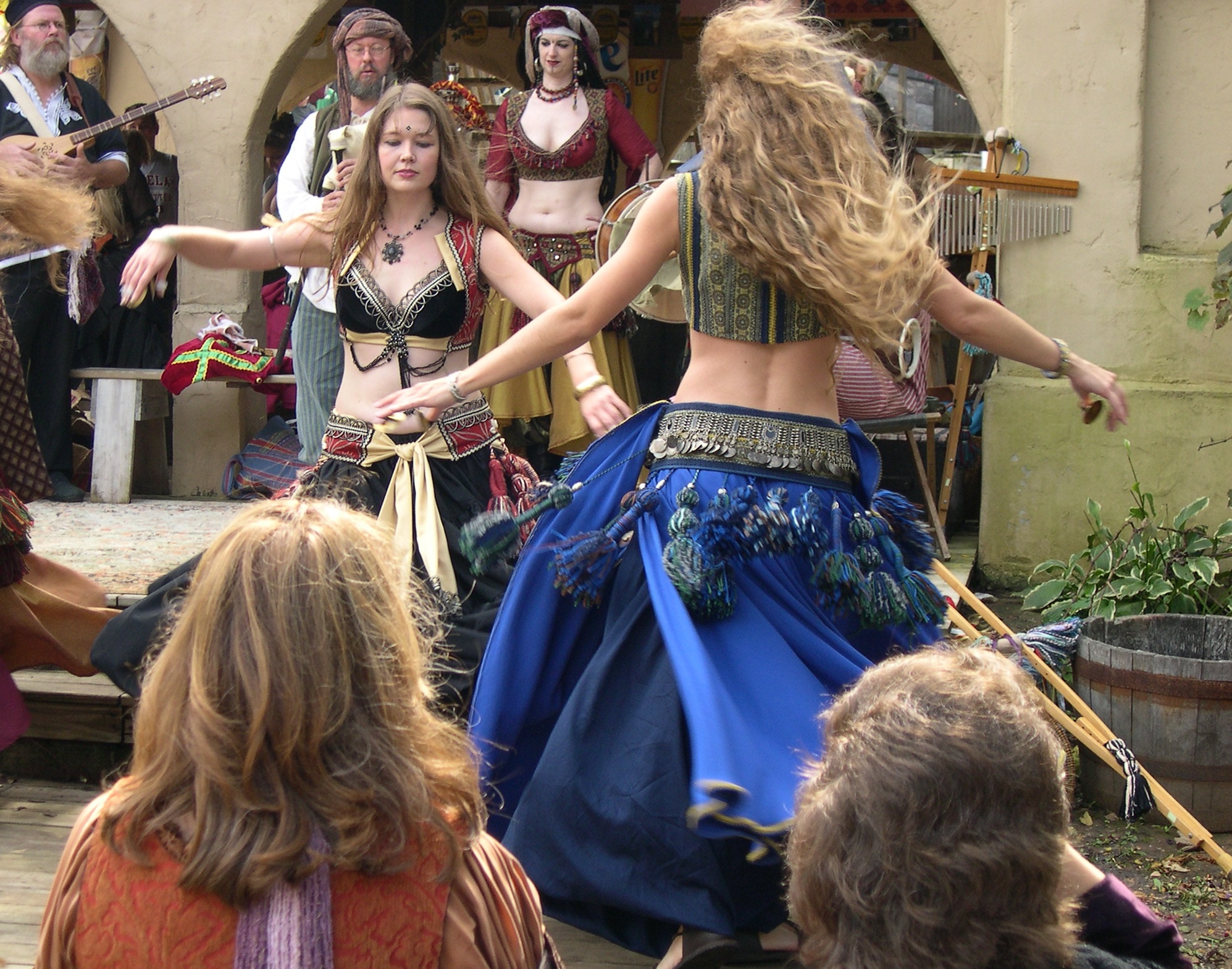
belly dancers for CWG croppedLast month, I talked about beginnings and how important they are to drawing the reader in to your book. It seems appropriate to continue on to story middles today.

Middles ought to be pretty simple. After all, it’s the stuff that happens between the beginning and the end. Many authors, however, struggle with middles. There’s a term for middles that lose their direction and energy: the dreaded Sagging Middle.

How do we keep our middles on task, doing the unsung but necessary work of getting the reader to the end of the story? How do we keep the energy high? Most important, how do we keep the reader engaged?

It’s best to step back and look at the big picture first. What is the underlying theme of your story? Is it clear and evident in every scene, though it’s likely never stated outright? Theme should be the basis for every action that takes place, every decision a character makes, and even descriptions of setting. Every word you use can and should further the development of the theme you’ve chosen. For more on THEME, click here.

Next, what about story structure? If you’ve built even a rudimentary five-sentence outline of turning points for a particular story, it is much easier to keep the individual scenes pointed in the right direction. No ambling about aimlessly in the rose garden and boring the readers—unless, of course, the rose garden is critical to both the theme and structure of this story! In that case, amble all you want, as long as there is purpose. For more on STRUCTURE, click here.

Now we get down to the nitty-gritty. Each scene in a story must have tension. This is sometimes referred to as conflict, and always results in suspense. Suspense isn’t defined as horror movie scary stuff; it’s simply a reader asking the question “What happens next” and turning the page to find out.

This is the key to toning up the middle of your book: Every scene and each chapter must have higher and higher stakes for the main characters. Each character has more to lose as the story progresses, and each character is forced into increasingly difficult choices. As situations evolve, and as the characters slog their way through their troubles, they reveal their increasingly deeper secrets to the reader. The characters struggle, and they grow. The reader identifies in some way, roots for them, and is willing to be swept along. For more on ROOTING FACTORS, click here.

One caution: Watch for filler, and ruthlessly cut it. It’s easy to rationalize that since this is the middle of the book, the reader is already caught up in it and won’t put it down, so you don’t have to work quite as hard, and nobody will notice that this whole scene/chapter doesn’t really advance the story; it’s just there because you, the author, like it. Nope. Readers are smart. Cut the scene if it doesn’t advance the story. Cut the details if they don’t advance the story. I know. It’s hard. If it’s too hard, create a file for deleted scenes and put the cuts there so they’re accessible if you want them later. I find that’s sometimes a necessary intermediate step, even though those end up fully deleted later. Human nature is pretty funny!

Once you approach the end of the book (or even at the end of chapters!), resist the urge to tie up loose ends too soon. I admit to that failing as a new author. My first attempts at chapters all had tidy endings. Wrong, wrong, wrong! Every chapter should end with an unanswered question. Analyze your favorite I-couldn’t-put-it-down book. What created that quality? I’m willing to bet it was ever more crucial unanswered questions, and lots of loose ends. For more on TENSION, click here, and for more on HOOKS, click here.

What tips do you have to share regarding middles? I’d love to hear a new take on the subject!

In the Beginning…

"The Beginning" Road Sign with dramatic blue sky and clouds.The most important part of your novel, short story, or even nonfiction piece is the beginning.

What compels the reader to keep reading? How do you craft a beginning that doesn’t bog down, one that keeps the reader engaged?

There are several schools of thought regarding beginnings. Depending on the genre, the beginning can create a normal world (think of the movies Star Wars or The Wizard of Oz), and let the reader get to know the characters in their natural habitat. Women’s fiction and literary fiction tend to follow this style. Caution: Choose the details of the everyday life carefully, to the point of foreshadowing what’s going to come nextnamely conflict. What’s at stake for the main character? In Star Wars, Han Solo saw his family facing the loss of their way of life, and peace. Dorothy, in The Wizard of Oz, engaged in a life or death battle to keep Toto.

What we tend to remember in these stories is the outrageous intergalactic characters and battle scenes of Star Wars or the Technicolor adventures on the way to Oz. Yet when one analyzes the story structure, the “black and white” ordinary life is where the story begins—and presages the main conflict in a way that amplifies the conflict when it arrives.

A different way to begin a story, common especially in suspenses, is in media res, which throws the reader into the deep end of the swimming pool along with the main character. Picture a book beginning with a young woman being snatched from a sidewalk and shoved into a van. The van speeds off—and of course the reader is going to turn the page to find out who, why, where, and what happens next??? This technique can be very effective. The author gives concise clues to setting (city or suburb, day or night, good neighborhood vs bad, etc.), characterization (she fights back or is paralyzed with fear, the snatcher and snatchee know each other and have shared history, etc.), and motivation (kidnapping vs bodyguards collecting an errant charge vs fraternity joke, etc.) without much else in the way of detail to ground the reader. It’s not for every story, though; imagine Dorothy opening the door of the house after setting down in Oz, with the story beginning in Technicolor. The event would lose much of its impact, and the subsequent conflict would lose its sizzle.

One of the most common mistakes new writers make is starting the story in the wrong place. My advice is to write it the way that makes sense to you, then come back when you’ve finished the whole thing and re-read the beginning. Chances are you’ll hit a certain paragraph where everything springs to life. That’s where your story really begins. One common suggestion is to dump the first chapter and start with the second. Personal experience: I had to dump the first three chapters of my first novel—they were that boring, even to me! But I had to write them in order to discover where the story really began. You may have to cut words, but they are never wasted; you always learn something important about your characters, even if it doesn’t end up as words in the book. 

Another common mistake is to explain the characters and back story (what happened before the book started). This is called an information dump. Resist. Draw your characters clearly through their internal and present thoughts; let the reader get to know them deeply, layer by layer. What brought them to this point will be revealed in good time. Another wise bit of advice I’ve come across is to get about thirty pages into a story before disclosing back story.

Dialogue is a great way to tell a story, and the beginning is no exception. If you can incorporate dialogue at that point, do so, and make it unforgettable.

For a fun exercise, go to the library or a bookstore, or even your own shelf of well-worn favorites. Open to the first page and read the first line. Is it compelling? Intriguing? Why did you want to read more? How much information about the character, setting, motivations and tone did the author convey in those few words?

When it comes down to it, the story begins when there is a change in the main character’s life. The change can be subtle or cataclysmic, but that is the point at which you, as author, commence weaving a tale that will hold readers in thrall until the words The End.

How do you know where your book begins? Do you have a strategy for determining what the opening scene is, or who inhabits it? Please share!


Building Books: Story Structure

blocksSo you’ve decided to write a book! You might attack the admittedly daunting task the way I did the first time around: I started with what I thought happened first, wrote it, then what I thought happened next, wrote it, and repeated until I got to about 300 pages.

I will say now that I wish I’d had at least a rudimentary understanding of story structure before I began that project! I’m in the final edits of that story now, but it’s been a very long road, in part because I didn’t understand how to put the pieces together in order to come up with a coherent finished product.

For those of you who would like to explore mythology or screenwriting as a template, check out Christopher Vogler’s The Writers Journey website. From this link, click on the fourth item down: The Hero’s Journey, which will bring you to Vogler’s explanation of the twelve steps of The Hero’s Journey as identified by scholar Joseph Campbell. Very interesting stuff – and effective at a primal level because we humans are hard-wired to respond to story-telling.

In a similar vein, Kim Hudson’s The Virgin Promise  provides a thirteen step process from a feminine point of view. I used this in my most recent work, and it fit my purposes beautifully.

However, for me, those templates, as universal as they are, are sometimes confusing, so I tend to fall back on my favorite writing coach, James Scott Bell. He simplifies the process to a beginning, a middle, and an end. (I think we all could figure that one out!)

There must be a transition from one step to another, no matter what template or format you choose. It is critical to make each transition irreversible for the character. In other words, s/he has no option to return to “normal.” S/he must move forward – and the stakes must be higher.

The first major transition will likely come about one-quarter of the way into the book, although this varies from genre to genre. Thrillers may reach the first (irrevocable) transition early in the book.

A gripping book will have a series of events to fill the middle that lead inexorably to the final transition, and each of these events will have increasing tension and higher stakes.

The final major transition will come at approximately the three-quarter mark, and will be followed by the black moment (when all appears to be lost), the climax, and the resolution (end).

A good exercise is to take a paperback book and analyze it. Identify the first transition, the ratcheting of higher tension, the final transition, black moment, climax and resolution. Mark up the pages, or use bookmarks. Do the same with a movie. (I will admit to difficulty with these sorts of exercises, because I get so caught up in the story, I forget to analyze!)

For instance, in The Wizard of Oz, the first turning point is the tornado. Up until then, life is getting more difficult for Dorothy and Toto, but she hasn’t been pushed through the door of no return. But once she’s caught up in the tornado, she can’t go back. “Normal” is no longer available to her. The middle of the book is filled with the (mis)adventures of the Cowardly Lion, Heartless Tin Man, and Brainless Scarecrow. The final turning point (in my mind; feel free to disagree!) is the audience with the Great and Wonderful Wizard of Oz – who dashes Dorothy’s hopes. The black moment comes when Toto reveals that the Wizard is just an ordinary man, and has no magic to return Dorothy to her home. The climax is Dorothy’s discovery that she’s had the power to return within her the whole time; the resolution is her joyful reunion with the people she loves. Dorothy’s character has grown, learning her own worth and appreciating that which she has taken for granted.

Identifying turning points and understanding the structure of your story provides immeasurable help in the writing of the story, whether you use a more elaborate outline or simply go with a listing of the crucial points. An added benefit is that you’ve got the bones of a synopsis; it makes writing one of those ever so much easier!

As with anything in writing, each person is different, and different methods work best for each individual. I’ve struggled with The Hero’s Journey, but found The Virgin’s Promise easier to execute. Bell’s simpler approach is perhaps a better fit for the writer who hates outlines.

How do you approach planning and structuring a manuscript? Is there a method that works for you, or one that I haven’t mentioned? Please share!


NaNoWriMo Approacheth!

Writing on a deadlineWhat is NaNoWriMo? For the uninitiated, this acronym is short for National Novel Writing Month, and it has taken place every November since its inception in 1999. The idea is to crank out 50,000 words between November 1 and November 30—which works out to be 1667 words per day. Every day. On a novel, specifically a new novel.

Why would any sane person take part in such a venture? (I have asked myself that very question, usually at five in the morning as I rub the sleep out of my eyes and stare at the glowing computer screen…)

First and foremost, it’s FUN! Really! Put that infernal internal editor on the back burner and let your creative side take over! When you write that fast and that consistently, you don’t have time to agonize over word choices or plot points. True, a lot of what you might write is drivel, but I can guarantee you that there will be a wealth of gold and gems in what you produce. (More than you think.) The best part is that you actually end up with words that can be edited—as opposed to a blank computer screen with a blinking cursor and anxiety because you haven’t produced anything.  :-/

Writing is a solitary activity; therefore, perhaps the most important element of NaNo is community. There are lots of forums on the site itself, and many groups, such as CWG, create their own small communities for the month. There’s a move afoot on the CWG Yahoo group and the Facebook group to get one going. (CWG members, contact Ann Lewis or Karina Fabian if you haven’t been invited to these groups yet.)

Even more fun, many regional groups have sprung up and organize “write-ins.” Can you imagine how much fun is it to go to a sponsoring coffee shop and be part of twenty or fifty folks tapping away at their computers on a blustery November evening?!! There are kick-off parties before NaNo begins, and celebration parties after it ends. If you follow the official rules and win, you get a cool NaNo icon to put on your website. And you get a “participant” icon just for making the effort.

One of the byproducts of the discipline of NaNo is confidence. You discover it is possible to crank out lots of words—and you discover that your creative side wants to come out and play. Like any talent, the more you use and hone it, the stronger it becomes. Lauren Sapala has written a great blog on the benefits of NaNoWriMo.

Think about it. This time next month, you could be nearing the middle or end of your novel! I will admit that I’ve never completed the 50k goal—but I’ve hit more than 20k. Without the challenge, I would have written maybe 5k words for the month. Whether you “win” or not, it’s worth a try.

Will you? If you’ve never tried it before, why not? Do you think you might try this year? If you’ve done NaNo before, share your experience—the good, the bad, and the ugly!

On writing…better!

Pile of BooksWhat do you view as the most important element of your writing, or your writing life?

Passion? Yes, we all need that, especially when faced with rejection or obstacles in our quest for publication. But if passion were the most critical element in the making of a successful author, the bookstores would be overflowing with our works.

Persistence is certainly another closely related trait shared by successful authors. Again, though, while essential to success, it’s only part of the story.

Time (and balance) questions are often posed to well-known authors in Q & A sessions. It’s a challenge for everyone: how to juggle family/work/writing. That one has no pat answer. Each person has to find what works, and once a routine is established, be flexible enough to accommodate changing circumstances.

How about subject matter and finding a matching audience? Yep. Crucial. Have you written something that someone wants to read? How are they going to discover it? If you have a good handle on these basics, you’re a step ahead of many writers.

Let’s say you have all these ingredients. You’ve got a story (or a topic, for nonfiction writers), a passion for telling it, you are persistent, and you have a good sense of your target audience. You’ve created a workable plan that supports your creativity.

Anything missing?

I would humbly propose that commitment to development of one’s craft might actually top the list. If the final product is full of misspellings, inappropriate word choices, poor pacing, clichés, etc., no one is going to want to read it, no matter how awesome the premise.

Your goal is for readers to snap up your amazing work! And then clamor for more!

Development of craft can come through formal schooling (college coursework, or in-residence classes), informal schooling (online classes or workshops at conferences), or books. I’d like to share my favorite books on the craft of writing. Some of these have garnered mention in my contributions to the CWG blog over the past year or so, but I thought it would be helpful to list them together. I’d also love for you to jump in with your favorites.

  • Self-Editing for Fiction Writers, Browne & King. The first craft book I ever bought, its precepts remain timeless and valuable.
  • Plot & Structure, Bell. Great for learning, well, how to structure fiction.
  • Conflict & Suspense, Bell. How to keep your reader turning the pages. The ideas pertain to all fiction, not just suspense, and can be applied to nonfiction, as well.
  • Revision & Self-Editing, Bell. Just what it says. (*Note: The last three books are by James Scott Bell, and are published by Writers Digest, which offers an extensive list of books on the different aspects of craft. There are other books on these subjects by other authors and other publishers.)
  • Save the Cat!, Snyder. Intended for screenwriting, it is a great resource for learning story structure and for increasing the level of dialogue (a trend in modern fiction).
  • Writing the Breakout Novel, Maas. Everything about novels and how to balance the elements, written by a high-powered literary agent.
  • Break into Fiction, Buckham and Love. Perhaps more geared to the genre of romance, but more broadly applicable.
  • Writing a Romance Novel for Dummies, Wainger. A top editor with many years of experience, this peek at our work through her lens is invaluable. Again, the content can be more broadly applied.
  • Believable Characters, Creating with Enneagrams, Schnebly. A method for creating rich characters based on personality types.
  • Punctuation, Plain and Simple, Edgar C. Alward and Jean A. Alward.
  • Roget’s Thesaurus.
  • Any good dictionary.
  • Words That Make a Difference, Greenman.
  • The Elements of Style, Strunk and White.

Books by successful authors about writing on my shelves:

  • On Writing, Stephen King
  • How I Write, Janet Evanovich
  • Escaping into the Open, the Art of Writing True, Berg.

Believe it or not, this is not a complete list of my reference books. Some of the rest duplicate the content of the ones listed, or stray from a strictly-writing focus. Have I read all of these? You bet. In some cases, several times over. Have they helped me? Absolutely. Would they help writers of the submissions of a recent contest I judged? Yes, yes, and yes again.

What references do you keep at hand as you write? What books do you consider so essential that you’d buy a copy for your favorite protégé? Let’s see how many different books show up in this list! Thanks for contributing to a reference gem for our fellow authors!

Which way???

Did you go to Catholic Writers Conference Live? Or perhaps you’ve been lucky enough to attend another writers’ conference in the past few months. You’ve come home with a mind spinning with possibilities. Suddenly you have options, and choices to make. You’ve pitched a book (or two, or three), and hurriedly polished your work in order to send it to interested editors or agents.

Maybe you sense a sale in the offing. (Cue cheering crowds and confetti!)

Or…maybe not. Maybe your work straddles two genres, or maybe publishers are saying your story is unmarketable. Or worse, your genre is dead. Whatever the case, you’ve found no takers.

No need for discouragement – not in this day and age. Now you can publish your work by yourself. Five years ago, self-publishing was still new, and still carried a fair amount of risk. Print on demand (in its current form) didn’t exist, and an author basically had to commission a small print run out of their own pocket. Without the ability to market or access traditional booksellers, more than a few self-published authors ended up with a garage filled with thousands of unsold books – and a big hole in their coffers. Thanks to the explosion of e-books, authors of well-written fiction can now publish their own work.

Rather than go into the nuts and bolts of how to self-publish, let’s examine the pros and cons of taking on the venture.

At first blush, there is no con. After all, you just format and upload your work and wait for the money to roll in. Well, not so fast.

It boils down to: How much work are you willing to do, in order to succeed? And how do you define success? The answers to those two questions will drive your decision.

As a self-pubber, you are responsible for obtaining quality editing (yes, you must do this, and no, critique partners don’t count), formatting, cover design, obtaining ISBN numbers, finding out how to upload to the different platforms (Kindle, Nook, Smashwords, etc.) and then doing it, and promotion.

Some people relish the control they have over the process; others would rather poke their eye out than deal with all the details. As a self-pubber, you will create business relationships with cover designers, free-lance editors, and formatters. You will build an online presence and platform. This includes at least a website (complete with “buy” buttons) and an author Facebook page.

Marketing and promotion are essential. Getting your book noticed now that “everybody” is self-pubbing is not an easy task. Depending on your comfort level and ability to create and manipulate social media, you may face a steep learning curve – or pay experts to build and maintain your website, etc. Either way, it takes time and effort to market. *Note: Marketing and promotion are required of all authors nowadays, whether their route is via traditional publishers or self-publishing.

Sound like something you’d like to tackle? Then here are a couple of important things to keep in mind.

The most critical item in self-publishing is having a quality product. That means your book has to be the best it can possibly be. No ‘throwing it out there’ to see how it does. If the quality is mediocre, or worse, poor, you’ll generate bad reviews on Goodreads or Amazon. It is very difficult to entice people to try a subsequent work if the initial one was of poor quality.

The best way to ensure quality? Surround yourself with a superb team.

Before you jump into the self-pubbed fray, pay for a free-lance editor. At three to five hundred dollars, it’s a chunk of change, but every successful self-pubbed author I know views this step as vital. Read other people’s self-pubbed books, and when you find one that’s well-edited, contact the author to find out who they use. The best ones are booked a year or so out.

Find a great cover designer. Even in e-books, a sloppy or amateurish cover can kill sales. Same for formatting. Most readers will let an occasional error slide, but repeated errors are annoying.

Build a strong online network. Word of mouth still sells more than anything – but when your ‘word of mouth’ is a small group of authors with a similar readership and ten to twenty thousand Twitter followers each, ‘word of mouth’ takes on a whole new meaning. Too, there are Twitter accounts that exist solely to promote self-published works.

Other options are available if you choose to not take on the responsibility of self-publishing. Many smaller e-publishers are springing up to serve specific niches. You give up some of the profit in return for not having to go it alone. A ready-made team might be the perfect solution.

Or consider the hybrid route. Self-publish some work and seek traditional publication for others. Mix and match between larger and smaller houses.

Having a clear plan is essential. And since this is the Catholic Writers Guild, it is imperative to begin the discernment process with prayer. It’s crucial to align ourselves with God’s plan for us and our work. Sometimes an examination of conscience reveals that our ego or pride is driving our insistence on a particular path. Neither avoidance of rejection nor arrogance will serve us (or God) well.

What are your thoughts regarding self-publishing? Can you add some wisdom gleaned from your experience? What led you to take that path? And what have you found to be the most important elements for success?