Dismantling Writer’s Block

Writer’s block.

I don’t believe in it.

Okay, I’ll hedge that a bit.

All writers have moments when the words don’t come, or they have to be pried out of our brains like candy out of a three-year-old’s grasp. I do acknowledge that fact. Those moments are not fun.

Those moments are always uncomfortable, even anxiety-provoking.

“Writer’s block” is a great excuse when you need one.

But I’ve learned that when I run up against the dreaded blank-page-combined-with-blank-brain syndrome, rather than “try harder,” I need to dig deeper.

For me, writer’s block is a symptom, not a disease. It almost always shows up when something else is wrong.

I’ve run up against it twice in the past couple of weeks. The first time, I was working on revisions to a book length manuscript. The rut began to form when I tried to revise in accordance with a critique partner’s suggestions. Mind you, there was nothing at all wrong with her suggestions; I understood and agreed with them. And yet the more I tried to comply, the deeper the rut became, until I was stuck.

When I finally stepped back and reevaluated, I decided to trust my own instincts and disregard the advice. The floodgates opened. Ta-da! No more writer’s block.

The other instance was when I was trying to write a post for a guest blog appearance. I got so tied up in how awesome all the other guest-bloggers were (and how hard it was going to be to compete with them) that I couldn’t think of a subject to write about. Fear of the unknown kept my fingers off the keyboard, with that blasted cursor mocking me.

And then I recognized what I put in parentheses in that paragraph.

I know better than that! At a simple decent-human-being level, or at the level of maturity befitting the color of my hair, I know better than to compare myself to others. And at the level it matters most, as a Catholic Christian believer, I know that we are all given the exact gifts God wants us to have. I can entertain exactly zero envy over the other bloggers’ humorous or clever or passionate posts. Once that flash of insight came, I was able to write.

Here are some of the tools for dealing with writer’s block I’ve discovered over the years, none of them my own, by the way. I credit the many authors who traveled ahead of me with these ideas!

1.       Give yourself permission to write badly – and then write. The words you tap out on your computer are not etched in stone. You can delete what doesn’t work later, so just start putting words on paper, so to speak. I’ve often started out with “I have no idea what to write next, but I have a sense that such-and-such character might do/say this, or that plot idea might happen.” Within a few sentences, it usually morphs into something I can work with. The unanticipated gift of this method is that I often discover a gem that livens up the story.

2.       Get out of your own way. Figure out what’s wrong. If there are underlying issues, acknowledge and face them. If fear has you paralyzed, stare it in the face and then stomp over it. We are all insecure. We all fear failure, success, taking a risk, criticism, making a commitment. Deal with what ails you, and then write anyway. If there’s something wrong with the manuscript, try writing the scene from a different character’s perspective or go a different direction for a while.

3.       Change your scenery. Get up and walk away from the computer. (I can’t tell you how many times a solution came to me as soon as I shut down the laptop and stood up!) Even better, go outside. Smell the flowers. Let the sunshine warm your face. Listen to the raindrops on the street, the leaves, the roof. Go to a museum, or a movie. Go to the zoo and watch people watching animals. Go to the mall and make up outrageous stories about the people walking by.

4.       Get physical. Go for a walk or a hike. Dance. Play a game of tennis or hopscotch or go for a bicycle ride. Anything to get the blood flowing in your muscles—and in your brain.

5.       Write something else. Write a thank you note or an email or an honest-to-gosh real live, old-fashioned letter! Free write, or use a writing prompt. Write fiction if you’re stuck on a nonfiction piece, and vice versa. Interview your characters; ask them what they want you to know.

6.       Do something creative with your hands. Draw or paint a picture. Do it with your non-dominant hand. Make a quilt square or embroider the beginning of a pillowcase design, if you like fabric arts. Cook something really yummy from scratch, and enjoy the aromas and textures along the way. Garden, whether it’s indoor or outdoor. Write something longhand. Try that with your non-dominant hand!

7.       Engage with another human being. Hey, we’re writers. It’s a solitary activity. Sometimes we forget how much we need to connect with others. Take a break and play with a child. Talk with your spouse and make eye contact. Volunteer, officially, or just lend a helping hand. Go out for coffee with a friend, or invite another family over for dinner.

Rather than a curse, writer’s block can be a blessing. Listen to it. Let it tell you what you need to do, or not do.

Just don’t let it be an excuse to keep you from your passion.

How do you identify writer’s block? What strategies do you employ to get past it? What have you learned from it?


The “Whole Package” Novel

Are you currently writing a novel? If so, my previous post encourages you to read great books in order to be a better writer.

For me, as a novelist, my goal is to write novels that encompass the “whole package.” So what is the “whole package” in novel writing?

In my opinion, the best novels contain compelling “can’t put it down” unpredictable stories, brilliant character studies, believable dialogue and rich, variant language. The majority of contemporary books are not “whole package “ novels (although there are a few contemporary novels listed below).

Most novels tend to have one or two strengths but may be lacking in other areas. For example, Jodi Picoult’s books have brilliant character studies, narrative voices and crisp writing, but sometimes the stories are lacking. Mary Higgins Clark’s novels have great stories and a crisp writing style, but they’re usually formulaic.

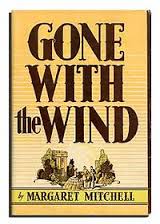
Gone With the Wind by Margaret Mitchell is one of those rare hard-to-find “whole package” novels: (Repeat from a previous post: I own a hard copy but downloaded this on Kindle for 1.99). This has become my favorite book of all time. Mitchell only wrote one novel in her lifetime, but it is the quintessential novel, especially if you enjoy historical romance. This book has it all: excellent, crisp writing, compelling story, intricate, believable and brilliant character studies and, most importantly, it is NOT formulaic. I don’t mind reading formulaic novels, but it’s more enjoyable for me to read a novel with unpredictable stories. The movie is a fair representation of the book, although reading the book offers richer character studies.

Reading and studying “whole package” novels will help novelists improve their writing.

Here are a few other “Whole Package” Novels:

The Time Traveler’s Wife by Audrey Niffenegger (This was also made into a movie, but I highly recommend you read the novel first. The movie is a fair representation of the book and I enjoyed both immensely.)

A High and Hidden Place by Michele Claire Lucas. My review is here. Excellent story, characters, writing.

Pride and Prejudice by Jane Austen. Many people don’t appreciate the rich, literary language of the early 19th century, but this is my favorite of Austen’s books. Austen’s books are rich in characterization, complex in storyline and her writing is exquisite. There are quite a few film adaptations; my personal favorite is this one with Keira Knightley.

One of Ours by Willa Cather (my review here)

To Kill a Mockingbird by Harper Lee. Most students will read and study this book at some point in their education. I read it first, in high school, then read it a second time when one of my sons was studying it. Again, Harper Lee only wrote one novel in her career and it was an incredibly moving one with rich characters, excellent dialogue, compelling story.

The Lord of the Rings by J.R.R. Tolkien: (The movie remains fairly faithful to the novels). Rich characters, beautiful writing, compelling story and symbolism all make this a whole package novel.

The Chronicles of Narnia by C. S. Lewis: I read these books out loud years ago to my boys at night before they went to sleep. Highly recommend.

Do you have any favorite novels that encompass great storytelling, rich language, believable characters and unpredictable plot lines? Feel free to comment below!

copyright 2013 Ellen Gable Hrkach

Community! Find it in Unexpected Places!

I took up a swimming challenge at our local YMCA in January, and I’ve had plenty of time while plowing through the H2O to contemplate. One of the things that came to me recently – and which I did not anticipate – was what swimming (or any solitary sport), writing, and faith have in common.

Did you notice the word solitary? Swimming is singularly solitary, because your face is in the water and the opportunities for interaction are pretty limited. This is true for writing, minus the face-in-water part. It’s an internal activity. Faith comes down to one’s core beliefs, which is, by definition, extremely individual.

What I never expected to discover with swimming is community – and yet it is there. Maggie, Ann, and Linda show up at roughly the same times I do for laps. They bring smiles, enthusiasm, and energy which all rub off on me. (Hopefully, I bring the same to them!) They also challenge me to do more than I ever thought possible, both in distance and in perseverance.

This is what a faith community does for us, as well. While we are responsible for nurturing our own growth, its potential is exponentially expanded when we share our faith with each other, and deepened when we gather to worship as community.

Writing communities can be powerful agents of support and encouragement, too. Because of the solitary nature of writing, it’s important to connect with other writers, whether through online venues such as Catholic Writers Guild, or through face-to-face opportunities.

So how is one to find these opportunities? The question of finding critique partners has come up a few times recently in the CWG blog. It’s not always an easy question to answer. The first step is to find writing groups. You’re here, so you’ve discovered this wonderful community. There are some forums for critique groups; check them out and see if they are a good fit. Also, participate in the live and online Catholic Writers Guild conferences whenever possible, and consider saving up for the annual writing retreat. Opportunities abound within this group!

Beyond CWG, check with your library or a nearby college for local groups. Google writers, authors, or writing groups in your area. (I recently found two groups in my area that I had no idea existed; you might be surprised!) Attend a local or regional writing conference, even if it’s not in your genre. You might connect with another author and decide to trade manuscripts for critique. Sometimes critiques are raffled off as writing fundraisers, or are offered as an extra benefit at a workshop. While this last idea isn’t as likely to result in long-term relationships, you will get some insight on how to improve your writing.

Many special interest associations exist, and most have local chapters. Check out American Christian Fiction Writers (which is focused on the Inspirational market and has a slightly different audience than the Catholic Writers Guild), Sisters in Crime (misters are welcome to join), or Romance Writers of America®. RWA® has a wide variety of online special interest chapters, one of which might address your genre, although all are focused on writing some variation of a Happy-Ever-After ending. Mystery Writers of America has an associate membership level for unpublished writers.  SCBWI, Society of Children’s Book Writers and Illustrators, is a gold mine of information for writers of children’s and young adult literature.

You might want to try out Critique.org, an online group that runs on critique exchange. No cost is involved, other than your time in exchange for someone else’s. Or consider an online writing class. One of my critique partners built a years-long critique relationship with a fellow writer she has never met in person. You can find class offerings on Announceonlinewritingclasses, a yahoo group. (Be judicious. When I first discovered online classes, I signed up for several at the same time, not realizing how much time and energy they can take. The cost adds up, too, but if you only sign up for the ones that really apply to your interests and level of expertise, it’s possible to develop a critique relationship with a like-minded author.)

For more on critique and critique groups, see my CWG post from May 22, 2012.

How have you found a writing community that meets your needs? How did you find Catholic Writers Guild? My guess is that many of us came from other groups; share what was best about them!

Unique Marketing Opportunity – The CWG Booth

Every year at the Catholic Marketing Network Trade Show, the Catholic Writers Guild organizes a booth which displays members’ books. Wholesalers, bookstore owners and other attendees can see, page through and even read excerpts of displayed books. This is a well-attended event so it presents a unique opportunity for CWG members.

It’s time again to gather books for the booth. You don’t need to attend the conference or trade show to have your book displayed. As you can see from the photo, it’s an extensive booth (usually taking up three to four booth spaces).

This year’s trade show (and simultaneous Catholic Writers Conference) is August 7-9, 2013 in Somerset, New Jersey. To take advantage of this great marketing opportunity, your book must be pre-approved!

We are representing the Guild and its mission, so books must be approved to ensure they conform to Catholic principles. The books do not need to be exclusively Catholic, but they do need to be free of any philosophies or elements that are contrary to Catholic beliefs. We also look for a minimum standard of quality of writing. Because we have so many members and because we anticipate a high number of requests, we have a few rules. Please read them carefully, as we will not be making exceptions:

1. If your book has been approved for the booth in 2011 or 2012, it is still approved for this year. (We probably still have the copy you sent us, plus any ordering information.)
2. If your book has been rejected in the past, it will not be considered again unless there have been significant rewrites.
3. If your book has the Seal of Approval or an Imprimatur, it is automatically approved for the booth.
4. If your book has not been approved, you can either submit it to the SOA committee (link above) or submit it for screening by July 1, 2013.
5. Books scheduled to be published after July 1st can be submitted digitally before this date (if approved, a hard copy must be made available for display).

If you are able to attend the conference, there are additional opportunities to take part in author signings and readings at the booth.

For more information, please contact me – (Ellen Gable Hrkach, President and Booth Coordinator) at ellengablehrkach(at)gmail.com.

Narrative Voice, Characterization and Reading To Improve Writing

Novelists should always be willing (and eager) to improve their craft. Writing fiction is difficult and complex because of the many complicated aspects (narrative voice, writing style, imagery, plot lines, characterization, setting etc).

Whether you’re a bestselling author or an aspiring novelist, one of the best ways to improve your writing is by reading well-written novels. Read books and dissect them. Ask yourself, What makes this particular novel great? What makes it not-so-great?

William Faulkner once said, “Read, read, read. Read everything – trash, classics, good and bad, and see how they do it. Just like a carpenter who works as an apprentice and studies the master. Read! You’ll absorb it. Then write.”

Currently, I read at least 100 books a year, mostly novels. I enjoy immersing myself in a compelling story with believable, relatable characters, rich imagery. These are the types of novels I aspire to write.

I read at night before bed and often first thing in the morning. I read manuscripts that are submitted to my publishing company. I enjoy a variety of contemporary novels and often read a classic or two here and there.

When I was a newbie, my editor recommended I read several books, then asked me to figure out what each book’s strength was. The first novel on the list was a book entitled “Picture Perfect,” by Jodi Picoult. (Spoiler alert) It’s a novel about spousal abuse. Picoult brilliantly creates an abusive – yet sympathetic – husband. So much so that when the abusive husband is begging his wife to return, I said out loud, “Oh, give the poor guy another chance.” I eventually came to my senses, but I realized that it was the author’s brilliant characterizations that made me want the abused wife to return to her abuser.

The following list is recommended for helping with character studies and narrative voice. It is, by no means, definitive. There are literally thousands of great novels with excellent characterizations.

Gone With the Wind by Margaret Mitchell (I own a hard copy but downloaded this on Kindle for .99). This has remained my favorite book of all time and I read it every few years. Mitchell only wrote one novel but it is the quintessential novel, especially if you’re writing romance. This book has the whole package: excellent, crisp writing, compelling story, intricate, believable and brilliant character studies. (More on the “Whole Package” novel in my next post.)

My Sister’s Keeper by Jodi Picoult: The winner of numerous awards, this novel is filled with brilliant character studies and narrative voices. The movie version was okay, but the book is much better (although like most of Picoult’s books, the ending is unexpected).

The Complete Stories by Flannery O’Conner: Just pick any of the short stories in this thick book and you’ll learn from O’Connor, who was a master of crisp, edgy writing and excellent characterizations.

Brideshead Revisited by Evelyn Waugh: A classic. Brilliant characterizations.

Death Comes for the Archbishop by Willa Cather: (read my review here) Also a classic.

The Lottery (short story) by Shirley Jackson (available free online) Excellent character studies.

Jewel by Bret Lott: This novel’s strength is the main female protagonist’s believable, moving, well-developed character.

A Farewell to Arms by Ernest Hemingway: This is my personal favorite of Hemingway’s novels. In this atypical war romance, I think the author’s strength is in the characterizations of the two main characters. I saw the movie with Rock Hudson and Jennifer Jones first, but the book captures their characters better than the movie. (Currently .99 on Kindle)

Do you have any favorite books or short stories that are strong in narrative voice and characterization? If so, please feel free to comment below.

Next month: The Whole Package and Reading Books that encompass great characters, unpredictable compelling stories AND rich, crisp writing.

Copyright 2013 Ellen Gable Hrkach

Balance in Fiction Writing

Balance.

A few days ago, Ellen Gable Hrkach posted a great blog on common errors to avoid in writing fiction. One item she mentioned got me to thinking, namely too much dialogue.

What’s ‘too much’?

A lot of times that depends on the genre you’re writing. Clearly, screenplays and graphic novels rely almost exclusively on dialogue.

Novels, however, require a blend of narrative, description, introspection and dialogue. The ratio of one to the other changes with both prevailing ‘style’ and with genre. Novels written a century ago utilize long passages of description and flowery stretches of dialogue, whereas the trend today is for faster, tighter construction in all areas, especially dialogue.

How do you know if your manuscript has a good balance? Part of this comes down to voice, that elusive factor that makes your work yours. However, we’ve all had the experience of reading a book and finding ourselves skipping over passages, maybe even pages. If we skip too much, we’ll put the book down – and if that happens, we may never pick it up again.

Not good, if you’re the author.

Next time this happens, stop and analyze why you lost interest. Chances are there was too much of one element on the page. Too much description. Too much internal monologue, or perhaps too much narrative. Sometimes too much dialogue, but if that’s problematic, it’s more likely because the ‘voices’ of the characters are too similar. They need to be so distinctive that the reader knows who is speaking. Even so, if they go on for pages, the reader may tire. (For more on dialogue, click here.)

One helpful technique is to analyze your manuscript for the different elements and highlight the pages. Margie Lawson teaches a method for this in her Deep Editing classes. Choose different colors for narrative, description, emotion, dialogue, and internal thought, etc., then go to town with your highlighters (or crayons, or whatever your inner child wants to play with!). If one color dominates a page, revision might be in order. One of my critique partners occasionally says of my work, “This section has too much yellow.” Since we’ve both taken Lawson’s class, I immediately understand what the problem is. My work flows better if the page has a rainbow of colors. Another application of this technique is to apply your highlighters to one (or more) of your favorite published books.

Keep in mind there is no ‘one size fits all’ in fiction. Thank God! Otherwise, reading would get boring! Check out a wide variety of books to see how other authors manipulate the elements that create story.

For instance, action novels such as Lee Child’s Reacher series use lots of dialogue, but it’s nearly all less than one line long. Child also uses relatively long stretches of description/narrative, and he tends to go with one or the other at any given point. His books are effective, powerful, and popular.

Debbie Macomber takes a more blended approach in her wildly successful women’s fiction and romance novels. You will find narrative, description, introspection and dialogue on nearly every page.

Many authors are exploring screenwriting classes, some for the challenge of breaking into a new field, but most for a better understanding of both story structure and use of dialogue. While this is an excellent strategy for honing of specific elements, written fiction is more effective and more engaging when the entire spectrum of tools are used to create the final product.

The subject of balance also touches on pacing, which is a topic deserving of its own post. Narrative, description, and interior monologue can slow the pace—although skillfully applied, they can ratchet up the tension until it is unbearable. Dialogue tends to speed things up.

As you can see, there isn’t a cut-and-dried answer to ‘how much is too much’. But a willingness to analyze and evaluate your writing will always make it stronger. Look at your work with an eye toward what you want to accomplish in a given scene. Learn to use all the tools in your toolbox. Buy books on the craft of writing. Review them once in a while. Take classes. Be open to feedback from trusted colleagues, and then decide how (or if) you will apply their advice.

Find the best balance for your story and your voice.

Have you struggled with this aspect of writing? Do you have tips to share? Please do!

Improving Your Fiction Manuscript: Common Errors To Avoid


A good novel begins with a great story, a compelling plot, interesting characters. But it doesn’t end there. A good novel also needs to be well written.

I’ve been editing other authors’ novels for two years and writing novels for ten years. What follows are the most common mistakes I see in fiction manuscripts and self-published novels. By finding and fixing these common errors, you can improve your manuscript before it gets to the editor.

1. Overuse of Adverbs
If you’re working on a manuscript right now, do a “find” or “search” for every word that ends with ly. Now remove half of them. Your manuscript is already better. Even without doing a search or find, read each sentence. Are there two adverbs in some sentences? Recent manuscripts I’ve read contain sentences with two or three adverbs.

2. Repetitive Wording
Just, so, very, some. It’s difficult for an author to see his/her own mistakes. Have someone else read through your manuscript to assist you with this. For me, I often can’t see that I often use the same word often in the same sentence (see what I mean?) Or…read your manuscript backwards. This helps to show you areas of repetitive wording and other common errors.

3. Show Don’t Tell
This is a big newbie mistake.

He was sad.
She was amazed.
The look on her face was happy.

Now go through your manuscript and pick out all the times an emotion is simply stated and not described. Instead of writing “He was sad,” try something like “his shoulders slumped” or “his eyes were etched in grief.” Instead of writing “She was amazed,” experiment with different descriptions. One of the most helpful resources I’ve found is The Emotion Thesaurus.

A seasoned reader can spot a badly written, amateur book a mile away and usually within the first two pages. And…it will be more interesting for your reader if you allow them to visualize what’s going on.

4. Too Much Interior Thought
When I presented the initial draft of my first novel to my editor, one of her biggest complaints was “too much interior thinking.” When a character’s italicized thoughts are on every page, twice a page, that’s too much. It’s almost as if the author is lazy and just wants to tell the reader exactly what the character is thinking. Interior thought is fine when used sparingly, but not several times a page. Describe how they’re feeling instead.

5. Comma Errors, Grammar Errors
A great book for helping fix comma errors is:Eats, Shoots and Leaves. As well, search on Amazon for good grammar books. There are many.

6. Exclamation Points!
First-time novelists tend to use too many exclamation points. Do a search and omit most of them (replacing them with descriptions of the tone or face).

7. Too Much Dialogue
My first novel, Emily’s Hope, is 60 percent dialogue and 40 percent narrative. As a beginner, I didn’t know any better. Quality novels tend to use dialogue to serve the narrative, not the other way around. Dialogue can also be a lazy way to show character development. Dialogue is important, but if it’s the mainstay of your book, write a screenplay instead.

8. Underestimating the Intelligence of the Reader (e.g. hitting the reader over the head)
Here’s an example: He was sad. He was depressed. It was hard for him because he seemed so sad. Okay, we get it. He’s sad. Once is enough…and even at that, it’s better to describe what he looks like and feels like.

9. Avoid Descriptive Clichés or Sayings
“She felt like a million bucks”
“Smoother than a baby’s bottom”
Well, you can think of many. Create your own descriptive metaphors and similes instead of using well-known cliches.

10. Point of View
Many first-time novelists tend to use omniscient point of view (POV), that is, in any given scene, the author shows what’s going on in everyone’s mind, even within the same paragraph. This is difficult to do well, even for the experienced, bestselling novelist. And…it can be confusing for the reader. If you want your readers to bond with the characters, try using third person (intimate) POV. For more information, check out my guest post for Savvy Authors.

Eliminating these common errors will improve your manuscript before it even gets to the editor.

Are you working on a fiction manuscript? Do you have any favorite writing books you’d like to share? Please feel free to comment below.

Image purchased from iStock.

Text copyright 2013 Ellen Gable Hrkach

Digital, Print or Both?

photo copyright Ellen Gable Hrkach

New self-publishers often ask the question: should I go digital, print or both?

Ten years ago when I was in the beginning stages of self-publishing my first book, I never considered offering my book digitally on a wide scale. Although I occasionally sent PDFs to reviewers, the digital revolution had not yet taken off. As well, I was concerned about e-book piracy (which will be a topic of a future post).

Fast forward seven years. On a whim, I decided to convert and upload my first two books to Kindle (at the time, there were no conversion programs…it took weeks of trial and error to figure out how to do it). However, this “whim” soon became the best publishing and financial decision I ever made.

For more on how my e-books became successful, check out my previous blog post.

If I were doing it today, I would probably do both. However, digital publishing is ideal to start with since there are no major printing costs to spend up front and you can reach millions of people within hours.

I still use a printing company (more on “print-on-demand” companies in a future post) for hard copy books, but I sell many more e-copies than print. Because of this success, my company is now publishing other authors’ books.

Here are some pointers I’ve come up with for publishing e-books:

Use Professional E-Conversion Companies (or learn how to do it professionally yourself)
Once you’ve uploaded your book to Kindle, use the previewer to determine whether it’s formatted properly…I can’t tell you how many times I’ve downloaded a book (some by established authors) that was not formatted correctly, like missing words, letters or words on different lines, which makes it difficult to read.

Editor
E-books still need editors. Check out my previous post about editors.

Cover Designer
I can usually tell a self-published book a mile away by the look of the cover. Please employ a professional. The cover design should be a normal cover size (and please, not a horizontal rectangle!)
Check out my previous post about covers.

Book Blurb
Must be well-written and short enough to pique your prospective readers’ interest, but not give them too much information.

Kindle KDP or Kindle, Nook, Kobo etc.
You must decide whether to go exclusively with Kindle KDP or have your book be available on other e-reader sites. The advantages of having your book exclusively on Kindle is that you can do free promotions (successful free promotions almost always bring a surge in actual sales following the free promotion). Your book also gets to be part of the KDP Library that Amazon Prime members can borrow for free. But that doesn’t mean you don’t get paid. A few months ago, for every borrow, I actually received MORE money than I did for each sale (2.20).

To find out more about the KDP Program:
https://kdp.amazon.com/self-publishing/KDPSelect

If you’d prefer to have your book available for other e-readers, check out Smashwords as they are a distributor for the other e-readers. A warning, however: Smashwords does not offer the same sort of piracy protection that Kindle does. (E-book piracy will be a topic of an upcoming post…)

Digital or Print? I’d say do both…but start with digital!

Next month: Print on Demand or Off Set Printing?

If you have any comments or questions, feel free to comment below.

Copyright 2013 Ellen Gable Hrkach

Query Letters – How to write a good one

You’ve just typed The End on your manuscript, your gloriously awesome book that’s going to rocket to the top of the New York Times best seller list! Editors are going to line up at your door, fighting to be the one privileged enough to publish your work. Thousands of people will stand in line for your signature at book signings, and you’d better clear your schedule for the television talk show circuit. Oh, and make sure your bank account is big enough to hold all the moolah that the USPS is going to deliver to your door. You are on your way, baby!

Except…no one is knocking. In fact, no one is even lurking in the shrubbery. And when it comes down to details, you’re not entirely sure how to get the attention of those New York editors, or even agents. You’ve been talking up your project to all your relatives, your friends, even your acquaintances. You’ve let a select few read your work (you deserve to be paid for it, after all!), and they rave about it! Why, it’s better than (fill in the blank with your favorite—and very rich—author)!

What to do???

This is what: set up a systematic, professional plan for querying.

It’s going to require hard work, persistence, and a thick skin to sell your work. If you do this part right, you’ll have a much better chance of actually getting published. And if your work rises above the fray, you may make it to that rarefied atmosphere of best seller-dom. If you do it wrong, you’ll get nowhere in traditional publishing.

A query letter, whether submitted via email or hard copy, is a one-page business letter with a fairly standard format. It is brief, professional in tone, and your only chance to connect with some agents or editors. Let’s look at the elements of the letter, and some common pitfalls to avoid, as well:

Research your targeted agent/editor. Make sure s/he is interested in the type of project you are pitching. Don’t send your speculative fiction to an agent who represents cookbooks and memoirs. Make sure they are accepting new clients. Then, send an individually addressed letter to the specific person—and spell their name right. The advent of email queries has tempted too many authors to try the ‘Dear Sir or Madam’, multiple-recipient approach. Sound like spam to you? It does to the recipients, and most delete without reading. I can’t stress these items strongly enough. I follow several agents on Twitter, and the biggest reasons for not reading past the first paragraph of the query letter are included in this list.

Cutesy doesn’t work. Use white paper if submitting via hard copy, or no background wallpaper on your email submission. Use standard fonts and font sizes. Times New Roman 12 works well; beautiful flowing script fonts don’t. Remember, this is business—on your end and on theirs.

Pitch finished projects. Keep in mind agents get thousands of queries a month. An unfinished manuscript isn’t competitive.

Only include personal information as it relates to your project. Your family, hobbies, other career, etc., are not fodder for this letter. If your story has strong elements that include fighter pilots or dulcimer players, and you are a fighter pilot or a dulcimer player, then include that; otherwise, as fascinating as your background is, it’s irrelevant. Also, resist the urge to say that your mother (or best friend, or spouse, etc.) thinks yours is the best book ever. Let the agent or editor be the judge.

Do include any writing credits. I’ve had interesting responses with this. At a pitch session for book length fiction, I sat with one editor who literally wadded up my nonfiction writing credits and threw them away. Clearly, he was unimpressed. However, the next editor was quite taken with the same information and spent time exploring it. Those credits lifted my submission above the standard in her mind. Bottom line: it doesn’t hurt to include writing credits. At the very least, it demonstrates that another editor somewhere thinks your work is worth publishing, and that you have experience with the editorial process. Always list membership in writing organizations and contest wins or placements. Again, some agents/editors value this more than others. But if you don’t toot your own horn, they’ll never know.

Keep it professional and polite. A query letter is a great place for confidence, but not such a good place for an overinflated ego. If you have a critique group, run your query letter past them. Sometimes they can see an area you need to emphasize more, or can suggest better wording. As an aside, one of my critique partners discovered she was pitching the wrong aspect of her story. Once she corrected that, her queries began getting responses.

So the basic format is:

Dear Ms. Specific Name Spelled Correctly,

I am seeking representation for my completed, xxx-thousand computer word count (name of genre) manuscript, Best Book Since War and Peace, set in (time, place). (If the story has a theme that is unique, you may wish to include it here.)

The next two paragraphs are like the back cover blurb would be for the book. Generally, one paragraph for the main character, the second for the other lead. Go to the bookstore (or your private library) for examples. Your goal here is to give a solid sense of the plot, a taste of your voice, but not a synopsis with lots of details or the resolution of the story.

The fourth paragraph will list your writing credits.

Close with a polite ‘I hope to hear from you soon’ and make sure to include your contact information.

Keep a spreadsheet or record of your queries. Make notes; don’t be afraid to follow up after a reasonable time (usually listed on the website), but don’t stalk. The publishing community is a small one; take care to develop your reputation as one of consummate professionalism. Divas and stalkers have no place in the business.

Query. A lot. Set aside time, set a specific goal, and keep the queries flowing. Follow the submission guidelines on the websites; they differ. Evaluate your responses and adjust future queries accordingly. But keep at it. And continue to work on improving your craft. If you’ve significantly revised and improved a project, don’t be afraid to re-query. Agents and editors really are looking for great stuff to publish. Give your work its best chance to catch their eye.

There are lots of sites and books out there that are great resources. Check with your writing organization for reputable agents, and make sure agents you query are members of the Association of Author’s Representatives. *No legitimate agent will ever charge a fee for reading your work.

What have your experiences with querying been like? Any advice? Questions? I hope this post helps rocket your work to the status of ‘sold and published’ – and best seller-dom!


Gotcha! Hooks: What They Are and How to Create Page-Turning Fiction

What’s a hook??? I admit to scratching my head over that term, and for a much-too-long time. I would hear it when people were discussing top-selling novels; I’d see it in articles about the craft of writing. It was a frequent comment from my critique partners. “Not much of hook there, Leslie.” (Insert visual of me scratching my head. Again.) They tried to explain it to me: Leave the reader hanging at the end of the chapter. An unanswered question. A cliffhanger.

Well, that was all fine and dandy, except I didn’t get the concept. Until our critique group got down to business and I began to evaluate other people’s unfinished work. Over time, I began to recognize when the end of a chapter or scene felt flat. I began to see how they worked through the process. And then when I saw what my fellow writers did to spice up the work, it finally began to make sense. The final piece of the puzzle fell into place for me when I read James Scott Bell’s Elements of Fiction Writing – Conflict & Suspense.

The basic idea is to end a chapter with the character facing peril of some sort, whether an internal conflict or an external plot development. The higher the stakes for the character, the better. In fact, Bell suggests the character must face death in some form – physical, psychological or professional. Of course your story isn’t filled with melodramatic, overblown situations, but each character must have something crucial at stake in each scene. By setting it up so someone is forced to face failure at some level, and then leaving the conflict unresolved, you create a hook.

Hooks come from disaster (Bell’s death) looming, occurring, or simply being implied. The hook can be expressed through dialogue, as a plot twist, as emotion, or via action. The hook can be an actual question, although I’d caution you to use that technique sparingly. I read a book once that ended every chapter with a question, and it felt like old-fashioned middle grade fiction. It didn’t work so well in an adult novel. Whatever method you chose to create a hook, take care to do it in a way that doesn’t leave the reader feeling manipulated. That usually has the opposite effect from what you intend!

One of the most common errors is the form that many of us learned in school: To write each chapter with a beginning, a middle, and an end. This works for nonfiction, but if you want a fiction reader to say “I couldn’t put it down!”, try ending the chapter a paragraph or two early. You’ll be surprised at how well this simple technique works. Then use that bit as the beginning of the next scene.

Go to your personal library of favorite books, or to the library or bookstore. Page through your favorite authors’ work and read the last paragraph of each chapter. You’ll get a solid sense of what creates a hook in short order.

It’s always a question that leaves the reader wanting—no, needing to know what happens next??? Whatever you do, don’t answer the question until the end of the book! Well, you can answer bits of it as you go along, but don’t answer the main question of the book until the end.

Hopefully, the result will be an ocean full of readers happily chasing the hook you’ve dangled – and saying, “That book was so good, I couldn’t put it down!

How do you define a hook? What’s your approach to creating one? Share your favorite technique!