Cath-Lit Live: Encountering Signs of Faith

Cath-Lit Live: Encountering Signs of Faith

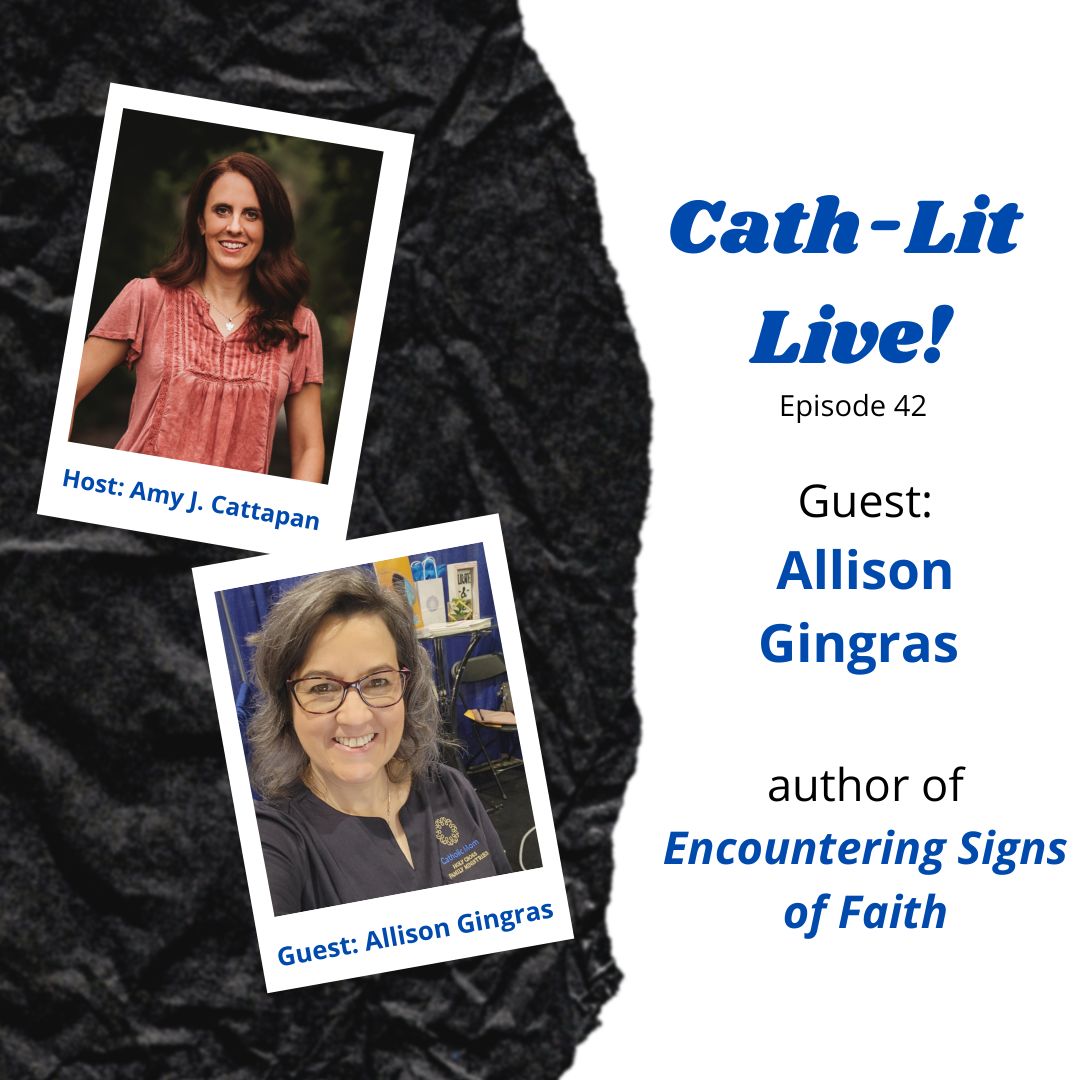
“Cath-Lit Live!” features brief interviews with Catholic authors who are releasing new books. Hosted by Catholic author and speaker Amy J. Cattapan, “Cath-Lit Live!” gives viewers a glimpse into the latest Catholic books while getting to know a bit about the author as well.


null


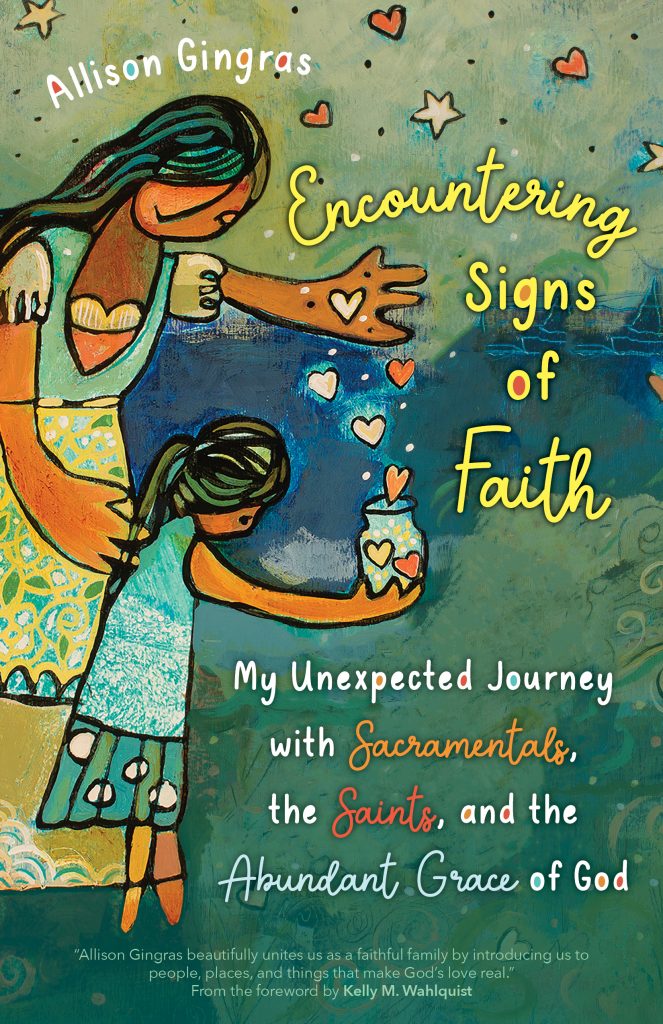
Encountering Signs of Faith: My Unexpected Journey with Sacramentals, the Saints, and the Abundant Grace of God by Allison Gingras

Allison Gingras shares how blessings, prayers, devotions, and objects such as rosaries and scapulars, also known as sacramentals—which prepare us to receive the grace of the sacraments—transformed her faith. In Encountering Signs of Faith, Gingras shares the story of how these helped her discern the adoption of her daughter from China, strengthened her faith as she waited to meet her, helped her bond with the toddler, and taught her daughter about her faith. Gingras offers examples of saints who inspired and embraced sacramentals, including Juan Diego, Faustina, Bernadette, and Venerable Patrick Peyton.

Discover the spiritual benefits of incorporating sacramentals such as sacred images, novenas, prayer cards, Lectio divina, and holy water into daily life. Reflection questions and grace-building activities are included with each chapter. Gingras will guide you to experience these sacred signs in a new way and to connect you more meaningfully to Jesus, Mary, and the saints.


null


About the author:

Allison Gingras is the founder of www.ReconciledToYou.com—where she shares the love of her Catholic Faith with stories, laughter, and honesty through everyday life! Her writing includes Encountering Signs of Faith (Ave Maria Press) and the Stay Connected Journals for Women (OSV). Allison is a Catholic Digital Media Specialist for Family Rosary and the Fall River Diocese. She hosts A Seeking Heart podcast and is co-host of the Catholic Momcast podcast.


You can catch “Cath-Lit Live” live on A.J. Cattapan’s author Facebook page. Recorded versions of the show will also be available to watch later on her YouTube channel and Instagram.


null


Copyright 2022 Amy J. Cattapan
Banner image via Pexels

The Road to Sainthood: A Fascinating Journey into Human Holiness

The Road to Sainthood: A Fascinating Journey into Human Holiness

On November 1, we celebrate the Solemnity of All Saints. Interestingly, more than 10,000 saints are venerated in the Catholic Church. How did over 10,000 people manage to be canonized? For starters, it is probably safe to say that since the Church has been around for 2000 years, that only works out to five saints a year. So, as far as the numbers go, that seems irrelevant. What is relevant is the actual process of attaining sainthood. The procedure is exceptionally stringent since no mistakes as to a candidate’s eligibility can go uncovered.

It should be noted that prior to the tenth century there was no set procedure for canonization. Frequently, different communities honored or venerated people whose stories were not backed by solid fact. Some stories were made up. For example, St. George the Dragon Slayer is from the third century. He is honored by both Muslims and Christians. Is the story fact or legend? In the French countryside St. Guinefort is venerated as the protector of babies. It seems that Guinefort saved a baby from a snakebite. The only problem was, Guinefort was a dog.

Interestingly, 52 of the first 55 popes became saints during Catholicism’s first 500 years. During the last one thousand years, only seven popes have attained sainthood, and that includes St. John Paul II and St. John XXIII.

The first saint formally canonized was St. Ulrich of Augsburg. He was canonized by Pope John XV in 993. During the 12th century, the Church, realizing they needed an orderly system, began to put a process in place. Then, in 1243, Pope Gregory IX proclaimed that only a pope had the authority to declare someone a saint. That process still exists to this day.

null


What is the actual process on the road to sainthood?

We know this for sure: sainthood is not an easy honor to attain. There are five steps in the journey. The first step begins right in the neighborhood where the proposed saint lived and was known.

After a person has been dead for five years (this time frame may be waived by the pope), friends and neighbors may get together and document all they can about that particular person. They would then present their evidence to the local bishop, requesting he begin an investigation into the person’s holy and exemplary life.

If the bishop feels the evidence is worthy of the cause moving forward, he may appoint a postulator to represent the cause. If, after further investigation, they feel the cause is worthy, they forward it to Rome. Now the evidence goes before the Congregation for the Causes of Saints. At this point in the process, the person receives the title Servant of God.

The Congregation for the Causes consists of nine theologians who thoroughly review all the documentation that has been presented to them. The person’s writings are examined, and all aspects of their life are picked apart. Nothing can go against the teachings of the Church. If they decide the candidate has been a person of “heroic virtue,” they are declared Venerable, and their cause moves on towards the next step; beatification.

Except in the cases of martyrdom, beatification requires one miracle. The candidate’s character and holiness have already been established, but having a miracle attributed to someone can take centuries. If a person has been killed for their faith, they have been martyred “In Odium Fidei,” which means “in hatred of the faith.”

This death is honored with beatification and the title Blessed is bestowed on the person. Father Jacques Hamel, who was murdered while saying Mass in France in 2016, is an example of someone experiencing this type of death.

Another death is called in defensum castitatis,” meaning “in defense of purity.” This, too, warrants beatification. Two young Catholic heroines who died in this manner are St. Maria Goretti and Blessed Pierina Morosini.

Pope Francis recently introduced a new road to sainthood. It honors those who sacrificed their lives for others. (The Mercedarians are known for this). This is called “Maiorem hac delectionem (nemo habet)” which means, “Greater love than this (no man hath).”

Finally, there is canonization. At this point, we are waiting for one more miracle. Upon that happening, the cause is presented to the pope, who makes the final decision. It is then a person is declared a saint.

All you saints above (and those in the queue), please pray for us all.


Copyright© Larry Peterson 2022

Image: Fra Angelico, Public domain, via Wikimedia Commons

Dear God

Dear God –

I sat thumbing through each page of my recent journal, earnestly looking for an article topic this month. It is not often that my idea bank runs dry. So, when that happens, it can be frustrating. I have made it a practice that when I feel God has given me a topic to write about, I highlight it or place a circle around it on the journal page. This makes it easier for me to find as I page through when the time comes.

I like to use a lined journal with pretty gold edges, and if it has scripture passages in the bottom margin, that is a perk.  I just love the days when my prayer and the pre-printed verses on the page blend perfectly. I often circle and highlight those moments as well.

Journaling has become a routine part of my prayer life.  My spiritual director insists that when you journal, you engage in an intimate prayer moment, and I can’t argue her point. I’ve experienced some pretty deep connections to what my heart wants to say to God as my pen glides across the page. Moments like this do not happen daily, which you might think they would since I am always writing on spiritual matters. 

Spiritual Writing happens for me when I listen to the guidance and nudges of the Holy Spirit. Always pointing me toward a topic or a situation that is, most often, something I would never consider writing about. Journaling prayer is quite the opposite. 

I believe the Holy Spirit is with me in the experience of prayer, but as I write to Jesus on my page, I am more apt to collapse in the emotions of what is happening in my life on that given day. There is a surrender that takes place, a release of fear in that I am entirely alone with Jesus and my thoughts. This may not sound any different than praying with words, but think about it for a moment.  If you had something really important to ask your best friend, do the words flow more accessible from your voice or your written hand?

I have an amusing memory that pops up surrounding that question. Growing up, I was always the shy and quiet one both at home and at school.  Almost every time I wanted to ask my parent’s permission for something, I left a handwritten note on the kitchen counter before bed. Then in the morning, I would race from my bedroom to see their answer. 

In those instances, fear kept me from vocalizing my request. In the act of writing, I was successful in stating my need. As a result, sometimes I received the answer I wanted, other times not so much. We can apply this same practice to our prayer. Fear may be blocking us from vocalizing our needs, but when the pen strikes the paper, it may pour from your heart. The result of our prayers, whether spoken or written, will have the same outcome as my childhood memory. Some will be answered in the way we hope, others not so much. Not knowing how God will respond is where our faith and trust in Him take hold.


Communicating with God in this way is not an exact science, and it will differ from person to person. If you are not familiar with journaling prayer, consider giving it a try. You might be surprised at how your heart and mind open up to communicating with Jesus in this way.  However, if you are the type where your voice is more apt to be free of clutter and genuine than holding a pen, then I say don’t stop speaking your prayers; use journaling as a supplement.

As I stated at the beginning of this post, I set out today to find an article topic. I felt I was initially unsuccessful until I realized that God had sent me into the journal with my hands up, asking for His help.  He accommodated me by reminding me why I journal in the first place. Opening my heart in the most intimate and vulnerable ways leads me to deeper communication and often results in God’s insightful guidance. Today was no different, as God led me to share these fruitful insights, which I know will lead Him into your heart. The next time you pray, keep your journal handy, when you feel the time is right, simply grab hold of your pen, and scribe: Dear God.

Copyright 2022 Kimberly Novak
Images: Canva

Taking A Trip Down Memory Lane

Taking A Trip Down Memory Lane

Memories can be happy, sad, or very painful. They can also be nostalgic. Old books, toys, and movies trigger certain memories.

A happy memory

The Fellowship of The Ring 2001 film came out when I was thirteen years old. Fans of J.R.R. Tolkien’s original book trilogy swarmed the theaters. Stores sold collectable items with pictures of the characters on top of the packages.

I remember another time when my sister read the first book out loud to my family while we were riding in the car. I was eleven years old at the time. Back then I did not understand who Bilbo was or why the ring was evil.

The first movie certainly made me curious about Bilbo, Frodo, and Sam. It also made me a Lord of The Rings fanatic! Like the rest of the fans, I watched the other two films and gobbled up the plot.

I cheered for Sam when he carried Frodo on his back in The Return of The King. His famous line “I know I cannot carry it for you, but I can carry you,” was very emotional.

Carrying each other’s burdens

Sam’s response in The Return of The King reminded me that we often need to carry each other’s burdens. We need to set a good example for our friends and family members in both the good times and the hard times.

Praying for friends, neighbors, and family members, along with little acts of kindness, can go a long way. We won’t always see in this life how our actions affected them. Sometimes only God knows.

Last thought for the road

The Lord of The Rings movie and book trilogy had a huge impact on my life. They helped me to admire the author. J.R.R. Tolkien. At the time, I didn’t know that he was Catholic. I found that out later. I was not a Catholic when I was a teenager, but little by little, God used things like these books and films to inspire me to think more about Catholicism and the Catholic Faith.

“The Road goes ever on and on

down from the door where it began”

(Tolkien, 1955).

This well-known little song from The Fellowship of The Ring reminds us that if we are open, God will lead us into situations that surprise us. Sometimes our actions might be a little bit like Bilbo’s. We want to remain at home, quiet and hidden from the world. Sometimes we end up in completely different circumstances.

Are you willing to take a long step out of your hobbit hole?


article by Angela Lano, copyright 10-13-2022
image by Pexels from Pixabay, free for commercial use

Never Let a Dream Grow Cold


“Place your hope in the Lord: be strong and courageous
in your heart,and place your hope in the Lord.”
Psalm 27:14 (New Catholic Bible)

Dreams come in all sizes, shapes, and forms like brilliant clouds in the sky. Sleep dreams are out of our control, like a movie that plays out as we rest. Life dreams or goals are the ones we think we can control. A common thread is waiting. 

Dreaming while we sleep requires little effort.  All we need to do is close our eyes (or shades as some refer to them), which God has provided for our rejuvenation. The waiting part of a sleep dream is in the moments before we drift off to our slumber.  The subject of the dreams is determined only by God and the unconscious thoughts which come alive as we dream. Often, a dream that occurs at night is only a blurred image that we can’t put our finger on.  The events of the dream may be remembered in days to come, but most often they fade into a vast array of past dreams.

As we sleep, dreams play out and affect us with happy, sad, or even scared emotional responses depending on the dream.  It is often helpful to keep a dream journal handy when you wake up and remember the dream vividly.  Recording the dream is beneficial in determining a dream pattern and perhaps a gift or insight from the Holy Spirit. Scripture tells us that God can speak to us through our dreams. Therefore, though sleep dreams may seem trivial sometimes, it may be fruitful not to let them grow cold.

We read about many sleep dreams in the bible. The three wise men who traveled to pay homage to Jesus received such a dream. We learn that “having been warned in a dream not to return to Herod, they departed for their country by another way” (Matthew 2:12).

Life dreams or goals are significantly more complicated than those mentioned above because they encompass our expectations and a high level of emotional attachment. Dreams of this nature are often afflicted with the task of waiting. We have heard terms like dashed dreams or a dream come true, two different extremes often requiring one to wait patiently.

We wait because we need or want something to happen, and when we are waiting for a dream or goal to come alive, this can bring frustration, sadness, and doubt.  One way to counterbalance this is to invite God into the pause. 

Taking life dreams into prayerful conversation with our Lord not only makes the wait manageable, but it also confirms that the plan aligns with glorifying God. I can’t count how many times my ambitions were suddenly halted. In each case, my emotional response was not pleasant until I realized that what I wanted was not of God but entirely my own vision.

I like to think of dreams for my life in this way, that I am waiting patiently for the Lord without expectations. I surrender my thoughts, words, and plans to the vision of my God. Prayer becomes the catalyst for making dreams come true. Growing in intimacy with God as we discuss the details of such dreams is a beautiful experience. Journaling each step, concern, and joyful moment helps to keep me aligned with God’s vision.

God wants us to succeed and be happy, and so He places the seeds for dreams in our hearts. Eventually, insights will become easier to recognize, and hopes and dreams will come alive. Never, ever let a dream grow cold. God is working in you, for you and His Glory!


Beautiful Writing Will Save the World


While spending time with my friend Megan Chalfant, a wonderful Catholic artist, a few years ago, I was introduced to the concept of art (including writing) as prayer. I understood that we as creators should pray over our work, dedicating it to God. But I hadn’t thought about how the act of doing the work God has called us to do is a kind of “Yes.” It’s a living out of our faith that is a form of prayer on its own. This realization sparked an elevation of my creative endeavors.

We chatted that day about many other powerful connections between faith and art/creation. It got me thinking about how we translate the concepts of God’s love and other eternal things into a language we can understand by creating. Since God made each of us unique, it makes sense that our expression of the truths we observe will take different forms than those around us. A sculptor, an architect, a community organizer, a musician, and a novelist will find vastly different ways to “say” the same thing.

Speaking God’s love into the world sounds a lot like evangelism, doesn’t it?

That day, Megan also gifted me a wonderful book produced by Likable Art called Created (In the Beginning God): Bridging the Gap Between Your Art and Your Creator. It opens with an admonition from Bishop Robert Barron to “Lead with Beauty.”

There is something unthreatening about the beautiful, which is what makes it so powerful as a pathway to God: first the beautiful, then the good, and finally the true.

Pope Francis focused on telling the story of beauty as a means of evangelism and as a balm for our souls during his message for World Communications Day in 2020. He emphasized that sacred scripture is the story of stories. It relates how God became story through his incarnation and how by becoming man, he made every human story a divine story. We can follow our Storyteller’s example as Catholic writers by sharing beautiful, good news.

Amid the cacophony of voices and messages that surround us, we need a human story that can speak of ourselves and of the beauty all around us. A narrative that can regard our world and its happenings with a tender gaze. A narrative that can tell us that we are part of a living and interconnected tapestry. A narrative that can reveal the interweaving of the threads which connect us to one another.

I love the idea of leading with beauty and regarding our world with a tender gaze. Because after all, as Dostoyevsky says in his novel The Idiot, “beauty will save the world.”

Beauty is powerful. But it is not always lovely at first glance. Dostoyevsky writes about beauty as “mysterious and also terrible.”  So while beauty often smooths our path to God, we aren’t called only to create easy-to-digest art or careful art that does not offend. Beauty can be found in suffering.

Authentic beauty… unlocks the yearning of the human heart, the profound desire to know, to love, to go towards the Other, to reach for the Beyond. If we acknowledge that beauty touches us intimately, that it wounds us, that it opens our eyes, then we rediscover the joy of seeing, of being able to grasp the profound meaning of our existence. (From Pope Benedict XVI’s 2009 Meeting with Artists)

Sometimes it’s exposure to a created work that reminds us of hard truths – our frailty, mortality, weakness — that ignites in us a longing for the eternal. Poignant art leads us back to what we would otherwise take pains to avoid – and it takes a sneaky route that we often don’t anticipate until it has already done its work in us. How many people came into relationship with God because they were drawn to the uncomfortable beauty of the crucifix? Or a hauntingly gorgeous old cathedral? Or the lives and deaths of martyrs?

As writers, we have the keys to unlocking truth through beauty for our readers. A well-written novel with compelling characters, for instance, can grow our compassionate understanding of a type of person we’d be hesitant to interact with in real life, and that “person” can teach us lessons that we’d brush off if the author wrote them plainly. And even better, carefully chosen, beautiful, illuminating words on any subject can point to the glory of the Creator who writes truth on our hearts and who declares that ours is a world worth saving.


Copyright Anjanette Barr, 2022

Lessons from a Chocolate Peppermint Plant

Is Your Spiritual Life Filled With Bugs?

I brought a chocolate peppermint plant a few weeks ago. It looked strong and healthy. Suddenly Thrips(a tiny bug) attacked the plant. Thrips are deceiving because you can’t see them right away. They blend in with the color of the plant.

They remind me of the spiritual life. Sometimes sin appears small. If not treated properly, it takes over and destroys us spiritually. Confession is very important! After we confess our sins to the priest, God removes the sin from our lives. He picks off the spiritual bugs that are bugging us.

When a chocolate peppermint plant is dry, it wilts. The stems flop down to the bottom of the pot. They are thirsty. When someone waters the plant, the wilted stems stand up straight.

I’m learning quite a bit about how to take care of a chocolate peppermint plant.  I have been researching the internet for tips and tricks on how to deal with bugs, etc. Using this information in the garden helps my chocolate peppermint plants and other plants to survive.

Another illustration that comes to my mind is the hot weather. When the heat of the day beats down on the plants, they wither. The soil dries up. These past few days the weather in my area has been humid. The chocolate peppermint plant is thirsty. It’s panting for water.

God the Gardener

Sometimes God uses plants and flowers to remind us of our spiritual lives.

God is our spiritual gardener. When he waters us, it’s like a whole bunch of graces showering on our spiritual leaves. Sometimes when I take care of my plant, I think about how God takes care of my soul. I like to think of myself as a plant in God’s spiritual garden. There are some days when I’m feeling droopy and my spiritual leaves are out of sorts. I turn to the Lord, asking him to help. Little by little, God comforts me. He pours living water into my soul.

Psalms for the Gardeners

There are a couple of verses from the book of Psalms that come to my mind, while I’m writing this article.

“He is like a tree planted by streams of water, that yields its fruit in its season, and its leaf does not wither. In all that he does he prospers.” -Psalm 1:2 

“As the deer longs for flowing streams, so longs my soul for you, O God. My soul thirsts for God, for the living God. “-Psalm 42:1-2

In these verses, King David focused on the spiritual life. He talked about the soul longing for God’s word. Don’t forget about this imagery while you water your own plants this summer!

Copyright Angela Lano 2022

Love Speaks

Kimberly Novak recreates a decisive moment when a single light conveys God’s voice. 

When I feel the cool morning breeze and gaze upon the dew-kissed grass glistening in the sun, Love speaks. As my body rests peacefully on an empty chair nestled in the meadow, Love speaks. The chair’s shape cradles me as I prayerfully accept God’s embrace. Turning toward the sun with eyes closed, I listen, and Love speaks. Colors change behind my rested eyes from red to yellow, signifying God’s enduring love and my euphoric happiness. Listening to the songs of birds nearby fills my soul, and Love speaks. As a brilliant pause takes over, I settle in and open my heart to the one who gave me breath, and God speaks.


Nothing declares love more than the Sacred Heart of Jesus—signifying the divine and human love that Jesus has for his Father and us. It also symbolizes Jesus’ ministry and the sacrifice he made. Many artists’ renderings and sculptures show us the genuine love and care Jesus has for all the world. The Sacred Heart speaks with a love that billows from both the divine and the humanity of Jesus. 

For the last few days, I have been on a small retreat at a place considered sacred ground. I’ve visited here on many occasions, all of which hold glorious moments of healing and transformation. It was on the first retreat that I arrived with my grandmother’s pocket-sized Sacred Heart of Jesus medallion. The theme for that retreat was love. During my stay, I scripted an enduring letter to God and placed it in the snow at the feet of the Sacred Heart Statue.  The gesture of that moment was both pivotal and healing. My life has changed in many ways since then, and I’ve often wondered if God had read my letter.

June is the month of the Sacred Heart, which brings to light the significance of what God allowed me to experience today. A large part of my retreats is allowing time for a prayerful walk. God has taken the time to create such beauty, and I must bask in it. Nestled among over 50 acres are wonders of nature, and the blessedness calls my name. Surrounding a brilliant open meadow, where the deer frolic and play, are trees as tall as the sky, with outstretched branches allowing light to shine through in just the right way. The landscape filled with God’s creations is dotted with benches in grottos and tear-stained places where those on retreat have prayed and wept. 

As the sun slowly descended from the sky and the hymn of the songbird was soft, I approached the statue of the Sacred Heart of Jesus. I suddenly felt the urge to rest. A sense came over me that I was standing upon the threshold of a divine God-filled moment. Inhaling deeply, I fixed my gaze upwards when I saw a single light shining upon the heart of Jesus. The light encompassed only the left half of the heart and illuminated the flames surrounding that side. I reached my hand to my own heart, exhaling fully in God’s grace. In my heart of hearts, I knew this was God’s response to my letter written so long ago. 

As quickly as it appeared, it was gone, like the flicker of a candle as it’s extinguished.  My heart, however, was full of light and grateful for the outpouring of love God so graciously bestowed on me. The events of this moment and the immense beauty will forever live in my heart. As the retreat ends, I leave with serenity in my soul. I am certain letters from my heart and prayers kissed to the heavens will always be a form of worship. Life will challenge, tears may fall, and God’s Love will carry it all.  When God speaks, Love speaks.

Images Copyright Kimbery Novak 2022

Cath-Lit Live: The City Mother

“Cath-Lit Live!” features brief interviews with Catholic authors who are releasing new books. Hosted by Catholic author and speaker Amy J. Cattapan, “Cath-Lit Live!” gives viewers a glimpse into the latest Catholic books while getting to know a bit about the author as well.


The City Mother cover

The City Mother by Maya Sinha

Fresh out of college, small-town crime reporter Cara Nielsen sees disturbing things that suggest, for the first time in her life, that evil is real. But as the daughter of two secular academics, she pushes that notion aside. When her smart, ambitious boyfriend asks her to marry him and move to a faraway city, it’s a dream come true. (Chrism Press)

author Maya Sinha


About the author: Maya Sinha grew up in New Mexico and wrote for the Santa Fe Reporter before attending law school. As a lawyer, she wrote a humor column for the local newspaper. In 2019, she became a columnist for The Saturday Evening Post. Her work has appeared in The Lamp Magazine, Dappled Things, Book & Film Globe, and many other publications. The City Mother is her first novel. She lives in Northern California with her family.


You can catch “Cath-Lit Live” live on A.J. Cattapan’s author Facebook page. Recorded versions of the show will also be available to watch later on her YouTube channel and Instagram.


Copyright 2022 Amy J. Cattapan

Cath-Lit Live: Where Angels Pass

“Cath-Lit Live!” features brief interviews with Catholic authors who are releasing new books. Hosted by Catholic author and speaker Amy J. Cattapan, “Cath-Lit Live!” gives viewers a glimpse into the latest Catholic books while getting to know a bit about the author as well.

Where Angels Pass


Where Angels Pass by Ellen Gable

Teenager Evie Gallagher is stunned when her 45-year-old father dies tragically and suddenly. Too many unanswered questions accompany Evie’s challenging journey to adulthood. When she finally discovers the reason her father led such a troubled life, shock turns to anger. Nervous about the first day of his freshman year, 14-year-old Hank Gallagher steps inside Archangels High School for the first time in September of 1954. Although the majestic Archangels statues inside the school’s grand lobby present an air of protection, it is not long before Hank passes right under them and into the hands of a wolf in sheep’s clothing. Confused and cornered by threats, Hank attempts to abandon his secret to the past, but a horrible wound on his heart eventually leads to a catastrophic breakdown. Chapters alternate between Evie and Hank to reveal a life haunted by betrayal and a revelation of true justice and hope.

Ellen Gable


About the author: Ellen Gable is an award-winning author of twelve books and a contributor to numerous others. Ellen is also a self-publishing book consultant, editor, NFP teacher, Marriage Preparation instructor, and Theology of the Body teacher. She and her husband, James Hrkach, are the parents of five adult sons ages 22 to 34, grandparents to two precious grandchildren, and they live in Pakenham, Ontario. In her spare time, Ellen enjoys playing trivia games, genealogy, watching classic movies, and reading on her Kindle.


You can catch “Cath-Lit Live” live on A.J. Cattapan’s author Facebook page. Recorded versions of the show will also be available to watch later on her YouTube channel and Instagram.


Copyright 2022 Amy J. Cattapan