The Power of a Smile

The Power of a Smile

When my kiddos were young, the local YMCA was a saving grace. My four daughters, ages four and under, loved playing in the childcare area almost as much as I loved a chance to pee uninterrupted. My mom-friends also belonged to the Y, so it was as much a playdate for me as it was for the kids.

At the YMCA, I learned that I do actually enjoy working out when it’s not a mandatory school class. I took various group classes that met my social needs and allowed me to try new exercises with no pressure or obligation. I remember especially fondly that if it weren’t for the YMCA, I may not have showered at all when my husband traveled for work. My twins are cute, but I couldn’t take my eyes off them for a minute!

Naturally, when I learned that my husband’s job was moving us to a new state, one of the first things I searched for was if our new town had a YMCA. To my great relief, it did. I’m fairly sure the girls and I trekked over there to become members on our second day there.

But everything was wrong with the new Y. My kids were scared of the new childcare area because they didn’t know the staff yet. They didn’t offer my favorite exercise classes. The cardio room was separate from the weights room, and both felt cramped: the building was regularly crowded, and my preferred machines weren’t available; I had to sign up for a turn on the cardio equipment and could only do thirty minutes at a time.

The worst part was how unfriendly everyone was, from the staff to my fellow patrons. I didn’t know anyone, and no one talked to me. Aside from a quick greeting as I dropped off my kids in the childcare area, I wouldn’t speak to a single person. I distinctly remember feeling profoundly alone while surrounded by people. They just weren’t my people.

One day, while I moped around the YMCA, bemoaning how I didn’t have any friends or even get a friendly smile, I realized the fault was mine. I recognized that from the moment I put the car in park, I hung my head and only looked at the ground. It was no wonder no one ever smiled at me. I didn’t give a single person I passed the opportunity.

At that moment, something changed in me. I decided to not be the reason for my own misery. I decided to lift my head, look everyone I passed in the eye, and smile. The most amazing thing happened: people smiled back.

I felt less alone from that day forward, not because I immediately made friends (which, I’m sad to report, didn’t happen overnight) but because I was connecting with other human beings. God created us in His image and likeness, and He created us for relationships. We aren’t meant to go through this life alone.

I learned some valuable lessons from that experience, the most notable being that I am responsible for my behavior. I can’t begrudge the unfriendliness of others when I don’t make the effort myself; something as small and simple as a smile can make a huge difference.

When I walk around looking people in the eyes and smiling, my soul is transformed. Even if I’m struggling and my life isn’t as simple and easy as I’d like, when I smile, I allow the joy that Christ offers to penetrate into my heart. What’s more, my smile is returned more often than not with a smile from a stranger’s face, further filling my soul with happiness.

These days, I don’t have to think about it: I’m always smiling. I love looking at other people and greeting them warmly. Each person I pass is a fellow creation of God, and I am blessed to be in her or his company. My kids often comment on how friendly I am—I get a chance to remind them that every person we pass has dignity and worth, regardless of her or his outward appearance. In this small, simple way, I get to share Christ’s joy with others.

If you’re feeling down or isolated, the most powerful tool you have requires only a few muscles in your face. It’s guaranteed to make you feel better, and chances are, your joy will spill into the strangers you pass. All you have to do is smile.

©Maria Riley 2024

Magnificat of a Prodigal

Magnificat of a Prodigal

“I baptize you in the Name of the Father, and the Son, and the Holy Spirit,” the priest said, making the sign of the Cross on the baby, a newborn not expected to live, and marking her forever as Christ’s own.

My urgent baptism the day I was born was probably the greatest gift my parents ever gave me. It lit a flame within me that oftentimes seemed to flicker dimly yet refused to be extinguished. As I wandered aimlessly and recklessly through the next decades, the grace I received at my baptistm acted as a homing device to bring me back to the true home and true faith that stirred inside of me.

I am a prodigal daughter, one who strayed long and far. One who thought she could grab her inheritance early and do better with it out in the world than within her Father’s house. Like the older son of the parable, I ended up metaphorically broken, dirty, and perishing from hunger.

We were a family that was Catholic, but not a Catholic family; an obligation passed down through my mother’s side. We knew about Catholic things―prayers, holy days, the pope―but as a family, we did not practice the Catholic faith. Culturally, the 1970s was an age of rebellion―not obedience―to tradition, ritual, and authority. Catholicism was an easy scapegoat. I was drawn to the mysticism, the precision of the rituals, and the stories told in the stained glass, but I didn’t understand any of it. I was curious about the people honored with statues but didn’t know them either, save Jesus, Mary, and Joseph. The old churches with their intricate architecture beckoned and the modern ones reflected messages around me that this faith was nothing to love. So many seemed to hate it, and I followed along.

While still going through the required CCD and Sunday motions, I became ABC: Anything But Catholic. How about Hinduism, Buddhism, Judaism? Then other eastern philosophies and exploration into yoga. I read enough to pick and choose what worked for me. Occult, New Age, and pursuit of worldly goals led to darker passageways and heavier sins, but there was always some flash, some small ray kindling in me that kept me from journeying as deep into the darkness that had captured many of my friends.

He has come to the help of his servant … he has remembered his promise of mercy.


By my 30s, wrong paths and hard lessons had beaten me down. I had pushed God away, doubtful I had a way back, but I started attending an Episcopal church. It was Catholic enough to be familiar but without … well, whatever it was I claimed offended me in my youth. I pondered the creed in the Book of Common Prayer and tried to recall the Creed I had memorized as a child. Was it exactly the same? The Creed was something I always believed. I didn’t know why. I could say it without feeling like a hypocrite. I knew that if I were serious about reuniting with God, I had to go back to my beginning. With a “try me” attitude, I began listening to Catholic radio and watching Catholic television constantly. What I thought were tough questions about the faith were satisfied quickly and easily.

Tentatively, I considered going to Mass, but refused to set my alarm, daring God. If he wanted me back to the Catholic Church, he’d wake me up. He did. I played that game the next week. Once again, he won. This continued for weeks until I wanted to go to church, and just to make sure I wouldn’t miss Mass, I set my alarm.

He has lifted up the lowly … He has mercy on those who fear him …


At Mass, I felt like I had crashed a gala event. Still, each week I went. I sat in the back feeling invisible, until Communion when I felt conspicuous. Alone in the pew, I knew it was not my time. It took three years of going to Confession, remembering a lifetime of sins, and speaking them out loud before I felt like I could honestly receive the Eucharist.

He has scattered the proud in their conceit …


On Easter, the day we celebrate his Resurrection, came a resurrection for me. After many years, torturous examens, and woeful pleas for forgiveness, I stepped up to receive the Body of Christ. “Amen,” I whispered, closing my eyes to dam up the tears. Immediately, I was surrounded by a beautiful aroma that was like home-baked bread with an undefinable sweetness. Not sweet like candy, fruit, or flowers, just a sweetness all its own. The experience simulated walking into a cozy home on a windy, frigid day, with a fire in the fireplace, and a scrumptious dinner in the oven. It had the joy of being welcomed by happy dogs and held by arms that had been waiting just for me. It had the intimacy of snuggling under a blanket with the person you love the most, who knows you better than anyone, your faces millimeters apart, trading secrets and dreams, giggling over private jokes. This sensation would remain with me through the end of Mass, and it continued through the summer.

He has filled the hungry with good things …

More than a decade later, I might experience a brief wafting of this aroma when I receive the Eucharist. I miss the intensity of the first months, but I think he knows I’m convinced he is with me. He promised, “Behold, I make all things new.” He took me, a soul that didn’t expect to survive, and bore me anew.

My soul proclaims the greatness of the Lord.
My spirit rejoices in God my Savior.


Copyright 2024 Mary McWilliams
Cover photo: Canva
Image: Pixabay.com

God’s Christmas Wish

God’s Christmas Wish

Finding myself deep in the throes of holiday madness recently, a short phrase spoken by a house guest caused me to stop and think about where my focus is this Christmas Season.

“We want as much as we can get. All dogs want are the crumbs.”

Among the busyness that comes with the holidays are many suggestions for the gift-giving season. As a child, I recall giving my parents my gift wishes in not-so-subtle ways. I circled toys in catalogs and newspaper ads, as a blatant way of letting them know all I hoped for that Christmas. I have lovely memories of how my children voiced their wish lists, and I am enjoying how creativity is growing with each new generation.

Fixing our eyes on the birth of Christ becomes complicated when the commercialization of Christmas is all around us. Somewhere, at some point, there needs to be a balance. After all, God gave us the best Christmas gift ever, and doing the same for our families is good. Keeping our hearts aligned with God in the process is even better.

I never imagined such a profound statement coming from giving our dog apple pie crumbs. The truth in those words echoes in my heart days later. At this time of year especially, we do want as much as we can get, and if you think about it, the little dog considers the crumbs a full-course meal. I don’t think I will ever look at a piece of apple pie the same, and if my little dog plays her cards right, she may end up with a whole slice!

What would this look like if we flipped the circumstances just a little? Would crumbs be enough in everything we pray for or desire from God? If God’s will for our lives is not to receive the wish list in our minds but to receive only a portion, can we be as content as the dog receiving scraps? Taking it even one step further, let’s imagine that we are holding the meal, and God is patiently waiting for us to give Him a portion—how much are you willing to give God? Are you offering only crumbs or the entire piece?

A relationship with God requires opening your heart and giving God your time and energy. We put forth all of these things to the multitudes during the holidays. I never think twice about making time for shopping, baking cookies, and attending holiday gatherings. However, there are times when my prayer life suffers amidst the holiday madness. Christmas is a celebration of the birth of Christ, God’s one and only Son, given to us as a gift. It is a beautiful gift for you and me to offer our time, energy, and focus to the God who gave us life.

So how do we find that balance, the sweet spot where we can check off the holiday to-do list while staying true to our commitment to the intimacy of prayer? The obvious would be to put God first. This is easier said than done when our minds focus on everything else. Perhaps a written wish list between you and God might do the trick. Consider what God might wish for you, and then offer your requests prayerfully each day. Actions such as these will help to keep your heart and mind focused on involving God in the holiday preparations.

As you wrap presents and tie beautiful bows this holiday season, offer a prayer or two for God’s children who are happy and content with what little they have. Pray for the desire and grace to be satisfied with what God has given you, and perhaps drop a crumb or two to the little dog waiting at your side; God is right there with them.


Copyright 2023 text and dog photo: Kimberly Novak
Other Images: Canva


Navigating through darkness to the Season of Light

Navigating through darkness to the Season of Light

My peace I leave with you, my peace I give to you. Not as the world gives do I give it to you. Do not let your hearts be troubled or afraid.
—John 14:27

The Lord spoke these words to disciples before the crucifixion. By the end of the discourse, it would be understandable that their anxiety was rising. He concluded: “I have told you this so that you might have peace in me. In the world you will have trouble, but take courage, I have conquered the world” (John 17:33). He knew what the earthly powers planned for them as his followers, and they needed to be reminded that no matter what the world dished out, his was not simply a better way, but the best way. He also sent this message before his birth. In reflecting upon the readings throughout Advent, we can quell the turbulent stirrings rousted during the holidays.

Living in the world is a hard contact sport, and only a fool would play a rough game without proper conditioning and back-up. Yet so many go through life without the support that faith gives. Our society has record numbers of people living with anxiety and depression, and plummeting numbers in church attendance and religious affiliation. The culture is identified by the disturbingly accepted phrase, “post-Christian society.”

Even believers can be shadowed by the unrest that balloons during the Advent and Christmas seasons. The constant pressure to spend, eat, socialize, and “be of good cheer” causes angst for many, even those who enjoy the hustle and bustle. The Devil, that slobbering, panting mongrel of darkness, dispatches four of his best henchmen to squeeze the vulnerable. These days, that applies to most of us. Anxiety, Panic, Fear, and Depression are among his supreme lieutenants because they are excellent collaborators of opportunism. He recruits limitless holiday help to brew botheration through the urgent and endless “best sale of the year” deals, the “get it or forget it” Christmas lists, and social engagements (or lack thereof).

For others, the season stirs up grief over deep loss. The reasons for the unease outnumber the people experiencing them. The pace of keeping up with the season triggers everything from dread to disappointment to despondency. It’s enough to make Santa’s elves want the holiday season to be done. How sad to want such a beloved and beautiful time—Advent and Christmas—to be over with a big sigh of relief. For the beast of the underworld, it’s pure delight, like fresh, bloody meat.

Scripture is always the balm for sufferings of the world, but the readings this Advent—including those from morning and evening prayer and daily Mass—penetrate the fog that can become ever so dense. We began Advent with the command to “watch.” Listen also to the messages of the season. Perhaps commit to memory a passage to push out the anxiety whenever it begins to bubble. “I will listen for what God, the Lord has to say; surely he will speak of peace to his people and the faithful” (Psalm 85:9).

During Advent, we encounter the faceless and the nameless that Jesus healed, proving that God sees us all—no matter how invisible we may feel—and wants to make us whole. “Great crowds came to him, having with them the lame, the blind, and many others. They placed them at his feet, and he cured them” (Matthew 15:30). Matthew recounts in 9:36: “At the sight of the crowds, his heart was moved with pity for them because they were troubled and abandoned, like sheep without a shepherd.” He even healed those not physically present as we hear the centurion’s pleas for his suffering, paralyzed servant (cf. Matthew 8:5-13).

We meet people this month who, with great trials, embraced the rays of the Son. December 13 is the feast of the fourth century martyr, St. Lucy, whose name means light. She chose a hideous torture that blinded her because she would not betray her Savior. Isaiah 40:29 fortifies us: “He gives power to the faint, abundant strength to the weak.” The following day, December 14, we remember St. John of the Cross who, more than five centuries later, continues to enlighten with his Dark Night of the Soul.

The Advent readings are a treasury of fortitude to battle distress: “… you shall no longer weep; He will be most gracious to you when you cry out; as soon as he hears, he will answer you” (Isaiah 30:19). And others: Psalm 121:5, 7-8; Isaiah 25:8; Wisdom 18:14-16; Song of Songs 2:10-11 to name a few. Throughout Advent, God sends us messages of hope and encouragement. We are assured in Philippians 4:6-7: “Have no anxiety at all, but in everything by prayer and petition, with thanksgiving, make your requests known to God. Then the peace of God that surpasses all understanding will guard your hearts and minds in Christ Jesus.”

Peace be with you.


Copyright 2023 Mary McWilliams

Feature Image by Rúben Gál from Pixabay
Image by Ri Butov from Pixabay

A Wonka Way of Life

A Wonka Way of Life

I love board games. I especially love them now that my kids have graduated from Candyland to (slightly) more advanced and strategic games. I find that playing board games with my kids is the easiest way for me to have them off screen time without them driving me insane or physically accosting each other. (Yes, my girls look adorable, but they’re feisty.)

Our current family favorite is Willy Wonka’s The Golden Ticket Game. Essentially, you play as one of the five children from the film, and collect Willy Wonka Bars through various actions. At the end of the game, when all the pretend candy bars have been collected, the players look inside their Wonka Bars to discover if they have won one of the coveted Golden Tickets. At least one player is left without a Golden Ticket, more if someone is lucky enough to have found more than one ticket in his or her own stock pile of candy bars.

Since they were itty bitty, I’ve never let my kids win at games. (Okay, maybe I skew the game a little bit, but I’ve never completely thrown one.) I believe that learning how to deal with losing is an absolutely fundamental skill that our kids need to learn as early as possible. We have a little song that the loser sings to the winner after a game, which goes, “You won, you won, but I had a lot of fun.” Then the winner has to clean up the game so there’s a tiny bit of retribution.

The original Willy Wonka and the Chocolate Factory movie from 1971 still gets regular viewing around our house too. (The anticipation is already growing for the Willy Wonka origins story releasing later this fall.) In the original film, we meet the eccentric Willy Wonka, who lives in a realm that seems contrary to the rest of the world. His jovial spirit and quirky mannerisms can seem enticing and confusing at the same time. He delivers countless iconic lines; my favorite one is when, after he says that they have so little to do with so much time, he exclaims, “Wait. Strike that. Reverse it.”

I feel like Jesus says that to me too in my call to Christianity. He says, “The world is doing X, but you need to strike that and reverse it.”

The American cancel-culture is infectious these days. When a person makes a single mistake, we are not only permitted but encouraged to cut them out of our lives permanently. This goes for celebrities and family members alike. If someone doesn’t agree with our religious or political views, we simply unfollow and block all communication. If someone hurts us, we self-medicate with booze instead of searching for true peace through forgiveness. We justify and excuse our actions because the rest of the world behaves that way too.

As Christians, we are called to live an upside-down, Willy-Wonka-type life. Where others refuse to forgive, we are called to love all the more deeply. Where others seek worldly recognition, we are called to work lovingly from the shadows. Where others seek riches, we are called to generously share all that we have been given. When the world says, “Do X,” we have to wait, strike that, and reverse it.

© Maria Riley 2023

Photo License: https://creativecommons.org/licenses/by-sa/2.0/deed.en

Little Sundays

Little Sundays

Every Sunday is a Holy day of obligation, a day set aside to gather with community and worship Our Father in heaven. This day can also be observed by attending a Sunday Vigil celebrated on Saturday evening. Catholic teaching instructs us to refrain from engaging in work or activities that deter the worship owed to God. Recently I took a day away and referred to it as my “Sabbath,” and I pondered whether or not, in today’s society, these teachings are being honored.

I can admit that I have worked on Sundays in the past. Whether it be writing, cooking, or cleaning, these all take on the energy of work and direct my attention away from worshiping God. I could argue that my writing is spiritual and for the Glory of God, so perhaps that is allowed. I’ve yet to answer that thought. However, I know that engaging in writing on the Lord’s Day is different than attending church, coming home, and reflecting on the readings, sermon, and worship music.
It would be lovely to come home from Mass and simply enjoy celebrating God with my family and friends over a meal. My husband and I like to watch old black-and-white television programs, where families are often depicted attending church service on Sundays and then relax on their front porch, carelessly and effortlessly enjoying the day of rest. I guess observing the Lord’s Day in past generations proved a little easier to do. I wonder what it would feel like if, in today’s culture, we made a considerable effort to set this day aside for the one who created us.



“Work shall be done for six days, but the seventh is the Sabbath of rest, holy to the Lord.”
Exodus 31:15 NKJV

My sabbath day away showed me how much my heart and mind craved one-on-one attention with God. I promised myself more of these days away from my routine to enjoy a full day of prayer and spiritual activities. I’m a little nervous about the holidays approaching if I will be able to honor the time I have set aside. I am organized and a good planner, but we all know how life intervenes and takes us off course. Because of that, I began thinking about other ways to honor God ahead of Sundays and days of spiritual enlightenment. I hope that by creating Little Sunday moments, my heart will be ignited and thirsting for more of God. All the while effortlessly easing me into honoring the seventh day of rest.

I have a few ideas based on my individual preferences. However, you can all devise your own Little Sunday moments. Each day, our local Christian Radio station, 95.5 The Fish, invites listeners to pray The Lord’s Prayer. Engaging in those few minutes is enough to draw the Lord into my day and close to my heart. Another opportunity is praying the Divine Office or Liturgy of the Hours. Many Catholic prayer apps and online tools can help you get started.

If you want to keep your focus on Jesus, honor the day of rest, and grow closer to God, then consider praying about how God is calling you toward Him. From this, devise your plan for Little Sundays throughout your week. Engage in conversations with your family and friends, inviting them to participate. For the time being, when I feel called to write on the Lord’s Day, I will first engage in prayer and allow God to guide my thoughts. If they end up on the page, I know it was because God designed it for His Greater Glory. God calls us to be set apart or different from ordinary things and turn our focus toward Him. I pray that your Little Sundays become stepping stones toward your complete surrender to the Sabbath day of rest, holy to the Lord.


Copyright 2023 Kimberly Novak
Images: Canva

Cath-Lit Live: The Good Death of Kate Montclair

Cath-Lit Live: The Good Death of Kate Montclair

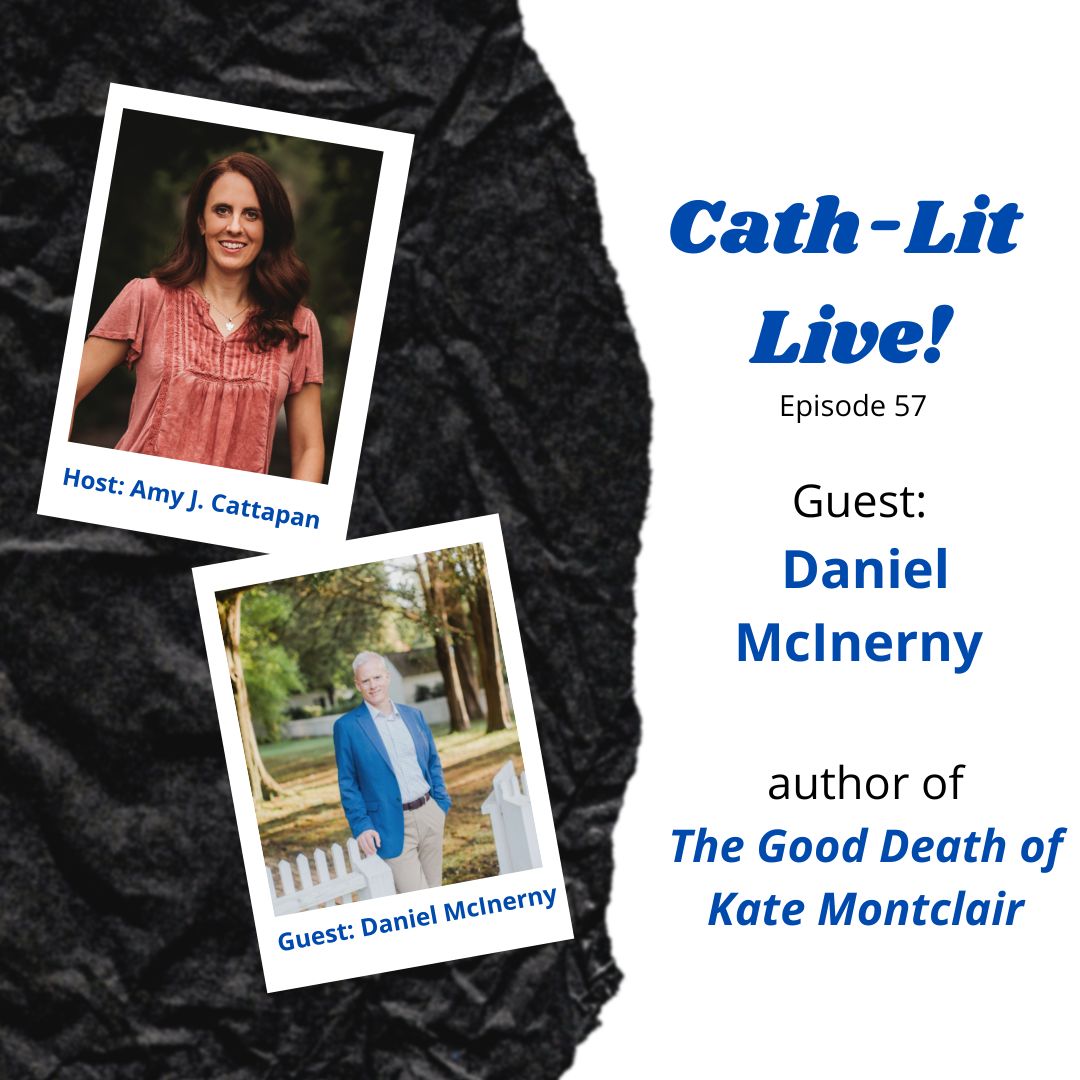
“Cath-Lit Live!” features brief interviews with Catholic authors who are releasing new books. Hosted by Catholic author and speaker Amy J. Cattapan, “Cath-Lit Live!” gives viewers a glimpse into the latest Catholic books while getting to know a bit about the author as well.


null


The Good Death of Kate Montclair by Daniel McInerny

Kate Montclair is dying. She has arrived at late middle age loveless, childless, and having failed to achieve the career dreams of her youth. Now diagnosed with an inoperable brain tumor, she sees the next fourteen months of suffering as an intolerable prospect. Desperate to avoid excruciating suffering and the indignities of so-called palliative care, the terminally ill Kate Montclair secretly plans to break Virginia law with an assisted suicide—but she isn’t prepared for the passion for life a “good death” can inspire.

null


About the author:

Daniel McInerny is a novelist and dramatist as well as associate professor and chair of the philosophy department at Christendom College in Front Royal, Virginia. In March of this year he published, with Chrism Press, his novel, The Good Death of Kate Montclair, which his fellow Catholic novelist Maya Sinha has called “an instant classic of 21st-century Catholic fiction.” In June 2024 Word on Fire Academic will bring out his scholarly monograph, The Way of Beauty: A Philosophical Reflection on the Arts, and in the fall of 2024 his play, The Actor, on the early life and underground wartime dramatic activities of Karol Wojtyla, the man who would become Saint John Paul II, will premiere at Christendom College. Visit his Substack, The Comic Muse, for more of his reflections on philosophy, the arts, technology, and culture.


You can catch “Cath-Lit Live” live on A.J. Cattapan’s author Facebook page. Recorded versions of the show will also be available to watch later on her YouTube channel and Instagram.


null


Copyright 2023 Amy J. Cattapan
Banner image via Pexels

The Five Cs of a Good Confession

The Five Cs of a Good Confession

Nothing warms my heart more than a long line for Confession. I love when other sinners respond to God’s call to repent. I find it especially beautiful when our parish has penance services during Advent and Lent, and our church is filled with priests and lines and lines of sorrowful Catholics seeking God’s endless forgiveness and mercy. As we near the beginning of our Advent season of preparing for the coming of Jesus, it’s time to start preparing our hearts for repentance.

The Sacrament of Confession begins long before you enter the confessional. It starts when you complete your examination of conscience. There are many options available for you to use, and I personally use a woman’s one based on the seven deadly sins. I have also seen some based on the Ten Commandments or focused on motherhood.

Regardless of which examination of conscience you use, be sure to spend time in prayer, and slowly and thoroughly think about everything you have done and everything you have failed to do. Once you properly examine your soul and let the Holy Spirit bring to mind the sins you need to confess, it’s time to go before the priest.

I recently learned about the 5 Cs of Confession on a podcast by Father Mike Schmitz, and I find them helpful as I prepare for the sacrament. Hopefully, you’ve had the chance to receive the Sacrament of Reconciliation recently. If you haven’t, remember that as Catholics we are obligated to receive this sacrament at least once a year (but it is so much more fruitful when you go more often!). Whether you make it to Confession weekly or haven’t been in years, keep these 5 Cs in mind to have the best Confession possible.

  1. Clear

When confessing, speak clearly and specifically. The priest needs to both be able to hear what you are saying and also understand the exact nature of your wrongs. Avoid mumbling or talking about your sin in vague terms. This is our time to openly bring our sins to God in anticipation of His endless mercy.

  1. Concise

We’ve all been sitting there in line for Confession and found ourselves watching the clock tick on and on and on. The truth is that Confession is a time for confessing, not for story telling. If you find that your Confessions go on for a while or that you feel like you have more to say, I encourage you to make an appointment to visit with your priest instead of using the limited Confessional time. If he is not available, seek the ear of a friend or find professional help from a counselor or a spiritual director.

  1. Concrete

Confession is not a time for abstract thoughts or partial admittances. You shouldn’t say things like, “I might have hurt my husband’s feelings,” or, “I sort of yelled at a coworker.” To make an honest Confession, truly acknowledge your sins and state them concretely.

You also need to be wary of our human tendency to justify our sins by bringing the sins of others into our time in the confessional. While pertinent context is appropriate, don’t attempt to minimize your sin by highlighting someone else’s. If you find yourself saying something like, “She did this horrible thing to me first, so of course I retaliated by . . . ,” you need to pray for the Holy Spirit to help you focus exclusively on your own transgressions.

  1. Complete

A good confession includes an honest sharing of all of your sins, not just the ones you feel comfortable sharing out loud. If a sin is honestly forgotten during your Confession, you are still forgiven. If, however, you intentionally do not speak a specific sin out loud, that sin is not forgiven. I find it helpful to write my sins on a piece of paper to bring with me so I don’t accidentally forget any of them. I especially love ripping up the paper afterward and throwing it in the trash, knowing that those sins are gone forever!

  1. Contrition

This is the real heart of Confession—and the most important part. We have to be truly sorry for our sins in order to fully receive the forgiveness and mercy that the Lord longs to pour out to us. If you find yourself struggling with contrition, either because you love your sin or because you feel justified by the circumstances, pray to God that He will change your heart.

When you put the 5 Cs into practice for regular trips to the confessional, your spiritual life and relationship with God will grow and blossom in unexpected ways!

Copyright © Maria Riley 2023

Book Review: Putting Joy into Practice by Phoebe Farag Mikhail

Book Review: Putting Joy into Practice by Phoebe Farag Mikhail

One of the appeals of the Phoebe Farag Mikhail book, Putting Joy into Practice: Seven Ways to Lift Your Spirit from the Early Church (Paraclete Press), is the author’s conversational tone in which she addresses forms of prayer. With the 2023 release of the audio version, the listener hears the author pull from her own experiences and those of others who work ceaselessly through difficulties, drudgeries, and triumphs to achieve the peace and elation that come only from an intimate relationship with God regardless of the circumstances. Like a caring friend who sits you down with a cup of tea and tells you what you need to hear, and not what you want to hear, she invites you to come along on this journey to an elation that supports us in this life and leads us to the next.

Achieving joy may initially sound easy, but it is not, the author admits. How does a grieving woman find comfort after the tragic death of her sister? When does a harried mother find rest after the city sewage leaks into her basement office and playroom? Why would a nation express jubilation over the beheadings of their own countrymen? It is found only through the embrace of the Resurrection and achieved with faith and persistence in the seven practices Mikhail describes: praying the hours, visiting the sick, repentance, thanks, hospitality, arrow prayers (short, spontaneous prayers in times of need), and songs of praise. First published in 2019, the book took five years to write in part because of the difficulties author faced and her desire to tell the story honestly. “Unlike me, my mother has a naturally joyous personality,” confesses Mikhail, the daughter and wife of Coptic Orthodox priests (p. 32).

She expresses awareness of the way modern culture offers immediate, superficial comforts in diets, technology and other fads and robs us of a more profound life. “For many disappointed young people, the stress of finding or following a passion creates impatience with the boring work of persistent practice that leads to mastery, and they experience failure and false starts … “ (page 24).

She differentiates joy from happiness. “For a long time, I confused joy with happiness, and sometimes pleasure,” she explains (page 14). “Easter means Resurrection, but it also once meant chocolate, cheese, chicken―everything I couldn’t eat during the Great Lent. Those are pleasures, but they don’t bring joy.”

She would like to help people pursue the better path. Shiny trinkets now or eternal life later? It’s a choice and a bumpy passage. The flow of the book and pace of the audio, combined with the author’s careful voicing clearly helps the listener transition through chapters move along to find his or her own way. Mikhail’s story is told from the perspective of her Egyptian Coptic faith which makes it unique and nuanced, even for Roman Catholics. That is where the seven methods come in which are common throughout Christian denominations. Mastering them bring us closer to Christ, which fulfills the ultimate joy. The compact volume (166 pages, excluding notes) and the audio, which runs 4 ½ hours, are so filled with stories and suggestions that each version supports the other. The listing of Arrow Prayers on pages 136-137 makes a quick reference. But the audio allows listeners to hear the author, in her pleasant and natural voice, sing songs of praise in the related chapter, a quality the reader misses.

She connects prayer and community with Christ and, with each chapter, Mikhail grips the reader/listener with a thought-provoking opening. How will she take the story of a desert monk and turn it into a lesson about visiting the sick? What does astronomy have to do with singing praise? Practice Four begins, “I never thought a suicide bombing would teach me the true meaning of thanksgiving―until April 19, 2017.” (pg. 84) She addresses basic questions like what is joy and why is it so hard? She refers to “joy thieves,” which seek to steal our joy. Here she spends time on the seven deadly sins. The author provides an abundance of sources that quote from an array of disciplines and philosophers, including ancient texts, modern psychology, CS Lewis, St. Augustine, and the Dalai Lama.

Putting Joy into Practice, while covering a profound and mysterious topic, is both an easy read and listen, thanks to the author’s style. Whether paging through in comfort at home or putting the advice to the test while listening in the car during rush hour, Phoebe Farag Mikhail offers friendly spiritual guidance that, for more than 2000 years has served many, from ancient desert fathers meditating on God’s wisdom to modern men and women desiring to grow their lives with God and one another.


Copyright 2023 Mary McWilliams
Feature Image by Jill Wellington: https://www.pexels.com/photo/lady-in-beach-silhouette-during-daytime-photography-40192/

Book Review: Dining with the Saints: The Sinner’s Guide to a Righteous Feast

Review: Dining with the Saints:

The Sinner’s Guide to a Righteous Feast

Viewers of the long-running tv drama, Blue Bloods, have created a popular culture undercurrent of anticipation for the program’s Sunday supper scenes. In it, four generations of Reagans, New York-based Irish American Catholics dedicated to law and service, gather to pray, argue, commiserate, laugh, and reminisce over a family-prepared meal. There, they remind one another from whence and whom they came and where they are going. The elders, Gramps and Dad, preside from each end of the dining table like two Solomons, maintaining order and reason. Regardless of the strife and animosity that may have come between siblings or parent and child during the week, they now sit for a meal among kin. All ages participate in an unspoken understanding that the place is sacred and together they join in a reverent act.

What the fictional Reagans play out exemplifies “theology of food,” the concept behind Fr. Leo Patalinghug’s ministry, Plating Grace. In Dining with the Saints: The Sinner’s Guide to a Righteous Feast, he and co-author, Michael P. Foley, help diners create their own family altar and a feast for the body, mind, and spirit that recalls Psalm 34:8: “O taste and see that the Lord is good.” Countless studies have documented increased depression, loneliness, and poor health habits in this country. We are paying for the lack of tradition, family, and faith. Twenty-first century Americans starve not only for nutritious meals but an “encounter experience” with one another. The authors are keenly aware that the canceling of thanking God for His gifts and sacrifices, for which we hunger, and asking Him to bless our meals before digging in leaves a void within. “We fear that the loss of the family dinner will also have a bad effect on the very source and summit of our worship (page x).”

More than a cookbook, Dining with the Saints provides a framework upon which folks may fortify their bodies, relationships with one another, and with God. The volume packs ideas for meals, conversation, and prayer in its 353 pages. Most of the 140 recipes, designed by Fr. Leo to be tasty, convenient, and nutritious, require few ingredients and little prep and cook time to afford a nourishing homemade repast.

Father Leo is known for his affability and humor. His experiences include penning the book Saving the Family and Spicing Up Married Life, an EWTN cooking show, and a memorable “beat down” of Bobby Flay on the Food Network, all of which showcase the means and methods by which he evangelizes. His fans will want this latest. This work, however, is just as much Mr. Foley’s. The hardcover’s title, clever cover design, and organization all parallel his other books, Drinking with the Saints: The Sinner’s Guide to a Holy Happy Hour and the smaller Drinking with your Patron Saints: The Sinner’s Guide to Honoring Namesakes and Protectors. The Baylor University professor with expertise in the early church, charmingly and theologically contributes Food for Thought portions and saints and seasons and with the recipes. “Whenever possible, Dining with the Saints presents what a saint actually ate or a piece of advice he or she gave about eating and drinking.” (page x). Mr. Foley’s knowledge of hagiography (the lives of the saints) presents some twists and turns, even for saint devotees.

It’s well known that St. Padre Pio bore the stigmata, but how many could correctly name his favorite vegetable or how it reflects of his personality? Another curiosity is the Chicken Tikka Masala (April 21) that many would assume would be attributed St. Thomas who was “hailed as the apostle of India,” but not so. That honor goes to Italian-born St. Anselm. For our Doubting Thomas, the authors chose a German sweet bread, Saint Thomas’s Kletzenbrot (Dec. 21). Some dishes have rather straightforward names such as Angel Food Cupcakes (Oct. 2, Feast of Guardian Angels), but the intriguing gelatin mold made with fresh raspberries may be lost for the evening’s dessert because it’s called Blancmange (December 29, Feast of the Holy Innocents). Candlemas, also known as the Presentation of Jesus Christ (Feb. 2), offers the ever-delectable Lemon Meringue Pie.

The authors deliver a delightful glimpse into Catholic church past using the 1962 Roman calendar which has more feast days, many unknown to post-Vatican II generations. Even the most catechized Catholic will appreciate discovering some long-forgotten days, such as Drunkard’s Thursday and Quinquagesima Sunday. Part One of the book ties recipe selections with the Feasts of Saints calendar. Part Two addresses the Liturgical Seasons. A five-page reference shows a side-by-side comparison of the “new” date with the traditional. A practical index based on course or main ingredient helps the culinarian find a recipe more quickly. The authors, however, encourage preparing the dishes any time. Enjoy the savory Sausage with Onion Gravy dedicated to Gregory the Great on the “old” date of March 12, the “new” date of September 3, or whenever the occasion fits. St. Gregory’s Food for Thought reminds that “evangelizing requires fellowship with people . . .becoming a part of other people’s lives. . . . Breaking bread together creates a sense of communion . . .” (page 40).  Share it with those close to you and those you want to know. Download some Gregorian chants and enjoy food, fellowship, and God’s blessings upon you.


Copyright 2023 Mary McWilliams
Images and quotes used with permission, copyright 2023, Regency House