Tag Archive for: faith

Sisters of the Last Straw: CWG May Book Blast


This month, the Catholic Writers’ Guild is touring Karen Kelly Boyce’s delightful children’s book Sisters of the Last Straw, Case of the Stolen Rosaries. It’s an SOA winner as well as an award-winning novel.

Summary: The Sisters of the Last Straw are a group of sisters struggling hard to overcome their bad habits. Sister Krumbles forgets everything. Sister Shiny can’t stop polishing and cleaning everything. Mother Mercy has a terrible temper. Yet when the misfit nuns band together to form a new order, lessons on tolerance and forgiveness (as well as much hilarity!) ensue. In this, the third of the series, the adventures of the lovable sisters continue! New troubles for the Sisters of the Last Straw require courage and cunning! A renegade rooster terrorizes the Sisters’ back yard and a mysterious thief snatches the Sisters’ rosaries. The Sisters struggle with their problems while seeking to love Jesus more. The Case of the Stolen Rosaries is a fun story that teaches tolerance and forgiveness in the midst of many comic exploits.

It’s available in paperback or electronically. You can read the first few chapters here: https://reginadoman.com/CP_book_previews/Sisters_of_the_Last_Straw_3_sample/index.html

Find it on Amazon or get it from Chesterton Press. https://www.chestertonpress.com/sisters-of-the-last-straw-3-the-case-of-the-stolen-rosaries/

Karen’s website: www.karenkellyboyce.com/


Confirmation: Are We Doing it All Wrong?

One of my favorite blogs is written by our own, Jennifer Fitz. She writes for Patheos and her blog is called “Sticking the Corners“. I began to read her April 19th post which was titled, “What’s Wrong with Age-Bracketed Sacramental Prep?” As I read, (get this) I gave her a “fist pump” and said, “You go girl.” That was because she quickly nailed it about her topic and also opened up my eyes to a fact I have thought about but never really paid any attention to. Her column made me pay attention. (Thanks, Jen.)

The subject discussed the practice of giving the Sacraments of First Reconciliation and First Holy Communion to children who are usually around seven to eight years old. Then, for some reason, we give the Sacrament of Confirmation to these same kids at unspecified times in their lives, like at twelve, fourteen, maybe seventeen. Sometimes they just stop coming back. That all started my wheels spinning and my mind meandered back in time to when I was in third grade and my classmates and I received our Confirmation. Why third grade back then and teenagers and older now? (The RCIA “candidates” and Easter Vigil is another topic for another time.)

Back to our newly-confirmed teenagers. We all know that these young folks do not turn into Apostles with tongues of fire dancing over their newly baptized heads. They are not dashing out into the streets converting Muslims and Hebrews and Presbyterians and Scientolgists and atheists. Why? Because they are not ready. (In fact, I stink as an evangelizer and I received my Confirmation long, long ago.) To the point: maybe the Sacrament of Confirmation should NOT come later. Maybe it should come before, like in second or third grade like it was for me and my peers of the 1950s and into the 60s. We became Soldiers of Christ in 3rd Grade and what did we know? The answer is nothing, absolutely nothing.

Then why receive Confirmation so young? Jennifer’s blog made me realize that what they were doing back then was the right way. We needed a shield of armor and a shroud of protection as we began our journey toward fourth grade and being ten years old. The Sacrament of Confirmation is our spiritual armor against the evil that surrounds us. It is to protect us as we move on and grow. By the time a kid is seventeen his/her faith formation has been set in place. Isn’t receiving Confirmation after the fact somewhat like putting on the body armor after the explosion?

Would it not be better to have the Holy Spirit and His gifts given to a child so they might have that protection available to them as they grow and confront the world and its temptations? Would not the graces that flow from the Sacrament be available to them as the world they are growing into invades their lives? It makes sense to me.

Many of these kids do not receive religious education at home. Oftentimes they are sent off to CCD or Faith Formation by their parent(s) who think that is all they have to do to instill the faith in their kids. The problem is, the secular world has gobbled up so much of our lives that it takes a lot more than an hour or so a week to instill anything in anyone. It has to be an ongoing process with a base of operations. That base is home base and without the fortress of a spiritually guided home front, the struggle for these young people will be ongoing, frustrating, and long term.

Time to “Slap Back” at the Self-Serving Intolerance of the Anti-Catholic/Christian

Sorry–it is Good Friday and I do not feel too “bubbly” right now. When I began to contemplate the Cross today and Who was nailed to it I found myself disgusted. I am disgusted and fed up with the approximately 2% of the population who are gay and are screaming at the “intolerance” of the Catholic/Christian community which comprises 80% of the American population. I am tired of us being called “intolerant” and “homophobic” and “racist” etc., simply because they do not get their way in every little thing they demand. Have they ever once considered what that Cross we revere stands for? The fact is, they have hijacked the Cross and insist it represents them and their self-indulgent ideology. We Christians are the “bad people.” This perverse nonsense has to stop.

I am also tired of the mainstream media and the Hollywood elite denigrating and mocking Christianity and all who belong to it as “fools.” Aren’t you tired of being trashed by the anti-God people? Why can’t they seem to understand one bit of the the kindness and goodness that has been extended to ALL people by Catholic/Christians, you know, people like all of us. Bill Maher says that people who believe in God, “are idiots and they are stupid.” Has he or any of his fellow God-haters ever taken one damn moment and looked at that Cross and reflected about the sweet mercy, flowing grace and abundant love that smeared blood red all over the wood? I think not.

The United States State Department says that in at least 60 countries, Christians face persecution simply because they are Christian. Imagine, being hated for loving. How twisted is that? Seventy-five percent of the world’s population lives in areas with severe religious persecution. Yes, yes, I know, we are supposed to “turn the other cheek.” Well, this Catholic man says I’ll turn it but if you keep slapping my face every time I do, sooner or later I am going to slap you back. My brothers and sisters, I think it is time to start slapping back. Not with fists and pipes and lies and rants but with the written word defending our Faith against all attacks, even if it is a Tweet on Twitter or a blurb on Facebook.

I also want our bishops to get up there and start defending Christ and His people. And I want them to tell their priests to defend it also. (When was the last time you heard a priest in your parish defend the faith against the evil run amok all over the world including the USA?) I want them to say “We don’t need your your damn tax exemption 501c3. We must defend our faith no matter what.”

That’s right, forget this “PC” (politically correct) nonsense. We, as Catholics, do not put pen to paper and lie, slander or foment falsehoods about people. We write about Jesus Christ and the beautiful Faith He has given to us. That is not evil or intolerant. That is what we are about. We are about loving our neighbor and, for the most part, we do.

Last June ISIS overran the city of Mosul in Iraq. They killed countless numbers of our brother and sister Chaldean Catholics. The Church in Erbil has set up camps and is helping more than 130,000 refugees settle in temporarily until they might once again go back home to Mosul. Pope Francis has set an example for us all, including our hierarchy. He has sent Cardinal Fernando Filoni, the Prefect for the Congregation for the Evangelization of Peoples, to these displaced Catholics. The Holy Father has initiated a program to give out cakes to each of the families in the camps. A total of more than 20,000 cakes will be distributed as the Holy Father shows them they all have his support and he is standing up to the maniacal, Satan driven savages of ISIS. He has taken the lead.

All I am asking for is more defense of the faith via the spoken and written word and some leadership from our safely placed American hierarchy in mounting a campaign to do so. Jesus never said it would be easy following Him. Seeing what happens to Him on Good Friday proves it. War is being waged against us, not only over there but right here in our own country. Time to “slap back.”

Connie Rossini and St. Therese – CWG March Book Blast

This month, the Catholic Writers’ Guild is touring Guildie Connie Rossini’s book, Trusting God with St. Therese. It’s an SOA winner as well as an award-winning novel, and an inspiration to anyone needing find inspiration in the face of difficult situations.


Summary: Are your fears, weaknesses, doubts, and anger keeping you from intimacy with Christ? Do you struggle with despair? Let St. Therese teach you perfect trust.  Learn how Therese of Lisieux trusted God through tragedy, scruples, spiritual darkness, and physical suffering. Connie Rossini pairs episodic stories from the saint’s life with memories of her own quest to trust. With Sacred Scripture, the Catechism of the Catholic Church, and insights from psychology, Rossini leads readers to surrender their lives completely to Jesus. Practical and accessible, Trusting God with St. Therese includes questions for reflection that make it perfect for book clubs and faith-sharing groups.

Buy it on Amazon: https://www.amazon.com/dp/B00LTATI6C

Excerpt

St. Therese’s trust in God is almost legendary—so much so that we might consider such trust beyond our reach. In her family and later in the Carmelite cloister, she was bathed in a culture focused on Christ. When she struggled at school, she came home to learn among those who understood her. When she wanted to give herself fully to God, she became a nun. When she began to speak about her little way of spiritual childhood, others encouraged her. We daily encounter challenges to trust that she never faced. The world around us—sometimes even including our dearest family members—meets our desire for God with indifference or hostility. In the Church, others think us presumptuous for even striving to follow God more faithfully. And an insistent voice inside us urges us at every step to abandon our course. “Why focus on trust?” we ask ourselves. There are so many pressing problems for Catholics in today’s world: battling the Culture of Death, bringing strays back to the faith, revamping catechesis, caring for the poor. Why not focus instead on one of these? When we ponder this question more deeply, the mistaken notion behind it reveals itself. We do not practice one virtue or join an apostolate in isolation from the rest of our Christian life. Focusing on trust does not take us away from these other important things. It helps us advance in them. Fighting the Culture of Death, for example, can be discouraging, heartbreaking, and personally risky. Trust gives us the strength to persevere. Likewise, we must trust God with the hearts of the lost, for ultimately only he can convert them. We must trust him to work through his Church, even when the humans who make up that Church fall short. And unless we can accept God’s providence, the trials of the poor will crush our spirits. Why should we focus on trust?

In a letter to Sr. Marie of the Sacred Heart, Therese put it concisely: “It is trust, and nothing but trust that must bring us to Love” (PST, 61). “Love,” of course, is God himself. In other words, we cannot grow close to him until we trust him.


Margaret Rose Realy and Lent – CWG February Book Blast

Cultivating Gods Garden - Feb 2015

This month’s CWG Book Blast is to get you ready for Lent. We’re a little behind, but that doesn’t make Margaret Rose Realy’s book any less applicable. It’s a perfect springtime meditation as well. It has the CWG Seal of Approval and is published by Patheos Press.

Cultivating God’s Garden through Lent

Margaret Rose Realy, Obl. OSB

These daily reflections for Lent offer tranquility and simplicity by finding God through nature. Readers who love gardens and woods and find solace in experiencing the Creator through these environments will enjoy these prayerful reflections.

Excerpt:

Thursday after Ash Wednesday

 Fast from bitterness; turn to forgiveness

Fast from hatred; return good for evil

It was a relatively small patch that I had dug at the back end of the yard to the rental house where I planned a vegetable garden. As an undergraduate at MSU, and a decade older than my classmates, I knew that growing my own food was a necessity; I did not have parents supporting my education.

I dug a portion of the sod and broke up clumps, picked stones and broken glass from the soil, raked it smooth, and mounded the edges to help direct water. Purchasing seeds, I then planted the early season crops of peas, radishes, kales, and a few herbs. A few weeks later I would purchase starter plants for vegetables that took longer to mature such as eggplants, tomatoes, and peppers.

I returned home rather late after classes one day about a week later and again headed to the back of the yard to water the seedlings before sunset. A few feet away I stopped dead in my tracks, saddened by the state of my garden patch. The mounded edges had been kicked into the lawn. Two-thirds of the patch had been covered over with pieces of hand-dug sod, while the remaining third was trampled. Apparently I had unknowingly encroached into the neighbor’s property.

Disheartened, I cleaned up what remained but knew I did not have enough time in my schedule to expand the now even smaller patch.

Soon afterwards, as weather permitted, I planted starters of tomatoes and eggplants in the remaining section of garden. In another garden area bordering the house I tucked in some bush zucchini seeds.

Throughout the summer when I was studying in my room, I would often hear the neighbor mowing his yard and anxiously hoped my plants were safe. They were often coated with grass clippings but never really damaged.

It wasn’t long until the fruits of my labor ripened and canning and freezing commenced. There is something about tomato and zucchini plants in that I always underestimate their production. Even with the smaller plot I had an overabundance.

While washing the vegetables I looked out the window over the kitchen sink. Sitting in the shade of a large sycamore tree was the woman who lived with the man who mowed the lawn that covered my plants with debris. What I saw was just another woman on a hot August day trying to find a cool place to sit. I had lived next to her for almost a year and never knew her name. After all, I was just another student in the rental house next door.

I carefully laid newspapers in the bottom and up the sides of a small cardboard box. I placed a few small zucchini to one side and then piled several large tomatoes on the other. I took a deep breath and headed out the screened side door.

As I approached the woman I introduced myself and held out the box of vegetables. I could tell by the look on her face she was surprised to see me. I think she realized for the first time that I, the student next door, was close to her own age and not a teenager.

As she accepted my gift she seemed dumbfounded by my presence. She never rose from the lawn chair or told me her name. Avoiding eye contact, she spoke a barely audible “Thanks.”

Feeling rejected, but without bitterness, I turned away and went back to my kitchen to continue putting food by. Looking again through the window I noticed that my neighbor had left her shady area and taken with her my gift.

That September I found a room in a house closer to campus. Before I moved away I kicked the mounded edges of dirt into the little patch that had been my garden, smoothed it over, and dusted it with seeds for new lawn. I patted down my pant legs and “shook the dust from my sandals,” knowing I had already moved on.

____________________________

Heavenly Father,

Guide me to always reflect you to those around me. Spare me the shame of reciprocal behaviors rooted in personal pride and let me not limit your love to human love. Grant me to be charitable and forgiving in the face of apathy or anger, so that those whom I meet will know it is you that I serve.

Amen.

Available online at:

Amazon, https://bit.ly/1Ms4EPF

Patheos Press, https://bit.ly/1iBPxTm

Barnes & Noble, https://bit.ly/17J9Fn2

Website: https://www.patheos.com/blogs/prayergardens

Author Central: https://amzn.to/1AKPvUS

Still not sure? Check out this review:

Cultivating God’s Garden through Lent offers daily reflections for each of the days of Lent. These reflections come from the writer’s experience bringing order to gardens both real and spiritual. At every turn of the trowel, every sprinkle of seed, every tug of a weed, Margaret points out to us the rich, loamy meaning that God has for us, just waiting there quietly, if only we will make ourselves still and small enough to see. Margaret does this, shares the fruits of her contemplation with us, and in doing so, invites us to examine our own gardens, wild and weed-ridden they may be. If we stop and look with her, we will see the kind of quiet, luscious adventure that only a gardener can find. This is the first book to ever make me wish Lent could be longer than it already is. The meditations in Cultivating are just the right length to slow you down without dragging it out, and the messages are presented so clearly… I cannot wait to see what sorts of seeds come forth from the read during that time of cold, silent, invisible growth [of Lent]. ~ Mrs. Erin McCole Cupp, OP

Meditating “Melchizedek”

When it comes to the Holy Sacrifice of the Mass I freely admit that of all the Eucharistic Prayers that are offered I do LOVE the Roman Canon (Eucharistic Prayer I) the best. The words after the consecration are specifically about our role in this heavenly drama:

“we, your servants and your holy people, offer to your glorious majesty from the gifts that you have given us, this pure victim, this holy victim, this spotless victim, the holy Bread of eternal life and the Chalice of everlasting salvation.”

Are not those words just beautiful? And then, after a few lines, “in humble prayer we ask you, almighty God command these gifts be borne by the hands of your holy angel to your altar on high—–so that all of us may be filled with every grace and heavenly blessing.—“ Magnificent, even out of context. But I skipped a few lines that come between the italicized words. Specifically, “the offering of your high priest, Melchizedek—“

I don’t know about you but I confess, I never thought about “Melchizedek.” Who is he? Where did he come from? Why am I thinking about this after all these years? Well, I heard a homily the other day where the priest talked about tithing. (Everyone’s favorite topic). First he quoted from the Letter to the Hebrews, Ch 5; 6, “You are a priest forever according to the order of Melchizedek.” Then he went on to say that in Chapter 14 of the Book of Genesis Abram’s nephew, Lot, was captured during the Battle of Sidim. So Abram takes 318 of his best men and goes and rescues him. Enter Melchizedek (I have just given new meaning to the word “synopsis”).

Anyway, the point Father was traveling to was this. After Abram won his victory, the King of Salem, Melchizedek, came out to greet Abram and gave him bread and wine, and being a priest of God, he blessed Abram with these words “Blessed be Abram by God Most High, the Creator of heaven and earth—“ And Abram knew immediately that he was supposed to give Melchizedek 10% of all he had. And he DID.

As soon as Father said this, drums began beating inside my head. Amid the pounding I began hearing words, “WHAT! WHAT! What did he say? Did he say Abram just knew? How did he know that? How could he know that? Why not 5% or 25%?” The pounding turned into doubting.

He immediately directed us all back to the quote from the Letter to the Hebrews. He explained that since Jesus was “a priest forever in the line of Melchizedek” and Abram knew what to do, that is why we are asked to give 10% as a tithe. Father did admit that no one really knows who Melchizedek was or where he actually came from. Salem could have referred to the future Jerusalem or Zion or to a tabernacle; there is much speculation. Oh well.

I am far from being a theologian, so I assume this is solid Catholic teaching. Since Jesus is identified as a “priest forever in the line of Melchizedek,” He assumes the role of High Priest once and for all. This I will not question even though I really do not understand it. But I posted this here because our CWG site is a truly Catholic place, and I am hoping for some simple input regarding the tithing business.

Father finished by saying, “All of us priests follow in Jesus’ footsteps. Therefore we have the right to request money from you, and you have an obligation to give it.” He said it, and I did not like it. For me it was like swallowing a pill that got stuck in my throat. Well, the pill is still stuck, right where it stopped. Any ideas on how I can get that pill swallowed without gagging would be appreciated.

The Nativity of Our Lord

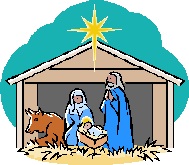
NativityLuke 2: 1-20 The Infancy Narrative

In those days a decree went out from Caesar Augustus that the whole world should be enrolled. This was the first enrollment, when Quirinius was governor of Syria. So all went to be enrolled, each to his own town. And Joseph too went up from Galilee from the town of Nazareth to Judea, to the city of David that is called Bethlehem , because he was of the house and family of David, to be enrolled with Mary, his betrothed, who was with child. While they were there, the time came for her to have her child, and she gave birth to her firstborn son. She wrapped him in swaddling clothes and laid him in a manger, because there was no room for them in the inn.

Now there were shepherds in that region living in the fields and keeping the night watch over their flock. The angel of the Lord appeared to them and the glory of the Lord shone around them, and they were struck with great fear. The angel said to them, “Do not be afraid, for behold, I proclaim to you good news of great joy that will be for all the people. For today in the city of David a savior has been born for you who is Messiah and Lord. And this will be a sign for you: you will find an infant wrapped in swaddling clothes and lying in a manger.” And suddenly there was a multitude of the heavenly host with the angel, praising God and saying:

“Glory to God in the highest and on earth peace to those on whom his favor rests.”

When the angels went away from them to heaven, the shepherds said to one another, “Let us go, then, to Bethlehem to see this thing that has taken place, which the Lord has made known to us.” So they went in haste and found Mary and Joseph, and the infant lying in the manger. When they saw this, they made known the message that had been told them about this child. All who heard it were amazed by what had been told them by the shepherds. And Mary kept all these things, reflecting on them in her heart. Then the shepherds returned, glorifying and praising God for all they had heard and seen, just as it had been told to them.

We, too, keep all these things, reflecting on them in our hearts, and give glory and praise to God for all we have seen and heard, just as it has been told to us.

Merry Christmas

A blessed Christmas Eve to all

Luke 2: 1-20 The Infancy Narrative

NativityIn those days a decree went out from Caesar Augustus that the whole world should be enrolled. This was the first enrollment, when Quirinius was governor of Syria. So all went to be enrolled, each to his own town. And Joseph too went up from Galilee from the town of Nazareth to Judea, to the city of David that is called Bethlehem , because he was of the house and family of David, to be enrolled with Mary, his betrothed, who was with child. While they were there, the time came for her to have her child, and she gave birth to her firstborn son. She wrapped him in swaddling clothes and laid him in a manger, because there was no room for them in the inn.

Now there were shepherds in that region living in the fields and keeping the night watch over their flock. The angel of the Lord appeared to them and the glory of the Lord shone around them, and they were struck with great fear. The angel said to them, “Do not be afraid, for behold, I proclaim to you good news of great joy that will be for all the people. For today in the city of David a savior has been born for you who is Messiah and Lord. And this will be a sign for you: you will find an infant wrapped in swaddling clothes and lying in a manger.” And suddenly there was a multitude of the heavenly host with the angel, praising God and saying:

“Glory to God in the highest and on earth peace to those on whom his favor rests.”

When the angels went away from them to heaven, the shepherds said to one another, “Let us go, then, to Bethlehem to see this thing that has taken place, which the Lord has made known to us.” So they went in haste and found Mary and Joseph, and the infant lying in the manger. When they saw this, they made known the message that had been told them about this child. All who heard it were amazed by what had been told them by the shepherds. And Mary kept all these things, reflecting on them in her heart. Then the shepherds returned, glorifying and praising God for all they had heard and seen, just as it had been told to them.

We, too, keep all these things, reflecting on them in our hearts, and give glory and praise to God for all we have seen and heard, just as it has been told to us.

Merry Christmas

Giving Thanks

give-thanksLast month, I attended CWG’s Your Word is My Delight: A Catholic Writers’ Retreat in Dewitt, Michigan. As is so often the case, it took me a few days post-retreat to recognize the gifts poured out by the Holy Spirit through the event.

Opportunities to pray abounded. Daily Rosary, daily Mass, Adoration most evenings…and those were just the formally scheduled times. Reflection in the privacy of one’s room or walking the beautiful grounds offered occasions for informal prayer. Several of us shared that the main focus of our attendance was discernment regarding our calling and future direction. No matter the answer(s) each individual heard, the time spent in the company of God brought peace.

The intimacy of the gathering allowed us to get to know each other in ways that are not possible through conferences. For me, recognizing the holiness in each person’s vocation, whether religious or as laity, was a true gift. Faith, fidelity, devotion, patience, joy—these attributes were modeled by various people throughout the five days. Our small community built each other up, just as Paul instructs us to do in the Epistles. Not limited to retreats, a mindset willing to see these things in our ordinary lives can open our eyes to God’s hand in the day-to-day.CWG Writers' Retreat Oct 2013 cropped

Networking, both professional and personal, was another gift. Blogs were born, ideas (writing and non-writing related) shared, horizons broadened, new directions and new projects envisioned, contacts swapped. I’d had an idea for a book-length nonfiction project, and, thanks to a presenter, realized I could create it in any number of formats, from brochure to booklet to book. Others took a step into fiction from their background of nonfiction, etc. Sometimes it takes another’s perspective to see possibilities we never imagined. As a bonus, we left the retreat with a strong network of writers in vastly different geographic areas and personal/professional circles of influence. Now, when one of us tosses the proverbial pebble into a pond, the ripple effects will go into coves we never could have predicted.

The subject of New Evangelization came up numerous times in unrelated contexts. New Evangelization is reaching out in love and catechesis to those Catholics who’ve drifted away from the Church, or who’ve made a conscious decision to leave the Church, or don’t have a solid understanding of its teachings—namely, a lively relationship with and fruitful gratitude to Jesus, our Savior. I certainly came away with a better understanding of the scope of the issue, along with a renewed sense of purpose as a writer and evangelizer.

As Michelle Buckman, the keynote presenter, said, God is in the details. He brought each of us to Dewitt, Michigan for a purpose—actually, several purposes. From personal to spiritual to the craft of writing to the purpose of our calling to networking, the Holy Spirit was hard at work at the St. Francis Retreat Center.

Look back at your most recent experience with a conference or a retreat, or maybe in a CWG forum or the new Google group or Facebook group page. Take a moment to recognize the Holy Spirit’s influence, and give thanks. It is far too easy to take these things for granted, or downplay them. Next time you have the opportunity to participate in a writing community, pay attention to what God is showing you. If you’re like me, it won’t be anything like you expected, and may not even be writing-related. It may be difficult to recognize or discern while in the moment, but at some point you will recognize the truth of why you were in that place, at that time, with those people.

God’s hand, open hearts—a combination that bears great fruit, whether on retreat or slogging through our daily lives. Together, they yield blessings, grace, and much cause for gratitude.

Thanksgiving is two days away. What are you offering thanks for this year? Do you have any examples of blessings or gifts related to writing you’d like to share? Let’s encourage each other in our vocation as writers.

Catholic Writers Conference Live! A Two-fer Blog for conference goers (and stay-at-homers)

Are you headed for this year’s Catholic Writers Conference Live? If you are, check out my blog from last year regarding conference etiquette. It was good advice then, and I can’t think of a thing to improve on it. Just substitute the words Somerset, New Jersey for Arlington, Texas.

If you’re not able to go to the conference, you can still share in the excitement and even network. Go to https://www.catholicwritersconference.com/ and see who’s going to be there. If a particular publisher or presenter interests you, go to their website and see if they have a Twitter account – and then follow them. It will quickly become clear who is tweeting and which threads have value for you and your situation. You can even jump in on conversations if you have salient points to contribute. One caveat here: Unless someone invites such, do not pitch via Twitter. And, as always with social media, remember to keep your tweets polite and on-subject.

Are you one of the lucky ones going to the conference? Tweet, blog, and Facebook your experiences. Engage your followers and create a ripple effect that no one else can. Encourage questions and/or discussions that you can facilitate simply by being present at the conference. Get on the Catholic Writers Guild blog and website. You have much you can share.

Like so many other enterprises we undertake as Catholics, it’s not ‘all about me.’ Be generous with your abilities and presence, whether it’s at the conference or from home. Support each other at the conference, and share with those unable to come. This is a unique opportunity to live your faith – evangelization in an unanticipated form!

Let’s all make this year’s Catholic Writers Conference Live the best ever!