
Tag Archive for: faith

Cairns Along the Way

As you read this, chances are I’m hiking somewhere above 10,000 feet in southwest Colorado, where we have a family vacation home. While Katie shows her love for us by staying at the house with our dogs, we’re enjoying two weeks at our cabin. As much as I love the water and never want to live away from the Chesapeake Bay, I look forward to these two weeks all year. It’s here in the mountains where my soul feels refreshed and renewed. It’s where I’ve learned some important lessons about life, particularly about the markers God and others leave for us along our journey.

Anyone who follows me knows I’m a big walker. I typically walk five miles a day and am training for Camino number three. Out here, I could walk for days, breathing in the fresh, clean air and tilting my face toward the sky, feeling as though Heaven is just beyond the reach of my fingertips.


Finding Markers

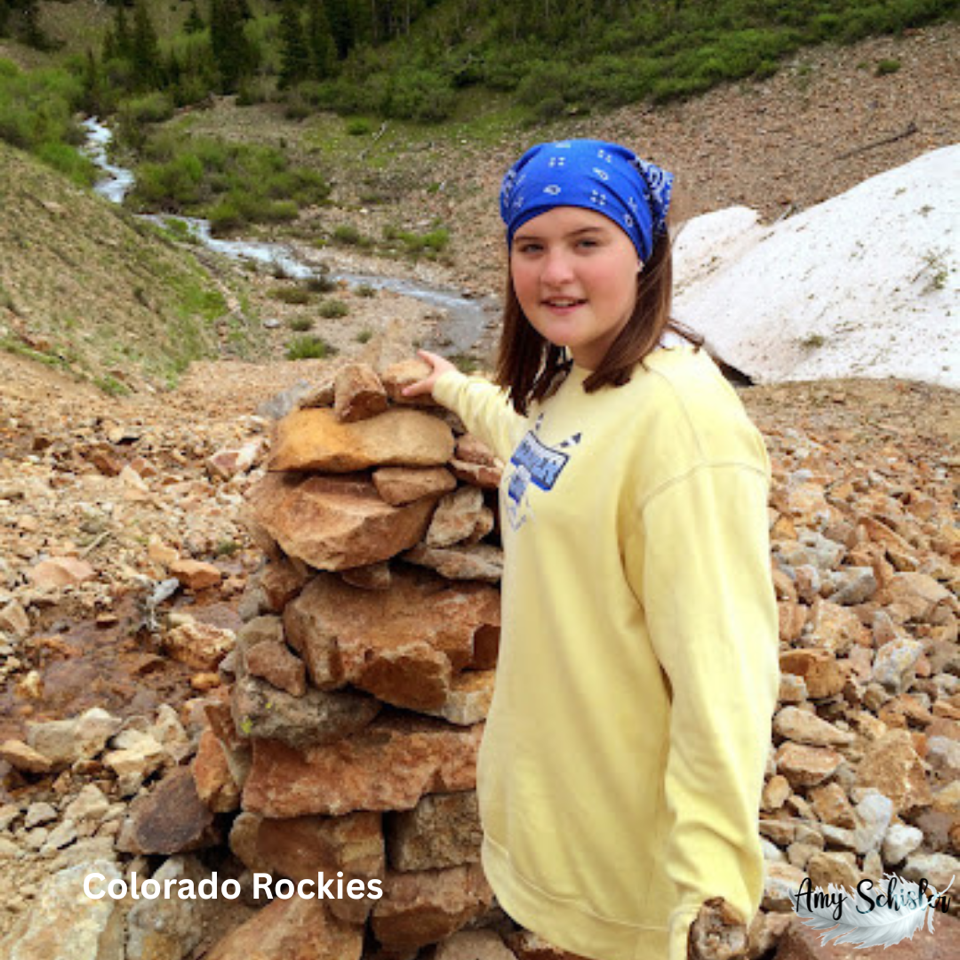
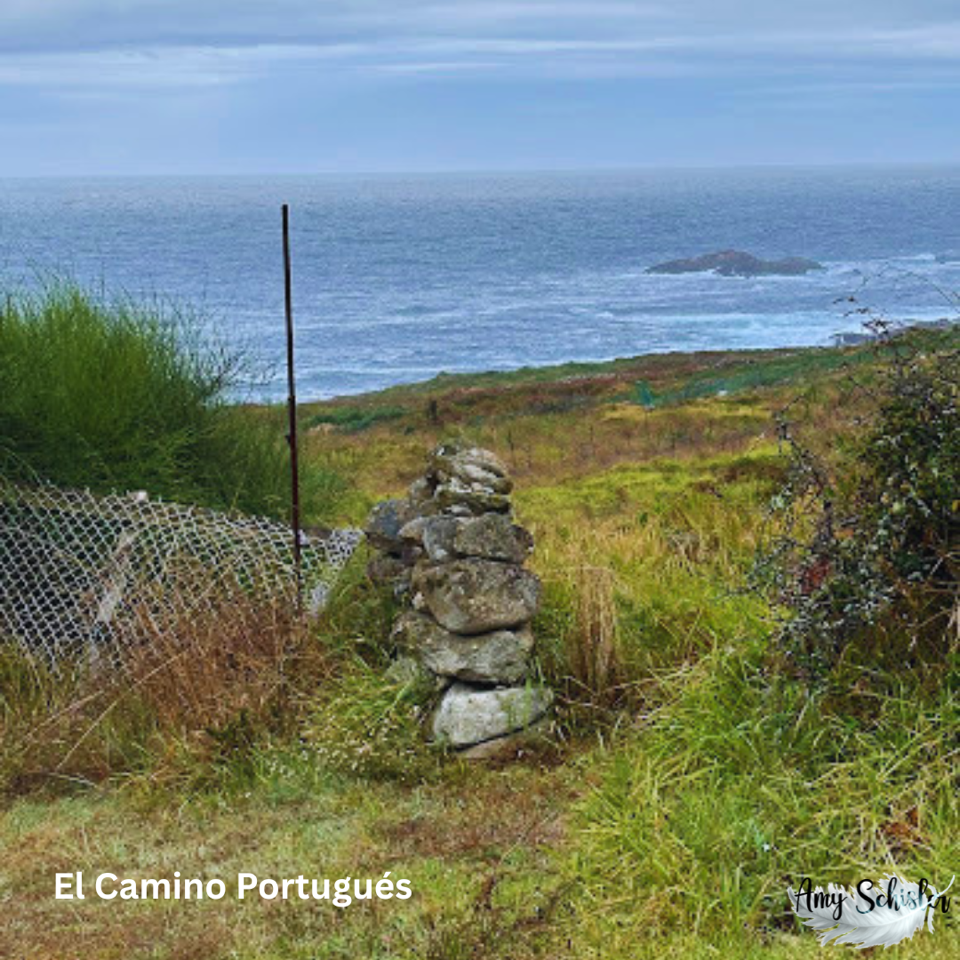
As a hiker, I’m always on the lookout for cairns. These are human-made piles or stacks of stones used as markers along a trail. They mark hidden trails, safe passages, memorials, historic events, and even burial places. Hikers will leave them as a testament that they were there, usually on a high peak or a remote trail. They’re a common sight throughout the Rockies and along the Camino, as well as other famous and not-so-famous trails around the world.

Perhaps it’s in my biology to be pulled toward these monuments. After all, they’re a Scottish tradition, and despite my married name, I have Highland blood flowing through my veins. Maybe it’s because I’m a walker and hiker and feel a kinship to those who have walked before me. But I believe it’s something even deeper than that. Even if I had never ventured further than my front door, I believe I would be looking for cairns. Each of us has a life journey full of cairns just waiting to be discovered.
 

Finding Answers

When I met my husband and he told me he was a waterman, I have no doubt that was a cairn (see my last blog). I’m certain my grandfather laid the foundation stone to that one.

When my grandmother passed, I was a mess, but she sent me a cairn I’ll never forget. I was on my way to school to pick up my girls just after I got the call, and Vince Gill’s voice floated through my car speakers. Vince was my grandmother’s favorite singer, and I’d taken her to see him in concert only a few years prior. I know this was more than just a song on the radio, though, as Vince consoled my heart with as he sang “Go Rest High on the Mountain,” about a loved one who goes home to God.

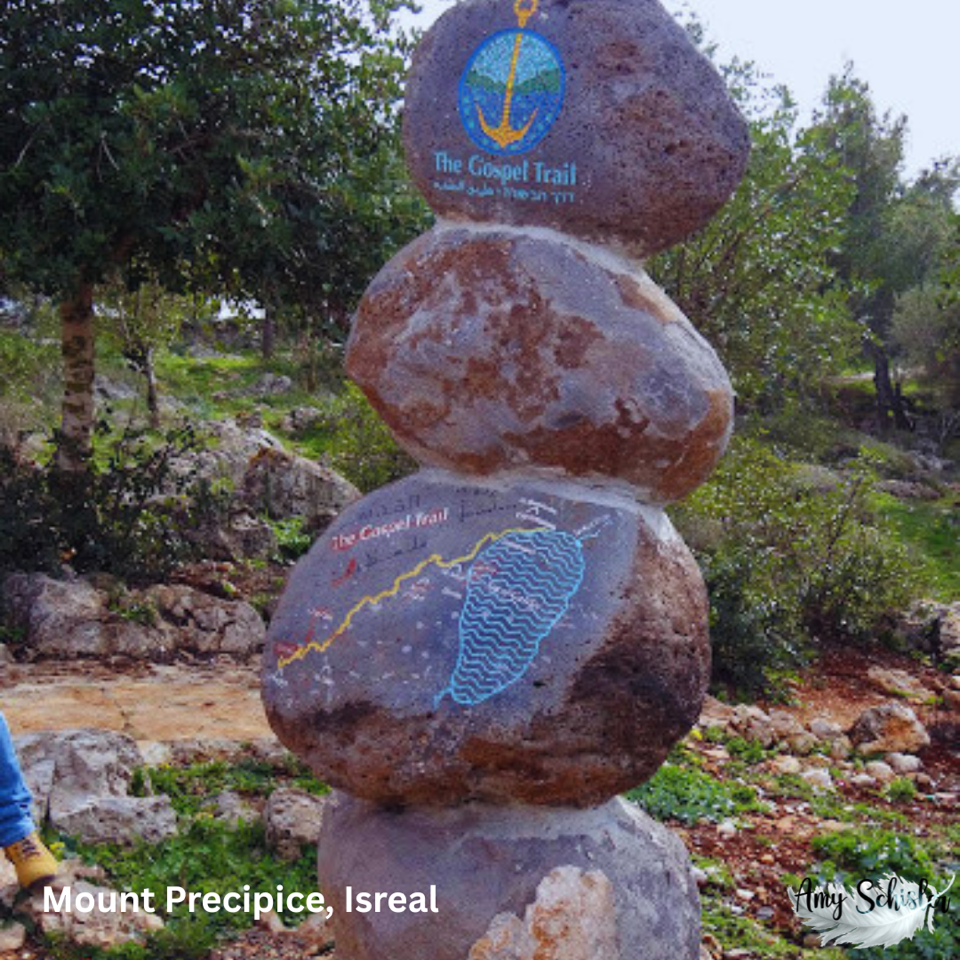
The first time I laid my eyes on the Sea of Galilee, I knew that pilgrimage was changing my life, and it did. Standing on Mount Precipice next to a cairn marking the Gospel Trail, I felt at peace and at home.


Finding Meaning

As I look back at the past fifty-six years, I see many cairns I’ve encountered along the way. Some led me down hidden trails I never thought I would go. Some afforded me safe passage when my world had been shaken. Others have served as memorials and symbols, reminders to where I’ve been, where I am, and where I need to go.

Wherever we go, our family seeks cairns already built and leaves cairns behind, to mark where we’ve been and lead others where they need to go. Much like life itself, some of these are mounds we’ve piled ourselves, and others are stacks we’ve contributed to along the way. Some are too high to reach and require a leap of faith. Others are small and easily overlooked unless we’re looking for them.

These all have become somewhat of a symbol for me in life, a tie to the trails I’ve walked and the lifelong journey I’m making toward my final destination.
 

Finding Joy

I always advise hikers to keep an eye out for the cairns that pop up along the way. You’re not alone in this journey. Those who have gone before you often leave signs for you to follow, pieces of stone to ground you, and markers to help you find your way. We would all be lost without these precious cairns that typically show up when least expected but most needed, bringing us reassurance and even happiness. Follow your cairns, and your journey will be one of peace and joy.


Copyright 2026 Amy Schisler

Photos copyright 2026 Amy Schisler, all rights reserved.
Casting the Net

“Master, we have worked hard all night and have caught nothing, but at your command I will lower the nets.” (Luke 5:5)

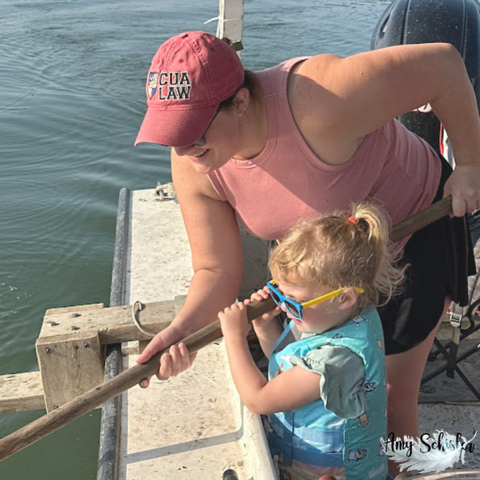
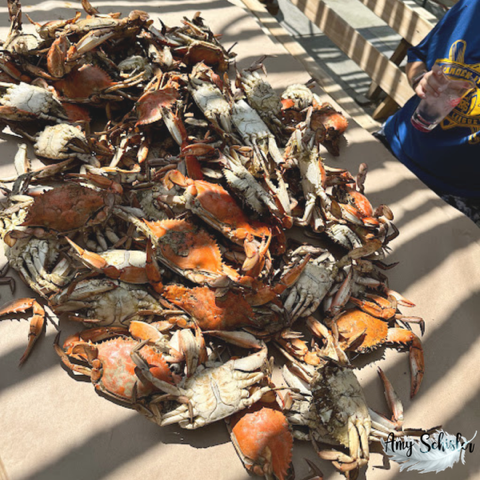
I come from a long line of watermen. Many of the men in my mother’s family were fishers, oystermen, crabbers, boat builders, or a combination of all of four. My husband began his career as a commercial crabber at the age of eleven, as an apprentice on his uncle’s boat. Though his ultimate full-time career became the law, he still has his commercial license and crabs multiple times a week during the season. This allows us a little spending money, family vacations, and this year, a new freezer and woodstove!

One of our favorite things to do in the entire world is invite friends and family to go crabbing and then feast on our catch. Most of the time, we’re able to haul in enough crabs to feed everyone. Some weeks, we know that won’t be possible. This year, crabs didn’t really start running in our area until a few weeks ago. That meant, July 4th week, Ken was out every morning just in case our group didn’t catch enough on the Fourth.

Casting Even When in Doubt

Sometimes the crabs are biting, and sometimes they aren’t. We can say the same about our family’s experiences with fishing. Sometimes the fish bite, and sometimes they don’t. However, Ken is the expert, and if we aren’t doing well in one creek, he pulls up the lines and moves everything to another. Usually, this changes our luck, but not always.

I can’t imagine anyone, especially a stranger to crabbing, coming into our boat and telling Ken to move his lines to another spot and try again. How dare they? Ken’s been crabbing these creeks for almost fifty years. Nobody would ever question his knowledge.

So I can imagine how Peter felt when Jesus told him to go deeper and cast his nets, yet Peter didn’t argue. Perhaps he was listening to Jesus as he was washing his nets. Maybe he heard something trustworthy in what this stranger was saying. Obviously, Peter didn’t argue when Jesus stepped into his boat and asked to be taken offshore. Of course, Peter’s brother, Andrew, may have been giving Peter the look that told Peter this was the man Andrew called the Messiah. Whatever his reasoning, Peter obeyed.

Jesus Enters Our Boats

I’ve often heard it said that Jesus didn’t ask Peter if He could enter his boat, and He doesn’t ask us either. Jesus enters our lives whether we want Him to or not. The question for us is do we welcome Him into vessels? When Jesus climbs into our boats with us, do we shoo Him away, or do we listen to what He has to say? Do we scoff at His commands, or do we obey?

Peter had his faults. He was rash, prone to anger, shortsighted in the ways of God, and often spoke without thinking. Yet he obeyed Jesus without question. He even stated the obvious — they had already been fishing all night and caught nothing — but didn’t argue against trying again.

Fishers of Others

We’re allowed to question God. We’re allowed to wonder how something can possibly happen when the odds are against it. We can even let God know our annoyance or displeasure in the present circumstance we may be in. God can handle that! He knows what it’s like to be frustrated. How many times was He irritated by the Apostles’ lack of faith? What He wants is for us is, when we are annoyed, frustrated, even angry, to obey Him anyway.

That is trust. Profound trust.

Doing the will of God, following His commands, walking the path He has chosen for us are acts of trust. Like Peter, we must put aside our own feelings and follow Jesus out into the deeper water. It’s there that we will haul in the greatest catch and follow Jesus’ final command — to become fishers of others.

My daughter, know that you give Me greater glory by a single act of obedience than by long prayers and mortifications. (Saint Faustina, Divine Mercy in my Soul)


Copyright 2025 Amy Schisler
Photos copyright 2025 Amy Schisler, all rights reserved.

The Shepherd’s Pie: Faith and Remembrance

The Shepherd’s Pie: Faith and Remembrance

“A slice of hope to raise faithful kids.”

This uplifting, ecumenical show uses engaging conversations and fun entertainment reviews to offer positive insights and media resources for families and youth leaders. We discuss current issues that impact young people at home, in school, and in the world today.

In this episode of The Shepherd’s Pie, Antony Barone Kolenc speaks with Father Jonathan Torres about his journey as a priest-author, and how the theme of remembrance is central to the Christian faith, and we discuss his fantasy novel, Blinding Dawn.


(info about this episode, get that here: https://anchor.fm/the-shepherds-pie )

Check out other episodes of The Shepherd’s Pie.

"The Shepherd's Pie: Faith and Remembrance" by Antony Barone Kolenc (Catholic Writers Guild blog)


Copyright 2025 Antony Barone Kolenc

The Shepherd’s Pie: Forgiving Ourselves

The Shepherd’s Pie: Forgiving Ourselves

“A slice of hope to raise faithful kids.”

This uplifting, ecumenical show uses engaging conversations and fun entertainment reviews to offer positive insights and media resources for families and youth leaders. We discuss current issues that impact young people at home, in school, and in the world today.

In this episode of The Shepherd’s Pie, Antony Barone Kolenc speaks with Doralyn Moore about the importance of learning to forgive ourselves to progress in our own faith journeys, and we discuss her novel, Caused to Triumph.


Check out other episodes of The Shepherd’s Pie.


null


Copyright 2025 Antony Barone Kolenc

Mountaintop Moments

null

Copyright 2025 Amy Schisler, all rights reserved.
 

“Master, it is good that we are here; let us make three tents, one for you, one for Moses, and one for Elijah.” (Luke 9:43)


I recently led a retreat for a parish in Arkansas on the Luminous Mysteries of the Rosary. One of those mysteries is today’s Gospel, a story with which I’m sure most of us are familiar. Jesus takes His chosen three Apostles — Peter, James, and John — up to the top of Mount Tabor to pray.

A Vision of Heaven

As the three Apostles look on, Jesus is transfigured before their eyes, “his face changed in appearance and his clothing became dazzling white.” The three men saw Jesus in all His glory, the way He is in Heaven, the way we hope will be our reward in the afterlife. The glory of Jesus and the understanding that this is a glimpse into the awesomeness of eternal life were not lost on Peter. He felt the importance of this moment.

And it gets even better. While in His glory, Jesus is joined by Moses and Elijah “who appeared in glory and spoke of his exodus that he was going to accomplish in Jerusalem.” Overwhelmed by what he is seeing and hearing, Peter naturally wants to cling to this moment. He wants to build tents there on that spot so they can stay there with Jesus forever.

Mountaintop Moments

As I told the ladies at the retreat, Peter was experiencing a true Mountaintop Moment. Often these moments are fleeting or come only after a beautiful spiritual experience. When we attend a meaningful retreat or go on pilgrimage, we typically feel the same as Peter. We are so wrapped up in the divine, influenced by the Holy Spirit, and full of zeal, we don’t want that time to end. Weddings, births, and other momentous occasions also lend themselves to this feeling.

In scripture, God is often revealed on the mountaintop. In Genesis, God speaks to Abraham from the mountain when He points out the stars and makes His covenant with His people. It is on Mount Zion where Abraham is to sacrifice Issac before the Lord intervenes. In Exodus, God appears to Moses in the burning bush at the top of a mountain, and it is on the top of Mount Sinai where Moses receives the Ten Commandments. Solomon builds his temple on Mount Zion, and Isaiah tells of the New Eden built upon a mountain. The Sermon on the Mount is given on a mountain, and Jesus often prays on the Mount of Olives. There is divine beauty on the top of mountain like no other place.

Is it any wonder Peter wanted to remain on the mountain?

Coming Down the Mountain

After those moments when we feel closest to God — on pilgrimage, when we say “I do,” after we receive the Eucharist — it’s so difficult to watch the glory fade, to see our lives returning to the ordinary, to go down the mountain. A day or two after a pilgrimage ends, I always send an email to my pilgrims letting them know that the letdown they may be experiencing is normal; it’s not easy returning to real life. It’s not easy coming down from the mountain.

However, we must come down because, like Jesus, like Peter, James, and John, coming down the mountain means going on mission. After coming down the mountain, Abraham surrenders his life to God, Moses leads the people to the Promised Land, Jesus comes down from the Mount of Temptation and gathers His Apostles. We must come down to finish the task God has given to us.

Returning for Mission

Peter wanted to stay, but his mission was far from over. He would become the rock, the foundation of the church. He would lead the Church and its members. He would preside over the first council of the Church in Jerusalem, and he would begin the conversion of Rome.

As a mountain climber, I can assure you that there is no more spectacular view than from the top of a mountain, and it’s hard to turn away from the vast beauty to make the trek back to the bottom. Alas, we’ve all heard, what goes up must come down. It’s part of God’s design, and there’s a reason for that. We were made for more than just appreciating the view. We were made to take that wonder and awe back down the mountain and share it with others.

When you have your next mountaintop moment, ask the Lord, what it is you are meant to do when you come down. How can you take the experience and turn it into something that glorifies God here on earth, even in the valleys and on the plains?

“Let us make best use of the fleeting moments.” (Saint Marianne Cope)


null

Copyright 2025 Amy Schisler, all rights reserved.


Copyright 2025 Amy Schisler

Two by Two

Jesus summoned the Twelve and began to send them out two by two. (Mark 6:7)


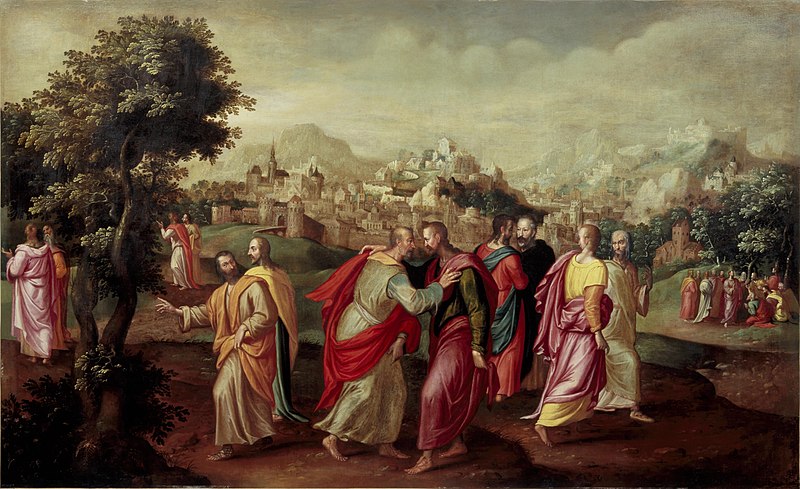
Two by two. Not alone. Not in a group. Jesus sent out the twelve two by two.

Jesus could have sent the disciples out on their own. After all, there would come a time when they would each go their own way — James to Spain, Thomas to present-day Iran, Andrew to Greece, John to Asia, Matthew to Africa, and so on. He could have told them that this first sending out was meant to prepare them for what was to come. He could have told them that there are times in life when they would feel and be alone, and they would have nobody to turn to or consult or just talk to.

Likewise, He could have sent them in two groups of six or three groups of four. There’s safety in numbers. Plus, groups of young men traveling around the globe attracting audiences have always been popular, right?


Two Are Better than One

Instead, Jesus sent them two by two. He knew that two is better than one, and often two work better than a group. In Ecclesiastes, we read,

Two are better than one … If the one falls, the other will help the fallen one. But woe to the solitary person! If that one should fall, there is no other to help. (Ecclesiastes 4:9-10)

C.S. Lewis takes it even farther. He tells us in the introduction to  Athanasius’ On The Incarnation, “Two heads are better than one, not because either is infallible, but because they are unlikely to go wrong in the same direction.” Two people are more accountable and hold each other accountable. They recognize when one is going off course and can steer each other to the right place, be it a safe harbor or a challenging cliff that can only be climbed together.


Finding A Second

For several years, I have thought about whether I need a spiritual advisor. Of course, being human and being the independent, forge ahead at all costs person I am, I’ve always laughed it off as something I don’t need and certainly don’t have time for! I never stopped to think that maybe I don’t have time for one because I’m not making the time or because I’m not where I’m meant to be and am too busy running around to see it.

More and more, this concept of having someone else in my spiritual corner — someone to help me when I’m falling, when I’m off course, when I need help — has been weighing more and more on my heart. I finally reached out to a friend who is a spiritual advisor and asked her opinion. As expected, she told me that “the Holy Spirit is a nudger worth listening to.”

In sending the Apostles out two by two, Jesus affirmed the view of two people working together to help each other out, to receive help when one falls, and direction when off-course, to further the Kingdom. If Jesus felt that this was the best way to go about our missions and bring His Word to the world, who am I to try to make the journey solo?


Christ Sends Apostles Out in Pairs Anonymous Dutch Painting, Public Domain

Christ Sends Apostles Out in Pairs Anonymous Dutch Painting, Public Domain


We Can’t Do It Alone

So they went off and preached repentance. The Twelve drove out many demons, and they anointed with oil many who were sick and cured them. (Mark 6:12-13)

As two together, the Apostles experienced the fruits of the Holy Spirit. They were successful, doing as Jesus told them, and healing may of their afflictions, both spiritual and physical. Perhaps they would not have been able to accomplish this on their own. Even after Jesus died, and they were to carry on the mission, they needed the Holy Spirit to descend upon them and grace them with confidence and ability. They couldn’t do it alone.

My brothers and sisters, if you are pondering where to turn for guidance and companionship on your spiritual journey, know that you are not alone and that you aren’t meant to be. If not a spiritual advisor, seek someone who will share the mission with you, be there when you fall, and steer you in the right direction. Two are better than one.

“For where two or three are gathered together in my name, there am I in the midst of them.” (Matthew 18:20)


Let us pray: Lord, I ask you to open my heart and my mind to the nudging of the Holy Spirit. I pray that you lead me to the person you have chosen as my spiritual partner. Help us to further Your Kingdom as we walk two by two. Amen.


Copyright 2025 Amy Schisler

Resolute

When the days for his being taken up were fulfilled, [Jesus] resolutely determined to journey to Jerusalem. -Luke 9:51 (NABRE)


New Year’s resolutions. Pretty much everyone makes at least one. “I’m going to exercise every day,” or “I’m going to read a book a month this year,” or “I’m going to get on a better sleep schedule.” But the reality is, not many of us make it past the first month. By January 31, most of us give up, and it’s just kind of accepted in our culture.

But when Jesus resolved to do something, He stuck it out to the end. The gospel of Luke tells us that when Jesus knew it was time for Him to go up to Jerusalem to suffer and die, He “resolutely determined” to go and fulfill what He’d been sent to Earth to do. He didn’t make excuses, and He didn’t back out. Even though it hurt, He endured to the end…because He believed that what awaited Him on the other side was worth it.

I’m not suggesting you make twenty New Year’s resolutions and burn yourself out trying to keep them all. But maybe we should give our resolutions this year some prayerful thought and ask Jesus what He wants us to accomplish this year…and then “resolutely determine” to stick it out to the end. And I’m not just referring to health goals and goals that make us nicer people, but the ultimate goal: to get to heaven.

Enduring to the end may hurt, like it did for Jesus. But if we stick it out and push ourselves to be resolute in our mission, we can trust that what awaits us on the other side is better than we could ever imagine.

_______________________________________________

Isabelle Wood is an editor for both the Catholic Writer’s Guild blog and Extraordinary Mission, a non-profit Catholic ministry. She is currently enrolled in a Christian, college-equivalent writing program, and it’s her dream to write stories that shine the light of Jesus and the Catholic Church into the darkness of this world.


©️ copyright 2025 Isabelle Wood

Edited by Sarah Reinhard

Blessed Laura Vicuña—Patroness of Abuse Victims

Blessed Laura Vicuña—Patroness of Abuse Victims

Laura Vicuña was born on April 5, 1891, to a man named Joseph Domenico Vicuña. Joseph came from a family of Chilean aristocrats. Laura’s mother, Mercedes Pino,  was the daughter of farmers. Joseph Vicuna had married a woman who was considered “beneath him.” As a result, his family disowned him.

Mercedes and her daughters, Laura and Julia, were okay while Joseph was alive. However, civil war broke out in Chile and quickly spread to Santiago. The family fled to Temuco, but a short time later, Joseph was killed in battle. Everything changed for Mercedes and her daughters. As far as her husband’s family was concerned, Mercedes did not even exist. Despised and rejected by the aristocratic Vicuna clan, Mercedes took her two daughters and moved to Argentina.

When Mercedes arrived in Argentina, she quickly discovered that work was not plentiful and life could turn hard. A local rancher, named Manuel Mora, sensed Mercedes’ vulnerabilities and offered her a job working for him. However, it was not a job where you could go home every day. On the contrary, Mercedes was told that she would have to live with Mora at the ranch. Manuel Mora also told Mercedes that if she agreed to live with him, he would send Laura to school, where she would be taught by the nuns. Marriage was not an option.

Mercedes weighed her options and knew in her heart that moving in with Manuel and sleeping together was wrong. But she desperately wanted her daughters to receive a Catholic education. She knew that she could never afford to send them to the Catholic school. So she moved into Manuel Mora’s ranch with her children.

When Laura was of age, Manuel kept his promise and had Laura enrolled in the school run by the Daughters of Mary Help of Christians (Salesian Sisters of Don Bosco). Before long, Laura began developing a deep love for the Catholic faith. She began spending extended periods of time in prayer and learning all she could about Jesus and the Blessed Mother.

Written in her First Communion notebook were the words, “Oh my God, I want to love and serve you all my life. I give you my soul, my heart, my whole self.” She became so pious that many of her classmates began to ignore her. She even tried to join the Salesians, but she was only ten and was told that she would have to wait until she was a bit older.

Laura loved her school, but her joy at being a student there turned to concern and worry when she returned home for vacation. She now realized that her mother was living with Manuel as his wife. She knew this was a sinful thing to do and began praying that her mom would leave Mora and once again follow God’s commandments.


null

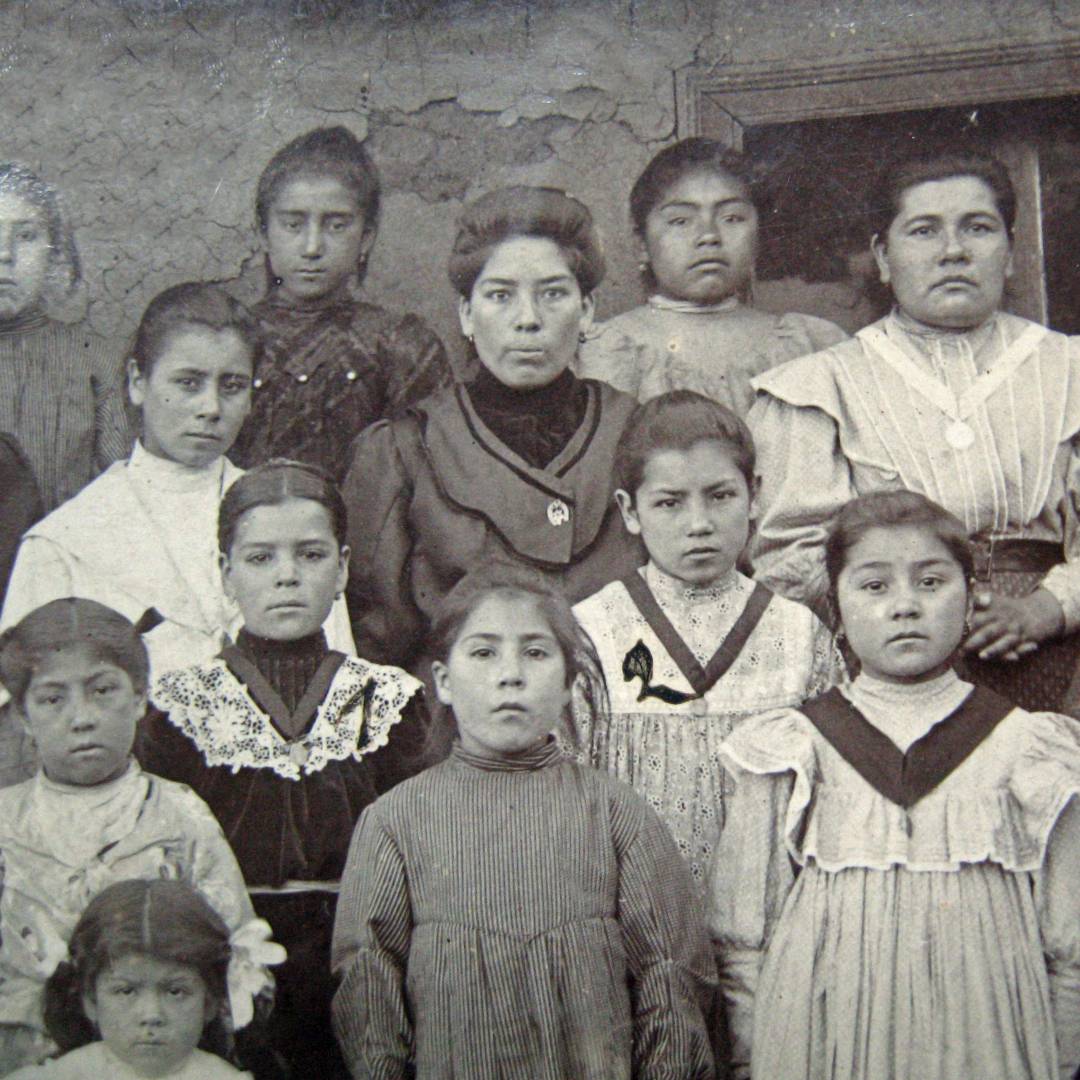
Laura Vicuña is on the right in the third row.


Manuel beat Laura severely several times to make her forget about becoming a nun

She was a child of eleven years of age, and Manuel Mora, who probably already harbored lust for the growing girl, heard that she had voiced a desire to become a nun. Enraged at this idea, Manuel beat Laura severely several times to make her forget about becoming a nun. He told her and her mother that if she did not forget the “ridiculous idea” of becoming a nun, he would stop paying for her education with the Salesians. The nuns heard of this and told Mercedes that both of her daughters would have full scholarships to the school and that there was no need for worry.

But Laura was worried about her mom’s soul. She remembered what Jesus had said: “No one has greater love than to give up one’s life for one’s friends.”  Laura decided to give her own life in exchange for her mom’s salvation. She asked Jesus to take her so her mom could be saved. Soon after, the child became seriously ill with pulmonary tuberculosis.


She told her mother, “Mama, I offer my life for you.”

Laura’s health quickly deteriorated. Before she passed away, she told her mom, “Mama, I offer my life for you. Before I die, mother, would I have the joy of seeing you repent?”

Her mother cried out, “I swear I will do whatever you ask of me! God is the witness of my promise.”

Laura smiled and said, “Thank you, Jesus. Thank you, Mary. Goodbye, Mother, now I die happy.”

Laura Vicuña, weakened by beatings from Manuel Mora, died from her illness on January 22, 1904. She had not reached her thirteenth birthday. She was beatified by Pope St. John Paul II on September 3, 1988  She is a patroness of abuse victims, incest victims, and children who have suffered the loss of their parents.

Blessed Laura Vicuna, please pray for us.


Copyright©Larry Peterson 2023
Image: Wikimedia Commons, Public domain

Not to Worry—If Another Pandemic Strikes, Catholic Saints are Ready to Protect Us

Not to Worry—If Another Pandemic Strikes, Catholic Saints are Ready to Protect Us


The Catholic Church has patron saints for many causes. There are so many, they even had to be alphabetized. Under the letter A, there are 23 named saints, such as Saint Agatha, the patroness of bakers and nurses, and the great Saint Augustine of Hippo, the patron saint of printers and brewmasters. Under G, there is Saint George, responsible for fifteen patronages, including butchers, shepherds, and Boy Scouts.

We Catholics have protectors against pandemics

You get the idea; we Catholics have a lot of patron saints, and almost every facet of life experience seems to be covered. We can always turn to Saint Jude, the patron of impossible causes, if it looks impossible.

Since the coronavirus pandemic has passed, we might sleep better at night knowing there are saints in the queue, ready to go to war against any and all attacks by invisible microbes and virulent demons looking to bring us down. Here are a few examples:


  • Saint Quirinus of Neuss: patron saint against bubonic plague and smallpox

Quirinus was born in the first century and died in the year 116 A.D. Legend has it that he was a Roman tribune and was ordered to execute Alexander, Eventius, and Theodolus. These men had been arrested on orders of the emperor. Their crime: being Christian. But Quirinus witnessed miracles performed by the three men. Instead of executing them, he embraced the faith and was baptized into the faith along with his daughter, Balbina. He and Balbina were decapitated for being Christian and buried in the catacomb on the Via Appia.

We move ahead 1300 years. Documents from Cologne, dated 1485, say Quirinus’s body was donated in 1050 by Pope Leo IX to his sister, the abbess of Neuss. Soon after, Charles the Bold of Burgundy laid siege to Neuss with his army spreading from western Germany, the Netherlands, and as far south as Italy. The citizens of Neuss invoked Quirinus for help, and the siege ended. Wellsprings popped up and were dedicated to him. He was then called on to fight against bubonic plague and smallpox.

There is a saying by farmers associated with Quirinus’s feast day, March 30: “As St. Quirinus Day goes, so will the summer.” 


  • Saint Anthony the Great: patron saint against infectious diseases

Saint Anthony the Great was one of the greatest saints of the early Church. Anthony was one of the first monks and is considered the founder and father of organized Christian Monasticism. He organized disciples into a community and these communities eventually spread throughout Egypt. Anthony is known as Anthony the Great, Anthony of Egypt, Anthony of the Desert, and Anthony of Thebes. He is also known as the Father of All Monks. His feast day is celebrated on January 17.

Saint Anthony the Great is also the patron saint for those fighting infectious diseases. We might all call on him now, since infectious diseases will always be attacking us.


  • Saint Edmund the Martyr: patron against pandemics

Saint Edmund is the acknowledged patron saint against pandemics. He died in 869, and hardly anything is known about him. Yet there are churches all over England dedicated to him. Saint Edmund cannot be placed within any ruling dynasty, yet the Danes murdered him in 869 when they conquered his army. In addition to being the patron saint against pandemics, Saint Edmund the Martyr is also the patron of torture victims and protection from the plague.


We might mention a few more saints who are patrons of those suffering from familiar illnesses and afflictions:

  • Saint Damien of Molokai: patron saint of those with leprosy (Hansen’s Disease)
  • Saint Dymphna: the 15-year-old Irish girl who is the patroness of those suffering from emotional disorders.
  • The Fourteen Holy Helpers: patron saints against epidemics, bubonic plague, aka the Black Death
  • Saint Matthias: patron saint of alcoholics and those with smallpox
  • Saint Tryphon: patron of those fighting off bed bugs, rodents, and locusts.


The list seems endless, so if you ever need a patron saint for anything, check this list of patron saints by occupation and activity. 

Most likely there is a saint just waiting for your call.


null


Copyright ©Larry Peterson 2023
Images: Pexels

Our Lady Showered the People with Abundance

“I have heard their prayers. Assure them that as of this day, their suffering has come to an end.”

There is a town located in Italy called Cursi. It is in the Apulia region of southeast Italy, and if you look at the map of the country, it is located on the heel of the boot. It is about as far southeast one can go before coming to the Adriatic Sea. In the seventeenth century, the Blessed Virgin came to this town and, reaching out with love and tenderness, saved all the people.

It had been three years since a drop of rain had fallen in the region. It was now 1641, and the summer heat was turned up full. The drought had led to famine, and the famine led to a lack of work. Sickness had erupted and began to spread among the people. Things had become genuinely desperate, and even water to drink was getting scarce. The people had been praying every day to the Blessed Mother for help, but no relief appeared.

In April of 1641, (the actual date is unknown) the son of a cattle farmer, Biagio Natali, was out herding some stray cattle back to the farm. Near the pasture was a chapel that had been dedicated to Our Lady. Next to the chapel, near the edge of the road, was a barn. Inside the barn, on one of the walls, was a fresco someone had painted (artist unknown) of the Madonna and Child.

As Biagio passed by the barn, he noticed a strange light coming from inside. He stopped and looked, and the light seemed to get brighter and brighter. Suddenly, the figure of the Mother and Child came from inside the light. Biagio fell to his knees and a beautiful voice said, “Don’t be afraid. I am the Queen of Heaven. Return to your village and try to placate your neighbors. I have heard their prayers. Assure them that as of this day, their suffering has come to an end. As a sign of my protection, you will have an abundant harvest.”

Realizing that the Madonna and Child were no longer there, Biagio got up and ran to Don Giovanni Domenico Coccioli, the parish priest. Don Giovanni was overjoyed to hear this message. He told Biagio that he had received a similar dream. The priest was so excited to hear Biagio’s story that he immediately ran out to announce the news to the people of the city. He organized them into a procession and all the townsfolk began marching while praying and singing in honor of Our Lady and Child. What an incredible faith the people had; nothing had yet to happen.

As the people processed toward the sight of the apparition, the clear, blue sky began to cloud over. The clouds grew darker, and the rains came down. The rain poured down for three days and nights with the fields soaking up every drop of the precious water. Since it was only April, the harvest that year was abundant. The famine ended, and the local granaries and cellars were filled with wheat and fruit.

The people of Cursi wanted to find a way to show their sincere gratitude to the Blessed Mother. They decided to enclose the small chapel and barn within a large church that would surround it. The fresco would be saved within the new church and hopefully become a place of pilgrimage. The church was finished in 1650 and, as hoped for, immediately became a popular place to visit. It was called the Sanctuary of Our Lady of Abundance. Biagio left his work as a farmer, donned the clothes of a hermit, and vowed to spend the rest of his life in prayer and fasting while looking after the shrine.

Some years after the new church was built, it was hit by lightning and burned down. A bigger and more beautiful church was built with a magnificent sanctuary. In the sanctuary, above the high altar, is a Greco-Byzantine fresco of the Madonna of Abundance (sometimes called the Madonna of Prosperity). In it, the Blessed Virgin holds the Divine Infant and in their hands, they are holding sprigs of olives and ears of corn.

The Shrine is not only known for the “abundance” of rain but it is also a place for nursing mothers who lack the necessary milk to nurse their babies. Those who invoke her intercession are said to often develop an abundance of milk.

The shrine in Cursi is opened daily and Mass is offered at 5:00 p.m. in the winter and at 6:00 p.m. in the summer, with the Rosary preceding Mass.


Copyright 2022 LarryPeterson

Stay in the Know

Join Our Newsletter

Members and supporters can get the latest on CWG news and events by signing up for our newsletter.

Please wait...

Thank you for signing up!

Catholic Writers Guild
P.O. Box 77
Eaton, IN 47338