Cath-Lit Live: Encountering Signs of Faith

Cath-Lit Live: Encountering Signs of Faith

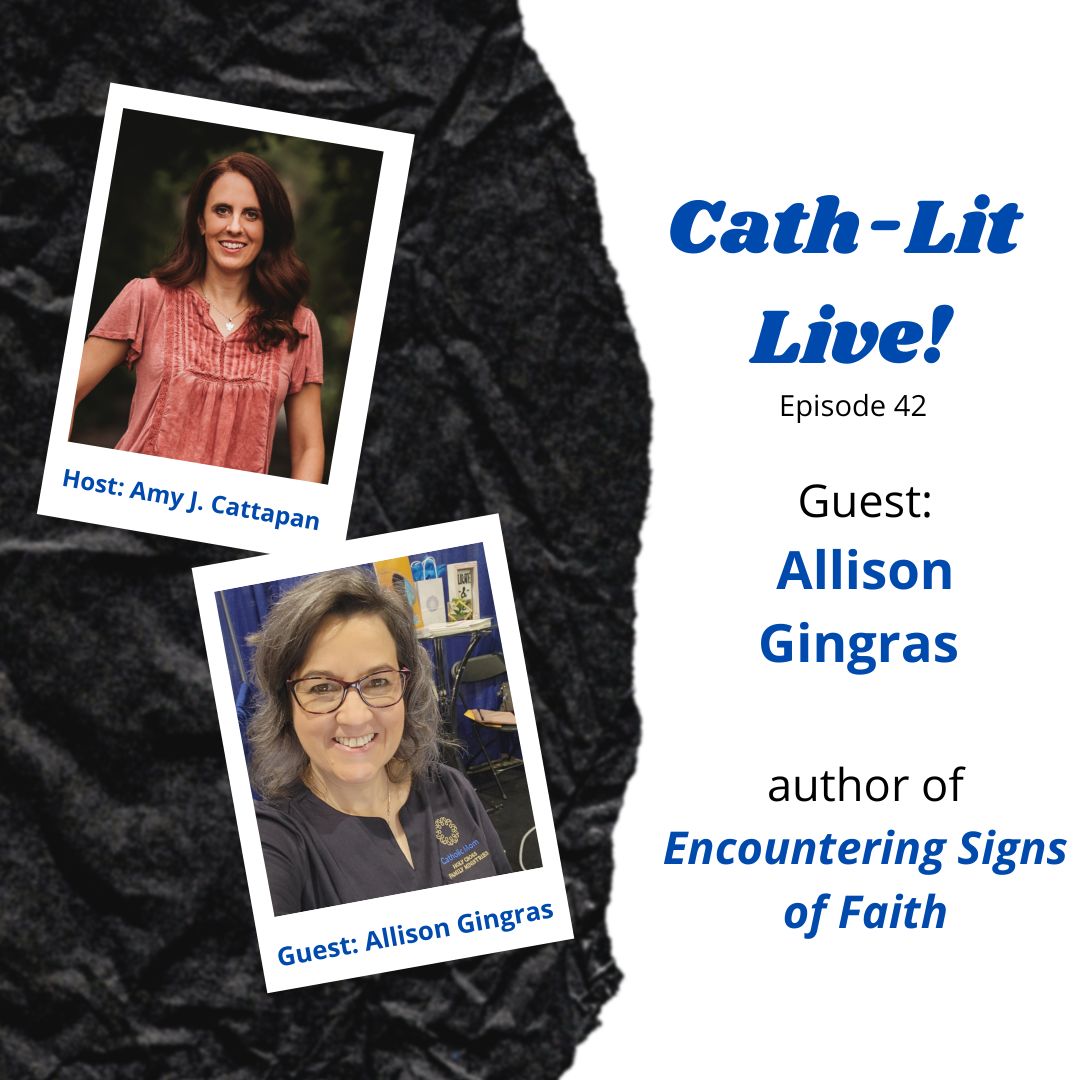
“Cath-Lit Live!” features brief interviews with Catholic authors who are releasing new books. Hosted by Catholic author and speaker Amy J. Cattapan, “Cath-Lit Live!” gives viewers a glimpse into the latest Catholic books while getting to know a bit about the author as well.


null


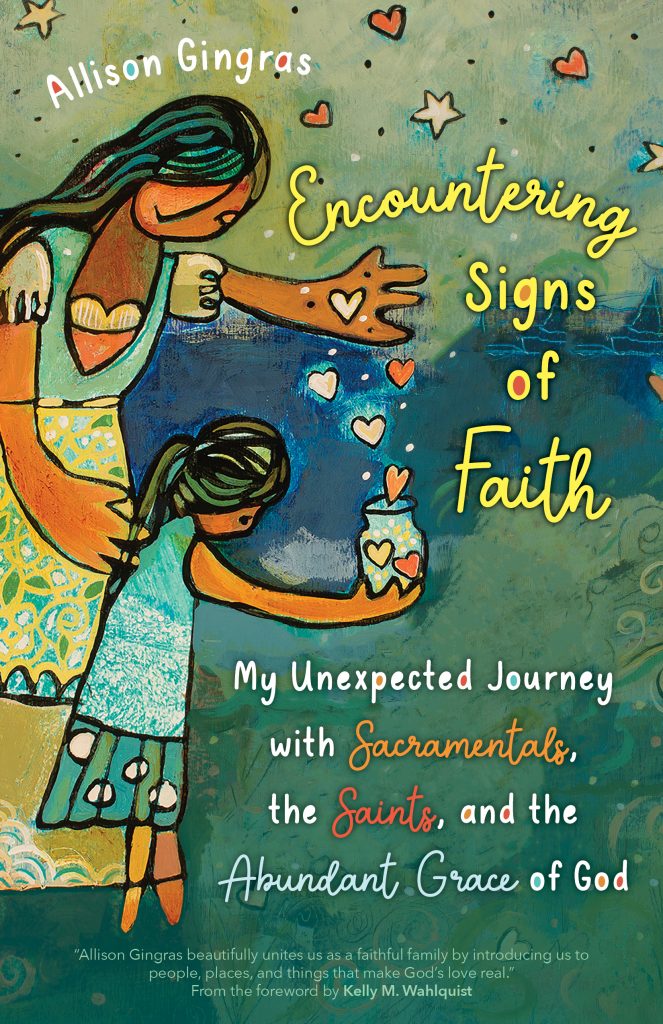
Encountering Signs of Faith: My Unexpected Journey with Sacramentals, the Saints, and the Abundant Grace of God by Allison Gingras

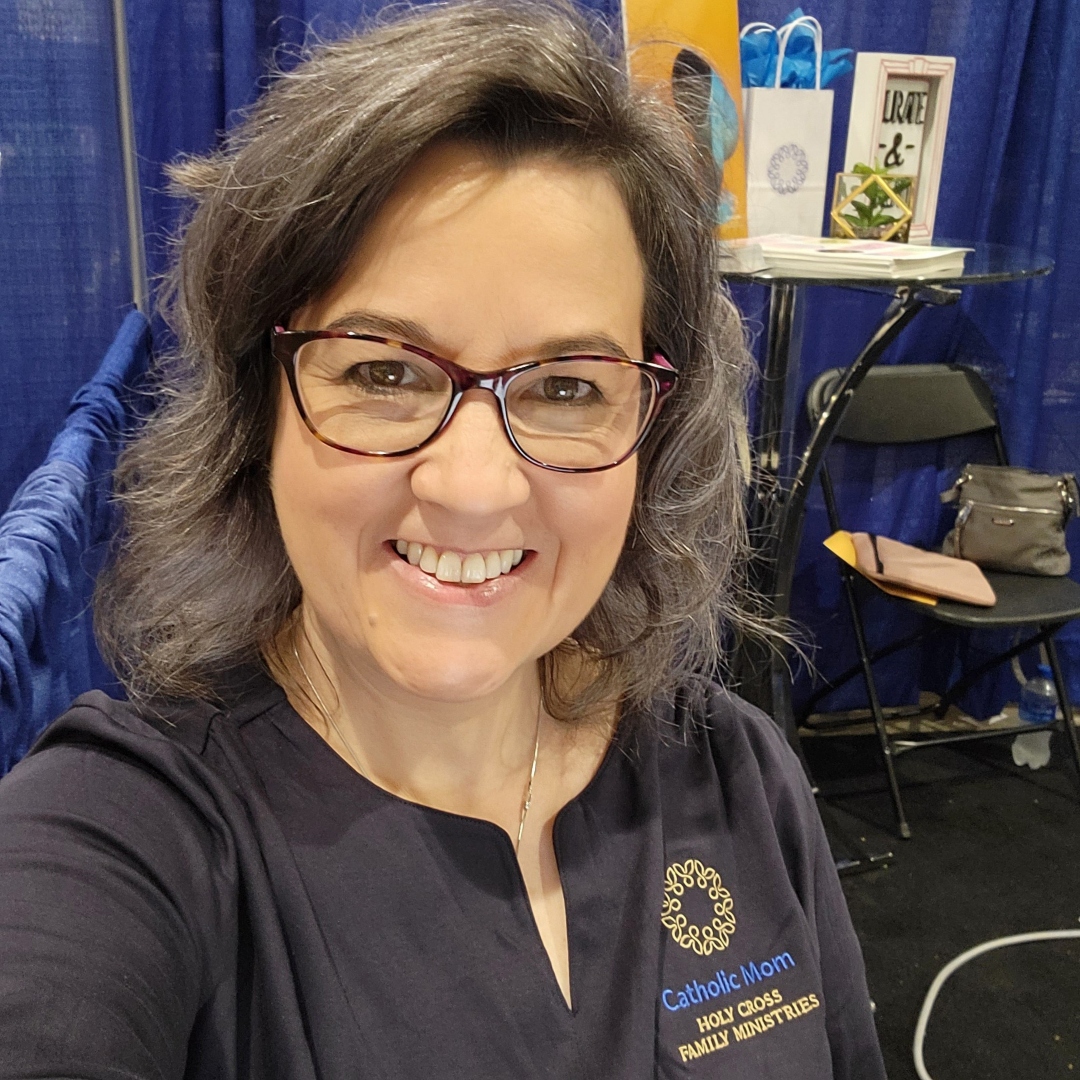
Allison Gingras shares how blessings, prayers, devotions, and objects such as rosaries and scapulars, also known as sacramentals—which prepare us to receive the grace of the sacraments—transformed her faith. In Encountering Signs of Faith, Gingras shares the story of how these helped her discern the adoption of her daughter from China, strengthened her faith as she waited to meet her, helped her bond with the toddler, and taught her daughter about her faith. Gingras offers examples of saints who inspired and embraced sacramentals, including Juan Diego, Faustina, Bernadette, and Venerable Patrick Peyton.

Discover the spiritual benefits of incorporating sacramentals such as sacred images, novenas, prayer cards, Lectio divina, and holy water into daily life. Reflection questions and grace-building activities are included with each chapter. Gingras will guide you to experience these sacred signs in a new way and to connect you more meaningfully to Jesus, Mary, and the saints.


null


About the author:

Allison Gingras is the founder of www.ReconciledToYou.com—where she shares the love of her Catholic Faith with stories, laughter, and honesty through everyday life! Her writing includes Encountering Signs of Faith (Ave Maria Press) and the Stay Connected Journals for Women (OSV). Allison is a Catholic Digital Media Specialist for Family Rosary and the Fall River Diocese. She hosts A Seeking Heart podcast and is co-host of the Catholic Momcast podcast.


You can catch “Cath-Lit Live” live on A.J. Cattapan’s author Facebook page. Recorded versions of the show will also be available to watch later on her YouTube channel and Instagram.


null


Copyright 2022 Amy J. Cattapan
Banner image via Pexels

Heaven Scent: What My Father Gave to Her


I have been paid in full and have more than enough; I am fully satisfied, now that I have received … the gifts you sent, a fragrant offering, a sacrifice acceptable and pleasing to God. ~Philippians 4:18


Every Christmas, for as long as I remember, Daddy gave Mum the same gift. It was especially meaningful to her because of its French origin. In the mid-1950s, my parents were stationed in a picturesque community near the city of Nice, known as Villefranche-sur-Mer, a natural harbor in the Mediterranean Sea. The 6th Fleet flagship, USS Salem, called Villefranche its home port, and while Daddy was at sea serving under Vice Admiral Charles “Cat” Brown, my mother made a quaint home for my sister and me in this French Riviera village. Although I was only three years old, I remember endless stone steps throughout town, bordered by shops, small hotels, and apartments. I vaguely remember the nuns who taught my sister and me at the Catholic nursery school—evidence of the value my parents placed on passing down their Catholic faith. It was here my father gave my mother the first of her special Christmas gifts.

After those years in Villefranche, my parents returned to England and eventually made it to the United States with two additional daughters. On Christmas mornings, my sisters and I watched expectantly as Mum unwrapped the small package from Daddy. It was always the same slender, shiny, black cylindrical container with a gold band around the center where the cap met the base. 

Our whole family loved the smell of Arpege by Lanvin, a sweet compilation of luxurious, gentle, floral fragrances leaving a lingering essence. In my mind, it represented the bouquet of my parents’ mutual love and devotion housed in the crystal-clear vase of their precious Catholic faith. The perfume’s container, like their faith, released a heavenly scent as its contents filled the air. But, unlike faith and truth, manufactured perfume does not endure.

As the years passed, it became harder for my father to find Arpege. While I was away at college, my younger sisters helped him search Pensacola to find it, until one year, the package on Christmas morning was no longer cylindrical. It was rectangular, a book—a spiritual book. And while my sisters and I were disappointed, our mother was happy to receive a gift to strengthen her faith and raise it to new heights. We grew used to Christmas mornings without the French perfume. Instead, Mum breathed in the scent of heaven from each new book. 

Before my father passed away, our families spent Christmas with our parents. As Mum opened the familiar rectangle, she burst out laughing and admonished Daddy as she held up two more spiritual books, “Are we planning to open a religious bookstore?” Secretly hoping for something a little more feminine.

The truth is, both of my parents were living examples of valuing the gifts that truly count—deepening faith, love for Jesus in the Eucharist, love of Scriptures, daily Mass, prayer, and Rosary—placing Christ at the center of life and passing on the faith. My sisters and I may not have appreciated the scent of heaven permeating my parents’ lives when we were young. We were more interested in tangible gifts. But, certainly now, as my sisters and I spend Christmas mornings with our own families, we can still breathe in the lingering perfume of their lives because of the faith passed on by our mother and father.

What My Father Gave to Her

Every day

a spiritual bouquet, holy communion prayers

a single red heirloom rose

silence in the garden


Every week

Fragrant Sunday supper specials followed with 

love petals strewn across ivory keys

wafting the sound of his song


Every month 

perfectly synchronized dances with the big bands

swaying like fields of wild chamomile

sowing meadows of memories


Every special occasion

sentiments written sweetly across the page

words curved and scented like wisteria


Every year

perfume in a slender black cylinder

gold banded Arpege

floral essences


Forever

what my father gave to her

he gave to me.

© Paula Veloso Babadi, 2022

There Are So Many Books…

Today, I went to a used bookstore and a library.

There were so many books.

I picked up a children’s book, written with care and published 80 years ago, that is now just sitting in a used bookstore, gathering dust. I would bet very few people know about this book, let alone remember its story and its author.

It’s enough to make me wonder why—why do I write? Why am I adding books to this plethora of stories that already exists? What do I have to add?

I closed my eyes and sighed, but then I felt a sense of peace fill my heart.

God has called me to write. He gave me a gift, and it’s meant to be used. He puts the stories in my mind and knows they will reach who they need to reach.

There have been many times in the past few years that I have felt a small desire to get a job. It would let me get out of the house, interact with other adults, and have a sense that I’m accomplishing something. However, every time I tried to picture myself at a job, God would give me a vision of myself sitting at our home office desk, writing. That vision would give me peace with where my life was at that moment and where it is now.

Writing is something I can do while I stay home to homeschool my children. In fact, writing is something I can do just about anywhere, and I have. Home, coffee shops, restaurants, hotels, cars, libraries, park benches—the list of locations where I have worked on my books is long.

I was listening to a podcast on creativity and the guest being interviewed mentioned that creativity is important whether it is seen or unseen because it is seen by God.

God sees the first, second, and third drafts. He sees the sections I wrote that never get printed. He sees the time I spend daydreaming scenes and characters. He sees the piles of ideas scratched out. I need to remember that.

God knows about that children’s book author. He knows what it took to write that story and get that book published. He knows who read it and how it affected him or her. He remembers. He knows about every one of the thousands books I saw today and the work that went into each one. He also knows about every book that hasn’t been published. The sentences still in laptops, in notebooks, or lost forever to us through fires and decay. He knows about the ideas the come and then flit away.

We always have an audience and, because of that, even if it never gets printed, our work is worthwhile.

God sees it.

Copyright © 2022 Sarah Anne Carter

Oxygen Mask of Spirituality

Oxygen Mask of Spirituality

If you’ve ever flown on an airplane with a child, you know that the flight attendants instruct that, in case of an emergency, you should secure your own oxygen mask before assisting your child. The reason is that you’re no good to your kids if you’re dead.

I’ve heard many people reference this example with respect to self-care. We need to make sure we are healthy, well rested, and cared for so that when we turn to help the other people in our lives, we have more to give them. The same concept applies to our spiritual lives.

Sharing the Gospel is the mission of every Christian. As parents, we are especially tasked to tell God’s story of salvation to our children. This is no small task, and the truth is, if we do not actively seek out our own flow of oxygen to grow in our own faith and relationship with God, we won’t be equipped to help anyone else, even our own kids.

Attending Sunday Mass is obviously the first step, but I believe that is not enough. We also need daily intentional spiritual development time. The trouble is, with our hectic lives and packed schedules, how can we make purposeful time for God?

The answer lies in using the tools and resources other faithful Catholics have created.

Explore what options your local parish has for study and fellowship. There may be a prayer ministry, a women’s group, or a Bible study. Instead of listening to music in the car, turn on a Catholic podcast (if you haven’t listened to it yet, The Bible in a Year podcast will change your life). There are Catholic Bible apps so you can read scripture on the go, and many apps that also have prayers, reflections, and daily readings, like the Hallow and Amen apps.

You can also sign up to get a daily inspirational email from Catholic organizations like Word on Fire or CatholicMom.com. Swap out your secular books with Catholic fiction, and trade Netflix for Formed, which is an online streaming service with shows, reflections, and even content for kids offered for free by the Augustine Institute.

Finally, one of the best and most fulfilling ways to grow closer to Jesus is through Christ-centered friendships. Jesus came to earth as a human so he could talk with and eat with us. When he commissioned his followers, he sent them out two by two (cf. Mark 6:7 & Luke 10:1). We aren’t meant to go it alone! The support and love of a Christ-loving friend can easily nurture and empower you to proclaim the message God has given you to share.

With so many options in this modern, tech-filled world, you will easily find daily ways to grow in your understanding and relationship with God, thereby further equipping you for your mission.

Now go and put on your own oxygen mask of spirituality, because you’re no good to anyone if you’re spiritually dead.

copyright 2022 Maria Riley


Never Let a Dream Grow Cold


“Place your hope in the Lord: be strong and courageous
in your heart,and place your hope in the Lord.”
Psalm 27:14 (New Catholic Bible)

Dreams come in all sizes, shapes, and forms like brilliant clouds in the sky. Sleep dreams are out of our control, like a movie that plays out as we rest. Life dreams or goals are the ones we think we can control. A common thread is waiting. 

Dreaming while we sleep requires little effort.  All we need to do is close our eyes (or shades as some refer to them), which God has provided for our rejuvenation. The waiting part of a sleep dream is in the moments before we drift off to our slumber.  The subject of the dreams is determined only by God and the unconscious thoughts which come alive as we dream. Often, a dream that occurs at night is only a blurred image that we can’t put our finger on.  The events of the dream may be remembered in days to come, but most often they fade into a vast array of past dreams.

As we sleep, dreams play out and affect us with happy, sad, or even scared emotional responses depending on the dream.  It is often helpful to keep a dream journal handy when you wake up and remember the dream vividly.  Recording the dream is beneficial in determining a dream pattern and perhaps a gift or insight from the Holy Spirit. Scripture tells us that God can speak to us through our dreams. Therefore, though sleep dreams may seem trivial sometimes, it may be fruitful not to let them grow cold.

We read about many sleep dreams in the bible. The three wise men who traveled to pay homage to Jesus received such a dream. We learn that “having been warned in a dream not to return to Herod, they departed for their country by another way” (Matthew 2:12).

Life dreams or goals are significantly more complicated than those mentioned above because they encompass our expectations and a high level of emotional attachment. Dreams of this nature are often afflicted with the task of waiting. We have heard terms like dashed dreams or a dream come true, two different extremes often requiring one to wait patiently.

We wait because we need or want something to happen, and when we are waiting for a dream or goal to come alive, this can bring frustration, sadness, and doubt.  One way to counterbalance this is to invite God into the pause. 

Taking life dreams into prayerful conversation with our Lord not only makes the wait manageable, but it also confirms that the plan aligns with glorifying God. I can’t count how many times my ambitions were suddenly halted. In each case, my emotional response was not pleasant until I realized that what I wanted was not of God but entirely my own vision.

I like to think of dreams for my life in this way, that I am waiting patiently for the Lord without expectations. I surrender my thoughts, words, and plans to the vision of my God. Prayer becomes the catalyst for making dreams come true. Growing in intimacy with God as we discuss the details of such dreams is a beautiful experience. Journaling each step, concern, and joyful moment helps to keep me aligned with God’s vision.

God wants us to succeed and be happy, and so He places the seeds for dreams in our hearts. Eventually, insights will become easier to recognize, and hopes and dreams will come alive. Never, ever let a dream grow cold. God is working in you, for you and His Glory!


Beautiful Writing Will Save the World


While spending time with my friend Megan Chalfant, a wonderful Catholic artist, a few years ago, I was introduced to the concept of art (including writing) as prayer. I understood that we as creators should pray over our work, dedicating it to God. But I hadn’t thought about how the act of doing the work God has called us to do is a kind of “Yes.” It’s a living out of our faith that is a form of prayer on its own. This realization sparked an elevation of my creative endeavors.

We chatted that day about many other powerful connections between faith and art/creation. It got me thinking about how we translate the concepts of God’s love and other eternal things into a language we can understand by creating. Since God made each of us unique, it makes sense that our expression of the truths we observe will take different forms than those around us. A sculptor, an architect, a community organizer, a musician, and a novelist will find vastly different ways to “say” the same thing.

Speaking God’s love into the world sounds a lot like evangelism, doesn’t it?

That day, Megan also gifted me a wonderful book produced by Likable Art called Created (In the Beginning God): Bridging the Gap Between Your Art and Your Creator. It opens with an admonition from Bishop Robert Barron to “Lead with Beauty.”

There is something unthreatening about the beautiful, which is what makes it so powerful as a pathway to God: first the beautiful, then the good, and finally the true.

Pope Francis focused on telling the story of beauty as a means of evangelism and as a balm for our souls during his message for World Communications Day in 2020. He emphasized that sacred scripture is the story of stories. It relates how God became story through his incarnation and how by becoming man, he made every human story a divine story. We can follow our Storyteller’s example as Catholic writers by sharing beautiful, good news.

Amid the cacophony of voices and messages that surround us, we need a human story that can speak of ourselves and of the beauty all around us. A narrative that can regard our world and its happenings with a tender gaze. A narrative that can tell us that we are part of a living and interconnected tapestry. A narrative that can reveal the interweaving of the threads which connect us to one another.

I love the idea of leading with beauty and regarding our world with a tender gaze. Because after all, as Dostoyevsky says in his novel The Idiot, “beauty will save the world.”

Beauty is powerful. But it is not always lovely at first glance. Dostoyevsky writes about beauty as “mysterious and also terrible.”  So while beauty often smooths our path to God, we aren’t called only to create easy-to-digest art or careful art that does not offend. Beauty can be found in suffering.

Authentic beauty… unlocks the yearning of the human heart, the profound desire to know, to love, to go towards the Other, to reach for the Beyond. If we acknowledge that beauty touches us intimately, that it wounds us, that it opens our eyes, then we rediscover the joy of seeing, of being able to grasp the profound meaning of our existence. (From Pope Benedict XVI’s 2009 Meeting with Artists)

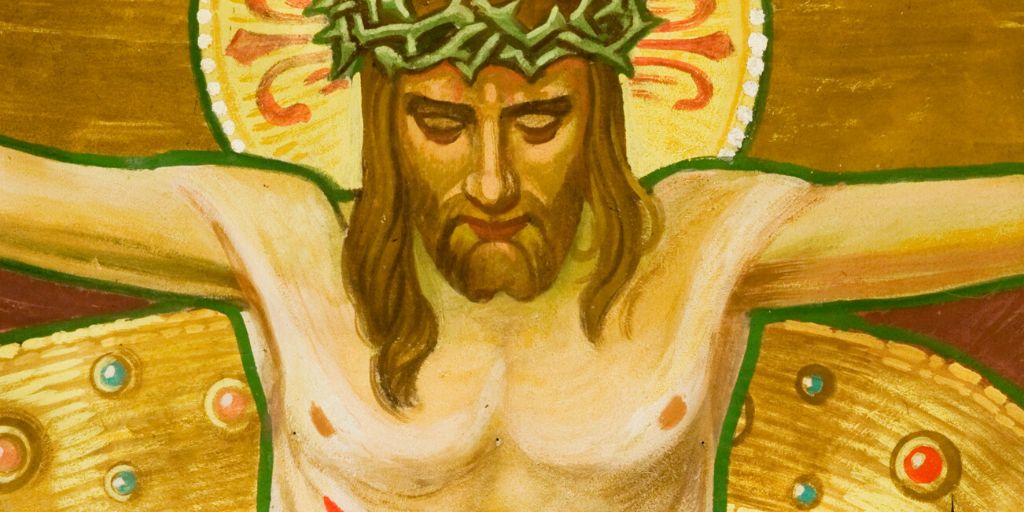
Sometimes it’s exposure to a created work that reminds us of hard truths – our frailty, mortality, weakness — that ignites in us a longing for the eternal. Poignant art leads us back to what we would otherwise take pains to avoid – and it takes a sneaky route that we often don’t anticipate until it has already done its work in us. How many people came into relationship with God because they were drawn to the uncomfortable beauty of the crucifix? Or a hauntingly gorgeous old cathedral? Or the lives and deaths of martyrs?

As writers, we have the keys to unlocking truth through beauty for our readers. A well-written novel with compelling characters, for instance, can grow our compassionate understanding of a type of person we’d be hesitant to interact with in real life, and that “person” can teach us lessons that we’d brush off if the author wrote them plainly. And even better, carefully chosen, beautiful, illuminating words on any subject can point to the glory of the Creator who writes truth on our hearts and who declares that ours is a world worth saving.


Copyright Anjanette Barr, 2022

Learning to Just Be


Our lives are often rushed. This summer’s calendar has been packed fuller than any before—trying to get household things done while running children here, there, and everywhere has me feeling rushed and a bit frantic some days. (Leave it to high gas prices to teach me a lesson about slowing down.)

Our daughter has dance class 30 minutes away and, for the past few weeks, to save on gas, we’ve been taking turns staying down near her class instead of driving back home and back again. At least 12 hours of driving has been saved, but that meant we had to find something to do for the two and a half hours while she was in class. My husband and I took turns “experiencing” the nights away from home.

On my first trip, I visited the downtown library that I had never been to yet. It had an underground free parking garage where I could eat my dinner in my car. I took my laptop into the library, but I spent the first 10 minutes wandering around the three floors to see the different areas the library had to offer. There were so many tables near the windows that faced either downtown or a small park. I found one and wrote for almost an hour. I still had time to kill, so then I read the local paper. While I hadn’t brought my water into the library, I noticed food and drinks were not taboo there.

My husband found a metro park where he could sit and eat his dinner and read while watching the fountains and the people. He encountered families, runners, hip hop dancers, and other people just taking breaks from work. During this time, he started reading a book I had already started and ending up finishing it before me because he had so much reading time. It’s the first time that’s ever happened since I’m the faster reader!

One night, I ate at the metro park, but since it was hot, I went into the local coffee shop to spend some time writing. For an hour, I got to write while listening to some great music from the ‘90s. The barista even offered me water to go as I was leaving and was impressed that I was an author. I definitely will go back there.

Another night, I went to Panera right down the street and wrote and wrote and wrote. Then, one night, I was tired and didn’t feel like pulling out the laptop, so I went to a bookstore and browsed.

My husband spent one night reading some, but also listening to the live music they had downtown. Turns out there’s a free concert every Thursday night in the summer.

Through all the nights I spent downtown, I found myself forced to slow down, to find a place and just stay there for a bit. I spent most of my nights away writing. I focused on just doing or enjoying whatever was in front of me. A quiet dinner outside let me focus on the tasty BBQ beef sandwich. A library let me focus on the plot of my novel. You should see how focused I am at a bookstore.

Those nights helped remind me to be where I am, and I started to apply it more at home. I often move from task to task, or even multitask a lot. But I don’t have to rush from one thing to another. I can enjoy making dinner. I can spend time looking at my daylilies. I can sit and listen to a child’s joke. I can just be.

Copyright © 2022 Sarah Anne Carter

Let Jesus In

Discernment can be a difficult task, and as Catholic writers, this includes our discernment for our writing. I have found that the only way to find clear directions, regardless if we write fiction or nonfiction, is to invite Jesus to be our guide.

I long to do the will of God, but at times I am caught by paralyzing fears of inadequacy and ineptitude. I do not have a formal Catholic education, and in my weak moments I start to believe that I do not have anything to offer or contribute to the world of Catholic writing. Even though that I have family members, friends, and even my priest cheering me on, I fall prey to these vicious inferiority thoughts.

I read Saint Thérèse of Lisieux’s Autobiography, The Story of a Soul. for a project I’m working on. I highly recommend it! She wrote it as a response to a request from her superior in the convent, and it reads like a letter written to a friend. I felt like Thérèse wrote it directly to me.

Thérèse’s life on earth outwardly seemed unremarkable (she became a Carmelite nun at age 15 and died at age 24); but thanks to The Story of a Soul, people like me have been learning about her profound yet simple way to heaven for more than 100 years. It is not written eloquently, but its message has changed countless lives. Because of this journal-style book, she has been named one of only four female Doctors of the Church.

Many phrases and ideas struck me, but none more so than her open confession to not being educated by traditional means. She tells us that she struggled with understanding deeply theological books, but that Jesus gave her the knowledge and understanding directly. She says, “Jesus has no need of books or doctors of the Church to guide souls. He, the Doctor of doctors, can teach without words.” (Martin, Thérèse. The Story of a Soul. Translated by John Beevers. Image Books, 1989).

I reread those words many times to let them fully sink in. The concept of being taught by Jesus directly makes so much sense, even though I never realized it before. I now know, if I will let Him, Jesus will teach me too. I do not need extra letters after my name to have something valuable to contribute to the world, because my words are not my own when Jesus is my guide. As long as I am inviting Jesus in, His will can and will be done through me.

© 2022 Maria Riley


Tending The Garden of Your Heart

Kimberly Novak shares heartfelt lessons she learned through the blooming of a Christmas Cactus. 

“The best and most beautiful things in the world cannot be seen or even touched; they must be felt within the heart.” Helen Keller

Many instances in our lives make a good argument for Helen Keller’s quote. Take, for example, a baby’s first smile and the soft touch of their little hand in yours. If we go deeper into those connections, we will find that the most intimate emotions are within the heart. In an unexpected example, I considered the many ways we can tend to the garden of our heart and produce a thriving relationship with God.

My mom texted me recently, celebrating that her Christmas Cactus had bloomed. After more than a year with no emerging flowers. Taking notice that the plant was not thriving in its environment, Mom moved it to a different room. “It is happy,” she shared.  I wondered why a Christmas plant would be blooming now in May. The weather is warmer though not quite yet spring-like. Also, this is a “Christmas Plant,” and we are in Easter Season. Intrigued, I powered up the laptop and searched all there was to know about the Christmas Cactus. 

There’s no shortage of information about this unique plant; for example, it is known for endurance and loyalty. Also, I read a Christmas Cactus Legend which goes deeper into what the plant represents. After all of this research, I still couldn’t find out why an adjustment in its environment made the plant happy.

The event and the beautiful change the cactus experienced gave me pause to look at how this relates to a nurturing relationship with God. Plants need specific growing environments, soil consistencies, and various levels of sunlight to achieve their full potential.  As children of God, we can relate. There are multiple ways to measure the growing conditions of our spiritual life, all leading to happiness of the heart.

Temperature plays a significant role in our walk with God. When we are consistent in prayer and our spiritual practices, our longing for God runs hot! Spirituality thrives in this environment.  The rising passion for God then needs to be watered frequently.  It is important not to get to a point where we are dry or overwatered in prayer life.  One can never pray too much; however, it is possible to pray without a feeling of genuine love for God in our hearts. Praying with sincerity from the heart will safeguard your level of spiritual hydration.

Life throws a lot our way, and there will come a day when you don’t feel like spending time with God. Much like a plant with halted growth, this is considered dormancy. A great way to combat this is through spiritual stillness. Prayer, without conscious words, yet in the presence of God. Eucharistic adoration is a beautiful place for worship of this nature and is an excellent preparatory phase for the next step on this journey, making conditions ripe for growth.

Recognizing your prayerful habits and patterns will keep your prayer life lush and abundant. Also, journaling is a great way to chart changes and emotions during your prayerful encounters. Find a way to highlight or mark days of consolation and go back to them when something has you down.  These moments will act as nourishment for your spirit.  

Now, it is time for the light to shine!  With plants, indirect or direct sunlight plays a prominent role in the plant’s growth, texture, and lifespan. It is not much different in our relationship with God when considering God’s light and love as our source. Living in a way that glorifies our Lord allows His light to shine outwardly from us and onto others. It is in God’s light and love where the happiness in our hearts takes hold.  Loving God and feeding on His love is a true expression of Helen Keller’s quote. When we nurture our spirituality before, during, and after blooming, it results in feeling the best and most beautiful things God is offering.

Spring is here, and soon, all will be shopping for the prettiest flowers, blooming plants, and preparing the soil for planting.  I might suggest that in this time, we also consider where we can allow for spiritual growth and how God is calling us to plant the seeds He has given us to share. 

The Writing Charism, and Finding Your Writing Niche

I’ve been a writer for forever, but I’ve only been Catholic since 2018. Writing in the Protestant world for decades was a blessing, and I had no trouble finding community and support. Still, a bit of grieving needed to happen when I recognized that becoming Catholic meant that my presence in some areas of my previous social sphere would now be awkward.

As an extrovert, I knew I needed to be assertive and find new friends while continuing to cherish my Protestant Christian friendships, and the first two places I searched were among mothers and writers. Obviously, I found the Catholic Writers Guild, praise God. And I also found a group of bookish moms at my parish!

My writing and mothering worlds converged in a fateful and providential way when I mentioned a podcast episode to my mom’s group. The podcast recommended some books I thought we could read together and introduced me to a Catholic word I was unfamiliar with – charism.

Because I come from a Protestant tradition that loves to study Scripture, I knew that charis was Greek for grace (or The Graces in classical mythology). And of course, I could see that it was the root of words like charisma and charismatic, but I had yet to encounter the concept of charism as Catholics use it.

The podcast episode (Fountains of Carrots Episode 86: Living Out Your Creative Dreams to Love Your Family, with Jen Fulwiler) talked about finding the special way God has called and gifted you to make a difference in the world—your charism. The way He created you to be a more whole, fulfilled person and family/community member. They also recommended a workshop from The Catherine of Siena Institute.

I had no interest in taking the workshop and really just wanted to read one of Jen Fulwiler’s books with the group. Still, one of my friends took the initiative and organized a group to go through the Called and Gifted Workshop, and I felt obligated to join since I was the person who brought it up in the first place. Since I’d taken oodles of personality profiles and spiritual gift assessments, I resisted. I felt like I knew myself pretty well, and I thought this would be a boring waste of time.

Something is compelling about looking at not just the way God has molded your personality or your talents but how He has specially equipped you to do good in the world. It goes beyond “what am I good at?” and asks, “what am I here for?”

This distinction is huge. And it proved to be life-changing for me.

I was not surprised to find that writing was at the very top of my list of charisms when I took the inventory. I already knew I was meant to be a writer. What I found the most useful in the workshop experience was learning about my other complementary charisms, and second, the six-month discernment process that the workshop recommends.

In addition to writing, I scored high in Teaching, Knowledge, and Helps, among others. I came to understand how valuable it is for me to know these things about myself when considering what to write. Technically, I can write decently regardless of subject or format, but that does not mean that all of my writing will be equally impactful.

To test this, I spent six months trying new things. I volunteered on the editorial board for our diocesan newspaper. I wrote (bad) poetry. I published a book of short stories. And I tried my hand at developmental editing, essays, and long-form fiction.

I discovered that while God can use me however He wants to, left on my own, I often try to swim against the stream and use my energy in ways that do not offer a great return on the investment. I can muddle through in some areas of writing, but I really shine in others. There’s a place that is an intersection of all of my charisms that is both personally fulfilling and evangelistically impactful.

Consider how a Writing charism paired with an Encouragement charism looks completely different than Writing and Leadership. Or Music. Or Administration. Or Prophecy.

I’m now working in publishing at a literary agency. I would never have even known to look in that direction for a job that utilizes my charisms if I had not gone through this discernment process, and every day it feels like a more and more perfect fit.

Whether you take an inventory like Called and Gifted, or maybe walk through the Clifton Strengths Assessment with Guild member Lisa Mladinich at Wonderfully Made, take some time to think and pray about the other charisms God has given you and how they impact your writing. Which kinds of writing will allow the graces God has bestowed on to you reach their perfect audience? Maybe it will be a new way to help you think about your niche.

Copyright 2022 Anjanette Barr

Stay in the Know

Join Our Newsletter

Members and supporters can get the latest on CWG news and events by signing up for our newsletter.

Please wait...

Thank you for signing up!

Catholic Writers Guild
P.O. Box 77
Eaton, IN 47338