Elder is a Verb

Editor’s note: Technical issues are a nuisance, but in this case it is to our benefit because we revisit Margaret’s September column which disappeared into the ether, along with several other author’s works, due to website issues, now resolved, the latter part of the year.


“… It was not you who chose me, but I who chose you and appointed you to go and

bear fruit that will remain …”  — John 15:16

“Now is the season of the fruiting and the dying.”  — Mary Dingman, SSSF


Elder is a Verb

My long-time spiritual director, Sister Mary Dingman (1919-2017), a vowed member of the School Sisters of St. Francis, was the first person from whom I heard the words, “elder is a verb.”

Sister Mary served her order with distinction as novice mistress, postulancy mistress, Catholic high school teacher, provincial coordinator, and formation director in multiple settings, from the Archdiocese of Milwaukee to the Archdiocese of Omaha. (1)

An apocryphal story tells that while she was still a novice herself, Mary refused a demand to sit in the back seat, from her brother’s fellow seminarian who was giving her a ride back to the convent from their rural hometown.

He was afraid of being seen with a female in his automobile. Novice Mary climbed straight into the front passenger seat. She didn’t recognize any difference in moral responsibility among disciples of the Lord, only different roles to fulfill.

Sister Mary was already a recognized religious figure in her own right by the time her older brother, Bishop Maurice Dingman (1914-1992), called her back to their home state of Iowa.  He asked her to support and assist the Jesuit priests who served Emmaus Community prayer house, to extend opportunities for professional spiritual direction beyond the clergy and into the wider Des Moines lay community.

For more than twenty years, Mary Dingman, SSSF served as a spiritual director at Emmaus House, in a historic Victorian two-story home located close the inner city. She prepared daily lunches where everyone was welcomed to the feast in her beautifully set dining room, after liturgy and Eucharist were offered in the home’s cozy living room. Mass was celebrated there for many years by one of the Jesuit or diocesan priests, as simply and profoundly as the earliest Christians celebrated in the catacombs. Later, centering prayer groups and holy day dinners joined the schedule as the Emmaus community grew.

Sister Mary hosted Catholic and Protestant clergymen, vowed religious, and laypersons for private retreats in the small bedrooms upstairs, providing three excellent meals a day along with plenty of quiet time and peace to enjoy the gardens that surrounded her home. She was still driving, by herself, around the state to provide directed retreats at monasteries and convents, into her late eighties.

Sister Mary Dingman fulfilled her commission as an apostle proclaimed by Jesus in the Gospel of John: to bear fruit that would last.

Emmaus House maintains its commitment to Ignatian Spirituality and community fellowship in the Diocese of Des Moines, even to this very day; offering educational conferences, group and private retreats, as well as personal spiritual direction, now from a new home that is better-equipped to utilize modern technology. (2)

What about us?

As the Autumn Equinox arrives this Monday, September 22, where do we find ourselves? Probably most members of the Catholic Writers Guild are attending Mass regularly, and making strong efforts to educate their families in the faith.

We might not want to think too much about our own deaths, but are we still living our faith to its fullest?

According to the United States census, all members of the United States “Baby Boom” population, people who were born between 1946 and 1964, will not reach the current “retirement” age of 65 until 2030 (3).

“Independent living communities” for “senior citizens” have been popping up like mushrooms all over the country for decades, and many have long wait lists as well as hefty fees. Busy families with active young children and teenagers are too often forced to beg, in some places, to find a single bed available in a skilled nursing home with adequate facilities to help them care for aging parents.

How many devout and aging Catholics do we know, who are facing difficult choices for their final years?

The Oxford English Dictionary gives three parts of speech for the word “elder”:  noun, adjective, and verb – which is offered third in order, after the noun and the adjective, because it is the least common usage.

“1. verb trans. With it, to play the elder. rare. …”

“2. verb intrans. Become older, begin to show signs of age. colloq. and poet. …”

“3. verb trans. Make a request to or admonish a person …” (4)

But none of these were what my friend Sister Mary meant, nor how she lived her own life. She spoke with an active verb, and went about “eldering” with her whole self.

Are we thinking too much about the leaves falling and dreading winter? Are we approaching our own “autumns” as fates to “die” rather than to “fruit”?

Many older people in our society are struggling to afford food on limited social security payments. Children in schools often need surrogate grandparents to listen to their reading and tell them stories, when parents may be too busy or too overwhelmed.

Families, parishes, and dioceses offer plentiful opportunities to help with food pantries, assist the ill or handicapped, offer constructive personal attention to children.

Perhaps most important, “Baby Boomers” who have already retired and those who will retire over the next three decades are the last generation on earth who will remember a culture, and a quality of human life, before demands and consequences of administration by computer.

We can leave an imprint of real experiences in direct and human interaction with the generations that will follow us.

The saints in heaven watch over us as we drag ourselves out of bed, perhaps groaning with arthritic pain. They listen to and intercede for our prayers on behalf of our ancestors, neighbors, children, and grandchildren. They see us picking up our glasses, hearing aids, keys, canes, or walkers, putting on our coats and boots, going out to take care of our daily business.

No matter our circumstances, we can move forward into this autumn of 2025 — even as our earthly weather starts progressing towards winter – carrying the fruits of love, hope, and genuine encounters that endure.

 

© 2025 by Margaret King Zacharias

Feature photo: First Color in Iowa – Photo Credit Margaret Zacharias. Published with permission.

Inset photo: Autumn Rainbow to Heaven – Photo Credit Charles Zacharias.  Published with permission.


Notes

  1. https://www.barrmemorialchapel.com/obituary/4352175
  2. https://www.theemmaushouse.org/about-us
  3. https://www.census.gov/library/stories/2019/12/by-2030-all-baby-boomers-will-be-age-65-or-older.html
  4. Shorter Oxford English Dictionary, Fifth Edition, Volume I A-M, Oxford University Press, Great Clarendon Street, OX2 6DP, Published in the United States by Oxford University Press Inc, New York, 2002, p. 801.

True Strength

“Put your sword back into its place; for all who take the sword will perish by the sword. Do you think that I cannot appeal to my Father, and he will at once send me more than twelve legions of angels? But how then would the scriptures be fulfilled, which say it must happen in this way?”—Matthew 26:52b–54 (NRSVCE)

Jesus could’ve stopped it.

He’s the Son of God, God Himself, the most powerful being ever to exist. He walked on water, made enough food for hundreds out of a few loaves and fish, healed countless illnesses, and cast out demons. He knew Judas was going to betray Him, knew the Pharisees were sending soldiers to arrest Him. Knew He was going to die.

Jesus could’ve called down legions of angels, raised a hand and struck all his enemies blind or worse, or even simply hid where He knew they’d never find Him.

But He didn’t.

Instead, He let the high priest arrest Him, let the Pharisees mock and accuse Him, let the crowds scream for His execution, let the Romans humiliate, torture, and kill Him.

He chose not to fight against His enemies but for them. Chose not to condemn us to the death and punishment we deserve but to take it upon Himself.

That’s true strength. Not strength of mind but strength of will. Not strength of body but strength of heart. The strength to be free, even in chains. The strength to endure. The strength to forgive.

The strength to love.

And it’s that love—that strength—that Jesus calls each one of us to as well.


© Isabelle Wood 2025

Edited by Gabriella Batel

Photo copyright Canva

Buried Treasure

Buried Treasure


When I enter my house, I shall find rest with her, for companionship with her has no bitterness, and life with her has no pain. – Wisdom 8:16


As Mom’s life was fading, we kept vigil by her bedside. Adjacent to Mom’s hospital bed sat the king-sized bed, which allowed me to rest comfortably overnight.

During the day, Mom’s faithful aide was present and hospice staff sifted in and out – the nurse, social worker, hospice aide, chaplain. There was a grief counselor on call, who promised availability for an entire year after Mom died.

With a tiny syringe, we administered medication and water, squeezing them into the corner of Mom’s mouth. I could hear her swallow the liquid. Also given were strong painkillers to ease her moments of agitation and restlessness.

In the afternoon came a lull as Mom slept. Feeling weary, I stretched out beneath the bedspread of the king-sized bed and closed my eyes.

My daughter entered the room and sat quietly at the bedside of her beloved “Gigi.” After a time, she approached the king-sized bed and lifted the bedspread. Then, my daughter climbed in beside me. We spoke not, but just lay beneath the cover, our mutual grief providing a blanket of comfort and support. She remained there with me for an hour or more as I recalled times she’d spent as a child with Gigi – playing, painting, eating popcorn, and for six months as a teenager, living in one of the bedrooms here. Deep within all of us, gentle transitions were taking place.

Thank you, Lord, that amidst the loss of a loved one there can be relational gain.

Reflect: Think of your loved one’s family members, whether they live near or far. If there is any discord, pray for healing.


The above selection is Entry #51 in Part V: The Final Season of Minding Mom: A Caregiver’s Devotional Story by Lisa Livezey (© 2024, En Route Books and Media)

Minding Mom: A Caregiver’s Devotional Story by Lisa Livezey | En Route Books and Media

Featured Image: (photo courtesy of Bronwyn Livezey)

Bed Climb

Bed Climb

He lay down to sleep, resting his head on a stone.  – Genesis 28:11 (GNT)


When Mom and Dad became empty-nesters, they hired a contractor to renovate the spacious attic area of their home, raising the roof and adding large windows, closets, and a small bathroom.  The result was a master bedroom that felt like sleeping in a treehouse.

After Dad’s death, Mom continued climbing the six steps to this attic-level bedroom for both her afternoon naps and overnight sleep. I found it a pleasant place to help Mom each morning. After her shower, I would place a chair by the window and blow dry Mom’s hair using a round brush.  She had naturally wavy and full hair, so my styling efforts yielded nice results.

With Mom’s needs increasing, I struggled to attend to her in the small bathroom. A bigger bathroom, located on the middle level, connected to a large blue bedroom. I started directing Mom to that bedroom for afternoon naps and she obediently complied, but at night insisted on the attic bedroom.

Rather than fight, I placed the two massive wooden dining room table inserts atop the bed in the attic room thinking this would deter Mom. You can imagine my surprise the next evening when, after tidying up the kitchen, I headed upstairs to find Mom lying atop the table inserts!

The next day, my husband replaced the attic bedroom doorknob with a lockable knob.  When Mom tried the door and found it locked, she compliantly turned and went into the blue bedroom.

Help us and our loved ones to adjust, Lord, as we adapt to their changing needs.

Reflect: What changes have you made recently to accommodate your loved one?  Ask the Lord for extra grace amidst the changes.


The above selection is Entry #46 in Part V: The Final Season of Minding Mom: A Caregiver’s Devotional Story by Lisa Livezey (© 2024, En Route Books and Media)

Minding Mom: A Caregiver’s Devotional Story by Lisa Livezey | En Route Books and Media

Featured Image: (www.freepik.com)


Worth It

He was spurned and avoided by men, a man of suffering, knowing pain, like one from whom you turn your face, spurned, and we held him in no esteem.”—Isaiah 53:3 (NABRE)

“Whatever you do, do from the heart, as for the Lord and not for others.”—Colossians 3:23 (ESV)

I’ve never handled being interrupted very well. Anyone else relate?

I usually get disproportionately annoyed whenever someone wants me to stop whatever work I’m doing and asks me to do something else. I always used to think it was because of my tenacity—I want to get one task checked off my list or finish my train of thought before starting something else. But while that is certainly part of it, and taking being interrupted with grace is certainly something I need to work on, I recently realized a deeper reason: appreciation.

I want to feel appreciated for the work I choose to spend my time on and want to know people think it’s important and worthwhile. Not that it’s dispensable and I should be doing anything else. If we’re honest, I think most if not all of us can relate to that. Jesus certainly could.

In His visions to Saint Faustina, Jesus revealed which type of souls caused Him the most pain in the Garden of Gethsemane: lukewarm souls. In other words, souls who don’t care. Souls who don’t appreciate the sacrifice He was about to make for them.

But Jesus loves us all so much, He did it anyway. Regardless of whether we’ll accept it or not.

He traded glory for suffering. Honor for humiliation. Acceptance for rejection.

Appreciation for sacrificial love.

Jesus knows how it feels to be spurned. But He also shows us that resolve to do God’s work and follow His Will should be our reaction, not bitterness and resentment and self-degradation. He shows us how to remember that we don’t work to earn the praise of others.

Rather, all our work should be done for God alone. His smile alone makes everything worth it.


© Isabelle Wood 2025

Photo copyright Canva

Edited by Gabriella Batel

This Magic Moment

This Magic Moment


And he vanished from their sight.  – Luke 24:31(NRSVCE)


Our youngest son, Trevor, entered the world when I was forty-three. Creative, talkative, and strong-willed, he brought much delight to my parents in their later years. When Trevor was three, Mom nicknamed him “The White Tornado” from the way his platinum-blonde, bowl haircut whirled about as he raced through their house.

Trevor was age eight when Dad died, and the grief he suffered at the loss of his beloved grandfather continues to this day. The year prior, Trevor had started teaching himself card tricks, eventually advancing to simple illusion-type magic tricks.

Always eager for a new audience, Trevor practiced his magic acts on Mom in her last days and on the hospice staff that came to the house. The nurse manager especially enjoyed his antics, and she dubbed him “The Great Trevini.”

After every trick, Trevor would ask, “Do you know how I did it?” Despite his delight at presenting magic, he also enjoyed divulging the method behind the trick. What’s harder to explain in words is the magical effect that his moments of fun brought to a home where Alzheimer’s was ravaging a loved one’s body and brain.

Dear Lord, thank you for Your mysterious ways, such as how you returned to heaven through the clouds. Thank you, also, for the mystery of the way child’s play can bring comfort to those around him.  

Reflect: Is there a child you know whose young spirit can bring a fresh moment to you and your loved one? Pray about having that young person stop by to visit.


The above selection is Entry #42 in Part IV: Summer Daze of Minding Mom: A Caregiver’s Devotional Story by Lisa Livezey (© 2024, En Route Books and Media)

Minding Mom: A Caregiver’s Devotional Story by Lisa Livezey | En Route Books and Media

Featured Image: The Great Trevini (photo:Lisa Livezey)

Dramatic Dahlia

Dramatic Dahlia


And from His fulness we have all received, grace upon grace. – John 1:16


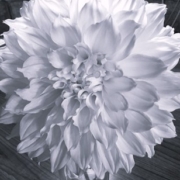
I noticed it in the neighbor’s yard near Mom’s house – a giant flower blooming upon a single tall stem. It was unlike any cultivated flower I’d ever seen.  Peach in color, it had straight, pointed dense petals that radiated up and out to result in a huge blossom the size of a dinner plate.

Although this immense bloom stood near other flowering shrubs, its dramatic size captured the onlooker’s gaze. I’d never seen anyone working in the yard but was tempted to knock upon the door just to find out the variety of this stunning stroke of nature.

You can imagine my surprise the next afternoon, after walking through Mom’s rec room and climbing the six steps to the kitchen to find that very same flower standing in a vase on the kitchen table. The aide stood at the counter preparing an afternoon snack for Mom, and she filled me in.

On their daily walk, Mom and her aide had shared friendly conversation several times with the neighbor in whose yard the flower grew. It was he who had picked this masterpiece and chosen to bestow it upon my sweet, Alzheimer’s-stricken mother. The gardener gave the best flower of all to Mom.

Lord, thank you for choosing the most fragile among us to receive the greatest graces.

Reflect: Can you think of a time when someone brought you flowers or fresh garden produce?  Think about the fragrance or the taste, appreciating God’s goodness in those moments


The above selection is Entry #37 in Part IV: Summer Daze of Minding Mom: A Caregiver’s Devotional Story by Lisa Livezey (© 2024, En Route Books and Media)

Minding Mom: A Caregiver’s Devotional Story by Lisa Livezey | En Route Books and Media

A Pal’s Eval

A Pal’s Eval


“What you are doing is not good. You and the people with you will wear yourselves out, for the  thing is too heavy for you.”  –  Exodus 18:17,18


I contacted my church friend, Steve, who worked for a company that offered on-site consultations to those caring for an aging loved one at home.

Steve arrived on a Sunday afternoon – Mom and I met him at the door. Although Mom didn’t know why he was there, her antennae were up. Saying she didn’t want to intrude, Mom descended the six steps to the rec room as Steve and I sat at the kitchen table.

Eventually I checked on Mom and found her trying to listen in while simultaneously “organizing” the room. Books and videos were strewn everywhere. “Mom, would you like to join us?” I asked.

“I want to give you privacy,” she answered. I welcomed her up to the kitchen.

Mom sat at the table, eagerly listening as Steve discussed assisted living options. Suddenly she reached across the table to me, “We can do this, Sis!” she said eagerly.  Hmmm, I thought. Does she think we are siblings discussing options for a parent or is she trying to tell me something?

Steve and I finished and stood up as he gathered his papers. As we walked towards the door, Steve lowered his voice and offered his initial take on things.

“Your Mom is doing well,” he said, “But it’s full-time work for you amidst your own full-time life and family.” He promised a follow-up email containing a summary and recommendations.

Thank you, Lord, for kind friends who provide knowledgeable, unbiased advice.

Reflect: Are you weary from your full-time caregiving work on top of your own full-time life?  Know that God sees you laboring in the trenches and pray for wisdom.


The above selection is Entry #33 in Part IV: Summer Daze of Minding Mom: A Caregiver’s Devotional Story by Lisa Livezey (© 2024, En Route Books and Media)

Minding Mom: A Caregiver’s Devotional Story by Lisa Livezey | En Route Books and Media

Window Glimpses

Window Glimpses

An old friend and author recently retired. When I first met Susi, her passion for God’s marvelous creation magnetically drew me in, focusing on His boundless wisdom and love as manifested in nature’s beauty all around us. She offered me a guest column, “The Poet’s Voice,” on her now-retired website, “Catholic Stewards of Creation.”

Susi Pittman understands the fundamental truth spoken by William Shakespeare: “The eyes are the window to your soul.” Her mentorship fostered in me the confidence to begin writing publicly. Through her eyes, I became hyper-aware of nature, animals, and beauty in general—all glimpses of God.  

The eye is the body’s lamp. If your eyes are good, your body will be filled with light. . . .” —Matthew 6:22

I am humbled when thinking about how God views His creation. He gazes at us with immense love and sees us through the lens of His beloved Son, Jesus. How can anyone not know our Creator exists and loves us when He reveals Himself daily to us in this part of the universe called Earth? What we see here is such a small representation of God’s magnificence—as St. Paul said, “Now we see indistinctly, as in a mirror. . . .”—1 Corinthians 13:12. 

Susi awakened me to abundant glimpses of God, and we can be glimpses of Him for others when we let ourselves be filled with the light and beauty of His creation. I say, “Open wide the windows!”


“Window Glimpses”

by Paula Veloso Babadi


It’s only a glimpse of

one sunbeam of light

one moment of love

one troublesome blight

one twinkling star

one glow in the morning

one wearisome sigh

one gasp of warning.

It’s a thread in the tapestry

one tear on a cheek

one piece of the puzzle

one thought that I speak.


It’s only a glimpse—

nose pressed to the pane—

one reflection returned

of one move in the game.

It’s a portion of me,

one part of the whole

it’s a glimpse through the window

to my soul.


Copyright 2025 Paula Veloso Babadi

Edited by Gabriella Batel

Live in the Moment

Live in the Moment

By Isabelle Wood

“No one who puts a hand to the plow and looks back is fit for the kingdom of God.”—Luke 9:62 (NRSVCE)

“Do not worry about tomorrow; tomorrow will take care of itself. Sufficient for a day is its own evil.”—Matthew 6:34 (NABRE)

It’s really hard to live in the present. Let’s face it. Most of us spend more time in the past or the future.

Sometimes, all we can think about is the past. Our past failures, our past wounds, those scars that haven’t yet fully healed. Or, on the flip side of the same coin, we live in the memory of the “good ol’ days” and pine for the times that are already past.

Other times, the future occupies all our thinking. We either look forward with worry about what’s ahead because we do or don’t know what’s coming, or we spend so much time looking forward to our plans for the future that we miss all the blessings God wants to give us in the current moment.

Actually, that last point is true for all of them. When we spend too much time in the past or the future, we miss all the little gifts God is handing us right now.

Jesus tells us that if we occupy all our energy looking back with longing or regret, we’re not fit for the kingdom—we’re not “all in” for the incredible adventure that living our Faith is. Likewise, Jesus tells us not to worry about tomorrow. When we spend all our time looking ahead and plotting out all our own “perfect” plans, we’re not putting our trust in the amazing, unimaginable plan God has in store for us, and we’ll be overcome with worry when things don’t work out the way we wanted.

Granted, the past and the future are both gifts God has given us. It’s good to look back with gratitude for the ways God has worked in our lives and the lessons we’ve learned, and it’s good to be responsible with the time God has given us by making plans and looking to the future with hope.

But let’s make it a goal to live in the gift of this moment God has given us right now—in the present.


© Isabelle Wood 2025