Being able to celebrate new life while grieving death: the Mass made it happen

In our Catholic world, March 25 is the feast of the Annunciation. Yes, this is the day the Holy Spirit came to an innocent, pure teenager in Nazareth and announced to her that God wanted her to be the Mother of the Messiah. Mary said, “Yes.” It was a day to celebrate a New Beginning. It was a day to celebrate New Life.

On March 25, two millennia later, at 2 a.m., my wife, Marty, in a comatose state, was wheeled into the Hospice Center on a gurney. They placed her unresponsive body on a bed, gently washed her face, brushed her hair, and pulled the blanket up, tucking it under her chin ever so nicely. Her death watch was underway. For me, celebrating New Life was completely evading me.

Marty died at 6 a.m. on March 27. The first anniversary of her passing fell on Tuesday of Holy Week. There was a Mass offered for her that morning. There is a distinct irony to it all. My first wife, Loretta, who had died in 2003, had passed on April 4. There was a Mass offered for her that morning. Smack dab in the middle of these two Masses was Easter Sunday, which fell on April 1 this year. Death — Risen Life Death.

Well, you know, sometimes messages and signs from above are “in our face,” but our human side blinds us to them. Especially when a person is plugged into the part of themselves that feels grief and sadness and loneliness. When you are in that mode, there does not seem to be much to cheer about. That has been part of my roller-coaster ride for almost a year. Up and down, up and down, up and down.

My mom died many years ago. February 18 was the anniversary of her death, and the 8 a.m. Sunday Mass was being offered for her. I did not expect anyone from my family to be there. I had planned to bring up the gifts with someone from church. I had no idea who that might be. Enter my oldest son, Larry Jr.

Junior was married the day before. His bride was a woman from Kenya, a beautiful person and the most unlikely daughter-in-law I ever expected. Her brother was the Catholic priest who officiated at the Nuptial Mass. It was a magnificent wedding, but it was not until the next morning that I knew how Jesus and Our Lady and all of those people we pray to and lean on were actually there.

That is also when I learned how all that death surrounding me was proof of New Life. It was not a contradiction; it was not a dark joke; it was a validation of the faith I have embraced, and we all share.

My son, who rarely attends Mass at my parish, texted me at 7 a.m. His message was simple, “Will be at Mass this morning. See you there.” They had no idea it was for my mother. Junior had never seen his grandma, as she had died nine years before he was born. Their attendance at that Mass was spontaneous and unplanned.

I stood in the back of the church and watched as they brought up the gifts. I have very little memory of my mother, who had just turned 40 when she died. But at that moment I knew that she was giving me a message. I could feel it. It was real.

She was standing there, next to the priest, as her grandson and his new wife handed the gifts to him. She was smiling, and then, I am pretty sure about this, I think she gave me a little wave. Maybe not my tear-filled eyes were blurring my vision, but everything was crystal clear behind them. In God’s world, New Life and New Beginnings break the bonds of grief, sadness, and death.

The prayer that an extraordinary minister of Holy Communion says before giving Holy Communion to someone is,

“We come to know and believe that God is Love, and he who abides in Love abides in God and God in them.”

This Easter, Marty, and Loretta, on the anniversary of their deaths, will each be on one side of the Risen Christ. They both had received the last rites of the Catholic Church. The faith we love tells us that they abide in Love, that God is Love and they abide with Him. Their deaths have brought them to New Life. I know it is true. Even my mother told me it is true, and she will be with them.

Copyright 2018 Larry Peterson
The Betrothal of the Blessed Virgin Mary to St. Joseph is tied to the Protection of the Unborn Children, Marriage and Family

January 22 is the day the Catholic Church in America sets aside all else and joins in prayer for the Legal Protection of Unborn Children. Traditionally, in the pre-1955 Church calendar, this day was set aside to honor the Betrothal of the Blessed Virgin Mary to St. Joseph. Today, the Mass for this feast is still celebrated by some religious orders using the Latin rite.

This is such a beautiful thing for the Church to do. By simultaneously joining together the Day of Prayer for the Unborn with Roe v. Wade and the Betrothal of Our Lady, it heralds the beauty of motherhood, and it trumpets the profound, spiritual importance of marriage and family.

When Mary was engaged to Joseph, before their marriage, she was discovered to be pregnant—by the Holy Spirit. Joseph, her husband, since he was a righteous man, yet unwilling to expose her to shame, decided to divorce her quietly.” (Matthew 1:18)

“Behold, the virgin shall be with child and bear a son, and they shall name Him Emmanuel.” (Matthew 1:23)

In the Old Testament days, Jewish marriages happened in stages. First came the betrothal. At this ceremony, the couple gave their consent. They were now considered truly married. However, before they would actually move in together as a husband and wife, there was a period of time where they spent time away from each other. This could be up to a year, and it was during this separation that the “newlyweds” were to learn from older married couples how to be good Jewish spouses.

In his 1989 Apostolic Exhortation, Redemptoris Custos, Pope John Paul II used the following words to describe the marriage ceremony of the Virgin Mary and St. Joseph: According to Jewish custom, marriage took place in two stages: first, the legal, or true marriage was celebrated, and then, only after a certain period of time, the husband brought the wife into his house. Thus, before he lived with Mary, Joseph was already her husband.”

When God does things, He sure is meticulous. Mary and Joseph were, according to the law, married. There are those who say that Jesus was born out of wedlock. If the betrothal had not taken place, that might be accurate. But under the law, they were married. There are some would have you believe that Mary was no different than an unwed mother. This is false. The Blessed Mother was a married woman at the time of the Annunciation. She even asked the Angel Gabriel, “How can this be since I know not man?” She is told it will be by the Holy Spirit. The Angel also informs Joseph. Therefore, within the Holy Family, the sanctity of marriage and family is fully protected.

Since the Roe v. Wade and Doe v.Bolton decisions on January 22, 1973, more than 60,000,000 lives have been eradicated. The number is incomprehensible. Yet there are so many who justify this by using the rare examples of teenage rape or incest, Down Syndrome, deformities, lack of finances, and so on. We could also say the Blessed Virgin Mary’s pregnancy was abnormal or irregular. After all, Jesus was conceived by the Holy Spirit. Jesus’ total DNA comes from a woman. Biologically, Jesus is not the son of Joseph, the Nazarene carpenter. But this man define’s fatherhood, and his example screams out to all men: Love and protect the child and his/her mom, no matter what. Be loyal and true. Give them your name if you must.

Fittingly, on the 45th anniversary of the two most ignominious Supreme Court decisions ever handed down, as we pray for the protection of the unborn, we can look to the marriage of Joseph and Mary, a marriage established by God and made perfect by His Son.

It is hard to even imagine a better husband or father than a simple carpenter named Joseph. He is an example for all mankind.

We ask the Most Holy Family to pray for all the unborn and children everywhere.

Copyright 2018 Larry Peterson 

Greeting the New Year—the Catholic Way

According to Georgetown University , as of October 2017, there are 1.28 billion Catholics in the world. 70.4 million of them are in the United States. The USA has a population of approximately 330,000,000 people. That works out to about 22% of the American population being Catholic.

From the Pope down to the vagrant, each of us is an individual creation made by God. We are all unique. Incredibly, we will all be judged individually. And, as Catholics, we will be held to a higher standard. After all, we proclaim to be part of the Mystical Body of Christ which is filled with the deposit of faith. No matter how we lived our lives, the common denominator for all of us will be: How much we loved each other and our neighbor.

Based on that, here are some points to consider if we focus on, before all else, pleasing God in the New Year, the Catholic Way:

  • Never forget that you are God’s individual creation and therefore a gift He has bestowed on the world. Be humbled by the fact that He does have you in the palm of His hand. Without Him you are nothing.
  • Be happy with who and what you are. God made you and loves If you feel you need to change to please Him, you can do it. Just ask for His help.
  • The choices you make are your responsibility. Sometimes our choices hurt us. Embrace them and learn from them and move on. Thank God for the experience.
  • Sometimes NOT getting what you want or what you think you need is a gift. If you trust God, you will thank Him. When “one door closes another opens.”
  • Always count your blessings — not your troubles.
  • Always do your best. The “best” is all God expects from each of us.
  • You can make it through whatever comes along.
  • Prayer is the most powerful of weapons and can be your greatest ally in all diversity.
  • Don’t take things too seriously — especially yourself.
  • The key to happiness is to give of yourself, not to “get” for yourself.
  • Miracles happen; you are one — I am one — we all are one.
  • Temptation is everywhere. It is okay to say “NO.”
  • Finally, never fail to help a neighbor, whoever it may be — even a stranger.

We all will experience “highs and lows” during the coming year. As Catholics, we have the armor of the Church to shield us and the angels and saints to help us fight our battles with the evil one.

St. Michael the Archangel will always ‘defend us in battle.” St. Anthony will help us find lost items. St. Jude will help us through seemingly impossible barricades. Good St. Joseph is ready to help all men be good fathers and husbands. St. Monica will help moms and St. Dymphna will help those with experiencing emotional difficulties or suffering from Alzheimer’s disease. And, of course, the Blessed Virgin Mary is always there for all of us.

Virtually every day of the calendar year honors a particular saint, and that saint has been assigned a special task, such as St. Padre Pio, who is the patron of adolescents and volunteers, or St. Maximilian Kolbe, martyred in the Holocaust, who is the patron of drug addicts. Help is always available when you are Catholic.

Lastly, we have in place for our salvation the most beautiful thing this side of heaven; the Holy Sacrifice of the Mass. We can actually be at the foot of the Cross and then witness the resurrection. It is there for all of us every day if we so CHOOSE. Then there are the sacraments, always available to build us up and restore us to where we should be.

Yes—being Catholic is very cool. We even have the Rosary.

HAPPY NEW YEAR, 2018 –“No Fear”

Copyright 2018 Larry Peterson

When You Think You Think You Have Nothing to Give, Bring Your Drum…

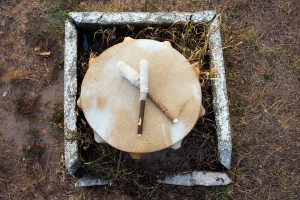
At least that is what a young boy did thousands of years ago when he wanted to honor a new king. You probably can hear the drum beating as he asks “Shall I play for you? On my drum?”  You know the rest. tribal-1215118_1920

Most of my life, I’ve felt I had nothing worthy to put at the feet of the King of the Universe.  Instead, I often ran away from him. But in his wisdom and love, he carried me to the point where I am today.

It was in my parish family during a small group retreat by Father Michael Gaitley, the study on “Consoling the Heart of Jesus” gave me a whole new insight into the love and longing Jesus has for us. Early in the book, Father Gaitley shares a simple message he perceived from Jesus:

“All I want is for you to be my friend. All I want is for you not to be afraid of me and to come to me.” (Page 71)

Loving and Consoling Jesus through His Living Body the Church

 I found great joy in meeting with like-minded souls to talk about our growing love for Jesus and the resulting desire to put faith into action.  It was nothing short of miraculous. God bears his light to us, first through his son and then through others.

They come heeding the call of the Holy Spirit to be in the right place at the right time. We all know people who are beacons – radiating goodness, kindness, love and action. Sometimes, we are the steadying signal, but I never forget who is at the origin.

Therefore let us be grateful for receiving a kingdom that cannot be shaken, and thus let us offer to God acceptable worship, with reverence and awe;  Hebrews 12:28 

Jesus is the burning heart, the center of this wonderful body of Christ and in loving others, we love him.  In consoling others, we console him. We truly are branches nourished by his living vine.

Bringing Our Drums

heart-2862156_1920So we come back to the little shepherd boy. I hear his drums, “pa rum pa pum pum” a physical declaration of his heart beating with love for the king, a testimony to all that is required of us–offering our own hearts without reserve.

I once thought I had nothing to give, but I was wrong.  Jesus smiled at the drummer boy and his gift while Mary nodded and the ox and lamb kept time. I am certain he smiles at each of us too; we just need to bring him our drum.


What Christmas songs stir your heart?  Bring loving memories to mind?  Feel free to share in the comments section.

The Gift of Red

2008-11-16 021Advent and Christmas were always bright and happy times in my childhood home.  While focus was on preparing for the coming of Christ, mixed in with that anticipation was the fun of decorating.  Red was everywhere and in every room.  My mother made sure our home reflected the joy heralded by the angels of peace on earth and goodwill to all men, with the manger scene a focal point.  We had red plaid table cloths in the dining room and playful elves hanging from every conceivable perch. I came to love the significance of all these bright red and green decorating traditions.

Several years ago, a cardinal perched outside my window one morning. He was a magnificent contrast against the small oak tree in my backyard, and reminded me of my father who faithfully put out black sunflower seeds (the best kind) for the cardinals gracing our home. My mother has kept a stained-glass cardinal on her bedroom window along with a myriad of colored-glass crucifixes, chalices, and other professions of her enduring faith.  She believes that my dad, long gone, signals to her when the cardinals come and visit.

So, my mind wandered the trail of how much the color red permeates our world and how God created so many variations for our delight.  Do you know how many names there are for this color called red?  I didn’t, and so I looked it up and daydreamed about the marvelous range of reds in existence.  But it was the deep scarlet of the cardinal that led me on a path to remember our Savior, not at His birth but at His redemptive sacrifice – and through my father – His teachings from the Sermon on the Mount.  At the end of the trail, one thing was crystal clear to me, one realization that I needed at the time; Jesus loves me , all of us, beyond our imagining, beyond all else in this created world.  I marvel at God’s wisdom in creating a small bird with such power to move the human heart, to lift our spirits toward heaven, and to give me memories of my devout parents.

The following poem was born from the gift of red given to me through inspiring parents.  What memories bring  warmth and comfort to you?  Feel free to share special holiday memories or traditions.

Cardinal Red

More than poinsettias and red curly-ribboned Christmas gifts,
more than glossy lacquered lines of red candy apples in the window,
more than clumsy Crayola-red shapes on a toddler’s first piece of art,
more than sumptuous strawberry-red berries begging to be tasted,
more than the competent clarity of fire engine reds racing to rescue,
the deep scarlet cardinal captures me
in the fleeting seconds of his landing,
in the sound of his song,
in the almost imperceptible rising and falling of his splendid chest.
He breathes life and bleeds red,
as red as the drops of blood2008-11-16 022
falling from our Savior’s wounds
and causes me to remember my father
quoting Matthew 6:26 from his red Douay-Rheims
“ Behold the birds of the air, for they neither sow,
nor do they reap, nor gather into barns;
and your heavenly Father feedeth them.
Are not you of much more value than they?”
In this cardinal red moment,
the two hundred and eighty four other shades
referenced in books
cannot compare.


Within the Crowd I Watched in Awe as the Priest Stepped into the Sandals of Christ

What follows is about a priest in a crowd, a famous poem, and a moment in time. The moment was like seeing a tiny flower growing out of a crack in a concrete sidewalk. That tiny flower is another example of God’s creative beauty that surrounds us yet is barely noticed by anyone. The fate of that tiny flower is ominous. Even though no person anywhere at any time could ever create that fragile, work of living beauty, it more than likely will be ignored, stepped upon or sprayed with weed killer to get rid of it. Ah well, we “smarties” have no time for such trivialities and petty annoyances.

The poem I refer to is “Trees” by Joyce Kilmer. Written in 1913, it has a timely message. There is a line in the poem that reads, “A tree that looks at God all day, And lifts her leafy arms to pray”: the tiny flower in the concrete is a smaller version, is it not? So what about the priest in the crowd?

I was at a parish event the other evening which featured as speakers our bishop, an author, a radio station personality, and our pastor. The Knights of Columbus (which included me) were the ones who prepared and served the free dinner to over 300 guests. The parish center was packed, and when the final speaker had finished we began to serve the dessert. I sensed something special was going on nearby. I do not know if anyone else but me was paying attention but I was about to witness one of those special moments in time.

There were a number of local parish priests in attendance and one of them was the chaplain at the local VA hospital. I was working in the kitchen, getting the cake plates on trays and handing the trays to those serving the guests. Outside the kitchen was the drink table where coffee, tea, cold drinks etc were available. At any given time there were at least ten people standing in line. Five feet away from the drink table was the first row of dinner tables. Father was sitting at the end of the first table talking to a woman.

At this point, the chatter was quite loud and people were up and moving about visiting other tables saying “Hi” to other folks they knew. I noticed Father looking at the young lady very intently and purposefully. I knew this priest had put his Jesus’ sandals on.

I kept working and watching the two of them. They were at least twenty feet away from me and, with all the activity and noise and people milling about and all around them, they had managed to be alone. The priest listened and listened and listened some more. I watched as best I could because this was so awe-inspiring. I was witnessing Christ do His thing through His priest. This happens every time we attend Mass, but how many of us think about what actually IS happening? We hear of this happening in other places, but how often do we get to watch it happen? Hardly ever.

After a while, Father leaned his head to the right a bit and rested his chin on his upraised fist. He was not looking directly at the woman; he was now sort of looking downward. He inconspicuously blessed her and, I assume, she was being given absolution. I was not positive because I had heard nothing and never even saw her face. But it did not matter. Whatever was happening between them was spiritual and beautiful.

Like the tiny flower popping its little lavender petal through a crack in concrete or Kilmer’s magnificent tree looking at God all day lifting its “leafy arms to pray,” this moment was those moments. Few people notice the stunning oak tree standing majestically alongside a roadway or a blade of grass pushing its way through a hairline crack in a slab of cement. Sadly, more and more people are losing sight of Christ in our midst and the hand of the Creator smiling down on His creations. I was blessed. I caught a glimpse the other night.

Joyce Kilmer’s poem finishes up with the poignant words: “Poems are made by fools like me, But only God can make a tree.”

We need to remember that.

Copyright 2017 Larry Peterson

Lepidoptera Blessings

IMG_1225-L[1]


The day after hurricane Irma, I marveled at a swallowtail butterfly gliding through my front yard; a graceful, welcome reprieve from the harsh winds of the day before. It was huge, soaring and totally unexpected.  This isn’t the first time a butterfly has blessed my day.

Happiness is as a Butterfly

In the early seventies, pastel posters floated around everywhere declaring “Happiness is as a butterfly, which, when pursued, is always just beyond your grasp, but which, if you will sit down quietly, may alight upon you.” One of my best friends gave me a small rock with a stone butterfly atop it because she knew how much I loved the bidding to sit quietly and coax the butterfly.  I kept that rock for over forty five years, smiling every time I remembered the person and the poster behind the gift. A few years ago, when the butterfly came unglued and was lost, I gave up the rock and replaced it with an engraving in my heart from Psalm 46:10 “Be still and know that I am God…” I have come to understand that he is my true happiness.

Monarch Migration

Just prior to starting the fifth grade my oldest son, Jahan, received a postcard from his teacher with an assignment to research and deliver a class presentation on the monarch butterfly. Monitoring my son’s project gave me a great appreciation for the only butterfly known to migrate as birds do to winter homes and fly back en masse for summers.

Together we colored a huge poster with multitudes of monarchs and I began noticing every monarch that ever graced our garden marveling at their trek, sometimes as far as three thousand miles! That such a delicate creature could survive the arduous journey amazed me and I figured there was a lesson in perseverance and trust I should remember.

One of my father’s favorite passages was Matthew 6:26 Look at the birds of the air; they neither sow nor reap nor gather into barns, and yet your heavenly Father feeds them. Are you not of more value than they?”  I think he could just have easily been talking about butterflies.

Recent Blessing

Butterflies fight to emerge from their cocoon- without the struggle, they don’t build the strength in their wings to fly when they break free.  Some years ago, I was struggling to get through the weariness and burdens of too much work, not enough time, and feelings that life would always be like this.  But God is so good; he gave me something I didn’t even know I needed.

I was walking out my front door one early morning, reluctantly heading off to work.  As I stepped off my porch, a magnificent monarch hovered in front of me, rested on a nearby bush and took flight again.  I stopped and immersed myself in the present moment, thanking God for the pure beauty and joy of a simple butterfly.  And then, I was peaceful.

“But those who wait for the Lord shall renew their strength, they shall mount up with wings like eagles, they shall run and not be weary, they shall walk and not faint.”  Isaiah 40:31

A calmness stayed with me as I realized the battle to be free, to soar above weariness will always be present, because we live in an imperfect world. But along the way, we can learn from the butterfly who doesn’t give up the fight to transform, to fly, even if only for a while. I thank God for the struggles that allow the breaking free and the soaring against a vast sky. The prize is winged flight and the reprieve of sweet nectar on the journey.

LepidopteraIMG_5706-L[1]

I long to fly
short-lived though soaring be
from embryo to crawling
then cocoon before the world I see.

Too much to bear,
the daily battle tires me.
Death sure to come if I but pause before
emergence sets me free.

IMG_5766-L[1]


This morning, transformation is in grasp
as night skies yield to light of day
and brilliant colors spread their wings at last.
Until they fall,
give me a sip to drink along the way.


“Little Nellie of Holy God”–The Toddler Who Inspired a Pope*

Ellen Organ was born on August 24, 1903 in what was known as the “married quarters” of the Royal Infantry Barracks in Waterford, Ireland. Her dad, William, was a soldier in the British army. Shortly after Ellen’s birth she was baptized into the faith at the Church of the Trinity. No one knows why, but from that point on Ellen Organ was called “Nellie.”

By William Organ - Own work, CC BY-SA 3.0, Link

By William OrganOwn work, CC BY-SA 3.0, Link

By the age of two, Nellie displayed a pronounced spirituality rarely seen in a child, especially one so young. While walking to Mass holding her dad’s hand she would constantly talk about seeing “Holy God.” This was something she began saying without having heard such an expression. Even her dad admitted years later he had no idea why his daughter began saying “Holy God.” Nellie’s parents were both devout Catholics and her mom, Mary, had an especially deep devotion to the Blessed Mother. She would take walks with Nellie, always talking about Jesus and Mary. She and her husband also made it a family custom to pray the family Rosary every day. Nellie, doing as her mom showed her,  always kissed the Crucifix and the large beads between decades. The first words she learned were “Jesus” and “Mary.”

Nellie’s life and the lives of her brothers, Thomas, David and their sister, Mary, were about to change dramatically. Their mom became very ill with tuberculosis. Nellie, the youngest of her siblings, was by her side constantly and was actually hugging her mom when she died in January of 1907. Nellie was three years old.

The children’s dad could not provide proper care for them. Consequently, he turned to his parish priest for help. Thomas, who was the oldest at age nine,  was sent to the Christian Brothers and David to the Sisters of Mercy. Mary and Nellie were taken in by the Good Shepherd Sisters in Cork City. They arrived there on May 11, 1907. The sisters treated them kindly and were very good to the girls. Nellie was happy to call all of the sisters, “Mothers.”

Nellie was three years and nine months old when she arrived at the Good Shepherd Sisters home. A young girl named Mary Long slept next to Nellie. Nellie never complained but Mary heard her crying and coughing during he night. She told the sisters and Nellie was moved to the school infirmary.

Upon examination it was discovered that Nellie had a crooked spine (the result of a serious fall) that required special care.  Sitting up was very painful for the child and sitting still for any length of time caused her great pain. Her hip and her back were out of joint. She was only three and she tried to hide her pain. But she could not “fake” feeling well. All the sisters could do was make the child as comfortable as possible.

Nellie astonished the nuns with her insight and knowledge of the Catholic faith. The sisters and others that cared for Nellie Organ believed without reservation that the child was spiritually gifted. Nellie loved to visit the chapel which she called “the House of Holy God.” She referred to the tabernacle as “Holy God’s lockdown.”  And she embraced the Stations of the Cross. Upon being carried to each station she would burst into tears seeing how Holy God suffered for us. She also developed an acute perception of the Blessed Sacrament.

One day Nellie was given a box of beads and some string. Being a three-year-old she put some in her mouth and inadvertently swallowed them. People saw her gagging and choking and rushed her into the infirmary. The doctor present was able to remove the beads from Nellie’s throat.

They were all amazed how brave the little girl remained as the doctor probed  into her throat, removing the objects. She never made a sound. At this time it was discovered that, just like her mom,  she had advanced tuberculosis. The doctor told the sisters there was no hope for recovery and gave Nellie only a few months to live.

Nellie loved the Holy Eucharist deeply. She would ask the sisters to kiss her when they were coming back from Communion so she could share their Holy Communion. She desperately wanted to receive her First Communion. But the rule of the Church was a minimum age of 12. Nellie was only three.

Nellie told of visions she was having of “Holy God” as a child and the Blessed Mother standing nearby. Her faith was so pronounced that the Bishop agreed (since she was close to death) to confirm her. She received her Confirmation on October 8, 1907. Then, on December 6, 1907, after considering all the facts, the local bishop, in consult with the priests, allowed Nellie Organ to receive her First Holy Communion. Nellie Organ died on February 2, 1908.

Nellie Organ’s story spread throughout Europe and reached the Vatican. It was presented to Pope Pius X by his Secretary of State, Cardinal Merry del Val. It was providential because the Holy Father had been looking for a reason to lower the age of receiving First Communion to the age of seven but was not sure about doing it.

When Pius X read the documents about “Little Nellie of Holy God,” he immediately took this as a sign to lower the age. The Pope immediately issued a Papal Decree called Quam Singulari, changing the age of receiving First Holy Communion from 12 years old to age seven.

Pope Pius X, who would become St. Pius X, after issuing Quam Singulari, took up his pen and wrote, “May God enrich with every blessing — all those who recommend frequent Communion to little boys and girls, proposing Nellie as their model. –Pope Pius X. June 4th, 1912.”

*edited version published in Aleteia on March 3, 2017

©Copyright Larry Peterson 2017 All Right Reserved

Running for the End Zone

By Janice Lane Palko

I recently celebrated my birthday. Now that I’m past the fifty-yard line of life and heading to the end zone, I can no longer deny that I am aging. When I was in my twenties and thirties, I could ignore the subtle signs of the advancing clock, and in my forties, platitudes like “forty is the new thirty” provided a flimsy veil of denial that I was growing older. However, when you hit your fifties, your children are grown, you are now called grandma, and conversations with friends gravitate toward aging parents, physical ailments, and possible retirement dates, there is no denying the obvious: I am getting older.

Many of us take a passive approach to our advancing years, believing that how one ages is out of one’s control–that it’s something that just happens to you. Others go into warrior mode and fight the “dying of the light” with hair plugs, Botox, and sundry other remedies in an attempt to vanquish the inevitable. This birthday spurred me to examine how I wanted to age. I decided I didn’t want to take the “curl up and die” approach and surrender to Father Time, but I also decided that I didn’t want to take the “aging rock star” approach and look foolish trying to cling to my youth at all cost. So how to approach this process of growing older? The second chapter of Luke’s Gospel provides the prescription. This last line jumped out at me as this chapter concludes: And Jesus increased in wisdom, and age, and grace with God and men.

It may seem odd talking about growing older when considering the immortality of Jesus. Though human and divine at the same time, Jesus, nevertheless, did age in body as is evident from his progression from birth as an infant to his culmination as an adult man in his thirties. Therefore, Jesus knew what it was to grow older, and as in all things, He provides the example for all humanity. This verse from Luke is His prescriptive on aging, and it implies that it should be an active, deliberative process that includes three aspects.

The first aspect is to grow in wisdom. To age following Jesus’s example, we must actively pursue wisdom. What exactly is wisdom? Proverbs 9: 10 tells us that “The fear of the Lord is the beginning of wisdom.” Fear in this sense does not mean wariness of God, but of a healthy knowledge of His magnificence and our place and God’s place in His grand design. To acquire wisdom is not to gain knowledge but to be always persevering to know God and know ourselves in relation to Him.

The second aspect is to grow in age. While we know that Jesus advanced in years, many commentaries say that this phrase actually means to mature. Not only did Jesus grow in wisdom, but he flourished into our Savoir. What does it mean to mature? It means to become what God intended you to be, to embrace and fulfill your mission on earth. So, we are not only to gain knowledge of God and ourselves, but we are also to channel that wisdom into serving God by becoming exactly who He intended us to be.

Finally, we must grow in grace. Now, if Jesus is perfect, he could not have grown in grace as we usually think of it. Most biblical scholars take this passage to mean that Jesus performed greater and greater works for men and for God. Therefore, to follow in Jesus’s example, we must continue to acquire knowledge of God and ourselves and strive to fulfill our mission on earth. However, unlike Christ we are not perfected in grace. As such, we must rely on God to help us do greater and greater works in His name.

So, our golden years are designed not to be a passive time of acceptance of the elapsing years or an unreasonable attachment to bodily youth, but to enjoy a dynamic time of continued growth and development. We are to continue our run all the way to the end zone—perhaps with flagging physical strength and failing breath—but, nevertheless, with a vibrant spirit filled with wisdom, maturity, and grace.

This Year, Experiencing Death and Resurrection during Holy Week became a Personal Reality

Author’s note: The following was written during Holy Week. It has to do with my wife’s death, funeral and the fresh grief that followed. I thought I should share it here. 

Marty’s funeral was April 6th. Everything was perfect; the Mass, the music, the people, the cemetery and the traditional “fellowship” that followed. I arrived back home about 3:30 pm and headed to the dining room table. I looked around and the reality of the moment sent a shiver though my body. I realized I was alone . . . very alone. I began to cry (yes, men do cry).

So I sat down and sobbed and fought hard to stop. I blew my nose, took few deep breaths and unconsciously stared at the paperback book in front of me. It was an old book of quotes. I have no memory of placing it there but I must have. Just like that it was in my hand. (In retrospect I believe someone unseen guided my hand to it).

I flipped it open and read the first quote staring at me. It was from Edgar Allan Poe about his wife: “Deep in the earth my love is lying and I must weep alone.” I read it again and thought how pathetic that was. The quote from the great writer embraced nothingness. It was so sad. It also jump started my brain. My crying turned into deep breaths and then my thoughts jumped to Holy Week and Resurrection. I was supposed to be rejoicing. Whatever was my problem?

Well, like everyone else, I am human. The death of a spouse leaves a deep hole inside you. When you get back home after everything is over you see her everywhere. That’s the way it is. You are wounded and bleeding. (I know–I lost my first wife 14 years ago to cancer.) Slowly, over time, the wound closes. Inevitably it leaves an unseen ugly scar which you learn to live with.

Once again I mentally dashed to my citadel, aka my Catholic faith. It was that pitiful quote from Poe that made me realize I had been witness to a great journey. I had stood by as my wife received all she needed from her Catholic faith to advance from this earthly life to the next. I even posted on Facebook how she had received her “Jesus hug” when she arrived.

There is a grief process we all go through when struck by the death of a loved one. But our magnificent and comforting faith can become our “fortress of solitude.” It eases the pain; it can dull the ache in your stomach; it can help you fall asleep. (For me, a Rosary in hand is more powerful than any Xanax.) Most of all, our faith helps us to make sense of what has happened.

My wife was blessed to receive an Apostolic Pardon when she was on life-support. Seven days later she came off life support and the next day received Holy Communion. Two days after that, she was still breathing on her own but unconscious. The infection had traveled to her heart.

She was transferred to Hospice House and, upon her arrival, my son and I said a Chaplet of Divine Mercy at her bedside . The next day a group from the church came by and said a Rosary and a Chaplet in her room. The last morning of her life an old friend of mine from the SVDP Society came in and we said a Chaplet together. The Chaplet is very powerful when said by someone’s death bed. If I count the Apostolic Pardon, the Chaplets, and the Rosaries, plus Holy Communion, she was most definitely prepared for her impending journey.

Holy Week is upon us. We journey with Christ through His passion and death and then we rejoice at His Resurrection. It was all done for us for one reason—Love. This year my wife gets to witness it all, up close and personal. I can see that great smile of hers beaming everywhere. I have absolutely nothing to cry about, do I?  But, since I am human, I’m sure a few more tears will find their way into the days ahead. But it is all GOOD.

Happy Easter everyone.

Copyright 2017 Larry Peterson
This article was originally published at Aleteia.org on April 17, 2017.