Cath-Lit Live: Treasures, Visible and Invisible

“Cath-Lit Live!” features brief interviews with Catholic authors who are releasing new books. Hosted by Catholic author and speaker Amy J. Cattapan, “Cath-Lit Live!” gives viewers a glimpse into the latest Catholic books while getting to know a bit about the author as well.


Treasures: Visible and Invisible

by Theresa Linden, Susan Peek, Antony B. Kolenc, Amanda Lauer, Carolyn Astfalk, Leslea Wahl, T.M. Gaouette, Corinna Turner

Treasures: Visible and Invisible is a collection of short stories by eight CatholicTeenBooks.com authors. A teen boy sets out to save a friend from pagan druids, but maybe he’s the one who needs saving. Between an unearthed treasure and a visit from Heaven, a young monk is in for the surprise of his life! A young girl seeks a mysterious treasure that holds the key to granting a nun’s dying wish. Honora is desperate—then a peculiar clover and a mysterious young man change everything. William’s weekend job is a little gift from heaven, but now his family needs a real miracle. When threatened by mobsters, Grace receives help from a surprising source. Alone and afraid, a young girl finds friendship in a stranger. But could this boy be trouble? Kyle was determined to save the precious relic–but now his whole family is in danger.

About the author: Carolyn Astfalk resides with her husband and four children in Hershey, Pennsylvania, where it smells like either chocolate or manure, depending on wind direction. She is the author of five contemporary Catholic romances. Carolyn is a member of the Catholic Writers Guild, Catholic Teen Books, Pennwriters, and is a CatholicMom.com contributor.

You can catch “Cath-Lit Live” three times a month live on A.J. Cattapan’s author Facebook page. Recorded versions of the show will also be available to watch later on her YouTube channel and Instagram.


Copyright 2021 Amy J. Cattapan

Cath-Lit Live: Anything but Groovy by Amanda Lauer

“Cath-Lit Live!” features brief interviews with Catholic authors who are releasing new books. Hosted by Catholic author and speaker Amy J. Cattapan, “Cath-Lit Live!” gives viewers a glimpse into the latest Catholic books while getting to know a bit about the author as well.


Anything but Groovy by Amanda Lauer

Morgan is looking forward to junior high school and all the adventures it holds in store for her. But after a collision on the volleyball court, she wakes up on the first day of school trapped inside her mom’s teenage body circa 1974. It doesn’t take long for Morgan to discover that living life as a seventh-grader in the ‘70s and dealing with everything going on in her mom’s life back then — from uncool parents, to annoying older brothers, balancing friendships, and to ultimately doing what she can to survive bullying at the hands of the school’s biggest jock — is anything but groovy.

About the author: Amanda Lauer is the author of the best-selling Heaven Intended Civil War series. A World Such as Heaven Intended won the 2016 YA CALA award. Lauer won Best Writer (Red Letter Awards) for her work on the 2019 movie The Islands. She collaborated on the recently released children’s book Dubbie: The Double Headed Eagle, written by Eduard Habsburg, the Archduke of Austria and Ambassador to the Holy See. Her next story, “Lucky and Blessed,” part of the Catholic Teen Books anthology Treasures: Visible & Invisible, was released March 1, 2021.

You can catch “Cath-Lit Live” three times a month live on A.J. Cattapan’s author Facebook page. Recorded versions of the show will also be available to watch later on her YouTube channel and Instagram.


Copyright 2021 Amy J. Cattapan

Cath-Lit Live: ‘Heart of the Violist’ by Maddie Evans

“Cath-Lit Live!” features brief interviews with Catholic authors who are releasing new books. Hosted by Catholic author and speaker Amy J. Cattapan, “Cath-Lit Live!” gives viewers a glimpse into the latest Catholic books while getting to know a bit about the author as well.

Heart of the Violist by Maddie Evans

Still reeling from her teacher and father-figure’s terminal illness, Ashlyn is struggling toward a brighter future. On the heels of a breakup, Michael is fighting to piece together his past by finding his biological parents. What neither realizes is the depth of the secret at the heart of their families, and how prying it open may destroy the harmony they’re trying to create.

About the author:  Maddie Evans has lived in three New England states for over two decades. When she’s not spending time with her family, she’s running or doing things with yarn.

You can catch “Cath-Lit Live” three times a month live on A.J. Cattapan’s author Facebook page. Recorded versions of the show will also be available to watch later on her YouTube channel and Instagram.


Copyright 2020 Amy J. Cattapan

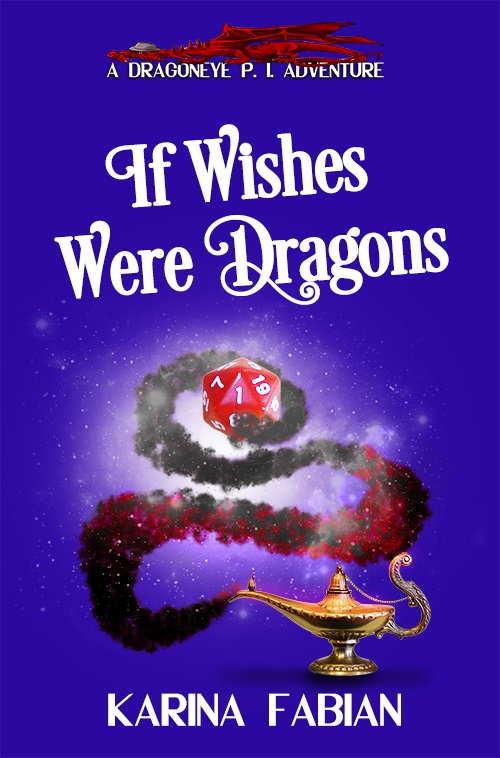
Cath-Lit Live: ‘If Wishes Were Dragons’ by Karina Fabian

“Cath-Lit Live!” features brief interviews with Catholic authors who are releasing new books. Hosted by Catholic author and speaker Amy J. Cattapan, “Cath-Lit Live!” gives viewers a glimpse into the latest Catholic books while getting to know a bit about the author as well.

If Wishes Were Dragons by Karina Fabian

When Vern’s gaming friends find a genie’s lamp, they wish for a real-life adventure … and boy, do they get it! Vern’s party is transported to Faerie to fight monsters, crawl dungeons, rescue fair maidens … and deal with some of Vern’s old schemes that come back to bite him in the tail. Vern even gets his secret wish fulfilled when he sees his dragon kin for the first time in centuries. But the genie is not what he seems. The Wish World is Faerie of Vern’s past – and their adventure is no game.

About the author: Karina Fabian writes product reviews and business articles by day, and has wild adventures in time, space, and fantastic realms just about any other time. Her stories are known for their humor, optimism and faith.

You can catch “Cath-Lit Live” three times a month live on A.J. Cattapan’s author Facebook page. Recorded versions of the show will also be available to watch later on her YouTube channel and Instagram.


Copyright 2020 Amy J. Cattapan

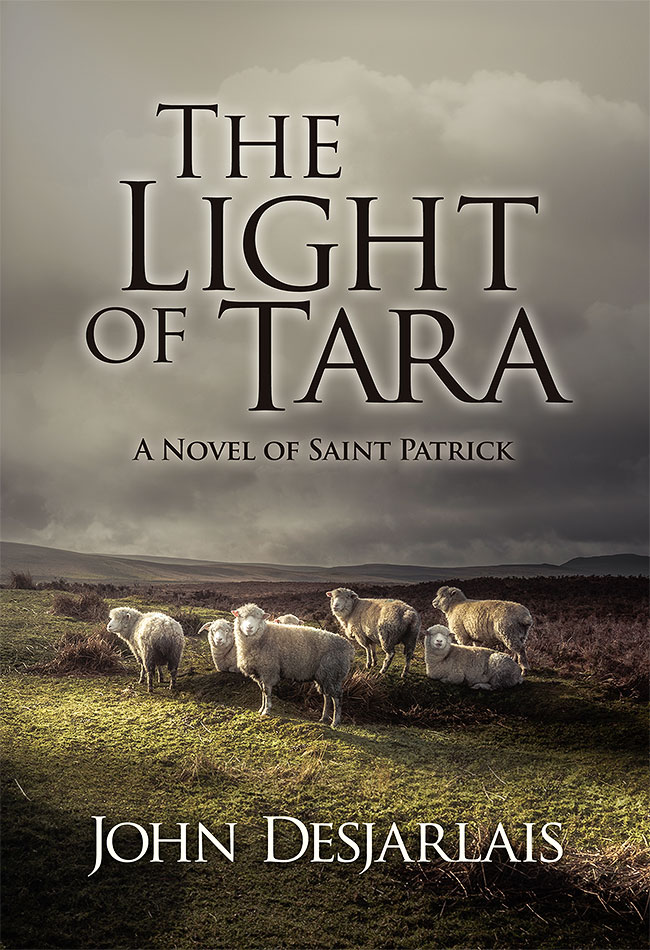
Cath-Lit Live: ‘The Light of Tara’ by John Desjarlais

“Cath-Lit Live!” features brief interviews with Catholic authors who are releasing new books. Hosted by Catholic author and speaker Amy J. Cattapan, “Cath-Lit Live!” gives viewers a glimpse into the latest Catholic books while getting to know a bit about the author as well.

The Light of Tara by John Desjarlais

While the Roman Empire crumbles into chaos, the flickering light of civilization is in the hands of a teenager herding sheep and swine at the edge of the world. His name is Patrick. Kidnapped by Irish pirates and sold to a Druid chieftain, Patrick befriends his master’s son and falls for the feisty daughter, making a jealous enemy of the druid’s apprentice. Even so, he boldly escapes to home after a dangerous journey, only to hear an insistent call in a dream to COME BACK. But first he must overcome a suspicious church, a backstabbing mentor, and his old rival who is now the Archdruid of Ireland, sworn to kill him and eager to enslave the beautiful woman Patrick left behind. Can he save Ireland from darkness—and free the girl he once loved?

About the author: John Desjarlais taught literature and creative writing for 25 years at Kishwaukee College in Illinois before retiring to the mountains of western North Carolina. His books include The Throne of Tara, Relics, Bleeder, Viper, and Specter.

You can catch “Cath-Lit Live” three times a month live on A.J. Cattapan’s author Facebook page. Recorded versions of the show will also be available to watch later on her YouTube channel and Instagram.


Copyright 2020 Amy J. Cattapan

From the President’s Desk – Success, Faithfulness and Farewell

At the 2015 Catholic Writers Retreat in Michigan!

At the 2015 Catholic Writers Retreat in Michigan!

Happy Thanksgiving! I hope everyone had a wonderful feast yesterday.

Catholic Writers Retreat: I’d like to thank all the attendees, presenters and organizers of the Catholic Writers Retreat. We all had a wonderful time writing, praying and socializing! Special thanks to Margaret Realy for organizing this wonderful event.

Blessed Mother Teresa once said, “We are not called to be successful. We are called to be faithful.”

In about four days, I will no longer be president of the Catholic Writers Guild so this will be my last “From the President’s Desk” post.

When I first discovered the Catholic Writers Online group, and later, the Catholic Writers Guild, I truly felt like I had come home. I was so happy to be a part of a group of faithful Catholic writers.  I hadn’t really thought much about “success.” I just wanted to write. And I just wanted to be faithful to my Catholic faith. At the time, there were only about 40 members of the Guild. In the eight years since I’ve been a active member, our membership has grown to over 500 members.

When I was asked to run as vice president in 2010, I readily agreed. Later, when I was asked to run for president, after a short discernment process, I readily agreed. Of course, I had no idea what was in store for me. Being president of this non-profit, mostly volunteer organization has had its share of challenges, but I’ve learned so much and I’ve gained many lifelong friendships.

I owe a tremendous gratitude to everyone in the Guild. Thanks especially to Ann Margaret Lewis (founding member and past president), who was always available to listen when I needed to chat, Karina Fabian (original president of the Guild), and the current members of the board: Dave Shaw (secretary), Karl Erickson (treasurer), Nancy Ward (committee coordinator), and Arthur Powers (VP and founding member).

Although I joined the Guild to be with like-minded faithful Catholic writers, I was surprised to find that much of what I’ve learned from Guild members over the past eight years has contributed to whatever “success” I’ve been fortunate to have. In the early years, I attended online conferences and chats. Later, I attended and helped to organize the live conferences. The success I’ve had as a writer has been the direct result of my involvement with the Guild. My books have been collectively downloaded over 625,000 times on Kindle. All of my novels have spent time on various Amazon Kindle bestsellers’ lists (In 2012, my novel, Stealing Jenny, was either #1 or #2 in several categories for 40 weeks of that year). I’ve been on EWTN’s Bookmark three different times and other TV and radio shows. And I’m actually making a modest supplemental income from my novels.

That success aside, my time as the president of the Guild, has been spent being faithful not only to the magisterium of the Catholic Church, but also to the values of our wonderful organization.

I won’t be leaving the Guild, however! I intend to remain on two very busy committees: the Seal of Approval and the Live Conference committees. I have a new job as the marketing director for a wonderful Catholic apostolate that promotes the regular practice of fasting. I write for the Live the Fast blog and newsletter; I write press releases and, best of all, from my regular practice of fasting, I’ve grown stronger in my faith (and even lost 10 pounds!).

Fellow CWG member and New Jersey native, Joe Wetterling, will be your new president. I’ve worked with Joe on three different committees. Besides being witty and knowledgeable about a variety of topics, Joe is level-headed and dependable. A little bit about Joe, in case you don’t know him:

Joe Wetterling is a professional educator and writer. During the day, his work includes performance improvement, technical training, and editing for the Temple University Health System. At home, Joe teaches the faith at his blog Ho Kai Paulos, comments on religious themes in fantasy and sci-fi at Baptized Imagination, and makes everything relate to Latin while helping homeschool his son. He’s a member of the Militia Immaculata. At the Catholic Writers Guild, Joe participates in blog editing, the Seal of Approval review process, and the CALA. Learn more about him at JoeWetterling.com.

Please take a moment over the next several weeks to welcome Joe to this challenging — yet fulfilling — position.

It has been my privilege and honor to serve as your president for three years and to serve on the Catholic Writers Guild board for five years. I look forward to continuing to be a part of this wonderful organization.

In Jesus and Mary,


Ellen Gable Hrkach

Karina Teaches Worldbuilding 201 – Lesson 1

Over this year, Karina is going to share some of her writing seminars on the blog, with the lessons and references for further study. We’ll be posting these once a month. There’s no assigned homework, but if you have questions, please ask them in the comments. Her first workshop is worldbuilding. This is Worldbuilding 201, Lesson 1. Here are the links to Worldbuilding 101 Lesson 1, Lesson 2Lesson 3, Lesson 4, Lesson 5, Lesson 6 and Lesson 7.

Karina teaches monthly webinars as well. Please check out her current schedule, or if you’d like her to teach at your writing group or class, see what courses she can offer.

Lesson One: Introduce your world

No matter what your story is about, you have to start it in one of three ways: Introduce your character. Introduce your conflict. Introduce your world. No matter which you do, your world will get at least a partial introduction.

Let’s look at some examples. I am using fantasy and science fiction here only because I want to make a point about explaining a world that is massively different from ours. The temptation is to overshare up front, and that turns readers off in general.

World Introduction: The Light Fantastic by Terry Pratchett

The sun rose slowly, as if it wasn’t sure it was worth all the effort.

Another Disc day dawned, but very gradually, and this is why.

When light encounters a strong magical field it loses all sense of urgency. It slows right down. And on the Disc-world the magic was embarrassingly strong, which meant that the soft yellow light of dawn flowed over the sleeping landscape like the caress of a gentle lover or, as some would have it, golden syrup. It paused to fill up the valleys. It piled up against the mountain ranges. When it reached Cori Celesti, the ten mile spire of gray stone and green ice that marked the hub of the Disc and was the home of its gods, it built up in heaps until it finally crashed in a great lazy tsunami as silent as velvet, across the dark landscape beyond.

It was a sight to be seen on no other world.

Of course, no other world was carried through the starry infinity on the backs of four giant elephants, who were themselves perched on the shell of a great turtle….

If you’ve not read Terry Pratchett, I highly recommend him, especially for his worldbuilding. He makes the fantastic seem completely believable and loads of fun! I wish I could have found the book in which he begins simply with the Great Turtle, then the elephants, then the Discworld and concludes blithely that in an infinite universe anything is possible, so why not? The great thing about Pratchett is that he’s so delightful in his descriptions that he can TELL you about the world and you just want to read more. You read on because you just know the punch line is coming.

Using this kind of approach works when you need to get the reader into the world right away–whether for the comedy value or because the world is vitally important. Even then, notice that he doesn’t give you a lot of information. This isn’t a State Department Brief (http://www.state.gov/r/pa/ei/bgn/35910.htm) From the introduction above, Pratchett talks a little about the turtle, who is having a great time, and about the spaceship that has been launched off the world with the mission of finding out the turtle’s gender.

Person Introduction: Out of the Dark by David Weber

Garsul, are you watching this?”

Survey Team Leader Garsul grimaced. Just what, exactly, did Hartyr think he was doing? Of all the stupid, unnecessary, infuriating–

The team leader made himself stop and draw a deep breath. He also made himself admit the truth, which was that as effortlessly infuriating as Hartyr could be anytime he tried, there was no excuse for allowing his own temper to flare this way. And it wouldn’t have been happening if he hadn’t been watching…and if both his stomachs hadn’t been hovering on the edge of acute nausea. Then there were his elevated strokain levels, not to mention the instinctual fight-or-flight reflexes (mostly flight in his species case, in point of fact) quivering down his synapses.

So how much of the world do we get in these few paragraphs? We know there are multiple species, that they are probably in space (talking through a link is a clue, as is the SF nature of the story), and that they’ve encountered something in the world that poses a fright if not a danger. Does it tell you a lot about the world? Not really. Does it tell you enough to keep you reading? It does for me–or would, if I weren’t writing this class.

Situation Introduction: “Ghosts of Kourion” by Andrew Seddon

I awoke to the thudding of my heart and the scrabbling of a mouse somewhere in the room. Pale moonbeams threaded through cracks in the warped shutters.

I’d been sleeping! Despite my best efforts to stay awake, sometime in the dark hours of the night I’d succumbed to sleep–on this night of all nights! I threw off my thin sheet, hurried to the window and flung open the shutters.

The city of Kourion slept bathed in silver moonlight, its sand and time-worn walls standing as they had for hundreds of years. A shiver of mixed excitement and fear trembled over me.

Turning away from the window, I rummaged in a pile of clothes tossed on the floor and shrugged a tunic over my shoulders. I strapped on my sandals and clattered down the stairs into my wine shop where amphorae of choice vintages surrounded me like shapeless statues. I opened the door and dashed out, leaving it swinging behind me.

From far below came the dull roar of the surf pounding the beaches. Otherwise, the pre-dawn night seemed preternaturally quiet–no wind in the trees, no dogs barking or cats fighting, not even a drunkard singing his slurred songs to the shuttered buildings.

It was the morning of July 21, A.D. 365, and it was to be Kourion’s last morning. Were there hours left or merely minutes?

Aren’t you drawn in? Do you have to be told that Kourion is an ancient Greek city on the southwestern coast of Cyprus which was destroyed by a volcano or that our main character had traveled back in time to witness its demise? We don’t need a history lesson here; we have been promised that we will experience history along with the protagonist.

What do we get from these, then? No matter what your approach, in those first few paragraphs, you want to give enough information about your world to orient the reader–but not overwhelm them–and get them interested enough that, combined with character and situation, they want to read on. Simple in theory, not always as easy in practice.

Karina Teaches Worldbuilding – Final Lesson

Over this year, Karina is going to share some of her writing seminars on the blog, with the lessons and references for further study. We’ll be posting these once a month. There’s no assigned homework, but if you have questions, please ask them in the comments. Her first workshop is worldbuilding. This is Lesson 7. Here are the links to Lesson 1, Lesson 2Lesson 3, Lesson 4, Lesson 5, and Lesson 6.

Don’t tell me the moon is shining; show me the glint of light on broken glass.   –Anton Chekhov

Now you’re well on your way to building your world! You’ve got–or have plans to get–all this great history, know everything about the orbital mechanics of your solar system, even know why your Grimphani part their hair on the left. Now, it’s time to tell your readers, right?

NO!

Don’t tell us about your world! Show us!

Everything we’ve done so far is background. Some of it may never come up. (Remember what I said in a previous lesson about the writer who has written an encyclopedia or game manual rather than a story?) Now you can use those elements, but don’t tell us about them!

So how do you avoid that?

Keep in mind point of view–even if you are using an omniscient narrative (i.e., the reader sees more than the character), do your best to describe things as they impact or are applied to the character or characters. For example, say I wanted to write a scene in The Miscria III: Hero Psychic, where there is a wild rainstorm that Tasmae (who controls the weather) has decided to allow to happen. I could just say it:

Joshua and Sachiko came in soaked from the storm. When Joshua saw Deryl, he asked, “What’s with the rain? Can’t Tasmae control the weather?”

 Deryl shrugged, though it was obvious he found Joshua’s soaked status funny. “The land is parched. Tasmae decided to let the storm come.”

 “She couldn’t have given us a warning?”

Or, I can show it:

 Joshua and Sachiko entered the city at a run, and the doors closed at their heels, shutting off the howling of the winds. As they stood there, shaking their heads and wringing out their clothes, Deryl strode toward them. “And where have you been?”

 Joshua gaped then pointed at the door. “Has your wife looked out the window lately?”

 Deryl shrugged, a smile tugging at his lips. “Tasmae said we need the rain.”

Of course, showing is sometimes easier said than done, so here are some tips:

  • See it through your character’s senses and experiences. Will your character know that the general is wearing the traditional (but itchy) dress of the Galvatin Space Fleet, with the braiding denoting his bravery in the Karu Nebula Encounter and the still-brass buttons that have been part of the uniform since 345 GT? Or will he just note that it’s impressive and traditional–but kind of gaudy?
  •  Use the detail that matters. If your hero is dodging a swinging blade, that may not be the time to note that it’s the Sword of Barnana, with rosewood hilt bearing the tiger-eye stones once stolen from the Kitcherie temple and which bears the curse that its wielder must kill a werewolf every full moon and how it has been highly polished yet has nicks. He may notice the crazed, possessed eyes of its bearer and how he pants, “Must killmustkillmustkill.” Once your hero defeats the swordsman, he may note some of these details–or he may be running like fun away from the scene. You decide how important the sword is at that point.
  •  The more it matters to the plot, the more detail you need. If you don’t intend to run across the Sword of Barnana again in the story, it may be enough to note that it’s a possessed sword. If it comes back later, you might want to note the odd tiger-eye jewels. If it becomes the focus of the quest (and hence the story), more background is needed.
  •  If you need to explain, let characters do it–but avoid lectures or extended Q&A.

Here’s Vern explaining his scratch marks on the local buildings to a member of the Los Lagos Beautification Committee. It’s a central point to the entire story, which is less than a thousand words.

“I understand you’ve… scratched some of the buildings in the area.”

“Yesssss….?”

“Well, you’re defacing the exterior!”

“Yesssss…..?”

“It simply won’t do!”

“Anybody complaining?”

“The Committee–”

“Anybody around here complaining?”

“No.”

“Those ‘scratches’ mark the area as under my protection. My Territory.”

“I realize it might be an instinct thing–”

I threw back my head and snorted. She jumped but didn’t back away. Score one for guts. “Do you know the crime rate around Territory?”

“Unacceptably high. That’s why the Los Lagos Beautification Committee wants to foster a more pleasant environment–”

“–Do you know the crime rate within Territory?”

“I don’t–”

“People don’t mess with places I’ve marked. They’ve got a stronger motivation than beauty. Me.”

For More Reading:

http://www.tarakharper.com/k_show.htm Great examples.

http://www.sfwriter.com/ow04.htm

Karina Teaches – Lesson 4

Over this year, Karina is going to share some of her writing seminars on the blog, with the lessons and references for further study. We’ll be posting these once a month. There’s no assigned homework, but if you have questions, please ask them in the comments. Her first workshop is worldbuilding. This is Lesson 4. Here are the links to Lesson 1, Lesson 2, and Lesson 3.

Worldbuilding 101, Lesson 4: Your People

On the last day, God created Man (male and female), but we’re going to do it on Lesson 4.

For some of you, this won’t be too hard–you’ll have basic humanoids with some special quirk that makes them unique.

As you’ve already heard me say–and everybody join in this time–you need to think about the impact of the differences you make on the rest of your world. For example, for my novel Discovery, my husband Rob and I have postulated a race of creatures that are more patterned after starfish–radial symmetry rather than the vertical symmetry of humans. This introduced a whole slew of interesting questions:

–Do they have a sense of right/left/forward/back?

–Are certain digits devoted to walking and some to handling tools? Or are they ambidextrous?

–Where are their eyes? How do they see?

–How do they eat, sleep, procreate?

–What would their homes, vehicles, and equipment look like?

Fortunately for Rob and me, we will be dealing with humans exploring a long-dead spaceship, possibly abandoned, so we have some wiggle room for unanswered questions. We could concentrate just on the things that directly apply to the space ship, its design and especially its life craft. If we take our humans to this planet in another book, we’ll need more answers!

Even if you’re doing fantasy and are going to use some of the time-honored “aliens” like vampires, werewolves, etc., you still need to decide their biology, needs and how they are different. Is vampirism a disease, a genetic defect or a choice? Why can’t they come out into the sun? How does it really affect them–sunburn, allergic reaction or the good ol’ burst into flames? Do werewolves have to change in a full moon, or can they only change in the full moon? What happens to their clothes?

I’ve had a lot of fun playing with the usual clichés of fairy creatures in my Dragon Eye, PI universe. (www.dragoneyepi.net). For example, my elves are very long-lived. Well, when you live to be 500-600, your biology should slow down a bit, and so does your sense of time. Thus, while elves are able to interact with humans, they are also infuriatingly slow. Their language, for example, is full of prerequisites–to apologize for bumping into someone requires you recognize their social status and that of their family and tribe as compared to yours, the nature of the offense, the impact of that offense on the relationship and the relationship of their people… As my dragon detective Vern likes to complain, “It can take them half an hour to ask where the bathroom is.” (And, thanks to their changed biology, they do have half an hour before the need is urgent.)

Keep in mind, too, that the more that quirk is part of their nature, the more effect it will have on their civilization–but that’s lesson 5.

For more reading:

http://www.amazon.com/Essential-Guide-Alien-Species-Star/dp/0345442202/ref=sr_1_1/104-5069618-1512745?ie=UTF8&s=books&qid=1189371773&sr=1-1 The Essential Guide to Aliens (Star Wars) by Ann Lewis and RK Post. It’s amazing what people have come up with for creatures. Contains their history, biology and sociology. Great for ideas.

Dragon Magazine: Although out of print, each issue had a bestiary with incredible detail about certain kinds of creatures.

Dungeons and Dragons Players Handbooks or Monster Manuals: Pick a fantasy creature and these writers have thought of everything from how they react in an adventure to what they wear as pajamas. Forget the dice and the stats and just play with the ideas.

Real life creatures: Google a species that may have traits you want – like starfish or manta rays or birds. Even if you aren’t looking for a full creature, you might learn something. For example, if your alien has wings and can fly, you will want to study what else is involved – do they have feathers or skin like a bat? Do they fly or just soar like a flying squirrel? How does their anatomy support the wing structure?


Karina Teaches – Lesson 2


Over this year, Karina is going to share some of her writing seminars on the blog, with the lessons and references for further study. We’ll be posting these once a month. There’s no assigned homework, but if you have questions, please ask them in the comments. Her first workshop is worldbuilding. This is Lesson 2. Find Lesson 1 here.


Lesson 2: Physics, Geology and Geography

HEY! Don’t open that! It’s an alien planet! Is there air? You don’t know!

–Guy Fleegman, Galaxy Quest

The more we know about the universe and what it takes to create Life, the more we realize just how amazing it is that any life–let alone sentient life–could have developed even once. The world must have a sun that is the right age, be in orbit at the right distance with an atmosphere to block out dangerous radiation and provide something to breathe. There must be carbon or some other basic building block that can combine with other elements to produce complex molecules that will work together. And of course, there must be water or a logical water-substitute. There must be time for those to evolve, societies to develop, etc…

Now, you may not have to start with quite these basics, but you should know to some degree (as determined by the need of the story) how what you’re doing will alter that delicate balance. Alter the mineral content of the world, and you might change its gravity. Change the gravity too much and you lose atmosphere. Introduce two moons and you mess with the tides. Even removing the tilt of your world (the earth sits at about a 23.5 degree tilt to the sun) and you mess with the seasons and the warming of the planet. Not that you can’t do these things, but you need to be aware of them and how they affect your world–and (if they are important to your story) what you’ll do for a work-around.

Second point for today is that planets are not homogeneous. Mars, for example, has a rep for being rather plain and desert-like, but it has fantastic topography, from huge mountains to incredible canyons, long stretches of deserts and rocky flatlands. There are polar ice caps (albeit made of carbon dioxide). Even the gas giants have regions of different climates and “topography,” or else they would not have storms. So the idea of a completely “Springlike” planet or an entirely harsh, rocky world isn’t especially believable.

Of course, there are exceptions. Arrakis (Dune) was desert from pole to pole, but Frank Herbert made it successful for several reasons: it was critical to the story, believable in its presentation, grounded in reason (the scarcity of water and the actions of the sandworms, who walled off water and kept it from rising to the surface), and he acknowledged (through the characters) its uniqueness in the galaxy, thus making it a mystery to draw you into the book rather than a distraction to pull you out.

The point, of course, is to know WHY your world is the way it is, and to make sure that its unique characteristics carry their own unique consequences. Fantasy artists can toss in another moon because it’s cool; writers have to deal with how that second moon affects the werewolves every month–or how it affects the counting of the months, for that matter.

Unless you are an astrophysicist, astrobiologist and geologist, you probably can’t readily say what will happen when you start tweaking your world. Fortunately, others have done that thinking for us. Find books, seek out professors at your local university–or call around and find an expert. And of course, remember that how deep you get into worldbuilding depends on how vital your world is to your plot–if you’re writing a fantasy tale that takes place inland, you don’t need to know how your second moon affects your tides so much as how it affects your werewolves. If you’re doing a “pirates on Xenologia” adventure, you’d better know how the oceans react to your second moon.

But my story takes place on Earth! You may not have to worry about the physics (unless you are introducing some paranormal element, in which case you might consider the “physics” of that), but your area still has geology and geography. Consider the differences between San Francisco, Chicago and Phoenix, for example. One is hilly and foggy; the other has multiple rivers; the third is flat and dry. Each has its own geography, and keep in mind that for the sake of your story “geography” includes man-made elements. Part of the geography of Los Angeles includes Chinatown, Little Tokyo, Hollywood, Beverly Hills… When I think about the geography of my hometown, Pueblo, Colorado, I think of the winding highway, I-25, with the mall at the north end, just before the big stucco welcome signs, and the rusting steel mill on the south end, where the city sort of peters out to an empty lot of the old drive-in and the greyhound race track.


For More Reading:

http://en.wikipedia.org/wiki/Extraterrestrial_life

http://www.humantruth.info/aliens.html A fair summary of different life possibilities–from organic to robotic

http://www.amazon.co.uk/exec/obidos/ASIN/0091886163/vexencrabtree “What does a Martian Look Like? The Science of Extraterrestrial Life” by Jack Cohen