A Writer’s Nemesis–an Unapologetic Computer

When I got my hands on my first Smith-Corona H Series Correctable Typewriter, I was in my glory. I was also in control.   Then…along came computers and the word-processing phenomenon.  Writers were thrilled at the technology: Spell-check, formatting, multiple fonts, save options and mailing options,  all at the click of a mouse.   But there was a dark side to all of this, and I have found it; or rather, it found me.   When  something went awry most of the time I was  lost.  The worst part was I did not know what to do.  I was at the mercy of forces beyond my tech challenged brain.  Yes…I had lost control of my writer’s world.

As writers we have all experienced the ‘glitches’ that come along in dealing with computers and the cyber universe they dwell in.  It is as if they do not want us to come into their world.  It is okay to stand in the foyer but that’s close enough.  If you get too close you suddenly have dropped text, lost messages, frozen screens and so on.  Why, one time  Google even blocked the Internet by mistake.  (Maybe there was a mob at the door.)   I think we all have our individual dark sides in the invisible universe. They are  like small black-holes ready to suck you in and devour you before you even know  what happened.

I discovered that my dark side exists in the tech end of cyber world. I have also found that I am just one of many computer users who know very little about computer repair,  especially if it involves  software.   I do try very hard not to open up unknown or suspicious items.  I also do a disk cleanup often and defrag and all of that stuff.   I do that because I know what can happen if I “click wrongly” and, when I do, the result  ain’t pretty.  Finally, I have Norton anti-virus.  Oh well, the fact is, if I do “click” wrong none of that matters anyway.  It is the proverbial ‘two edged sword’.

My two published books have been returned to me because my publisher is going out of business effective June 1.  (Obviously, my  books did not hit the best  seller list).   I have also been given my blogsite to tend to.  I do not know how.  With the assistance of the publisher I have managed to republish the book on Amazon and Smashwords. But I have no idea how to update the blog site with the new editions.  This is what I mean about losing control.  In addition, I had my email account with Verizon for 13 years. I cancelled it 15 months ago saving $50.00 a month by using Bright House.  Verizon told me that was ‘just fine” to keep the Verizon address.  Like an idiot, I believed them.

So (the day after I found out about the books) my email stopped working. I was sure I had “clicked” something wrong and it took six hours to find out Verizon had disconnected it. It took six hours because they did not know they had done it,  and there was nothing anyone could do about it because their computer had done it and that was that, end of story.  Many people apologized but the computer did NOT apologize.

Bottom line: we are at the mercy of cyber forces that can get us at any time.  We need to learn more about that other world before it gets us like it did everyone in “Terminator III: Rise of the Machines”.  In that movie  “Skynet”, the computer system,  takes over control from mankind unleashing worldwide, thermonuclear war. No one can stop it, not even Arnold.  I guess that old Smith-Corona had a very positive side after all.  We were smarter.

From the President’s Desk – March 28

ASG mini
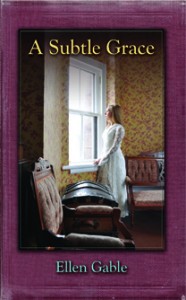
I’m going to avoid talking about the lengthy, brutal winter that most of us are still experiencing to tell you about my new book, A Subtle Grace. It’s the sequel to my second novel, In Name Only, and continues the story of the wealthy and unconventional O’Donovan Family in the year 1896. At 19, Kathleen (oldest daughter) is unmarried with no prospects. Fearing the lonely fate of an old maid, her impatience leads to an infatuation with the first man who shows interest. The suave, handsome son of the local police chief seems a perfect match. But will her impulsive manner prevent her from recognizing her true beloved? A disturbing turn of events brings a dark shadow that threatens the life-long happiness she desires. Dr. Luke Peterson (the family’s new physician) also makes quite an impression on Kathleen. His affection for her leads him to startling revelations: about Kathleen, about his practice and, most importantly, about himself. Will (oldest son) believes God may be calling him to a religious vocation. Eventually, he discovers the hidden circumstances of his humble beginnings compelling him to embark on a pilgrimage to Rome.

(Although “A Subtle Grace” is a sequel, it can be read as a stand alone book.) It’s now available on Kindle and in print.

In other Guild news, the Catholic Writers Online Conference took place a few weeks ago and was a great success. If you missed any of the talks, most of them are available via transcripts at the conference website. I found the talks edifying, inspiring and helpful. Special thanks to Laura Lowder and Karina Fabian who organized the conference, and to all the moderators and transcribers!!

Volunteers needed!! If you have spare time and would like to help out with any of our committees, please leave a comment below or email me privately. We especially need a Public Relations volunteer and at least one additional person to help out with our Seal of Approval Committee.

If you’re a member of the Guild and on Facebook, please let us know so we can add you to our exclusive members only Facebook group! As always, if you have any questions, comments or concerns, please feel free to email me: president (at) catholicwritersguild.com

Ellen Gable Hrkach
President, Catholic Writers Guild

Books, and Toned Middles

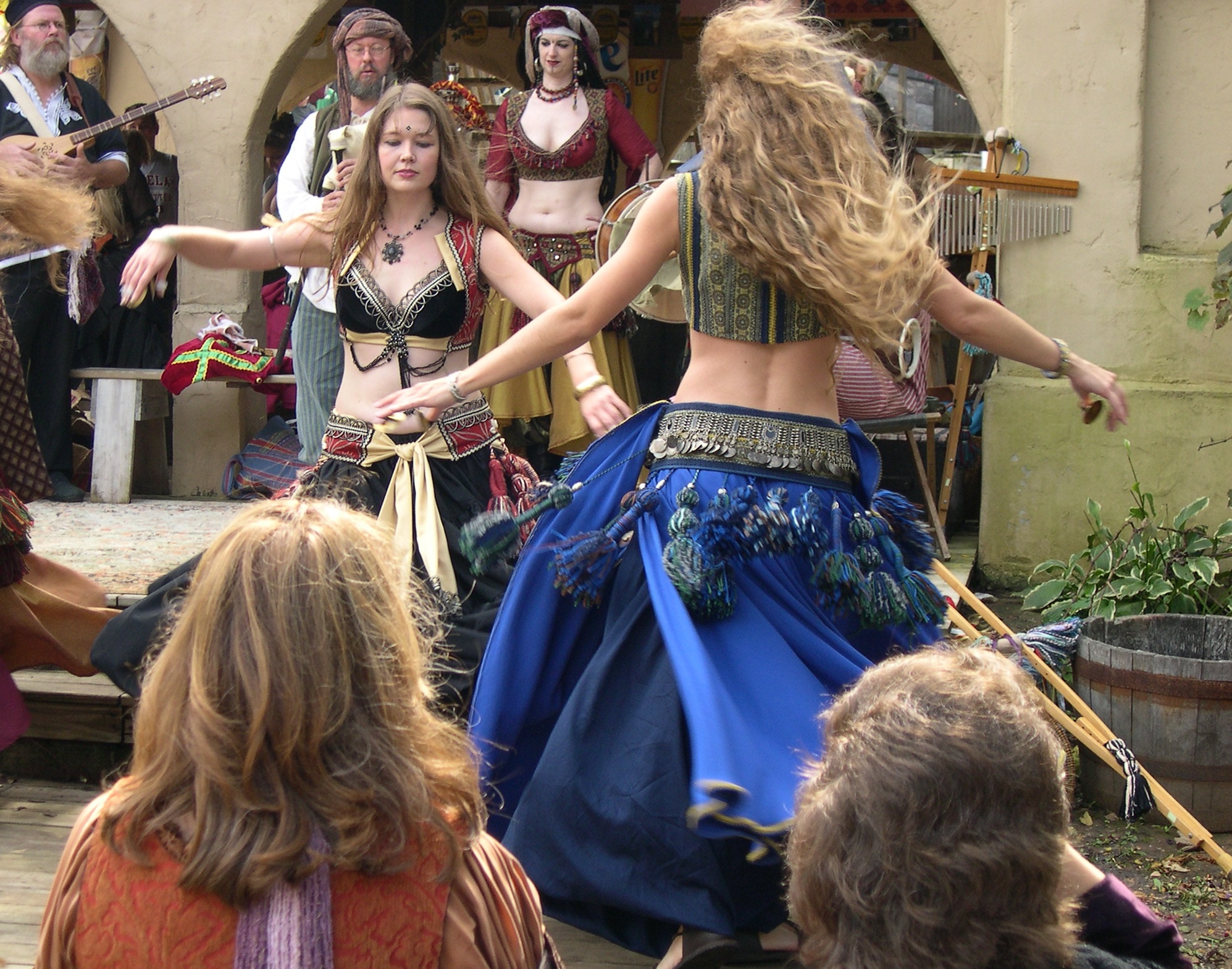
belly dancers for CWG croppedLast month, I talked about beginnings and how important they are to drawing the reader in to your book. It seems appropriate to continue on to story middles today.

Middles ought to be pretty simple. After all, it’s the stuff that happens between the beginning and the end. Many authors, however, struggle with middles. There’s a term for middles that lose their direction and energy: the dreaded Sagging Middle.

How do we keep our middles on task, doing the unsung but necessary work of getting the reader to the end of the story? How do we keep the energy high? Most important, how do we keep the reader engaged?

It’s best to step back and look at the big picture first. What is the underlying theme of your story? Is it clear and evident in every scene, though it’s likely never stated outright? Theme should be the basis for every action that takes place, every decision a character makes, and even descriptions of setting. Every word you use can and should further the development of the theme you’ve chosen. For more on THEME, click here.

Next, what about story structure? If you’ve built even a rudimentary five-sentence outline of turning points for a particular story, it is much easier to keep the individual scenes pointed in the right direction. No ambling about aimlessly in the rose garden and boring the readers—unless, of course, the rose garden is critical to both the theme and structure of this story! In that case, amble all you want, as long as there is purpose. For more on STRUCTURE, click here.

Now we get down to the nitty-gritty. Each scene in a story must have tension. This is sometimes referred to as conflict, and always results in suspense. Suspense isn’t defined as horror movie scary stuff; it’s simply a reader asking the question “What happens next” and turning the page to find out.

This is the key to toning up the middle of your book: Every scene and each chapter must have higher and higher stakes for the main characters. Each character has more to lose as the story progresses, and each character is forced into increasingly difficult choices. As situations evolve, and as the characters slog their way through their troubles, they reveal their increasingly deeper secrets to the reader. The characters struggle, and they grow. The reader identifies in some way, roots for them, and is willing to be swept along. For more on ROOTING FACTORS, click here.

One caution: Watch for filler, and ruthlessly cut it. It’s easy to rationalize that since this is the middle of the book, the reader is already caught up in it and won’t put it down, so you don’t have to work quite as hard, and nobody will notice that this whole scene/chapter doesn’t really advance the story; it’s just there because you, the author, like it. Nope. Readers are smart. Cut the scene if it doesn’t advance the story. Cut the details if they don’t advance the story. I know. It’s hard. If it’s too hard, create a file for deleted scenes and put the cuts there so they’re accessible if you want them later. I find that’s sometimes a necessary intermediate step, even though those end up fully deleted later. Human nature is pretty funny!

Once you approach the end of the book (or even at the end of chapters!), resist the urge to tie up loose ends too soon. I admit to that failing as a new author. My first attempts at chapters all had tidy endings. Wrong, wrong, wrong! Every chapter should end with an unanswered question. Analyze your favorite I-couldn’t-put-it-down book. What created that quality? I’m willing to bet it was ever more crucial unanswered questions, and lots of loose ends. For more on TENSION, click here, and for more on HOOKS, click here.

What tips do you have to share regarding middles? I’d love to hear a new take on the subject!

The Glories of Google

As those on the CWG FB page know, I started working full-time for a product review site called TopTenREVIEWS.  It’s a really fun place to work, and I learn a lot of stuff that I can apply to writing. One of those things is the intricacies of Google.

As a website that is making its money off ads, TTR depends heavily on pleasing the Google beast, so often, my writing is tempered by “What will Google think?”  As such I’ve learned a few things that might help you as writers as well.  Here are a few tips:

1. Length of Blog. This apparently is going away, but for some time, Google paid less attention to super short entries.  Articles over 350 words got more favor.  So if you habitually write short, you might be hurting your Google standings.

2. SEO Keywords. If you are going to use keywords, USE them.  Google adwords (https://www.google.com/adwords/)  will let you know what words are popular searched for. Find ones with high numbers and low to medium request rates. Then, don’t just put them in your tags section, use them in the article.  My rule of thumb at work is at least twice, although I’ve been told once is enough.  Google is smart about words, so it will look in context.  If you want “Catholic devotional” as a keyword, you can also say “devotional book for Catholics” and it will understand.

3. Google Plus.  Google is the 800 pound gorilla and it wants Google Plus to grow.  Thus, if you have a website, articles, blogs, whatever, under your name, you are more likely to have them show up higher in a Google search if you are also active on Google Plus.  This is getting more important, as Google is starting to favor products over informational articles in the searches.

Google also puts you higher in searches by your Google Plus followers…and their followers.  So being in circles increases the chance your stuff gets seen in the first page of a search.

4. Business and Pleasure on Google Plus. Unlike Facebook, Google Plus has a more serious, professional feel to it.  You can certainly post pictures and memes, but take time to write.  Also, if you want to score points with Google, use links and words rather than images.  Google does not count images toward your Google cred. Pictures draw readers, so you need a balance, however.

5. Cut the Copy and Paste. I learned this one in February. Google is now smart enough to tell if you have posted the same stuff in more than one place, and it will downgrade both sites in its searches.  So if you’re into “recycling” old posts, remember there’s a balance.  It might be worth the 20 minutes to refresh that content to make Google happy.

And that’s the final thing: refresh.  Google is now looking at how current your site is. If you are not putting in new content, then you will lose points in Google searches.  You don’t have to add something every day, but depending on the site, monthly or quarterly is a good rule of thumb.

Google is a constantly changing beast, so what rings true today may be the big no-no next month.  However, you can never go wrong with good content and interesting posts.  Keep writing!

CWG Book Review-o-Rama by Karina Fabian

One of the great things about the Catholic Writers Conference Live is getting books from authors…and knowing those authors are friends.  One of the worst things is catching up on the HUGE pile that I bring home in the suitcase.  I’m not much of a reviewer. I know what I like and if the book doesn’t click with me, I don’t take time to analyze or give it a second chance. I move on.  As a result, my reviews tend to be short and of the “this is why I liked it” variety. Having said that, here are three books I received during CWCL that I loved:


God’s Bucket Lis
t by Teresa Tomeo:  Theresa wrote this reflecting on her own crisis time, when her career was falling apart—or more accurately, metamorphosing—and as a result, it’s a great book for those in middle age. However, it’s also an excellent book for someone in their 20s, who is on the cusp of entering the real world of career and family. Teresa gives strong, insightful, spiritual and most of all USEFUL advice for finding a path that gives you a fulfilled life on earth as well as in heaven.  Read it, and pass it on to your college-age kids.


Don’t You Forget About Me by Erin McCole Cupp:  I really need to stop saying something isn’t my genre, because my friends keep proving me wrong.  Case in point: Erin.  Sorry, sweetie, I promised to read your book because we were having such a good time at the booth, but I wasn’t sure I would like it.  I’m so glad you proved me wrong.  It was delightful.  The plot had plenty of twists but you tied them in so well together, I didn’t see them coming as I read, but looking back, I could say, “Oh!”  I liked the characters and the setting was described enough to get me into it without making me want to skip paragraphs.  Erin, I want the next one.  Surprise me again!

The Girl Who Learned to Kneel by Sr. Patricia McCarthy: Having read about Edith Stein for a series of articles I wrote, I got caught up in the story of Etty Hillesum, a Jewess in Nazi Occupied Holland. She seemed to have started out in a secular humanist crowd in college, but one day gave into the urge to kneel and pray, and that changed her life and how she handled everything. This is a small book and Patricia writes it something like a book report, but that in no way takes away from the power of Etty’s story of finding faith and developing a bright, loving relationship with God in the middle of a dark and hateful time. If you are looking for a fast, Inspiring read, then pick it up.

Palace of the Twelve Pillars by Chris Weigand:  I need to get this one on my son’s Kindle. Did you grow up on fairy tales of the good prince and the bad prince? Here’s one written for the more modern reader, with more adventure, but still the same sound principles. I did feel in the start of the book that the bad brother was a little too obviously bad and the good brother too obviously good, but I did find myself thinking about them now and again even after I put the book down. And (a total aside) the covers are amazing.  I get serious cover envy when I see them.
There are more books on my pile still, and who knows if I’ll get through them all before next CWCL. However, it is a joy to have good friends who are also great writers.


Honoring the “Shadow Saint” His name is Joseph

I know St. Joseph’s feast day is not until March 19, but since this is the only day in the month of March I get to post here, I just have to write a few words in his honor right now. Hey, what can I say, I really love this guy.

I call Joseph of Nazareth the “Shadow Saint” because, even though his life was so quiet and unknown, he was still responsible for being foster-father to the God-man and husband to the God-man’s mom, Mary. He had to shelter them, protect them, feed them, provide for them. He married Mary while the cloud of “adultery” (a sin punishable by death) hung over her head. Imagine how incredibly difficult this must have been for him, a “righteous Jew” who followed the law and found himself betrothed to a pregnant woman who was not carrying his child. He must have loved Mary so much and had such great faith.

Then he managed to take her to Bethlehem for the census when she was almost full term. If that were I, I would have been sick to my stomach the whole way, wondering if my wife could make it and if the child would survive. This was an 80-mile trip over rocky and dusty roads and Mary had to ride a donkey. Then, after the baby is born in a dingy stable with smelly animals, he had to hide his wife and Son and run from the maniacal Herod, who wanted the child dead and had ordered his soldiers to find Him so they could kill Him. Imagine the fear and anxiety as you try to avoid detection. Imagine your heart pounding faster and faster at the sound of every hoofbeat or snapping branch. I can’t imagine. Joseph must have had incredible courage.

Back in Nazareth he raised his Boy as any loving and caring father would. He aided the Boy when he took his first steps, held Him on his lap when he fell and scraped his knee causing it to bleed, showed Him how to eat, taught Him how to pray, read the scriptures to Him and tucked Him into bed at night. No-one ever in the history of the world has ever been entrusted with such incredible responsibility. No one in the history of the world could tell Jesus, the God-man, when to go to bed or when to wash His hands for supper or “not to interrupt” if mom or dad was speaking. Yet, we know so little about this just and holy man. What we do know is he saved the Son of God who, in turn, lived long enough to save us all. Oh yeah, he also was married to the Blessed Virgin Mary. He loved her, took care of her, and protected her against all dangers.

There are no writings left behind by Joseph. There are no words that were spoken by him that were ever recorded. We have no idea as to what he might have even looked like. None of that matters, because we do know he was there when God needed him to be there. Last year Pope Francis picked St. Joseph’s Feast Day day to be installed as Pope. This was no coincidence I am sure. Joseph is considered the Protector of the Universal Church. He is also the patron saint of fathers and families. Next to his wife, The Blessed Virgin Mary, he is the greatest of all other saints. Just remember that Jesus Christ, the Son of God, called him, and only him, “dad”. And maybe (I like to think this) the Blessed Mother called him “sweetie” or “hon”.

Hey guys, imagine this. You get up in the morning and your wife says to you, “Good morning sweetie, want some bacon and eggs for breakfast?” You turn and look and the Blessed Virgin Mary is standing there in a housecoat holding two eggs in her hand. That would have happened to only one man in all of history and his name was Joseph. No one, anywhere, ever, was afforded such an honor. No one.

HAPPY FEAST DAY ST.JOSEPH Thanks for being there for your Boy, your wife, and for all of us.

From the President’s Desk – February 28, 2014

Image from iStock

Image from iStock

You don’t have to live in Canada to have experienced a brutal winter this year with record breaking amounts of snow and bitterly cold temperatures across the North, Midwest, South and East. Some experts say that it’s the result of the Polar Vortex. Whatever it is, I am sure of one thing: I’m ready for spring.

I’m also ready for the Catholic Writers Conference Online which will take place from March 10th to 21st. If you’ve already registered, great! If not, registration is now closed (and hopefully you can join in the fun next year). Take a look at the schedule here.

In other news…are you a self-published author? If so, have you ever heard of The Independent Author Network? I belong to IAN. They are a great resource as well as a good marketing tool for the independently published author. Starting on March 1st, they will be offering a special yearly rate, 20% discounted from their normal rate. If you’re interested, email me at fullquiverpublishing(at)gmail.com and I will give you more details (as well as a coupon code for the discount).

Have you written or contributed to at least one book? If so, your book is probably on Goodreads. Goodreads is an excellent marketing tool for both self-published and traditionally published authors. To learn more about the Goodreads Author Program, click here.

Volunteers needed! We have two positions currently open that need volunteers.

First, Sarah Reinhard, SoA Chairperson, has asked for one additional volunteer for the Seal of Approval committee (Evaluation Coordinator) whose duties are as follows:

1.Recruit evaluators by sharing the link to the Google Form
2.Follow-up to make sure evaluators have received books, are reading
3.Log denial points from submitted evaluations on current quarter’s Decline Notes document
4.Bring concerns and needs to Chair’s attention as needed

Second, the CWG blog needs a Virtual Book Tour (VBT) Coordinator, duties as follows:
1.Communicate with CWG members regarding new books and hosting them for VBT
2.Copy and paste the information for the VBT into a blog post (making sure that the books are appropriate for the blog) Note: VBT Books do NOT have to have the Seal of Approval
3.Schedule posts

If you feel called to do either of these two positions, please email me: president(at)catholicwritersguild.com

Last, but not least, my fifth book, A Subtle Grace, will be coming out on Kindle March 22nd and in paperback on April 6th. I recently received a proof copy. After years of work, it’s always very satisfying for me to hold the finished product in my hands. Special thanks to my husband for taking this cool photo of all my books (this represents ten years worth of writing, polishing, editing and nearly 500,000 words!)

photo copyright James Hrkach

photo copyright James Hrkach

As always, if you have any questions or concerns, please contact me: president(at)catholicwritersguild.com

Ellen Gable Hrkach
President, Catholic Writers Guild

In the Beginning…

"The Beginning" Road Sign with dramatic blue sky and clouds.The most important part of your novel, short story, or even nonfiction piece is the beginning.

What compels the reader to keep reading? How do you craft a beginning that doesn’t bog down, one that keeps the reader engaged?

There are several schools of thought regarding beginnings. Depending on the genre, the beginning can create a normal world (think of the movies Star Wars or The Wizard of Oz), and let the reader get to know the characters in their natural habitat. Women’s fiction and literary fiction tend to follow this style. Caution: Choose the details of the everyday life carefully, to the point of foreshadowing what’s going to come nextnamely conflict. What’s at stake for the main character? In Star Wars, Han Solo saw his family facing the loss of their way of life, and peace. Dorothy, in The Wizard of Oz, engaged in a life or death battle to keep Toto.

What we tend to remember in these stories is the outrageous intergalactic characters and battle scenes of Star Wars or the Technicolor adventures on the way to Oz. Yet when one analyzes the story structure, the “black and white” ordinary life is where the story begins—and presages the main conflict in a way that amplifies the conflict when it arrives.

A different way to begin a story, common especially in suspenses, is in media res, which throws the reader into the deep end of the swimming pool along with the main character. Picture a book beginning with a young woman being snatched from a sidewalk and shoved into a van. The van speeds off—and of course the reader is going to turn the page to find out who, why, where, and what happens next??? This technique can be very effective. The author gives concise clues to setting (city or suburb, day or night, good neighborhood vs bad, etc.), characterization (she fights back or is paralyzed with fear, the snatcher and snatchee know each other and have shared history, etc.), and motivation (kidnapping vs bodyguards collecting an errant charge vs fraternity joke, etc.) without much else in the way of detail to ground the reader. It’s not for every story, though; imagine Dorothy opening the door of the house after setting down in Oz, with the story beginning in Technicolor. The event would lose much of its impact, and the subsequent conflict would lose its sizzle.

One of the most common mistakes new writers make is starting the story in the wrong place. My advice is to write it the way that makes sense to you, then come back when you’ve finished the whole thing and re-read the beginning. Chances are you’ll hit a certain paragraph where everything springs to life. That’s where your story really begins. One common suggestion is to dump the first chapter and start with the second. Personal experience: I had to dump the first three chapters of my first novel—they were that boring, even to me! But I had to write them in order to discover where the story really began. You may have to cut words, but they are never wasted; you always learn something important about your characters, even if it doesn’t end up as words in the book. 

Another common mistake is to explain the characters and back story (what happened before the book started). This is called an information dump. Resist. Draw your characters clearly through their internal and present thoughts; let the reader get to know them deeply, layer by layer. What brought them to this point will be revealed in good time. Another wise bit of advice I’ve come across is to get about thirty pages into a story before disclosing back story.

Dialogue is a great way to tell a story, and the beginning is no exception. If you can incorporate dialogue at that point, do so, and make it unforgettable.

For a fun exercise, go to the library or a bookstore, or even your own shelf of well-worn favorites. Open to the first page and read the first line. Is it compelling? Intriguing? Why did you want to read more? How much information about the character, setting, motivations and tone did the author convey in those few words?

When it comes down to it, the story begins when there is a change in the main character’s life. The change can be subtle or cataclysmic, but that is the point at which you, as author, commence weaving a tale that will hold readers in thrall until the words The End.

How do you know where your book begins? Do you have a strategy for determining what the opening scene is, or who inhabits it? Please share!


What if more TV characters were Catholic?

My husband and I are catching up on Arrow.  For those that don’t know, this is a TV show about the comic book hero, the Green Arrow, and it’s really pretty good, with multiple complex story lines and good writing.  I’ve yet to determine what draws every villain from the League of Assassins to mad scientists to Arrow’s home of Starling City, but they certainly get more than their fair share, and by that I mean, more than an entire crime-rid nations’ fare share.

Still, it makes for some good episodes, but I had to wonder, what if more characters in this show were faithful Catholics?

Last night we saw the episode where a drug lord, the Count, mixes up his designer drug with the flu shot to addict half the city. Apparently, everyone gets super-sick and in extreme pain unless they get a fix. The assistant DA gets the shot, falls ill in court and the Count kidnaps him in the ambulance. He takes him to a secret location and interrupts all the TV stations to broadcast the DA in pain to advertise the “cure,” available at your nearest gang-ridden street corner. (It’s comic-book TV. Go with it.)

After the adverting and posturing, he makes the ADA beg to get shot up with Vertigo on live TV.  But what if the ADA had been Catholic?

Count:  “Say you want it.  Say it…”

ADA:  “No.  I’m giving it to God.”

Count: “Eh…what?”

ADA: “I united this pain with the wounds of Christ on behalf of those you’ve made suffer.”

Count:  “You don’t have to suffer.” (Turns to the camera.) “Nobody has to suffer.  Just go buy the Vertigo.  Believe me.”

ADA:  “I believe in one God, the Father Almighty…”


Your turn!  Rewrite a scene from a TV show with a character as a Catholic and post it in the comments.

A Man Born Again: A Novel Based on the Life of St. Thomas More

Hans Holbein, the Younger - Sir Thomas More - Google Art Project.jpg

A Man Born Again: A Novel Based on the Life of St. Thomas More

by John E. Beahn

Originally published in 1954 by Bruce Publishing Co.
Re-published in 2013 by TAN Books for the TAN Legends Series

TAN Books
Charlotte, North Carolina
www.TANBooks.com

This book is absolutely mesmerizing. The author, John E. Beahn (1910-1990),  has managed to somehow crawl into the mind of the great Lord Chancellor of England and, writing in the first person, chaperones him right into your presence.  You meet Sir Thomas in the Tower of London where the author of “Utopia” awaits an unannounced yet obvious fate at the hands of his King, Henry VIII.  Thomas, looking down from behind his prison window, has you look with him and survey the city of London below.

Just like that you are walking with Sir Thomas down Milk Street and he shows you where he was born.  You pass by St. Anthony’s on Threadneedle St. and he shows you where he first went to school.  Suddenly you are walking across a bridge and John More, Sir Thomas’ father, is walking with you.  Thomas explains that he is being taken by his dad to Lambert Place to meet the Lord Chancellor of England, Archbishop Morton.  You watch as the Archbishop accepts 12-year old Thomas as a page.  Why not?   Thomas is already versed in Latin and English and rhetoric and mathematics. You do notice though, that the young Thomas More is quite taken with the things of the world, more so than those esteemed by God.

Filled with a false pride at his superb intelligence and  against his father’s wishes, Thomas agrees with Archbishop Morton that he should go to Oxford.  His father objects and wants him  to study law at New Inn.  The Lord Chancellor has his way, and Thomas  begins preparations to leave for Oxford.  His father becomes distanced from him but Thomas does not seem to care.  He is being treated as a young man of “importance” by his acquaintances and other students and even people in the street. He relishes the popularity.  His climb up the ladder of success has begun and it is moving quickly.  He tells you  at Charterhouse that he is “determined to be a saint just like all the Carthusians.”   You, as the reader, already know better but are anxious to see how his sudden “call to sanctity” develops.

You now follow along with Sir Thomas and observe as he becomes a fine lawyer and a  sought after lecturer. He rejects the idea of the priesthood and marries  Jane Colt, has four children, becomes widowed when Jane dies from illness, marries Alice Middleton and pursues his dream of being a writer.  He does gain notoriety with his book, Utopia, and is suddenly under the watchful  eye of Cardinal Wolsey and King Henry VIII.

Suffice it to say that once again the primary of the seven deadly sins, Pride, reared its ugly head and consumed the King of England.  Infatuated with Anne Boleyn he wanted to divorce Catherine and marry Anne.  He also wanted Pope Leo to annul his marriage to Catherine.  This the Pope refused to do.  In the affair known as King Henry’s “Great Matter”, the King was not about to defer to the Pope.  He took over the church in England and demanded oaths of fidelity to the realm.  You now travel with a humble Thomas More who confides in  you that “God permitted me to sink into that blackness of spirit and to the darkness about myself. And when I could endure no more, He returned to me.”  Thomas More refused to reject his faith and his church and his God. He was canonized a martyred saint on May 19, 1935 by Pope Pius XI.

One final thing, treat yourself and read this book. You might find a new friend albeit someone a bit older than you. His name is Saint Thomas More.