Observing Mother’s Day: Never Let a Hug Go By

Mother’s Day is almost here, and I will tell you immediately that it has never been my favorite holiday. Truth be known, it has consistently been my most dreaded day of the year. So please bear with me as I share my journey to finally finding some inner peace with this beautiful celebration.

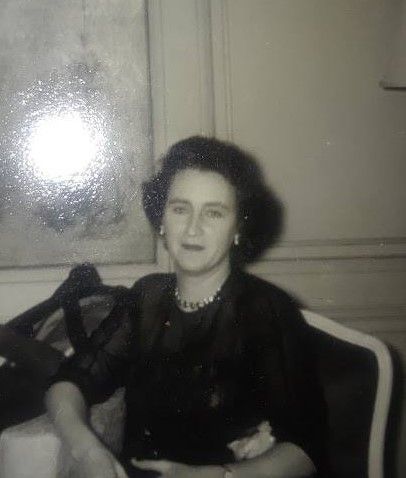
My mother died in 1961. She had just turned 40. (if you had leukemia 60 years ago, your chances of survival were almost zero). For some reason, I have only a few faded memories of her. And, for me, that is an emptiness that has always exploded inside me each year during the Mother’s Day observance.

We were kids when she died. There were five of us, and at fifteen, I was the oldest. My sister and brothers (the three youngest have now passed away) remembered details about her, such as the softness of her hair, her laugh, how she loved cherry vanilla ice-cream or pulling the shopping cart to the A&P. My own memories of my mom are almost non-existent. Fortunately, I had the second-hand information my younger siblings shared.

Death visited us often when we were young. Grandma, who lived with us, died two years after Mom. Dad died two years after her. We were officially orphans (that became a novel, The Priest and The Peaches), and we hung together and survived and did okay. But death kept lurking nearby and over the years, my sister was widowed, my brother was widowed, and I was widowed—twice. My brothers, Bobby died in 2007, Johnny in 2016, and Danny in 2022. We had a stillborn daughter in 1978 and I lost my son, Billy, last July. But it all began with Mom.

I always managed, fortified by my Catholic faith, to move through the grief process and learn to accept what had happened. It was sort of like making peace with someone you wish you had never met. But with my mom, that process never completed itself until recently. I never realized until years later how she was always teaching us a lesson as she lay there either holding her blue Rosary or having it next to her. It was as if it was a part of who she was.

I finally came to understand why I have been “stuck in the mud” with Mom’s sudden passing, albeit so long ago. I was selfish. I never thought about what must have been going through her mind as she lay dying at the age of 39. It was always about me and how MY Mom died. That was the reason for my decades’ old problem. Therein was the cause of my emptiness. It was never about her. I felt sorry for myself when she died and kept feeling sorry for myself, year after year after year.
 

null


I needed help, and finally, it came. Out of the clear blue, my daughter, Mary, called me and, during the conversation, said, “Hey Dad, do you realize I’m going to be 40 on my next birthday?”

Talk about being hit by lightning. My own daughter was going to be the same age as my own mother was when she was slowly being killed by an insidious, no-holds-barred, merciless disease. I had never thought of my mom as a 40-year-old woman with five kids. I thought of her as my mom, who died leaving me alone. How pathetic was that?

Mary, who also happens to look a lot like the Grandma she never knew, had only asked me a simple question. She could not have known the power that was in it. She had no idea that at that moment, it removed the veil from my clouded “Mom world” and set me on my journey to discover the woman and person who was my mother.

It had taken decades, but I finally began to reflect and ponder about this woman I had called “Mommy.” Her name was Lillian, and she carried me in her womb. She fed me, bathed me, held me and hugged me, and nursed my siblings and me through illnesses such as mumps, measles, and chickenpox (all of which I have no memory). This woman cleaned our house, washed and ironed our clothes, cooked, shopped, and even worked part-time. I cannot imagine how she must have felt as she prepared to leave her family knowing death was getting closer and closer. How awful and terrifying that must have been for her?

How did she hold her not-yet-2-year-old son on her lap and look at him without going hysterical? How did she handle thinking about her 6-year old son, missing his front teeth, to whom she would never give a sweet hug to again? She had a 10-year-old who was in fourth grade and always needed his mom to help him with his homework. Would Dad help him? I never considered such a thing.

And of course, there was my sister Carolyn, “Mommy’s little girl.” But she was 13 already, and she was growing up. She would need her mom to talk to about woman things. How did Mom feel having the knowledge that her children would soon be motherless? What did she say to our dad, her husband, and lover, as they lay together in bed, in the dark of night waiting for the inevitable as their five kids slept?

Mom had been close to death several days before Christmas in 1960. But she made a miraculous recovery and came home. During the first part of February, she took ill again. I have a vivid memory of her lying in bed with Bobby, age six, and Johnny, who just had his second birthday, each nestled into the crook of her arms, one on the left and one on the right. Her best friend Adeline was standing there talking to her about something, and she was looking at me. I said, “Okay, I have to go to work.” (I worked for the local grocer delivering groceries) and I left.

No hug, no kiss, I never even said good-bye. I just left.

When I got home, she was not there. She was back in the hospital. We were supposed to see her Saturday morning but she died before we got there. I will always regret that I never hugged or kissed my Mom one last time, that one damn day. Sometimes you don’t get a second chance. Trust me, I know. Never let a hug go by.

It took a very long time but I have forgiven myself for being an insensitive kid. I have stuffed my “sorry for me feelings” in my trash bag of vanquished self-pity. Those thoughts about my Mom have brought me to a better place. I know my siblings and I were blessed to have her as our Mom.

On this Mother’s Day, I will also thank God for that phone call from Mary. I will then thank Him for my Mom. Then I will go home, and, fortified by a different mindset, I will still sit by myself and cry … not out of self-pity but simply because I miss her and wish I could hug her—just one more time.

 

null


Copyright©Larry Peterson 2023
Images: Pexels; copyright 2023 Larry Peterson, all rights reserved.

Spring and the Stubborn Cardinal

Spring and The Stubborn Cardinal

Spring has arrived in my neck of the woods, and with it comes the hustle and bustle of God’s fantastic flying creatures around the flowers in bloom. This time of the year, I try to take every opportunity to visit outdoor places of interest. Recently, my husband and I walked the grounds of Our Lady of Lourdes Shrine, taking in all that nature had to offer. Scattered across the walking paths were sticks and small branches which had fallen in storms earlier that week. However, the beauty of the outdoor chapel, statues, and illumined candles surrounding the altar remained. Off in the distance was the whistling call of a cardinal announcing its presence, bringing happiness to my heart. 

As we approached a building that housed a gift shop, the little red cardinal made its existence known, flying from its edge to a nearby tree. It wasn’t until we were inside the shop that we became aware of the cardinal’s intent. We listened to the shopkeeper’s story explaining that the cardinal was either confused or stubborn. 

A sister of the Most Holy Trinity told us the cardinal had been visiting for many months. Daily attempts were made at flying directly into the shop window. These occurred so often that decals were affixed to the window to deter the bird from attempting to enter. It is common for a bird to see its reflection in a window, provoking it to go after what it thinks it sees—ultimately resulting in either an injured bird or complete surrender to the situation.  

In this case, it appears the Shrine has a stubborn cardinal on its hands, and it prompted some thoughts as my husband and I recalled the activity of the bird that afternoon. Could it be that the bird was refusing to leave? What was it looking for? Had it lost a mate? Did the bird know it wasn’t getting anywhere by continuing its current behavior? 

I am not alone when I share that there have been countless times when God has called me toward something, and I have run the other way. Or instances when I continued to go “my way” only to hit the same roadblock repeatedly, never realizing that the road I was trying to travel was not God’s plan. Like the cardinal at the gift shop, we spend too much time looking for something that isn’t there instead of listening to God’s voice as our guide. 

Our moment of surrendering to the situation comes when we realize that our plan may not necessarily be God’s will. Like the bird flying into a window repeatedly, we are injuring ourselves when we repeat a pattern that has us, in essence, stuck. The decals in our lives that help us to see come in many forms—spiritual guides, faithful friends, parents, siblings, a spouse, and our children. Let’s not discount the stranger or good Samaritan who will help us to visualize what is ahead through teachable moments. 

We can only hope that the cardinal visiting the sisters at the Shrine stops long enough for God to provide enlightenment or perhaps send another bird to provoke a different activity. You and I both know that if it continues on the path it is now, the bird will eventually suffer hurt beyond repair.  The same is true for you and me. If we continue on the wrong track and fight the direction of God, our circumstances may result in a chaotic life.

The cardinal has as many choices as you and I. We can continue flying into the window, never getting anywhere, or set our sights on a path for God to light and guide us. Discernment becomes clear through consistent prayer and prayerful conversations with a spiritual director or parish Priest. Take advantage of the freshness and new beginning spring offers, open the windows of your heart, and fly. 


Copyright 2023 Kimberly Novak
Images Copyright Canva

Cath-Lit Live: Siren Spell

Cath-Lit Live: Siren Spell

“Cath-Lit Live!” features brief interviews with Catholic authors who are releasing new books. Hosted by Catholic author and speaker Amy J. Cattapan, “Cath-Lit Live!” gives viewers a glimpse into the latest Catholic books while getting to know a bit about the author as well.

null


Siren Spell: A Dragon Eye, P.I. Short Story by Karina Fabian

What could challenge a dragon more than being human? When a curse turns Vern human, he does not have time to deal with it; Sister Grace’s cousin has gone missing in the Mundane. Besides, how hard could humaning be? He might even enjoy it for a while. But from stubbed toes to fever dreams of emus, he discovers that humaning is not as easy as it seems. When women throw themselves at him, the unfamiliar hormones catch him off guard – especially because his heart, dragon and human, belongs to the nun who is his best friend. Can he master his new emotions and solve the mystery before Grace becomes the kidnapper’s next victim?


null

About the author:

By day, Karina Fabian freelance writes business articles. After hours, she’s a snarky dragon who thinks he saves the world all too regularly, a psychic who’s desperate to save his world; a zombie exterminator who just wants her world clear of undead vermin, and Catholic religious sisters whose callings have taken them off our world. She enjoys Florida life with her husband, Rob. They have four adult children, two dogs, and a rocket company. Last year, she started taking standup comedy classes because she’s a glutton for punishment.


You can catch “Cath-Lit Live” live on A.J. Cattapan’s author Facebook page. Recorded versions of the show will also be available to watch later on her YouTube channel and Instagram.


null


Copyright 2023 Amy J. Cattapan
Banner image via Pexels

It’s Never too Late to Learn from the Baltimore Catechism

My father made my sisters and I study the Baltimore Catechism when we were children – you know, that slim volume every Catholic family had at home prior to the new, massive Catechism of the Catholic Church? I memorized answers in fourth grade while preparing for Confirmation back in the 1960’s. What has stuck with me all these years is my childhood recollection of the answer to the question, “Why did God make me?”  Throughout my entire life, the answer sustained me through every existential crisis. “God made me to know, love, and serve Him in this world and be happy with Him in the next.”

 Beloved, let us love one another, because love is from God; everyone who loves is born of God and knows God. 

1 John 4:7


While the answer was simple and memorable and kept me from despair, I can’t say I have always understood exactly how to know, love and serve Him.  That part took many long spiritual journeys with twists and turns and lots of stumbling.  The path to understanding began with reading and learning to love scripture, participating in parish retreats and bible studies, receiving the sacraments and even straying from the faith for a while -only to come running back when I realized the emptiness inside without the Holy Eucharist and the catharsis of reconciliation. 

We love because he first loved us.

1 John 4:19


In the decades before my father passed away, he sent copies of the new Saint Joseph Baltimore Catechism (©1964 by Catholic Book Publishing Co., N.Y. – United States and Canada) and encouraged my sisters and I to teach it to our children. I picked it up recently and discovered that the new edition answer to “Why did God make me?” states “God made us to show forth His goodness and to share with us His everlasting happiness in heaven.” The next question “What must we do to gain the happiness of heaven?” provides the rule for living, “To gain the happiness of heaven we must know, love and serve God in this world.”  I missed out on a critical element: God did everything for us FIRST and we obtain the ability to share in His everlasting happiness when we follow His example on Earth.

For the Son of Man came not to be served but to serve, and to give his life a ransom for many.

Mark 10:45


Had I paid attention, I might have saved years understanding that God knew me, loved me and served me before I ever reciprocated. But it was three special Psalms learned at three stages in my life, that came together to tell me how much God knows, loves and guides me.  Growing up, I was in awe of the night skies and everything in nature; I sensed my smallness in comparison, and yet somehow knew God must love me amidst His awesome creation.

When I look at your heavens, the work of your fingers, the moon and the stars that you have established; what are human beings that you are mindful of them, mortals that you care for them? Yet you have made them a little lower than God, and crowned them with glory and honor.

Psalm 8:3-5


Later in life, I didn’t always love myself. But a kindly priest gave me Psalm 139 to study after confession.  It was a reinforcement I needed to remember that God knows and loves me.

O Lord, you have searched me and known me.  You know when I sit down and when I rise up; you discern my thoughts from far away. You search out my path and my lying down, and are acquainted with all my ways. Even before a word is on my tongue, O Lord, you know it completely.

Psalm 139:1-4


Finally, some twenty years ago, I was able to give witness to how God lit my way and guided me to Him.  These words from Psalm 119:105 are a continual reminder of how He serves us and is available to us every moment: “Your word is a lamp to my feet and a light to my path.”

It’s been a lifetime since I first picked up the Baltimore Catechism, and had I paid closer attention, I might have realized much sooner that we come to know love and serve God by following His example of knowing, loving, and serving His people.


Copyright 2022 – Paula Veloso Babadi

Meet Venerable Adele Bonolis

Meet Venerable Adele Bonolis

Adele helped prostitutes reclaim a life of dignity

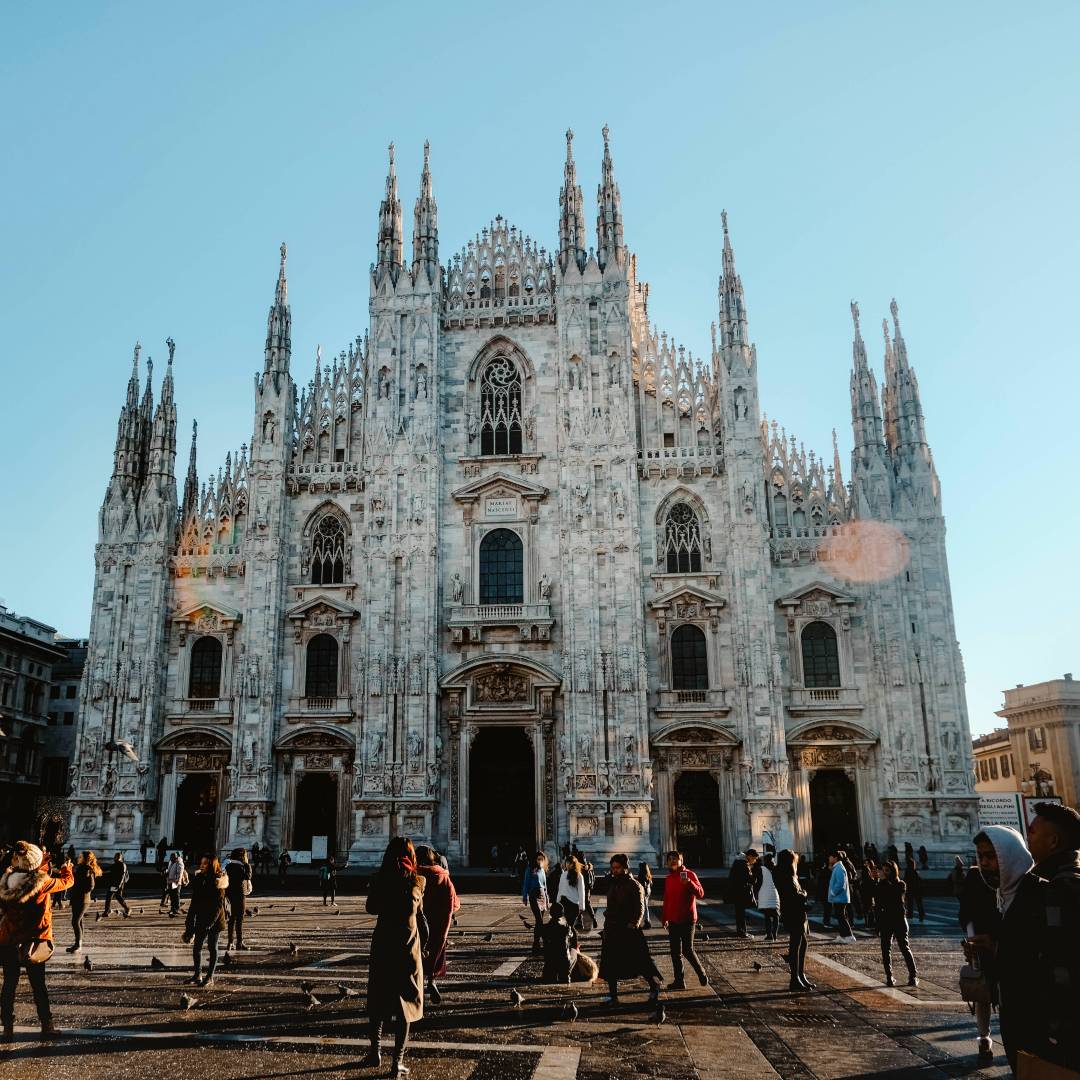
Adele Bonolis was born in Milan on August 14, 1909. She was the youngest of four children and was born into a family where religion was not practiced. Still, the basic principles of it were adhered to. Her mom and dad were “believers” but non-participants in church activities, including the Mass. However, they did have their children baptized, and Adele was christened in the Basilica of St. Ambrogio.

Adele became a member of Women’s Youth, which was part of Catholic Action. This is where she received her primary education in the teachings of Catholicism. Adele attended classical high school, maintained good grades, and received her diploma. She then graduated from the Faculty of Letters and Philosophy at the Catholic University of the Sacred Heart. After graduating, she became a high school religion teacher.


Her father told he not to look at the prostitute—she kept on watching

A childhood encounter with a prostitute was a seminal moment in the life of Adele. She was with her dad and saw a prostitute going by. Her father told her not to look at the woman, but Adele did not hear him. She was mesmerized by the woman’s appearance and kept watching her. This was a turning point for Adele. It was that brief moment that helped her decide that once she grew up, she would help such women regain their lost dignity and become socially redeemed. She wanted to help give them a chance for a new life. She had no idea how this would be done.

Adele demonstrated determination and possessed unmistakable leadership qualities. In 1947, she began directing a summer camp for needy children in the poverty-stricken town of Lecco. Then she was put in charge of overseeing a parish level group of the Women’s Youth of Catholic Action. Her natural ability to coordinate and manage this group led  to her working in the diocesan center with women at risk and, before long, in the city of Milan. It is here that her plans to help the forgotten prostitutes begin to take shape.


The Merlin Law outlaws prostitution and brothels

In 1957, following the new Merlin Law, houses of prostitution were permitted to be closed down. Prostitution itself was not outlawed, but brothels were. One of these, located in Montano Lucino, became a reception center for former prostitutes, the Maria Assunta Center for Female Orientation. That was followed by the Casa San Paolo opening in Vedano, the Casa Maria dell Grazie in Cibrone, and the Villa Salus in Lenno.

Adele’s compassion extended to other categories of women, such as former prisoners and the mentally ill. She believed that “our faith commits us to firmly believe in the value of the human person and that no one’s past can be sufficient to cancel this mysterious yet real value.”


She demanded a family atmosphere in all of her homes

Slowly but surely, volunteers signed on with her. But first, they had to commit to the concept of “rehabilitating love, going through the reconstruction of the person.” In her homes, she wanted a family atmosphere where everyone helps each other.  She believed that this type of environment leads to the person’s rehabilitation and helps get them prepared for reintroduction back into society. At times there were up to thirty people staying in her homes.


She fought cancer as best she could

Adele began experiencing a decline in health, and it was discovered that she had an intestinal tumor. She continued in her ministry as long as she could, but eventually her illness prevented her from continuing. She died on August 11, 1980. At her funeral, Monsignor Libero Tresoldi said, “Approaching Adele Bonolis, the impression was that of one who found in her a point of support, a place of refuge, a hope to proceed along the path. She had always been concerned with behaving like the sail of a boat looking for the breath of wind and letting itself be led by it.”

On January 21, 2021, Pope Francis declared Adele Bonolis a woman of “Heroic Virtue,” and she became Venerable Adele Bonolis. Her cause for beatification continues.


null


Copyright 2023 Larry Peterson
Image: Pexels

Hope and Resilience

Hope and Resilience

Only Divine Providence could have woven such a tale. I can just offer you a sketchy map, and a few further clues. But we’re all a part of it. You’ll find your way.

This story opens in the mid-1800’s, with an English nobleman who collected American tree specimens to forest his Irish estate across the Atlantic Ocean. It encounters White Russians fleeing persecution following the communist revolution in 1917. It continues into the 1920’s, with an ambitious Irish diplomatic attaché in Paris; and a devastating family tragedy in Ireland.

Our tale emerged again in a small Swiss town in 1957, when a Protestant housewife received an indelible message in prayer from an Eastern Orthodox Catholic Saint.

But perhaps the most interesting plot twist occurred in the late 1940’s or early 1950’s, when a group of Irish schoolboys discovered dusty 15th-century religious icons while searching for treasure in a 19th-century reproduction-Gothic castle.

For me, it began on a recent March morning when a massive herd of glossy cattle crossed the road in front of our tour bus for more than fifteen minutes on their way to pasture. These cows dwell at Glenstal Abbey near Murroe, County Limerick, in the ancient Munster region of Ireland. (1)

Assisted by their dedicated local lay-oblate community, the Benedictine monks at Glenstal administer a substantial farm; a nationally-accredited Roman Catholic boarding school; and a conference center that offers retreats, spiritual consultations, and pilgrimages to individuals and groups of different faiths from around the world. A major inspiration for many pilgrimages to Glenstal Abbey is its unique collection of rare Eastern Orthodox prayer icons. These icons are displayed in a custom-built underground chapel beneath the main church.

In the Eastern Orthodox faith tradition, iconography is regarded as a particular kind of worship and a specific religious vocation. Although drawing and painting are involved, icons are always referred to as “written,” not made. The most important stages in their writing are the trained religious artists’ disciplines, fasting and prayer. Orthodox believers do not “look at” their icons; they present themselves before them, so that the saints can communicate with human beings on earth through the windows of their eyes.

The White Russians eventually found their way to Paris, France. Many families at that time were trapped in an economic depression that gripped continental Europe as well as North America. Too often, they were forced to part with their most precious possessions in order to support their families. For the Russian émigrés, that meant selling their family icons.

It seems that a diplomatic attaché for the Irish government, stationed in Paris, was happy to assist with the disposition of religious art works. The monks at Glenstal Abbey believe that this is how their Russian Orthodox icons were transferred to Roman Catholic Ireland.

At some point the icons landed at the castle forested with North American trees, once owned by the Barrington family. When their daughter was killed by Irish freedom fighters in 1921, the family returned to England. A local priest, Monsignor James Ryan, purchased Glenstal Castle in 1926 and donated it to the Benedictine Order, to found an abbey and school in the Archdiocese of Cashel. Glenstal Priory was inaugurated in January of 1928; the abbey boys’ school was established four years later in 1932. (2)

But following the turmoil of World War II, by the early 1950’s the Orthodox icons’ presence at Glenstal Abbey had been almost forgotten. Inquisitive schoolboys, digging through nooks and crannies, apparently came upon them stored somewhere in the castle. The Russian Orthodox saints traveled across a Roman Catholic campus in children’s hands, to decorate dorm room walls or to lie hidden under beds as secret prayer talismans.

Back on the continent, in 1957 the small-town wife of a Reformed Church pastor began to see saints and angels, including Mother Mary, beckoning to her from Roman Catholic churches in central Switzerland. Eventually, Joa Bolendas entered these churches to pray.

According to one of Bolendas’ accounts, St. Nicholas appeared to her and said, “This is the testimony of an early Saint of the Russian Orthodox Church.” In their encounters, St. Nicholas showed her images of icons that he said were “missing.” He told her that these icons were important for the future of the world and must be found. St. Nicholas thought that the icons he sought were somewhere in Ireland.

Bolendas’ nephew by marriage, John Hill, a graduate of Glenstal Abbey School, was in residence at that time in the C. G. Jung Institute of Zurich. Acting as a family member and not in his professional capacity, John began to accompany his wife’s aunt to church. He observed her in ecstatic prayer (3).

Joa Bolendas was described by all who knew her as “a strong woman,” and “a thoroughly practical person.” John himself watched her come out of prayer visions and briskly proceed to a nearby shop. There she would haggle with the butcher for his best cut of meat at the lowest price, to cook for her family’s dinner. John Hill deemed her fully grounded in reality.

He had a vague recollection of “those icons we used to play with at Glenstal as boys.” The matter seemed worthy of investigation. John called his old friend Mark Patrick Hederman, a monk, writer, teacher and administrator for the same abbey school where they both grew up.

In 1976, John and his wife Anne-Marie, with a photographer selected by Joa Bolendas, traveled back to Glenstal Abbey to examine whatever icons they might be able to find there.

Photographs of the icons they located in a thorough search of abbey and school were shown to Joa after they returned to Switzerland. She confirmed them as the same images St. Nicholas had revealed to her in visions. The saint then requested through Joa that the Benedictine brothers at Glenstal “build a chapel at their abbey to preserve them.”

All of the saints and angels who spoke with Joa over many years conveyed the same essential message. Whether explicitly or implicitly, the thrust of these revelations was always the importance of unity among mankind. If the chapel was built at Glenstal, St. Nicholas told her, “Unity will follow for Germany and Ireland.”

When Brother Patrick first presented a multi-million-dollar bid he’d received from a local contractor, the proposal to build a free-standing icon chapel on the abbey grounds was firmly rejected by the Glenstal monastic community.

Over time, however, the Benedictine brothers eventually developed a consensus. If Brother Patrick could find a way to build this chapel in the unused dirt cellar under the abbey church, they might be willing to help support it.

A third Glenstal Abbey School classmate, Jeremy Williams, had grown up to become one of Ireland’s leading architects. Patrick called Jeremy to the abbey for a consult. The aesthetic they both envisioned was a smaller version of the chapel at St. Sophia Church in Istanbul.

Their design was ultimately built in Glenstal Abbey’s church cellar to house the Russian icons, as well as an equally-precious donated collection of Greek Orthodox icons.

Their cement contractor in Cologne, Germany, who ground real stone for use in the colored-concrete chapel floor, provided the abbey with hefty discounts. In return the monastic community granted permission for the contractor to use an image of the finished chapel in promotional materials.

Before construction even began, while the abbey team was still examining the underground structure, a man no one had ever seen before walked in.

He said, “I know what you’re doing here! I know how to do it! No one else must touch it!”

With the monks’ permission, he spent the night alone, “inside the black box,” for inspiration. That ‘stranger’ turned out to be a local man, the brilliant and idiosyncratic Irish artist James Scanlon, who created luminous stained-glass medallions to anchor and illuminate a portion of the chapel ceiling vault.

Even the cows offered up their own fair share of the chapel costs, in cream and butter. Dairy sales from the farm help to support all of the spiritual and educational programs offered at Glenstal Abbey.

The finished icon chapel opened on April 10, 1988, with ancient musical tones and choral chants. These were researched as well as performed by Irish composer Michael O’Sullivan, with Rev. Nóirín Ní Riain, Ph.D. as liturgical cantor. (4)

Just nineteen months later, on November 9, 1989, the Berlin wall that had divided Germany for more than five decades fell to the ground. On 10 April, 1998, the tenth anniversary of the chapel’s consecration, Good Friday Agreements brought peace to Northern Ireland, putting an end to physical interreligious violence there.

This evidence is anecdotal, of course. Private devotions are treated as optional, not obligatory, in our Roman Catholic church. Still, the discerning monks of Glenstal Abbey visit their icon chapel every day, at the same time, to pray for healing in our world. This devotion is performed in addition to their traditional Benedictine charism, ora et labora, a daily rhythm of work and prayer in the Liturgy of the Hours.

If nothing else, the length and breadth of this history illustrate that dark times of many different kinds have always besieged humanity. The haunting eyes of early saints in the Glenstal Abbey chapel continue to regard contemporary pilgrims with eternal compassion.

Glenstal Abbey will celebrate the icon chapel’s 35th anniversary on April 10, 2023.

Should you, yourself, feel called to reflect on how a group of 1950’s Irish schoolboys ‘just happened’ to be in the right places, at the right times, prepared with the exact adult skills to provide every resource required to incarnate this chapel … Please join in prayers for unity and peace on Easter Monday.

 “Drive away the darkness that surrounds us,

Shed onto us the mantle of your light.

Help us to know your will,

And give us the courage to do it.” (5)

 Amen.

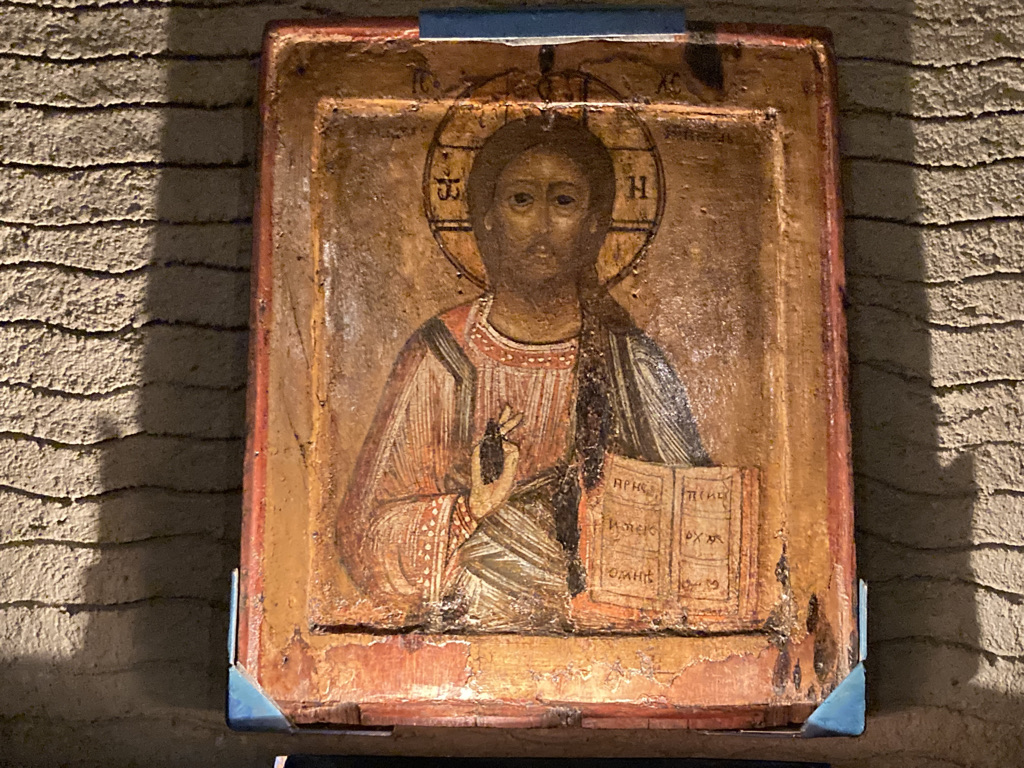
Original Russian Icon “The Healing Christ” in the Glenstal Abbey Icon Chapel Photo by Margaret Zacharias, taken with permission from Don Mark Patrick Hederman


Featured Image: Collection of Original Eastern Orthodox Icons in the Glenstal Abbey Chapel Photo by Margaret Zacharias, taken with permission from Don Mark Patrick Hederman The “Angel of Silence” can be seen at lower right.

Notes:

  1. https://glenstal.com/abbey/
  2. A more detailed history of Glenstal Abbey, and exposition about the educational philosophy of the secondary-level boy’s school, may be found in former Headmaster Mark Patrick Hederman’s book:

 The Boy in the Bubble: Education as Personal Relationship

 https://www.amazon.com/Boy-Bubble-Education-Personal-Relationship/dp/1847304052/ref=tmm_pap_swatch_0?_encoding=UTF8&qid=1680133263&sr=8-1

  1. The full story of Joa Bolendas’ visionary prayer experiences may be found in her books:

So That You May Be One

https://www.amazon.com/s?k=Joa+Bolendas+That+You+Be+One&crid=1RFFTDTLMZBLJ&sprefix=joa+bolendas+that+you+be+one%2Caps%2C155&ref=nb_sb_noss

Alive in God’s World

https://www.amazon.com/Alive-Gods-World-Described-Bolendas/dp/097010975X/ref=sr_1_1?crid=Q8W6BZWU4KAG&keywords=Joa+Bolendas+Alive+In+God%27s+World&qid=1679641031&sprefix=joa+bolendas+alive+in+god%27s+world%2Caps%2C144&sr=8-1.

  1. Recordings of the early Christian music that accompanied the consecration of Glenstal Abbey’s icon chapel may be found here:

 Vox De Nube

https://www.amazon.com/dp/B09S3F6YQ1/ref=sr_1_2?crid=3RR326YJQLC6A&keywords=vox+di+nube&qid=1679728636&sprefix=vox+de+nube%2Caps%2C142&sr=8-2

  1. One prayer given in a dream to Don Mark Patrick Hederman, now Abbot emeritus of Glenstal Abbey.

This article was prepared with help and permission from Don Mark Patrick Hederman and John Hill.

Any errors of fact or interpretation are the sole responsibility of the author. 

© Copyright 2023 by Margaret King Zacharias, Ph.D.


Journey ad Amorem

Journey ad Amorem

We’re all here to learn how to love. Life is a school of love. The things that happen to you in life are meant to help you learn how to love. The people who cross your path in life are meant to help you learn how to love, and you’re meant to help them learn how to love, too.

We’re all on a journey back to God, a journey ad Deum. It’s just that some of us don’t realize that yet, or have forgotten it, or else don’t want to believe it. But we are. We all came from God, and we’re all intended to return to God. Only in God will we find the ultimate happiness, freedom, purpose, and peace that we so desperately desire.

The little three-word phrase “God is love” (1 John 4:16) is the most profound statement ever uttered by a human being. For some people, however, the phrase “God is love” has become so familiar as to have become almost trite. They may acknowledge that it is true in the abstract, but it is not a truth that they allow to impact their daily lives in any significant way: “‘God is love’ sounds nice, but it doesn’t pay the bills”—this seems to be the attitude of some people. Other people reject the claim that “God is love” entirely.

Many of us need to consider (or reconsider) the profound meaning and implications of the claim that “God is love.” This little phrase not only claims that God exists; it also makes a startling claim about what God is. The claim is not just that God has love, but rather that God is love. Love is what God is. God’s essence, the core of who and what God is, is love. Not thought, or power, or freedom, or knowledge, or any of the other things that we human beings might have expected or predicted to be the essence of God, but love.

But “God is love” is not just a statement about God. It’s also a statement about the nature of existence, the nature of life itself. God is not just one more being among many. God is not some “super-being” with superhuman powers. Some atheists seem to derive pleasure from attacking such images of God, but that’s not the God in whom we Christians believe. No, God is not just one more being among many; God is Being itself (Exodus 3:14; John 8:58). God is the Mind behind all that exists, the Mind that gave rise to all that exists and that sustains everything in existence from moment to moment, the Source and Ground of all that exists, the uncaused Cause of all that exists. So if God is Being itself, and the essence of God is love, then the essence of Being itself is love. Love is what Being is, so love is what being is meant to be. To love is to be, and to love more fully is to be more fully. The more fully we join in the dynamic of love, the more fully we share in Being, and the more fully alive we are.

Some of the ancients described human life as a process of exitus and reditus: a going out from God when we are born into this life so that we might then freely choose whether or not we want to return to God forever. Our life is intended to be a journey back to God, a journey back to Love. We were born for love. We were made from and for love. We were created to dwell forever in the divine Love, but whether we end up there or not depends on whether we accept God’s offer of a share in the divine life.

Life is a beautiful and profound and mysterious drama in which our ultimate destiny, our eternal destiny, hinges on our choice of whether to say Yes or No to Love and to love. The stakes couldn’t be higher. So why does God leave the choice up to us? Again, it’s because love, to be genuine, has to be both freely offered and freely accepted. God doesn’t work by force, but rather by persuasion. God freely offers us the gift of a share in the divine life and love, but it’s up to each of us to choose whether to accept the gift or not. We’re all enrolled in the school of love, but it’s up to each of us whether we make the most of the opportunity or choose to drop out.

* This article is an excerpt from Rick’s recently released book, The Book of Love: Brief Meditations. https://enroutebooksandmedia.com/thebookoflove/

Rick Clements, 2023

(Photo by Patrick Fore on Unsplash)

May I Have This Dance?

May I Have This Dance?

I recently spent the day waiting for a family member undergoing a medical procedure. As we hunkered down in the lobby, a gentleman played the piano, filling the open atrium with melodies. We enjoyed reminiscing on some songs from the past, and I noticed how those conversations put our worried minds at ease. A hospital employee arrived at our table asking if we liked the piano music and if we would dance.

How lovely it was to see her go from table to table, bringing smiles to worried families looking for anything to occupy their minds while they waited. I never saw anyone accept the dance offer in the hours we spent in that space. However, moods were lifted, achieving the ultimate goal. I thought how wonderful it was for the hospital to provide this type of service and how nice of the employee to present it so joyfully. Little niceties like this are heaven-sent moments where God joins us in the dance.

Over the last several years, music therapy has become a staple in healthcare, and I am a big fan. Not long ago, I spent time with my uncle, who had suffered a stroke. Uncle Boo, I called him, had been a wedding singer for many years, and music meant the world to him.  When the nurses on his floor learned of his passion, they quickly ordered music therapy at his bedside. I was blessed to have been visiting him on a day when the therapist arrived. The stroke left his voice weak, but that did not slow him down.

Singing his favorite songs with the therapist brought tears, laughter, and an unforgettable smile to his face. The connection the therapist made with my uncle was like watching two old friends dancing cheek-to-cheek. Setting aside my emotions, I managed to record a voice memo on my phone as my uncle softly sang the lyrics, “All my lovin’, I will send to you,” and “Don’t you look back.” I relish the gift God gave me that day—an opportunity to play the recordings back, close my eyes, and dance.  Reflecting on that memory today, I realize how blessed I was to have chosen that particular moment to pop in for a visit, not to mention that this was God filling His dance card.

In both instances, music was a gift presented by God through a person who was trained and highly qualified, not to mention motivated to share their gift. That does not mean that only trained professionals can present gifts of this sort. For instance, before we were married, my husband asked me to dance in the middle of a candle store. It ultimately led to a dance with the same song on our wedding day—when God filled his and my dance cards. 

It makes me wonder how many other events, not only in my life but for everyone, are times when God asks us to dance. More obvious moments might be when the trees sway in a soft breeze inviting us to swing side to side as we watch the leaves dance. Or, perhaps, the joy on a child’s face as they ride on the playground. 

I can go on and on with different scenarios, and I’m sure there are many you can think of, also. God is with us in all things, big, small, medium, and large, especially in the twinkling of a dance. Embrace these joy-filled moments of glee and savor them with prayers of gratitude, a note in your journal, or sharing with a friend. My prayer for you, the reader, is that you tune into the little niceties as gifts from God. Consider them precious moments when God shows up with His dance card.  Like a little girl with her daddy, learning to dance, except this time, God is leading the steps. 


Copyright 2023 Kimberly Novak
Images Copyright Canva

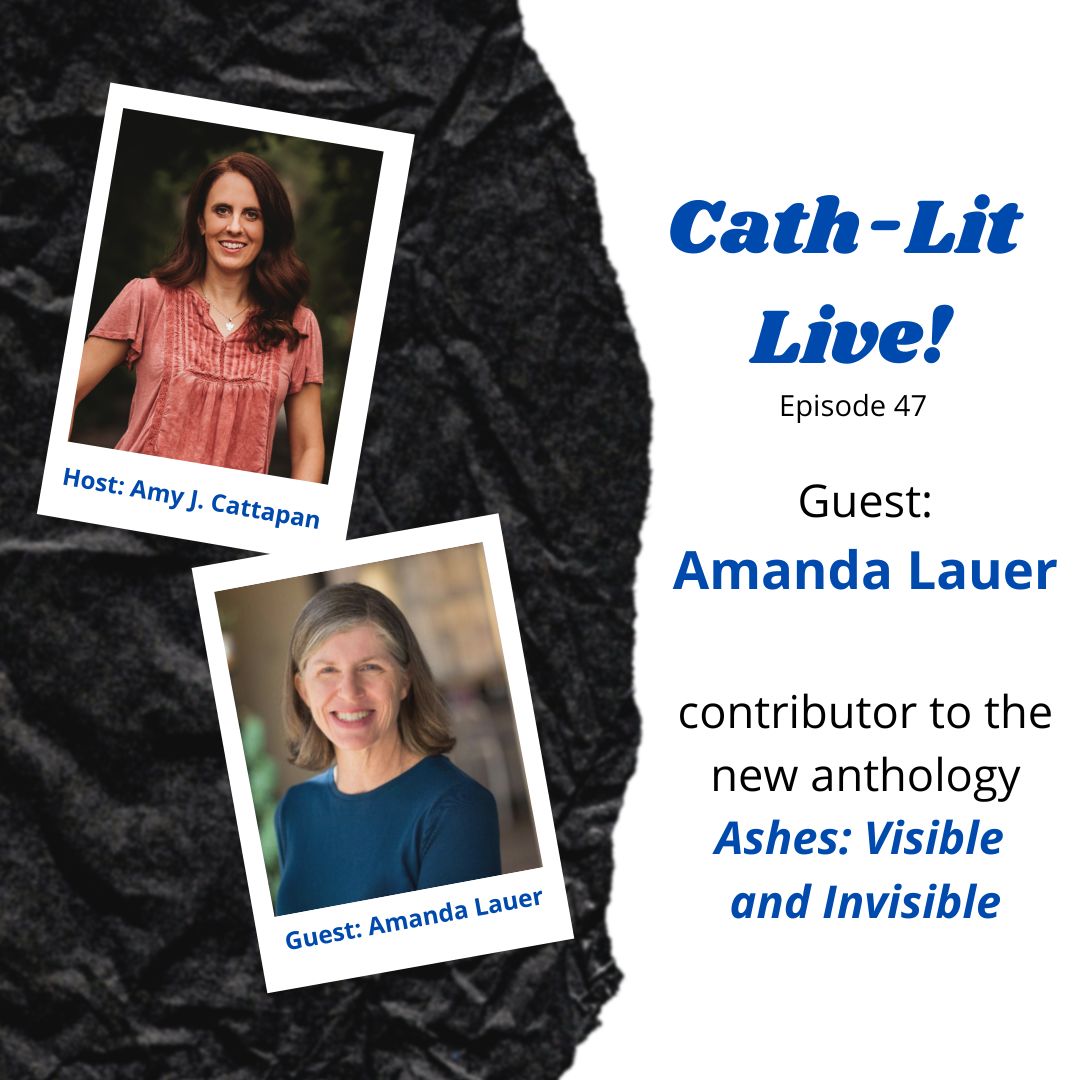
Cath-Lit Live: Ashes, Visible and Invisible

Cath-Lit Live: Ashes, Visible and Invisible

“Cath-Lit Live!” features brief interviews with Catholic authors who are releasing new books. Hosted by Catholic author and speaker Amy J. Cattapan, “Cath-Lit Live!” gives viewers a glimpse into the latest Catholic books while getting to know a bit about the author as well.


null


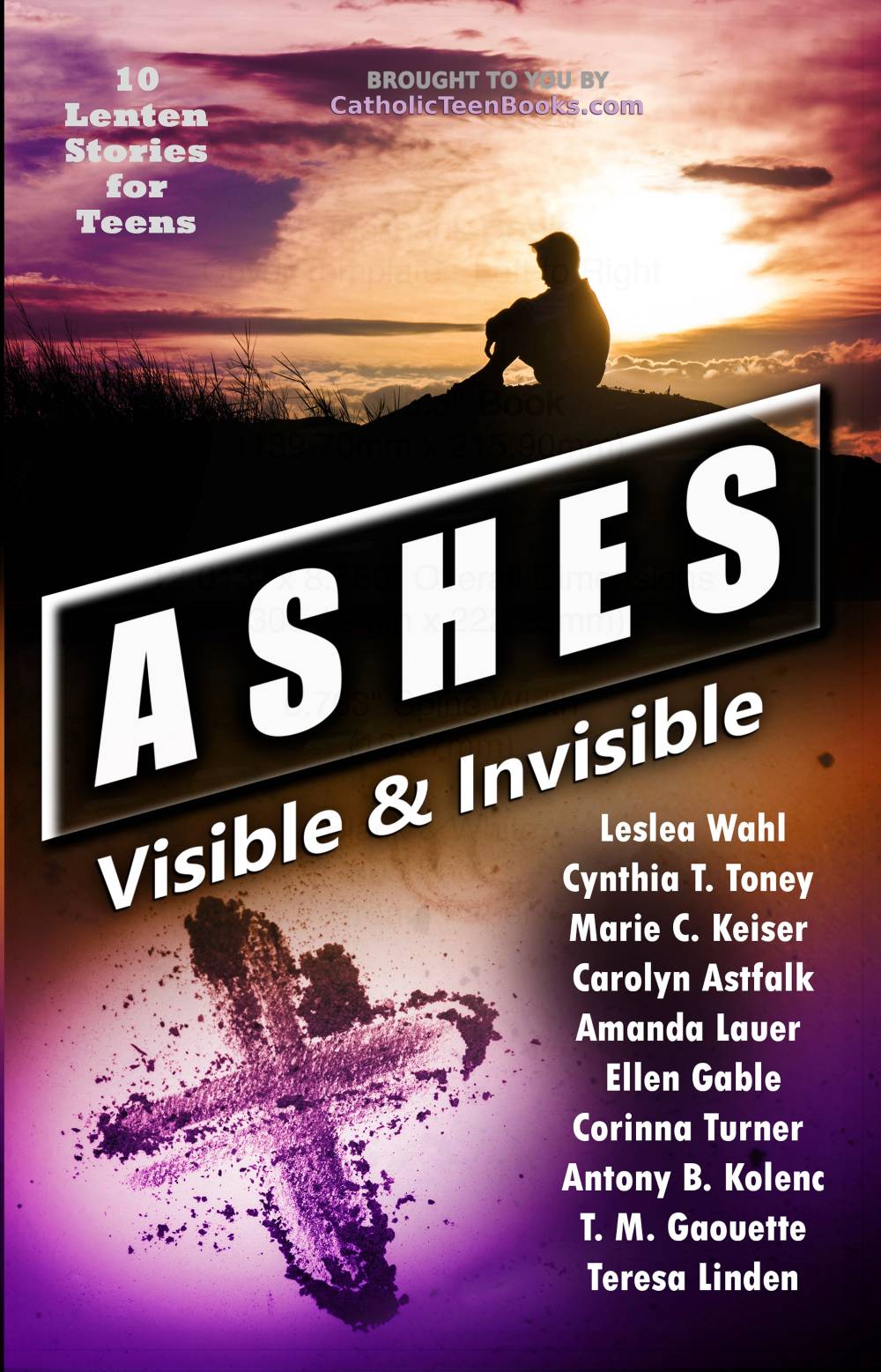
Ashes: Visible and Invisible by Catholic Teen Books

A boy in ancient Israel, a girl in modern-day America, a young man in the far future; a dozen teenagers in different settings. What do they all have in common? Each of these otherwise unrelated young people is presented with a choice, the same choice that every teen must make at some point in their lives: God or self. Sacrifice or selfishness.

The stakes vary. Some characters in this anthology risk being eaten by dinosaurs while others must simply rise to a new level of maturity in their everyday life, or choose a higher level of generosity.

Ashes: Visible and Invisible is a collection of stories that will both entertain young readers and invite them into a deeper understanding of Lent and their faith.


null


About the author:

An avid reader since childhood, award-winning author and journalist Amanda Lauer is the creator of the Heaven Intended Civil War series. A World Such as Heaven Intended won the 2016 CALA Award and A Freedom Such as Heaven Intended earned the 2022 Catholic Media Book Awards: First Place Catholic Novels: Inspirational. In addition, Lauer has written two time-travel novels Anything But Groovy and Royal & Ancient. Ashes: Visible & Invisible, a follow-up to Treasures: Visible & Invisible, is her second anthology written will fellow Catholic Teen Book authors.


You can catch “Cath-Lit Live” live on A.J. Cattapan’s author Facebook page. Recorded versions of the show will also be available to watch later on her YouTube channel and Instagram.


null


Copyright 2023 Amy J. Cattapan
Banner image via Pexels

Cath-Lit Live: I Am Earth’s Keeper

Cath-Lit Live: I Am Earth’s Keeper

“Cath-Lit Live!” features brief interviews with Catholic authors who are releasing new books. Hosted by Catholic author and speaker Amy J. Cattapan, “Cath-Lit Live!” gives viewers a glimpse into the latest Catholic books while getting to know a bit about the author as well.


null


I Am Earth’s Keeper by Lisa M. Hendey

Embark on a whimsical journey to encounter and protect the majesty of Earth. With a call to simple but impactful action, this book invites young readers to serve as caretakers for the natural world around them. With a gentle, rhyming story by bestselling author Lisa M. Hendey and artwork by award-winning Italian illustrator Giuliano Ferri, I Am Earth’s Keeper describes one child’s pre-dawn kayak ride that opens his eyes to the astonishingly beautiful world around him. Observing the rising sun, frogs, fish, birds, trees, and gentle breeze, he begins to marvel at the life all around, and to imagine how he can care for it. Inspired by St. Francis and his famous love song “Canticle of Brother Sun and Sister Moon,” this warmhearted book sparks the imagination of young readers to connect more deeply with God’s creation and develop an ever-deepening sense of commitment to living in solidarity with nature. (Paraclete Press)

null


About the author: Lisa M. Hendey is the founder of CatholicMom.com and a bestselling author. She has journeyed around the globe to hear and share messages of hope and encouragement. Her Chime Travelers series for kids is read and studied worldwide in homes, schools, and churches. A frequent TV and radio guest, Lisa also hosts two podcasts. Lisa and Greg Hendey worship and live in Los Angeles, CA. 


You can catch “Cath-Lit Live” live on A.J. Cattapan’s author Facebook page. Recorded versions of the show will also be available to watch later on her YouTube channel and Instagram.


null


Copyright 2023 Amy J. Cattapan
Banner image via Pexels

Stay in the Know

Join Our Newsletter

Members and supporters can get the latest on CWG news and events by signing up for our newsletter.

Please wait...

Thank you for signing up!

Catholic Writers Guild
Archdiocese of Indianapolis
1400 N. Meridian Street
Indianapolis, IN 46202

EIN: 26-4150820

© 2026 The Catholic Writers Guild. All Rights Reserved.