When Charity is Counter Culture, We Need to Lead the Way

Last year, I took my first job in the corporate world. I’m loving it, but there’s a lot I have to learn…and some things I never want to learn.

Last week, while most of us were in a meeting, three of our employees got laid off. (We were told in the meeting right after it happened.) These were hard-working and much admired men in the office, but the work they did, through no fault of their own, wasn’t paying for itself. It was out-of-the blue, and a pure budget decision.

We’re a close-knit group, so everyone was upset, and not because they were worried about their own jobs. The rest of the day was spent in group walks, a long lunch, and much discussion and commiseration. I suggested we get a card and take up a collection. The suggestion surprised folks. Apparently, when someone leaves a company, they’re just gone, and life moves on. I was told that that’s usual for any company, not just ours. To acknowledge their contribution and their loss, esp as a group, is  “counter-culture.”

Nonetheless, people loved the idea. Those who had been laid off before said how much they’d have appreciated knowing folks still cared. So I got cards and some envelopes and spent part of the day walking around the office. The cards filled to overflowing. Everyone pitched in some money. Our Human Resources guy sent the cards and gift cards for us (since he can’t divulge the addresses.) It may have been counter the corporate culture, but when asked, everyone was willing to help, even people who didn’t know the guys in question. It just took a nudge.

At our hearts, most of us are considerate and generous. But we’re also timid, sometimes lazy, and unwilling to take a risk that goes against the standard culture. As an outsider coming into the culture, I acted out of ignorance. If I’d spent 20 years in the corporate world, I don’t know if I’d been so quick to act.

We wait for someone else to spur us to action. I wonder if that’s why so many people believe so strongly in government welfare – with the government taking charge, we can rest easy, feeling we’re helping the poor without our having to take steps ourselves. When Mormons tithe, the money comes straight out of their paychecks. I must admit, I think that’s brilliant. I wish the Catholic Church had a direct-deposit tithing program. We’re already the biggest charitable organization in the world. Can you imagine how much more we could do if people could just assign a portion of their paycheck automatically instead of waiting until Sunday to think about it? Like the Jews demanding a king, we demand that someone else take charge and lead us in things we know we should do.

Regardless of whether you agree with welfare or mandatory tithing, the fact remains that there is so much more we can do – so much more that people are willing to do – if only we had a nudge. Be the one who does the nudging. Forget what “the culture” says and do what your heart says, and invite others to join you. You might be surprised at how people will rally behind you to help.
Books, and Toned Middles

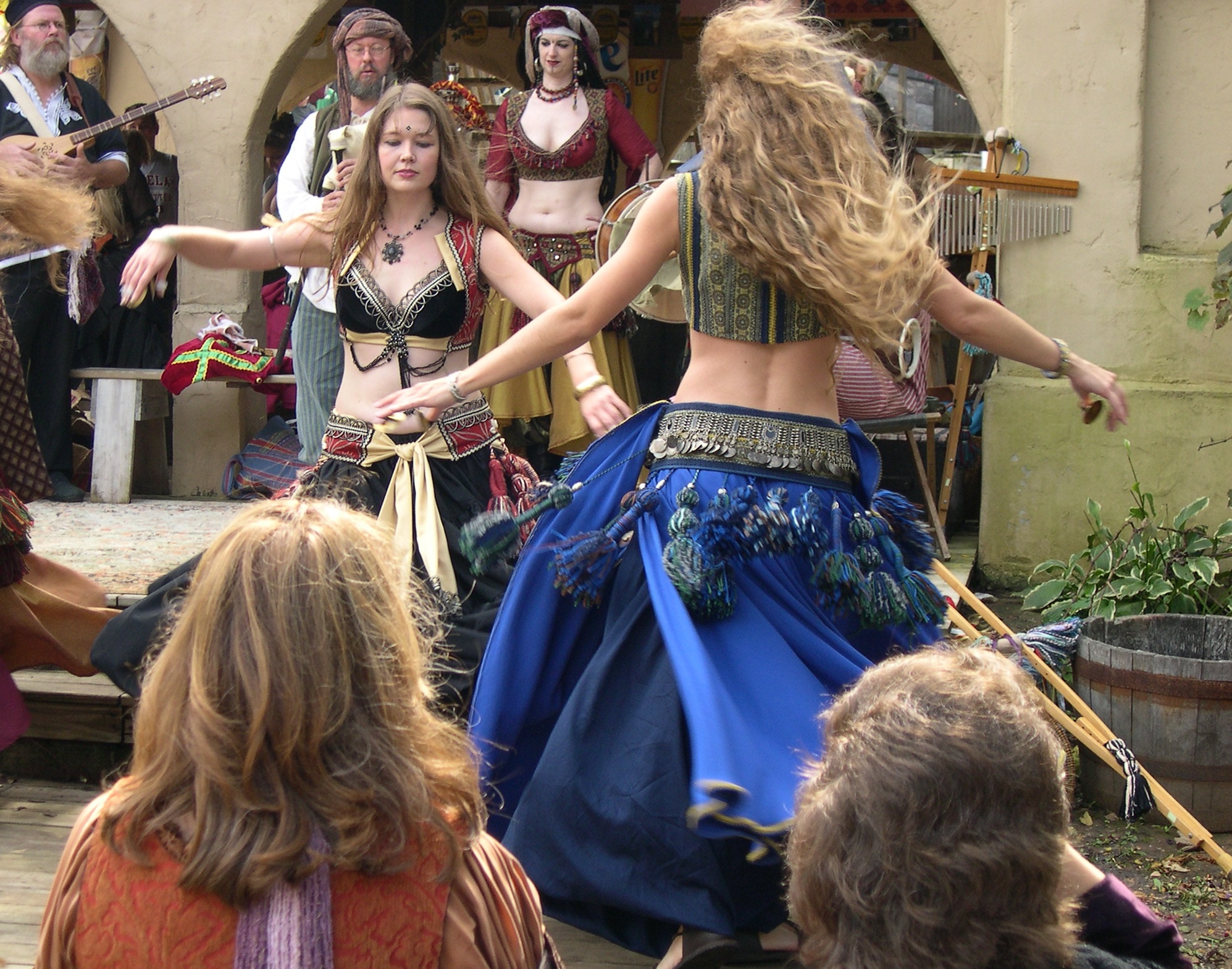
belly dancers for CWG croppedLast month, I talked about beginnings and how important they are to drawing the reader in to your book. It seems appropriate to continue on to story middles today.

Middles ought to be pretty simple. After all, it’s the stuff that happens between the beginning and the end. Many authors, however, struggle with middles. There’s a term for middles that lose their direction and energy: the dreaded Sagging Middle.

How do we keep our middles on task, doing the unsung but necessary work of getting the reader to the end of the story? How do we keep the energy high? Most important, how do we keep the reader engaged?

It’s best to step back and look at the big picture first. What is the underlying theme of your story? Is it clear and evident in every scene, though it’s likely never stated outright? Theme should be the basis for every action that takes place, every decision a character makes, and even descriptions of setting. Every word you use can and should further the development of the theme you’ve chosen. For more on THEME, click here.

Next, what about story structure? If you’ve built even a rudimentary five-sentence outline of turning points for a particular story, it is much easier to keep the individual scenes pointed in the right direction. No ambling about aimlessly in the rose garden and boring the readers—unless, of course, the rose garden is critical to both the theme and structure of this story! In that case, amble all you want, as long as there is purpose. For more on STRUCTURE, click here.

Now we get down to the nitty-gritty. Each scene in a story must have tension. This is sometimes referred to as conflict, and always results in suspense. Suspense isn’t defined as horror movie scary stuff; it’s simply a reader asking the question “What happens next” and turning the page to find out.

This is the key to toning up the middle of your book: Every scene and each chapter must have higher and higher stakes for the main characters. Each character has more to lose as the story progresses, and each character is forced into increasingly difficult choices. As situations evolve, and as the characters slog their way through their troubles, they reveal their increasingly deeper secrets to the reader. The characters struggle, and they grow. The reader identifies in some way, roots for them, and is willing to be swept along. For more on ROOTING FACTORS, click here.

One caution: Watch for filler, and ruthlessly cut it. It’s easy to rationalize that since this is the middle of the book, the reader is already caught up in it and won’t put it down, so you don’t have to work quite as hard, and nobody will notice that this whole scene/chapter doesn’t really advance the story; it’s just there because you, the author, like it. Nope. Readers are smart. Cut the scene if it doesn’t advance the story. Cut the details if they don’t advance the story. I know. It’s hard. If it’s too hard, create a file for deleted scenes and put the cuts there so they’re accessible if you want them later. I find that’s sometimes a necessary intermediate step, even though those end up fully deleted later. Human nature is pretty funny!

Once you approach the end of the book (or even at the end of chapters!), resist the urge to tie up loose ends too soon. I admit to that failing as a new author. My first attempts at chapters all had tidy endings. Wrong, wrong, wrong! Every chapter should end with an unanswered question. Analyze your favorite I-couldn’t-put-it-down book. What created that quality? I’m willing to bet it was ever more crucial unanswered questions, and lots of loose ends. For more on TENSION, click here, and for more on HOOKS, click here.

What tips do you have to share regarding middles? I’d love to hear a new take on the subject!

A blessed Christmas Eve to all

Luke 2: 1-20 The Infancy Narrative

NativityIn those days a decree went out from Caesar Augustus that the whole world should be enrolled. This was the first enrollment, when Quirinius was governor of Syria. So all went to be enrolled, each to his own town. And Joseph too went up from Galilee from the town of Nazareth to Judea, to the city of David that is called Bethlehem , because he was of the house and family of David, to be enrolled with Mary, his betrothed, who was with child. While they were there, the time came for her to have her child, and she gave birth to her firstborn son. She wrapped him in swaddling clothes and laid him in a manger, because there was no room for them in the inn.

Now there were shepherds in that region living in the fields and keeping the night watch over their flock. The angel of the Lord appeared to them and the glory of the Lord shone around them, and they were struck with great fear. The angel said to them, “Do not be afraid, for behold, I proclaim to you good news of great joy that will be for all the people. For today in the city of David a savior has been born for you who is Messiah and Lord. And this will be a sign for you: you will find an infant wrapped in swaddling clothes and lying in a manger.” And suddenly there was a multitude of the heavenly host with the angel, praising God and saying:

“Glory to God in the highest and on earth peace to those on whom his favor rests.”

When the angels went away from them to heaven, the shepherds said to one another, “Let us go, then, to Bethlehem to see this thing that has taken place, which the Lord has made known to us.” So they went in haste and found Mary and Joseph, and the infant lying in the manger. When they saw this, they made known the message that had been told them about this child. All who heard it were amazed by what had been told them by the shepherds. And Mary kept all these things, reflecting on them in her heart. Then the shepherds returned, glorifying and praising God for all they had heard and seen, just as it had been told to them.

We, too, keep all these things, reflecting on them in our hearts, and give glory and praise to God for all we have seen and heard, just as it has been told to us.

Merry Christmas