From the President’s Desk: NFP Week and Catholic Writers Conference Live

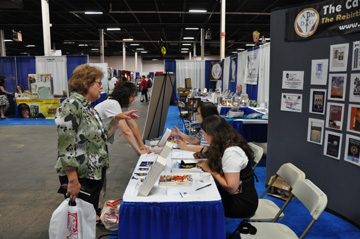
James and I teaching an online (virtual) NFP class

James and I teaching an online (virtual) NFP class

In case you didn’t know, we are coming to the end of NFP Awareness Week.

Before I became President of the Guild…even before I started my writing career, I taught Natural Family Planning (NFP). This year, my husband and I will mark our 30th year teaching NFP. My passion for promoting Natural Family Planning and Saint John Paul II’s Theology of the Body is what prompted me to start writing fiction. Since this is NFP Awareness Week, I’d like to first share a few of my NFP-themed blog posts from this week:

Theology of the Body in a Nutshell

The Spiritual Works of Mercy – TOB Style

Theology of the Body Fiction

When I self-published my first book nine years ago, I joined a local (secular) writers’ group. At the first meeting, they asked me to introduce myself and when I said I had five children, I heard a few gasps and perhaps a scoff. Someone said, “With five kids, where did you find time to write a novel?” I remember thinking, “Five kids isn’t all that many.” It wasn’t that they weren’t welcoming; they were nice enough, but I had little in common with the members. I attended a few more meetings, but eventually decided to stop going.

Soon after, I found a Yahoo group called “Catholic Writers Online.” I looked forward to the posts of fellow members, but rarely posted anything. A few years later, some of the Catholic Writers Online members started a group called the Catholic Writers Guild. Knowing they were “faithful to the magisterium,” and knowing I wanted more interaction than daily emails, I joined the Guild in early 2008 and I really felt like I had “come home.” These were writers with whom I shared a common faith and common goals. There were online conferences and in 2009, the first live conference.

The (Sixth) Catholic Writers Conference Live is just around the corner. I’m looking forward to meeting, networking and just chatting with other Catholic writers next week in Schaumburg. If you’re attending, please come and introduce yourself to me (I’ll be the short one giving orders). If you’re not attending, please pray for a successful, safe conference.

With Karina during our book signing. 2009 Trade Show/Conference

With Karina during our book signing. 2009 Trade Show/Conference

As always, please let me know if you have any questions, comments and/or concerns: president(at)catholicwritersguild.com

Ellen Gable Hrkach
President, CWG

Cheerleading! Mutually Beneficial Author Support

Cheerleaders Doing Routine --- Image by © Royalty-Free/CorbisThere are a lot of us out there. Authors. With great books to share. Too often, though, we feel alone in our endeavors, trying to get readers to notice us in the roiling sea of other great books. This is a great time to be a writer! It’s more possible than it has ever been to publish a book. But that means that all sorts of other people are doing the same.

Whether you are independently publishing your work, under contract with a traditional publisher, or working with a small, online press, the business of marketing one’s work falls more and more upon the shoulders of the author. “But I just want to write,” you say. Hey, I’m with you. Me, too. But that’s  not our reality anymore.

How do we get “out there” where someone might notice?

First, write a quality book, no matter the genre. If you’re publishing independently, surround yourself with an expert team of editors, formatters, and cover artists. First impressions matter. Don’t give the reader a reason to skip past your book; give them a reason to stop and look at it, really look at it. Hopefully, they’ll be intrigued enough to click the ‘buy’ button.

Then, the meat of this post: Network. Before you ask people to spread the news about your book, make sure you’ve nurtured relationships with them, and have crowed about their successes. You can do this well before you are ready to publish your own work; in fact, that’s the best time to create these relationships. Have you gone to Catholic Writers Conference Live? Or participated in the online CWG conference? How about the Writing Retreat? Or any other writing focused activities? What about the CWG Facebook page? Have you interacted with other writers in any of those venues? I hope so, because that’s crucial for the next step, which is:

Celebrate with them! Post their new releases or awards on your Facebook page. Use your blog or Twitter to let your followers know there’s something available that’s worth their time. If you’re on Twitter, find and follow some entities that reflect your interests; they may reTweet for you and expand your reach.

Buy and read your friends’ books, and then review them on Amazon and Goodreads. *Caveat: Always say something nice, or don’t post a review. This does not mean you can’t be honest, but be honest in a kind manner. Personally, I never give a review with less than four stars, and even if I didn’t like everything about the book, I focus on what I loved about the book—or, if it’s in a genre that’s not  my favorite, focus on what readers of that specific type of book will enjoy about this particular one.

Here’s an example of how this might work. A few weeks ago, Erin McCole Cupp contacted me because I’d done a cover reveal on my upcoming release, Hijacked, on CWG’s Facebook page. Would I like to trade read and reviews with her? She’d recently published Don’t You Forget About Me, a cozy mystery. I said yes, and posted reviews on Amazon and Goodreads. She upped the ante and asked me to be an interviewee on her blog the week my book comes out. I said yes (!), and then tagged  her on a My Writing Process blog tour/relay. With any luck, some of my readers will be interested in her work and some of hers readers, in mine. That’s just with two authors! Imagine what can happen when more get in on the fun!

(And did you notice what I just did? I linked Erin’s website and the Amazon link to buy her book to this post. I purposely do this for everyone I mention on both my CWG and personal blogs. What goes around comes around…)

Join writing organizations and establish relationships with authors you respect. Be a cheerleader for them, and hope they’ll return the favor when it’s your turn. Yes, it’s time consuming, but it is well worth the effort—not just because they’re going to help you sell books, but because they are wonderful people and their friendships enrich your life.

Are you feeling a little less alone now? I hope so! If you’ve had success in the arena of networking, please share your story! What are the elements that contribute to that success?


Catholic Writers Conference Live! A Two-fer Blog for conference goers (and stay-at-homers)

Are you headed for this year’s Catholic Writers Conference Live? If you are, check out my blog from last year regarding conference etiquette. It was good advice then, and I can’t think of a thing to improve on it. Just substitute the words Somerset, New Jersey for Arlington, Texas.

If you’re not able to go to the conference, you can still share in the excitement and even network. Go to http://www.catholicwritersconference.com/ and see who’s going to be there. If a particular publisher or presenter interests you, go to their website and see if they have a Twitter account – and then follow them. It will quickly become clear who is tweeting and which threads have value for you and your situation. You can even jump in on conversations if you have salient points to contribute. One caveat here: Unless someone invites such, do not pitch via Twitter. And, as always with social media, remember to keep your tweets polite and on-subject.

Are you one of the lucky ones going to the conference? Tweet, blog, and Facebook your experiences. Engage your followers and create a ripple effect that no one else can. Encourage questions and/or discussions that you can facilitate simply by being present at the conference. Get on the Catholic Writers Guild blog and website. You have much you can share.

Like so many other enterprises we undertake as Catholics, it’s not ‘all about me.’ Be generous with your abilities and presence, whether it’s at the conference or from home. Support each other at the conference, and share with those unable to come. This is a unique opportunity to live your faith – evangelization in an unanticipated form!

Let’s all make this year’s Catholic Writers Conference Live the best ever!


Dismantling Writer’s Block

Writer’s block.

I don’t believe in it.

Okay, I’ll hedge that a bit.

All writers have moments when the words don’t come, or they have to be pried out of our brains like candy out of a three-year-old’s grasp. I do acknowledge that fact. Those moments are not fun.

Those moments are always uncomfortable, even anxiety-provoking.

“Writer’s block” is a great excuse when you need one.

But I’ve learned that when I run up against the dreaded blank-page-combined-with-blank-brain syndrome, rather than “try harder,” I need to dig deeper.

For me, writer’s block is a symptom, not a disease. It almost always shows up when something else is wrong.

I’ve run up against it twice in the past couple of weeks. The first time, I was working on revisions to a book length manuscript. The rut began to form when I tried to revise in accordance with a critique partner’s suggestions. Mind you, there was nothing at all wrong with her suggestions; I understood and agreed with them. And yet the more I tried to comply, the deeper the rut became, until I was stuck.

When I finally stepped back and reevaluated, I decided to trust my own instincts and disregard the advice. The floodgates opened. Ta-da! No more writer’s block.

The other instance was when I was trying to write a post for a guest blog appearance. I got so tied up in how awesome all the other guest-bloggers were (and how hard it was going to be to compete with them) that I couldn’t think of a subject to write about. Fear of the unknown kept my fingers off the keyboard, with that blasted cursor mocking me.

And then I recognized what I put in parentheses in that paragraph.

I know better than that! At a simple decent-human-being level, or at the level of maturity befitting the color of my hair, I know better than to compare myself to others. And at the level it matters most, as a Catholic Christian believer, I know that we are all given the exact gifts God wants us to have. I can entertain exactly zero envy over the other bloggers’ humorous or clever or passionate posts. Once that flash of insight came, I was able to write.

Here are some of the tools for dealing with writer’s block I’ve discovered over the years, none of them my own, by the way. I credit the many authors who traveled ahead of me with these ideas!

1.       Give yourself permission to write badly – and then write. The words you tap out on your computer are not etched in stone. You can delete what doesn’t work later, so just start putting words on paper, so to speak. I’ve often started out with “I have no idea what to write next, but I have a sense that such-and-such character might do/say this, or that plot idea might happen.” Within a few sentences, it usually morphs into something I can work with. The unanticipated gift of this method is that I often discover a gem that livens up the story.

2.       Get out of your own way. Figure out what’s wrong. If there are underlying issues, acknowledge and face them. If fear has you paralyzed, stare it in the face and then stomp over it. We are all insecure. We all fear failure, success, taking a risk, criticism, making a commitment. Deal with what ails you, and then write anyway. If there’s something wrong with the manuscript, try writing the scene from a different character’s perspective or go a different direction for a while.

3.       Change your scenery. Get up and walk away from the computer. (I can’t tell you how many times a solution came to me as soon as I shut down the laptop and stood up!) Even better, go outside. Smell the flowers. Let the sunshine warm your face. Listen to the raindrops on the street, the leaves, the roof. Go to a museum, or a movie. Go to the zoo and watch people watching animals. Go to the mall and make up outrageous stories about the people walking by.

4.       Get physical. Go for a walk or a hike. Dance. Play a game of tennis or hopscotch or go for a bicycle ride. Anything to get the blood flowing in your muscles—and in your brain.

5.       Write something else. Write a thank you note or an email or an honest-to-gosh real live, old-fashioned letter! Free write, or use a writing prompt. Write fiction if you’re stuck on a nonfiction piece, and vice versa. Interview your characters; ask them what they want you to know.

6.       Do something creative with your hands. Draw or paint a picture. Do it with your non-dominant hand. Make a quilt square or embroider the beginning of a pillowcase design, if you like fabric arts. Cook something really yummy from scratch, and enjoy the aromas and textures along the way. Garden, whether it’s indoor or outdoor. Write something longhand. Try that with your non-dominant hand!

7.       Engage with another human being. Hey, we’re writers. It’s a solitary activity. Sometimes we forget how much we need to connect with others. Take a break and play with a child. Talk with your spouse and make eye contact. Volunteer, officially, or just lend a helping hand. Go out for coffee with a friend, or invite another family over for dinner.

Rather than a curse, writer’s block can be a blessing. Listen to it. Let it tell you what you need to do, or not do.

Just don’t let it be an excuse to keep you from your passion.

How do you identify writer’s block? What strategies do you employ to get past it? What have you learned from it?


A closer look at blogging stats and how to improve them

This is the third installment of my Blogging 101 series. I’ll be posting on alternating Wednesdays here and addressing a few different topics:

Today’s topic covers a closer look at stats and how to improve them.

Sometimes, when I get too busy numberizing, I start to wonder if it’s worth it. I mean, why am I here, the small fish in the big pond? That’s its own discussion, really, and I’ve torn into it again and again and again.

So let’s talk stats, despite my reluctance to get all neurotic.

What are stats?

Statistics, including how many people are viewing your site, what posts are most popular, and what color you should wear. There are a variety of different programs and add-ons for this, and we’ll cover stats in more depth in a future post in this series.

SEO refers to search engine optimization, or “how you get people to find you,” although that makes it sound more important than it is. Wait, it IS important. But it can also be distracting. Just like stats.

How can stats help a blogger improve?

They can be a guide of sorts, introducing you to your audience and what they like to read of your writing. You can gain insight into where people are finding your posts and clicking from (i.e., from a link at someone else’s blog or an aggregator site).

They can also show you what topics and posts are popular. You can leverage this information in a number of ways. You can use it to do more of the same or to grow beyond what’s getting attention. You can

They can be misleading. Sometimes, I have a lot of traffic on a post, and I come to find out that I have an image named “mother” during the first week of May and wow, there it is for everyone to find via Google Images. Then again, back when my most popular post of all times was about a huge family tragedy, I took it to mean that people had morbid curiosity and only came to visit my blog because there was blood on the floor, so to speak. (A friend set me straight when I voiced that and said, “Wow, what a caring community that they came and “visited” when you most needed prayer!”)

What are some ways to improve your stats?

Improve your post titles. On the one hand, you’re telling people what to expect. Maybe that means you’re cutesy and clever. Maybe it means you’re straightforward. Maybe it means you’re a mix of everything. (Can you tell I have mixed feelings about this?)

Make sure you are interacting with the readers you already have. Respond to their comments, invite them to leave comments, engage them. If you have people who read and comment via a social network (i.e., Facebook or Twitter), engage. Talk. Share.

Interact elsewhere online, including reading other blogs and commenting. For me, this ALSO means a few of my social networking circles, too. In the last six months alone, this has really changed who’s coming to my blog and how they are responding to me.

Read the blogging blogs and decide for yourself whether to take their advice. Yeah, I have mixed opinions. But I read it, in part because I’m interested and in part because I’m a bloggy-geeky type.

Write for your audience…and for yourself. Guest posting is a way to blog elsewhere and get known (but do it well!). There’s a temptation to turn into “more of the same” and not grow. There’s also a temptation to never pay attention to what resonates. There’s a fine line you walk (or type?) as a blogger…be aware of that

Get known for something, differentiate yourself. Easier said than done, sometimes (often?). I would argue that it takes years, but maybe if you’re focused it doesn’t have to. My experience is that it takes time to get good. You can put those hours in now or over the next few months, years, whatever.

How do you keep your perspective?

Be realistic. Stats are numbers, and numbers are important, to a point. They are useful, to a point. They are a tool to be used, to a point. If you have any sort of tendency toward obsessing or splitting hairs, maybe stats won’t be helpful. (I may or may not be speaking from experience…)

Set goals, have high standards, and don’t settle for less than the best from yourself. I say this at the risk of sounding like I’m in a high school leadership class, I know. Even so, there’s something to be said for living in the present while aiming for the future. Sometimes. 🙂

Revisit your blogging purposes. They can and do change over time. When you find yourself frustrated with your stats, consider whether it’s time for a change—in scenery, in approach, in something.

Blog traffic is NOT the same as book sales. Since we’re an audience of authors, this is a point you should remember. Blog traffic can help. And being a constant commercial for your book is annoying and won’t help anything.

From the archives:

The simple steps to getting a blog

This is the second installment of my Blogging 101 series. I’ll be posting on alternating Wednesdays here and addressing a few different topics:

Today’s topic covers the simple steps to getting a blog.

1. Pick your platform.

The platform is the back-end that you’ll use to publish your content. Here are the two I have experience with (and the mention of a third):

Blogger – I spent many years on Blogger, and in fact, this blog is hosted on Blogger. It’s easy to use and easy to get started with. If you decide to move to another platform, it’s relatively easy to migrate your posts, but you could start and stay with Blogger, I think. It’s also tied in with Google, so there’s search engine optimization that happens automatically (or so they say).

WordPress – WordPress has really become popular in the last couple of years, and it’s because it is a very versatile platform for websites in general. There are a lot of free templates to let you choose and customize how exactly your blog looks and a great community of helps and tips. Highly recommended as a website solution. It will probably take a little getting used to and need you to read or watch tutorials.Other Platforms

I don’t have any experience with any other blogging platforms, but TypePad always seems to make the top three lists and seems to be easy to use and to make a nice finished look. If you have other recommendations for blogging platforms, please include them in the comments!

2. Choose your hosting.

Do you want to have your own website (which costs money) or just use the free service? If you want a custom website address (also known as a domain name or URL), you’ll have to spend some money for hosting.

There seem to be two popular options: Bluehost and GoDaddy, though I’d love to hear more in the comments.

You can register your domain name and do an installation of the full version of WordPress with both of these providers. You may also opt to have custom email (i.e. [email protected]) hosted as well.

In both of these providers (and probably any others you’ll find), you have the option to have a “site builder,” which is a guided set-up process and helps you learn the ropes.

3. Do what you do → WRITE!

Yes, there is a bit more to it than just that, but only as much as you want there to be. You can have fancy sidebars with blogrolls and even widgets of content. But you don’t have to.

For more on this topic:

Don’t Be Scared Away from Blogging!

In the comments to my first installment of Blogging for Beginners covering 3 questions to ask consider before you blog, Colleen Duggan made this observation:

There’s so much talk today (in general, not from your post specifically) about building a platform, audience and brand that I think it can scare real writers away from buying a domain name and setting up shop.

It’s ok to start a blog, one that is very small, to develop the writing craft, experiment with who you are as a writer, and figure out your voice. I think blogging helped me with this very thing and it’s been a great gift. Your point is a good one–knowing why we are blogging–but if someone out there wants to blog just because, I think it’s great.

I read Marian Roach Smith’s The Memoir Project over the weekend and she suggests one of the best reasons to write down our stories is so our families can have them. If that’s not a reason to continue to blog (even if we aren’t “big”) I don’t know what is.

Colleen makes a GREAT point, and she reminded me of why I started blogging and why I continue to blog: I just plain like it. It’s my space, it’s my voice, it’s my chance to do what I do.

Blogging can be a business and, honestly, I’ve resisted that. For me, as for most of us in the Catholic Writers Guild, I think, blogging is writing.

My goal with this series and with my writing here on the Guild blog is, first and foremost, to encourage other writers and share what I’ve learned and observed. A lot of this–as with so much else in the publishing world–is hit or miss. A lot of it is opinion.

At the end of the day, as we look at ourselves as Catholic writers, it is our vocational call that should motivate us. I’m a wife and mother before and while I’m a writer.

What do you think? 

Go ahead, let’s talk about it. Because this is a conversational piece, FOR SURE. 🙂

3 Questions to Consider Before You Blog

This is the first installment of a series I’m going to call Blogging 101. I’ll be posting on alternating Wednesdays here and addressing a few different topics:

  • 3 questions you should consider
  • The simple steps to getting a blog
  • A closer look at stats and how to improve
  • Four strategies to stay sane

Today’s topic is 3 questions to consider before you blog.

1. Do you need or want a blog?

What’s your motivation? Can you maintain it? Are you meeting a need of your own (or your audience’s) or just fulfilling a desire?

There’s not a right or wrong reason, but I believe it’s good to go into this with your eyes open. Blogging is a lot of work, especially if you don’t like it.

2. What tools will you use?

There are two main tools you need to consider: the platform and hosting. They’re both “back-end” considerations, but it’s worth doing a bit of research to get a feel for what will work best for you.

Platform refers to the software/interface you use to write your blog posts. The three most popular are Blogger, TypePad, and WordPress, though there are others. I’ve only used Blogger and WordPress.

Hosting refers to how your blog will “live” on the internet. Do you want to have your own website, which costs money, or use a free service?

All three of the platforms above offer a free hosting option, and you can also use any of them with a custom url (i.e. MyCustomURL.com as opposed to MyCustomURL.wordpress.com).

3. How often will you post?

Blogs are, by their nature, updated on a regular basis. Since it’s your blog, you can determine what your posting frequency will be. And you can change it.

What can you handle? Will blogging be a writing exercise for you? Could it be a fun diversion?

And, in case this whets your appetite for more about blogging, here are some from the archives:

Feel free to chime away with questions and comments in the combox…

When enough is ENOUGH

A few weeks ago on Google+, I came across a comment that struck home with me.

Someone had written (slightly paraphrased):

Catholic blogs: so that one more person can comment on the Pope’s abdication and what Pope Benedict means to them.

Please STAAAAAAAAHP!

What made me +1 it was that I related. While I have been a total, completely uncharacteristic newshound since Benedict’s announcement on February 11, I’m sort of “done” with opinions about it.

That comment got me to thinking, though…sometimes, I don’t always recognize when I’ve had enough of something. I’ll keep going, often to the detriment of those around me (in real life and online). I just chug, chug, chug along, plowing through and not caring who or what I’m stepping on.

Recognizing when enough is ENOUGH is handy. Here are three ways I know when I’ve had enough:

1. When I’m getting angry.

Anger is a symptom for me. When things online–whether blogs, my own writing, social media content, whatever–are getting my dander up and my growling going, it’s time to call it enough. Done. Pause. Walk away.

2. When I’m neglecting the present and my primary vocation.

This is me talking to me: I have to remember the now, which is where I’m called to be. Maybe it’s time with my husband, maybe it’s care of children, maybe it’s my paying work. But my primary vocation and the present must not be trumped by the demands of my blog (or my social media presence, for that matter). I fail, yes. And I struggle.

3. When I’m talking out loud to my computer.

Sometimes this one happens because I’m so amused, though it can happen because I’m irate, too. I might be muttering to keep track of what I’m doing. But it’s usually a sign that there are frayed nerves or the need for fresh air.

So, chime in: how do you know when enough is ENOUGH?

A Project that Needs Your Help

Back in May 2006, I started my blog on a whim and a prayer.

And over the years, as both my confidence and my numbers have grown, I’ve come to appreciate that, more than anything, it’s about the people.

One of the relationships I’ve come to treasure in those years is the one that’s grown with the gracious and lovely Lisa Hendey, founder of CatholicMom.com. In the years since I first cracked open my first blog post, Lisa has been a mentor, a guide, and, best of all, a friend to me.

When my most recent book was proposed as the first of the CatholicMom.com Books, I was, first of all, immensely humbled. Right on the heels of that, though, was the excitement of putting one of my favorite websites on the covers of a book that I had poured so much of myself into.

This Lent, I find myself once again humbled by the work I get to do with Lisa and CatholicMom.com. Thanks to the generosity of both Lisa and Ave Maria Press, we have an awesome initiative:

I’m learning about how my little blogging–which started as a way of keeping myself accountable for daily writing–has turned into so much more. Lisa’s own work over at CatholicMom.com began as a response to a need in her community.

If you’re inclined, I’d love to have your support for this project. Whether you’re in a position to donate and help us meet our goal or if you can offer a prayer or three, know that we greatly appreciate your participation!