
A Weary World: Wuthering Heights and the Art of Hoplessness

There is certainly something to be said for reading seasonally “charged” stories in the seasons they are connected to. The ability to connect and relate to the story and characters seems to increase exponentially! The first time I attempted a springtime reading of Emily Brontë’s Wuthering Heights, the story simply did not click – it wasn’t engaging enough to keep me going. There was something about taking up the book again in the chill final days of November that transported me into the novel’s harsh, cold winter of northern England. Not only did the physical landscape of the novel come alive in my mind, but the emotional and moral aspects have lingered with me ever since as a fitting meditation for Advent and the expectation of Christ.

Given the literary arguments surrounding Brontë’s novel, it might be odd to take the novel as a deeply Advent-themed tale. Any blatant reference to religion throughout Wuthering Heights, especially as found in the servant Joseph’s sermons, is negative at worst or indifferent at best. The ever-present reality of death hardly inspires aspirations towards heaven in any of the characters. So how could such a bleak spiritual landscape point to the joy and hope of Advent? I would argue that it is in the very hopelessness and hardness of heart that propels the plot of Wuthering Heights that we find a form of Advent’s longing for Christ.

Looking back over the plot from “The End” side, one could see it all as a microcosm of Salvation History. In the beginning, the first Mr. Earnshaw makes the original fault of bringing in a foreign child, Heathcliff, and choosing to favour this child over his own offspring. Such original fault is not the same as Adam and Eve’s disobedience, but it taps into a similar selfishness. Rather than acting as a true father figure in his family, Mr. Earnshaw chooses to love something that he, and not the natural order of family, has put in his care. The result is an enduring rift in family life, which leads to violence and death. A break in the cycle of abuse and death, together with the renewal of beauty in the hereditary houses of Wuthering Heights and Thrushcross Grange, only comes with the removal of the slightly demonic Heathcliff. 

The sense of hopelessness for the afflicted Earnshaw family might offer a glimpse into the dark days when the house of Israel waited for its messiah. Just like Heathcliff’s evil cunning and strength, powers of darkness, embodied for Israel in hostile foreign nations, always arose in war and oppression over God’s people. A large portion of Israel’s history was also riddled with internal division between Northern and Southern kingdoms, much as the house of Wuthering Heights was fragmented by the action of the first and second Mr. Earnshaw. One appreciates the birth of Christ as Savior much more when reminded of how dark life is without Divine help, and such is the depraved state of life in Wuthering Heights.

When Divine help does come to Wuthering Heights, it is through the supernatural intervention of Cathy’s ghost, invisible to all but Heathcliff himself. The happiness and light that follows is very simple and nothing extraordinary in itself. Without knowing the dark background, one would not be surprised to see the joy of young love blossoming between Hareton and Catherine at the conclusion of the story. But if one has read through the drama and darkness that both Hareton and the second Cathy have experienced, there is a sense of miraculous happiness and fulfillment. 

Such is the joy of Christ’s birth in time. One does not at first realize how important is the birth of a baby in a stable, but if that child is God Incarnate, born of a miraculously Immaculate Virgin, his birth changes everything. As the ancient “O Antiphon” for this day phrases it, Christ is the “Radiant Dawn” which quietly breaks into humanity’s cycle of sin and violence. For Israel and the family at Wuthering Heights alike, the longing and prayer that God will “come, shine on those who dwell in darkness and the shadow of death” is profound and almost desperate. Light and dawn are both everyday items, but when filled with God’s grace in the face of evil, they are welcomed as miraculous. Christ coming as the dawn brings, as that oh-so-accurate line in “O Holy Night” puts it, “a thrill of hope” over which “the weary world rejoices.”

For writers, I believe it important to delve into the riches of our forerunners in the canon of great literature. Emily Brontë has something to teach us, not only as a spiritual meditation for Advent, but also as a good storyteller. One might draw from her example of infusing her story with hopelessness and know that every good story ought to have a taste of darkness and despair. I would not suggest everyone explore the same depth of darkness and vengeance that Miss Brontë delves into, but a streak of despair before a burst of hope will serve any story well.

May we all experience the thrill of hope that Christ brings this Christmas.


Copyright 2025 Maggie Rosario

Edited by Janet Tamez

The Cookie Burn

“Look,” I said, holding my pointer finger. I showed my four-year-old son a small burn I had gotten from baking cookies the night before, hoping to get one of his sweet kisses on my boo-boo. Instead, the first words that came out of his mouth were, “I told you not to bake cookies.”

In reality, he didn’t. But what shocked me wasn’t the lie; it was the way he echoed back my own words toward him. This “I told you so” reaction was a morning wake-up call I wasn’t expecting. It made me come to grips with how I am raising my children. Instead of offering a kind or compassionate word, his “I told you so” showed me that I was doing a bad job raising compassionate kids.

As parents, it can be easy to default into authoritative mode; to reprimand every fall, mess, or mistake a child makes instead of offering an encouraging word or a compassionate hug. When I replayed all the “I told you so’s” I say in a single day, I realized that if someone kept a tally, it might be the main form of communication I have with my children all day. What starts as a habit can quietly become a disposition.

It reminded me of my years as a middle school teacher, dealing with coworkers who were unable to turn off their “teacher voice”. After spending eight hours as an authoritarian, saying phrases like, “Raise your hand. Stay in your seat. Spit out your gum. No, you may not go to the bathroom. No talking. No running in the halls,” they were unable to turn it off. They were condescending to colleagues, parents, and other adults in the school building. 

I decided in that moment to do my best to break this habit. This meant not only reflecting on my communication with my children, but also in other areas of my life. It meant looking at how I spoke to my spouse, how quickly I judged strangers, how I reacted to inconveniences, even the tone in my writing. Children absorb everything – the way we yell at drivers (“What is this guy doing?” “Use your signal!”), our impatience at the grocery store, the way we rush past the elderly in an aisle, or neglect to hold a door.

As parents, we need to understand that we are shaping our child’s inner voice. Just as my son gave me an “I told you so” instead of the little wet kiss I was hoping for. We often hear that today’s parenting style is too soft, that kids these days need discipline. Instead of arguing between the old and new schools of parenting, we should use Jesus as our example. Jesus formed, not dominated, the disciples. He told stories, not lectures. Jesus led with love and mercy, not law and punishment.

I work at a Catholic university, and part of my job is to lead like Christ. This is why I was surprised when a student told me about a bad experience she had with a professor. She was two minutes late to class, and the professor told her to leave. I have been an educator for over ten years, and I totally understand setting the tone and respecting the class. But in this case, the student was a college freshman. It was her first day, and she was late because she got lost trying to find the room. Moments like these are when we should ask ourselves: Do I correct more than I connect?

As Catholic writers, we should think about the tone and message in our writing as well. Are we correcting or truly connecting with our audience? Do we slip into an authoritative voice? How are we evangelizing with our storytelling? 

That burn on my “I told you so” finger was a reminder, almost like the scarlet letter, of what I was becoming—a harsh mom. Unlike Hester, I don’t have to wear my burn forever. In fact, it’s already healed and barely noticeable. But my son’s words are pressed into my mind like a cookie cutter. His silly scolding — “I told you not to bake cookies” — showed me that my own words were lacking compassion. His comment was the little dash of truth my cookies and I needed. Mercy isn’t something you’re born with. It’s something you practice, just like baking. Next time, I won’t be baking, not because my son “told me”. Instead, I’ll just pick up a neat little box of ladyfingers — the perfect treat for a mom whose fingers clearly need spiritual formation. 😉

copyright 2025 Janet Tamez

Caleb, A Shepherd of Bethlehem

Caleb brushed aside the dust with his fingers and, leaning closer to the stone, blew away more particles. Joseph handed him the smallest chisel, and Caleb gently hammered in the fine lettering to finish the inscription on the stone lintel above the door of the house.

Stepping down from the ladder, Caleb collected the tools and joked with Joseph about the likelihood that the high priest might not pay them for the job. One more day of work in the holy city of Jerusalem and then they would travel home with others, to Nazareth for Joseph, and Bethlehem for Caleb.

For twelve years now Caleb had worked with Joseph, first as his apprentice, and then as a friend and fellow craftsman. Caleb often reflected on the extraordinary night twelve years ago when he had first met Joseph:

the night Mary had given birth to Jesus,

the night Caleb had been working in the hills of Bethlehem as a shepherd,

the night that was his 13th birthday,

the night when heaven showed its face and Caleb and the other shepherds had heard the voices of angels,

the night they had come to the cave to see the child the angels said would be found in the manger,

that singular night when Caleb became a man, a new man, a man of God.

Joseph had taught Caleb carpentry, and masonry, and stone carving. He also taught him to pray, to work as a form of prayer, and to read, so that Caleb might read the holy scriptures.

Joseph had also taught Caleb to listen:

to the wind,

to meanings underneath the voices of men,

to the silent stirrings of his heart,

to the messages of God that come in unexpected ways.

Caleb had traveled with Joseph, Mary and Jesus and other villagers to Jerusalem, to festivals, to job sites, and to the hills for rest and quiet. He had also continued his work as a shepherd, to be close to his father and his friends. He sheared the sheep and brought the wool to Mary. She wove wool and linen into marvelous creations.

“What will you weave next, Mary?” Caleb asked.

“Oh, I’m thinking of some things for Jesus now, and for later,” she answered.

Caleb later taught Jesus many of the skills he had learned from Joseph, when he and Jesus started to work on jobs together. Jesus was now the age that Caleb had been when he first met him. Caleb, and then Jesus, took on new apprentices to train as the years progressed.

Caleb owned a grotto next to his home in Bethlehem. Inside the cave he had carved a burial tomb for Joseph, and he chiseled a small prayer on the stone that covered the narrow opening, showing it to Mary, before Jesus and Caleb carefully laid Joseph down for his rest.

When Jesus began his public ministry, Mary and a group of other women would sometimes travel with them. Caleb occasionally would travel from Bethlehem to Nazareth to watch over Mary’s home when she was away.

Mary had woven an ingenious tunic for Jesus that seamlessly wove about him and adapted to various kinds of wear. Caleb had been perplexed, though, by a piece of linen she created that was roughly 14 feet long, and more than 3 feet wide. He knew that it was something special, so he built a cedar box in which Mary carefully folded the cloth.

One day when he was alone at her home while Mary was away with Jesus and the others, Caleb opened the cedar box and stared at the mysterious cloth. Placing his hands on the cloth, he prayed that somehow God would give a glimpse of Himself through that cloth, so that others might have a glimpse of heaven, just as Caleb had on a hillside of Bethlehem on a cold and silent night so long ago.


copyright 2025 Tom Medlar

Bear Fruit this Winter

“Not everyone who says to me, ‘Lord, Lord,’ will enter the kingdom of heaven, but only the one who does the will of my Father in heaven.” (Matthew 7:21)

We’ve just begun the season of Advent. It’s a time of preparation but also a time of healing, sharing, and reaching out to others. There is so much we can do, in ways both large and small, to have an impact on the lives of others. Take your children to drop off gifts at a homeless shelter or a prison. Support your local organizations that help those in need (look for a St. Vincent de Paul Society near you and ask how you can help). Bake cookies for the shut-in across the street, and spend time with her when you deliver them. Call an old friend or family member you haven’t seen or spoken to in a while. Let go of old grudges, and forgive. Open your heart to the relatives you’d rather not spend time with or those far away. Ask them how they are, and let them know you care.

It’s not enough to sing songs of goodwill and peace on earth if we aren’t living lives of goodwill and peace. In fact, it’s kind of like the two missing verses from today’s Gospel.

“Not everyone who says to me, ‘Lord, Lord,’ will enter the kingdom of heaven, but only the one who does the will of my Father in heaven. Many will say to me on that day,  ‘Lord, Lord, did we not prophesy in your name? Did we not drive out demons in your name? Did we not do mighty deeds in your name?’ Then I will declare to them solemnly, ‘I never knew you. Depart from me, you evildoers.’” (Matthew 7:21-23)

We may live good lives and spread cheer wherever we go, but if aren’t doing the will of the Father, what good will that be to us in the end?

Setting the Example

I remember one Christmas, many, many years ago. I might have been seven or eight, but I’m honestly not sure. There was a report on the news about a poor family in DC who not only had no presents but no clothes, no food, and no heat. I think there was a new baby in the house, and the family would be lucky to make it through Christmas. If my parents looked at each other with sadness as we watched the story, I didn’t notice. When they discussed it together later, I don’t know. How they found out where this family lived, I have no idea.

A few days after we saw the report, my father came home and loaded us all into his car. We drove into the city, going to a neighborhood we wouldn’t have entered during the day, not to mention at night. When the mother opened the door, we all stood on her front step with wrapped presents, bags of clothes, and food. I’ll never forget her tears or the way she hugged us all. I’ll never forget the looks on the faces of the little children as they reached for their presents.

Maybe some of these details are a little mixed up. Maybe I invented half of them with the imagination of a child who witnessed something akin to a miracle, but this is how I remember it. I couldn’t tell you what I got for Christmas that year. To be honest, we didn’t have extra money growing up, so it wouldn’t surprise me if some, maybe all, of those wrapped presents were meant for us. What I do remember is that there never was and never will be another Christmas quite like that one.

My parents may not have had much, but they knew we had more than others. They understood Jesus when He said we need to do the will of the Father. They also understood what the Father’s will is—love, to love one another as He loves us.

Willing the Good of the Other

The Church defines love as willing the good of the other. It’s as simple as that. Love is wanting others to be happy, to be fed, clothed, and cared for. Love wants what is best for those around us, even if that comes at some expense to ourselves. Often, the greatest love comes at the greatest expense. “There is no greater love than this, to lay down one’s life for one’s friends” (John 15:13).

How often do we think about willing the good of the other? In today’s world, it seems as though so many people are just out for the good of themselves. Recently, in preparation for an upcoming pilgrimage to Poland, I’ve been studying the life of St. Maximilan Kolbe. Now, there was someone who willed the good of the other in the greatest sense. While serving time in Auschwitz for the crime of being a priest and spreading the truth, Maximilian Kolbe witnessed another man, Franciszek Gajowniczek, being taken away for execution. Gajowniczek pleaded for his life, saying he had a wife and children. Willing the good of Gajowniczek, Kolbe offered himself in the man’s place. Willing the good of the other, Kolbe gave his own life to save Gajowniczek for his good and the good of his family.

By Their Fruits

Unlike Father Kolbe, the acts of my parents most likely will never be known to anyone outside this blog, but their actions on that one Christmas will forever live in my heart. Just before Jesus warns us that not everyone will enter Heaven, He says,

“Just so, every good tree bears good fruit, and a rotten tree bears bad fruit. A good tree cannot bear bad fruit, nor can a rotten tree bear good fruit. Every tree that does not bear good fruit will be cut down and thrown into the fire. So by their fruits you will know them.” (Matthew 7:17-20)

So by their fruits you will know them. By their actions, they can be defined, those who will enter the gates of Heaven. They will be the ones willing the good of the others around them.

Go, and Bear Fruit

Maybe you can’t solve all the world’s problems this holiday season. Maybe you can’t supply Christmas for a needy family. Certainly, the probability of you laying down your life for someone else is low. However, I bet you can do something to brighten someone’s day, to make some person’s or family’s holiday a little more joyous, to bring good to others and their lives.

Look beyond what you see in each person or what you think you know about them, and find a reason to love them, to will good things for them. Then show your love through your actions, not matter how small. When Christmas arrives, you will be more than prepared. You will be bearing fruit during the winter, and the Lord will know you because of it.

Miss no single opportunity of making some small sacrifice, here by a smiling look, there by a kindly word; always doing the smallest right and doing it all for love. (Saint Therése of the Child, Jesus, Story of a Soul)


Copyright 2025 Amy Schisler

Photos copyright 2025 Amy Schisler, all rights reserved.

Watch!

Watch!

Despite a bit of concern that I might start to be viewed as a presumptuous would-be-homilist, I’m reflecting about the upcoming gospel reading again, on this December First Saturday of 2023.

But as a writer, I’ve always been intrigued by diction, the word choices we make to convey what we want to say.

While we have no way of easily confirming the accuracy of transcription or translation in any of the traditional readings for the First Sunday of Advent, the customary gospel uses one word, “watch,” four different times, in three different ways, within a 98-word passage.

Any word used every 24.5 words in a single brief teaching monologue must surely be significant, especially when that teacher was Jesus. So, I feel it’s a worth a little bit of dissection, to consider why Our Lord placed so much emphasis on this one concept.

“Jesus said to his disciples:
“Be watchful! Be alert!
You do not know when the time will come.
It is like a man traveling abroad.
He leaves home and places his servants in charge,
each with his own work,
and orders the gatekeeper to be on the watch.
Watch, therefore;
you do not know when the lord of the house is coming,
whether in the evening, or at midnight,
or at cockcrow, or in the morning.
May he not come suddenly and find you sleeping.
What I say to you, I say to all: ‘Watch!’”

— Mark 13: 33-37 (https://bible.usccb.org/bible/readings/120323.cfm)

Our first encounter with the word “watch” is as part of an adjective, “watchful,” and we’re immediately given a synonym, “alert.” Jesus seems to be describing a habitual condition that he would like his disciples to inhabit. That condition could also be described as “paying attention.” Attentiveness appears to be an internal quality that we are encouraged to develop.

Then, we are introduced to two nouns, a “gatekeeper” who is “on the watch.”

Lovingly-preserved Medieval house in a contemporary Medieval neighborhood, viewed from the city wall, Rothenburg, Germany. Photo Credit Fr. Lawrence Hoffmann, published with permission.

From paleolithic times, there have been lookouts on hills overlooking valleys, guardians on mountain peaks above passages between cliffs, gatekeepers in watchtowers embedded in city walls, who have served to help keep their communities safe.

The noun “a watch” has most often described a defined a unit of time with specific limits — “I’ll take the first watch, and you can take the second” — during which the person on duty was expected to provide vigilance for all.

So now, a dimension of community responsibility has been added to the internal personal quality of alertness.

And immediately, it is repeated, for the first time as an imperative verb, “Watch.”

“Watch me!” Children shout as they wave going by, up-and-down, round-and-round, on a carousel.

We “watch” the sky for incoming storms, traffic on the freeway for wayward drivers, the bathtub filling, so it won’t overflow.

We “watch” our cakes and Christmas cookies baking in the oven, often while others in the family are “watching” a parade or football game on television.

As writers, we are always “watching” our budgets, and our word counts. 

The Cambridge English Dictionary offers this definition for the action verb “watch”: “to look at something for a period of timeespecially something that is changing or moving.”  (https://dictionary.cambridge.org/us/dictionary/english/watch)

There are two important elements here.

The first is “a period of time.” The verb “to watch” does not mean a brief glance; it means focused attention for long enough to take in the nature, conditions, and dimensions of what is being watched.

The second is “something that is changing or moving.” “Watching” involves engaging in, and recognizing, a process of change and a direction of movement.

Christmas Market Square, Rothenburg, Germany. Photo by Margaret Zacharias, published with permission.

The Christmas markets in Europe, of which Rothenburg is one of the most famous, do offer material goods for purchase as gifts. But their most memorable value is in the experience itself — a satisfying bite into a hot brat on a bitterly cold day; the comfort of a hot cup of chocolate or gluhwein; live musical notes, floating with ephemeral snowflakes in the air.

Do we want broken budgets from too much online shopping this Advent? Do we want morose, unhappy households from endless consumption of ugly world news? Do we want stressed out children from too much sugar, and too many toys?

Or do we want the peace of gratitude for our blessings, the warmth of a simple, unhurried family meal, and the grace of acknowledging that we have enough?

Our Lord’s words speak directly to our authentic needs as human beings, and to the world as it really is.

There have always been wise servants “watching” — and there have always been thieves.

In this new Advent Season that we are about to embark on together, may we be the disciples of Christ who can look into the eyes of our children and grandchildren, our neighbors and friends, with awareness of who they really are, and who they are striving to become.

May faith, hope, and love fill our hearts, and theirs.

Watch.

Featured Photo: Watchtower in the Medieval City Walls, Rothenburg ob der Tauber, Bavaria, Germany, on the plateau overlooking Tauber River ravine.  Author’s personal photo, published with permission.

© Copyright 2023 by Margaret King Zacharias

Mom Hated to Clean!

Mom Hated to Clean!

My mom was a typical mom in all but one thing. She hated to clean!

Mom was a good Catholic girl who went to work in a restaurant at 16 and didn’t finish high school until she got her GED at the age of 32, followed by a college degree in art. Later, she was an optometric dispenser for Montgomery Wards and several other companies before she retired. She didn’t make millions of dollars doing it, but she loved what she did. She’d help pick out new glasses or calm those who were told they needed glasses for the first time, or—several times a year—she would be there for people who were told they would lose their sight or lives to a tumor that was found because of an eye examination. Many of these people became lifelong friends; for others, she would go to their funerals, comforting their families.

How did she get to know all these people? Simply by offering to clean their glasses.

Now, you would think that cleaning is cleaning. Not so to her. If she cleaned at home, she would immediately elicit my and Dad’s help in whatever project she conjured up. Then, after the couch was moved, or everything was out of the cabinet, or the beds were moved to a different room, the white tornado clouds of Lysol, Pine Sol, or vinegar would appear. As much as she hated cleaning, she loved the results and always commented, “Well, that wasn’t so bad. We should do this more often.”

The other thing mom loved to do was go to church. She was always the most comfortable—not at Sunday Mass—at the Tuesday night Novena Mass. She loved being in a church at night, with the votive candles flickering and the sight and smell of incense wafting upward—especially during Advent, when the sun went down around 5 p.m. She would usually drag me along and plop me down in the pew next to her, sometimes to pay attention to the priest, others to sit on the kneeler and use the seat for a desk so I could draw a boat or dog or house. I once asked her why she liked the Tuesday night Novena Mass so much. With a calm look and a slight smile, she said, “Because I feel so clean and straightened after.”

Now that I think about it, Mom was very similar to Saint John the Baptist. Since John was the son of a High Priest of the temple, I’m sure he grew up in a comfortable life with finer things—the best cuts of meat, great clothes, never going hungry. But as he got older, he felt restless. He wanted to work, not go to school. He wanted to do what God was telling him to do. He wanted to help people. And, just like Mom, he would go to heroic lengths to “clean.” He went to the desert; he wore only scratchy, stinky camel skin and ate locusts and honey. He would look out in the night sky, not at votive candles flickering, but at stars. He would see the smoke rise, but instead of incense, it was from his small fire for warmth. And just like Mom, John would comfort the people who came to him. He would tell them there was a better life, a life with God, and a life worth “cleaning” for.

So, he would get right down in the river, roll up his sleeves, and clean. He would baptize with Lysol for the spirit, wash away sins with the Pine Sol of the Holy Spirit, and lift them out of the Jordon with the cleaning vinegar of sanctity running down their cheeks and back. And, just like Mom, John would take whoever came to him—young or old, rich or poor, woman or man, heathen or heretic … they were all God’s children, and he was there to serve.

In Advent, we read in the Old Testament,

Comfort, give comfort to my people, says your God. Speak tenderly to Jerusalem and proclaim to her that her service is at an end, her guilt is expiated… A voice cries out: “In the desert, prepare the way of the Lord! Make straight in the wasteland a highway for our God! Every valley shall be filled in, every mountain and hill shall be made low; the rugged land shall be made a plain, the rough country, a broad valley …” (Isaiah 40:1–4)

In the New Testament, we have John appearing “in the desert proclaiming a baptism of repentance for the forgiveness of sins… and [they] were being baptized by him in the Jordan River as they acknowledged their sins” (Mark 1:4–5).

Like Mom and John the Baptist, we have heroic cleaning to do. Advent is the perfect season to clean the closet—of our souls. Vacuum up the carpets—of the times we know we missed the mark. And clean your glasses—so your heart can see the goodness of God in everyone you meet during this season of expectation.

Copyright 2023 Ben Bongers

Getting Ready for the Season!

Getting Ready for the Season!

Christmas is near! The stores are filled with activity. People are buying gifts, candy, food, and other supplies. Everyone is getting ready for the season. Joy and excitement are in the air. The decorations are up. Most of the kids are staring anxiously at the fireplace, waiting… impatiently for Santa to arrive.

A little story

I, however, did not have a fireplace as a child. This concern was very important to me. How was Santa Claus going to get into my house? This question bugged me. I wanted Santa Claus to bring me presents. I didn’t want him to forget me just because I did not have a fireplace.

Thankfully, on Christmas Eve, the bottom of the tree was filled with presents. I knew, later on, that it was actually my parents and extended family members that gave me presents. I was not forgotten.

Sharing the excitement

Christmas is my favorite time of the year. Not because of the presents (although that part is fun, too) but because it reminds me of the birth of Jesus. Thinking about him coming into the world fills me with joy. It’s the perfect reminder of what Christmas is all about. Without Jesus, Christmas would not exist.

A sweet memory

My grandpa used to dress up as Santa Claus. He had this special tradition of handing out gifts to me and my cousins. After doing this little event, grandpa sat down on a piano. My cousins, Aunts, and Uncles sang Christmas songs.

What are your favorite Christmas traditions?

Is it reading the book of Matthew out loud together as a family? Traveling on Christmas Day to extended relatives? Eating summer sausage, crackers and cheese? Ham and mashed potatoes? How about eggnog? Watching

A Christmas Carol or It’s A Wonderful Life?

As you gather around the Christmas tree, think about how God has blessed you and your family this year. Write down the graces that you have received on a piece of paper.

In the meantime, enjoy celebrating the birth of Jesus Christ, on Christmas Eve with friends and loved ones. May God bless you!


Copyright 2022 – Angela Lano

Journey to Bethlehem

Scripture and our imaginations give us an image of Joseph and a pregnant Mary setting out on foot from Nazareth to travel to Bethlehem. Perhaps they brought a donkey along for Mary to ride as the road became more treacherous.

In fact, that road winds for considerable distance around dusty mountains as it ascends into the Judean highlands, where the town of Bethlehem stands perched on a cliffside. (I sure hope Mary did have that donkey.)

Today pilgrims ride the bus. In 1997, when I made my first visit to the Church of the Nativity, we traveled urban highways without obstacle, straight to an underground parking garage in Bethlehem.

In 2012, when I made my last visit, we were stopped at a passport checkpoint for almost an hour, while armed soldiers determined whether we should be permitted to pass into Palestine. This ritual was repeated as we returned to Jerusalem in Israel.

The journey to Bethlehem has never been easy.

Consider the Three Kings who traveled for months to pay their homage to the Christ Child. They did have animal transport, of course: camels, creatures that are reputed to be even more stubborn than donkeys.

Perhaps the most important journey to Bethlehem involves a sometimes-frightening walk down a church aisle with “everybody watching.” This trip is performed annually by small children dressed in outlandish costumes; a few of them might manage to enjoy the experience, but I suspect those are probably the exceptions. No, it’s us, their parents and grandparents who relish—in fact, insist upon—this yearly spectacle.

For more than a decade my fellow catechists and I joined forces to organize a typical extravaganza specifically for our public-school religious education children. Our students were not going to suffer because, for a variety of reasons, they did not attend Catholic schools! We would present our own Christmas pageant for the parish, no matter what it required.

In Matthew’s Nativity story, there is little mention of Mary; his focus is on Joseph. Aside from speaking to Joseph in his dreams, angels don’t appear, either (certainly not to shepherds in the fields). Joseph’s vital decisions, and important conversations the Three Kings hold with King Herod, drive the action in Matthew’s Gospel.

We know the angelic chorus and the shepherds from Luke’s Gospel, written much later in historical time. The Annunciation, the Visitation, a heavenly host of angels, and shepherds who keep watch over their flocks appear only in the Gospel of Luke. In Luke’s narrative, the Three Kings are notably absent. Neither Mark nor John offers a comparable birth narrative.

But the tradition endures.

At the Church of the Nativity, they tell pilgrims that there were once pictures of the Three Kings painted on its exterior walls. When Ottoman Turks swept through the Holy Land destroying Christian holy sites, this birthplace of Jesus was not razed. The invaders recognized their own faces in those mural portraits and spared the shrine.

For that reason, the precise site of Jesus’ birth is relatively more certain than many other Christian monuments in the Holy Land.

We often were told, “This may not be the exact spot where it happened. But it was somewhere very close by. These stories have been handed down, generation after generation, by families who still live right here today.” That’s the reason we love our Christmas pageants, too. They’ve been passed down in our families as part of our religious heritage. They may mingle different gospel stories; they may create a lot of extra work; they may drive sensitive elderly pastors crazy with their noise and chaos; but they are metaphors for something sacred that we all cherish.

One Advent, several years ago, I stood in a crowded church with a long line of people. We were all waiting to see a popular confessor when, ahead of me, I noticed three energetic teenage boys. They bounced on their feet as they waited and traded playful punches in the shoulder. Behind them, right in front of me, stood a teenage girl who had brought the boys with her into the church. I had watched her organize them into their current semblance of order with a charming personality that matched her physical beauty.

I kept thinking, “She looks so familiar.”

Finally, I touched her arm. “Forgive me. I think I might know you, but I don’t remember your name.”

She gave me a sweet smile and said, “I remember you. I’ll never forget the person who gave me my first Rosary. You cast me as Mary for the Christmas pageant in second grade.”

It matters how we travel.

May your journey to Bethlehem this Advent be blessed.


Copyright 2022, Margaret Zacharias

Cath-Lit Live: 5-Minute Prayers Around the Advent Wreath

Cath-Lit Live: 5-Minute Prayers Around the Advent Wreath

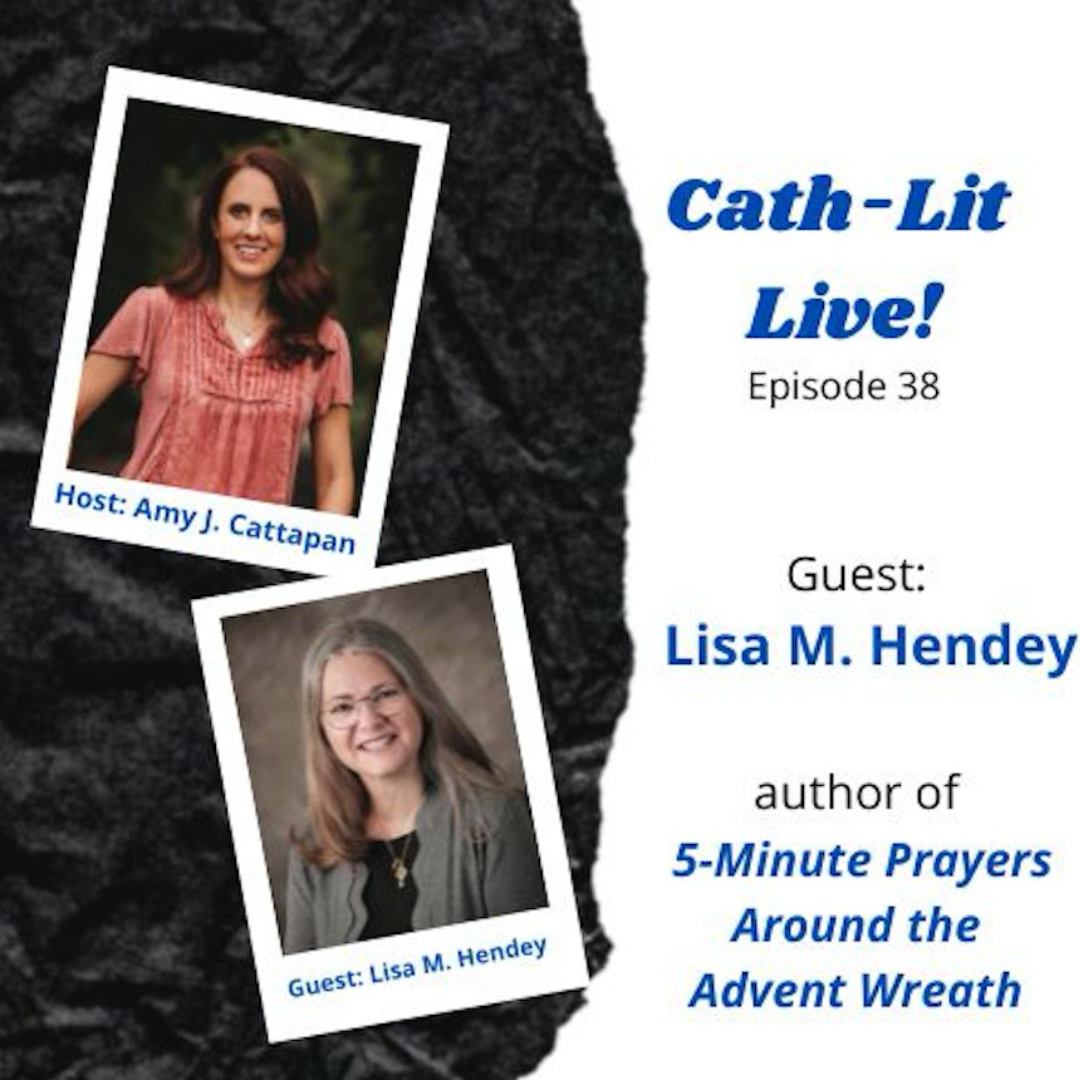
“Cath-Lit Live!” features brief interviews with Catholic authors who are releasing new books. Hosted by Catholic author and speaker Amy J. Cattapan, “Cath-Lit Live!” gives viewers a glimpse into the latest Catholic books while getting to know a bit about the author as well.


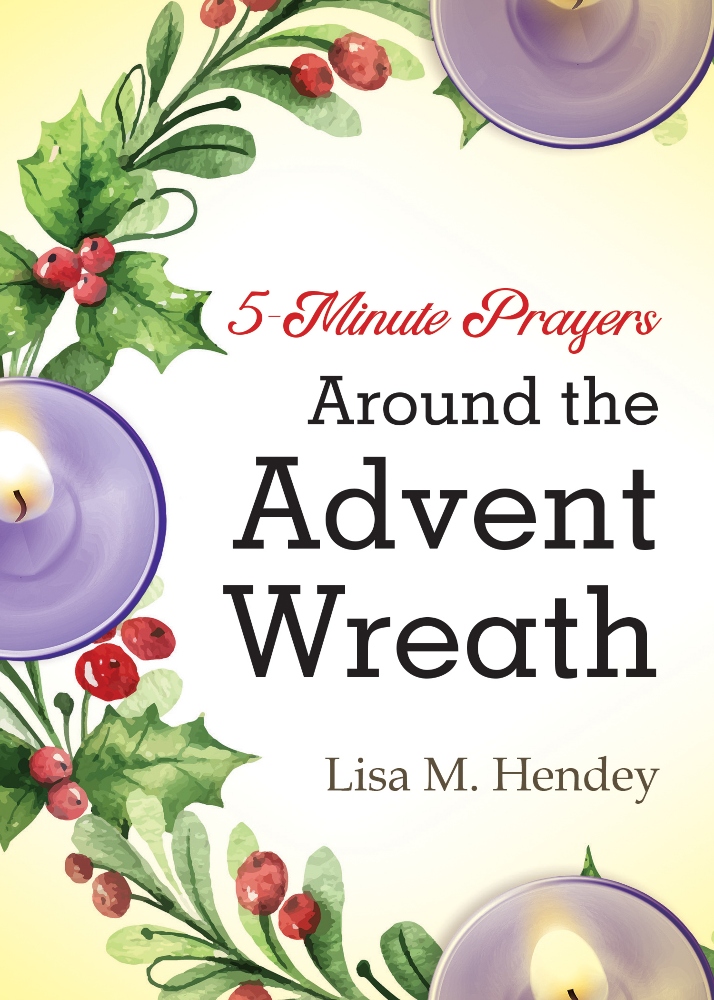
5-Minute Prayers Around the Advent Wreath by Lisa M. Hendey

Spend just five minutes a day praying around your Advent wreath with popular author Lisa M. Hendey’s heart-felt reflections and you’ll experience the promise, renewal, and hope of the Advent season. Hendey—founder of CatholicMom.com—invites you to take up the centuries-old tradition of lighting candles and gathering around an Advent wreath in prayer with family and friends. These Scripture-based devotions are perfect for any age and setting, and offer a few minutes of simplicity, focus, and sacred longing as you contemplate and prepare for the great gift of Christ’s birth. Each day includes an opening antiphon and a closing prayer, a Scripture reading, a short reflection, and questions to ponder, journal about, or use in conversation. (Ave Maria Press)


About the author: Lisa M. Hendey is the founder of CatholicMom.com and a bestselling author. She has journeyed around the globe to hear and share messages of hope and encouragement. Her Chime Travelers series for kids is read and studied worldwide in homes, schools, and churches. A frequent TV and radio guest, Lisa also hosts two podcasts. Lisa and Greg Hendey worship and live in Los Angeles, CA.


You can catch “Cath-Lit Live” live on A.J. Cattapan’s author Facebook page. Recorded versions of the show will also be available to watch later on her YouTube channel and Instagram.


Copyright 2022 Amy J. Cattapan
Banner image via Pexels

When You Think You Think You Have Nothing to Give, Bring Your Drum…

At least that is what a young boy did thousands of years ago when he wanted to honor a new king. You probably can hear the drum beating as he asks “Shall I play for you? On my drum?”  You know the rest. tribal-1215118_1920

Most of my life, I’ve felt I had nothing worthy to put at the feet of the King of the Universe.  Instead, I often ran away from him. But in his wisdom and love, he carried me to the point where I am today.

It was in my parish family during a small group retreat by Father Michael Gaitley, the study on “Consoling the Heart of Jesus” gave me a whole new insight into the love and longing Jesus has for us. Early in the book, Father Gaitley shares a simple message he perceived from Jesus:

“All I want is for you to be my friend. All I want is for you not to be afraid of me and to come to me.” (Page 71)

Loving and Consoling Jesus through His Living Body the Church

 I found great joy in meeting with like-minded souls to talk about our growing love for Jesus and the resulting desire to put faith into action.  It was nothing short of miraculous. God bears his light to us, first through his son and then through others.

They come heeding the call of the Holy Spirit to be in the right place at the right time. We all know people who are beacons – radiating goodness, kindness, love and action. Sometimes, we are the steadying signal, but I never forget who is at the origin.

Therefore let us be grateful for receiving a kingdom that cannot be shaken, and thus let us offer to God acceptable worship, with reverence and awe;  Hebrews 12:28 

Jesus is the burning heart, the center of this wonderful body of Christ and in loving others, we love him.  In consoling others, we console him. We truly are branches nourished by his living vine.

Bringing Our Drums

heart-2862156_1920So we come back to the little shepherd boy. I hear his drums, “pa rum pa pum pum” a physical declaration of his heart beating with love for the king, a testimony to all that is required of us–offering our own hearts without reserve.


I once thought I had nothing to give, but I was wrong.  Jesus smiled at the drummer boy and his gift while Mary nodded and the ox and lamb kept time. I am certain he smiles at each of us too; we just need to bring him our drum.


What Christmas songs stir your heart?  Bring loving memories to mind?  Feel free to share in the comments section.