Live in the Moment

Live in the Moment

By Isabelle Wood

“No one who puts a hand to the plow and looks back is fit for the kingdom of God.”—Luke 9:62 (NRSVCE)

“Do not worry about tomorrow; tomorrow will take care of itself. Sufficient for a day is its own evil.”—Matthew 6:34 (NABRE)

It’s really hard to live in the present. Let’s face it. Most of us spend more time in the past or the future.

Sometimes, all we can think about is the past. Our past failures, our past wounds, those scars that haven’t yet fully healed. Or, on the flip side of the same coin, we live in the memory of the “good ol’ days” and pine for the times that are already past.

Other times, the future occupies all our thinking. We either look forward with worry about what’s ahead because we do or don’t know what’s coming, or we spend so much time looking forward to our plans for the future that we miss all the blessings God wants to give us in the current moment.

Actually, that last point is true for all of them. When we spend too much time in the past or the future, we miss all the little gifts God is handing us right now.

Jesus tells us that if we occupy all our energy looking back with longing or regret, we’re not fit for the kingdom—we’re not “all in” for the incredible adventure that living our Faith is. Likewise, Jesus tells us not to worry about tomorrow. When we spend all our time looking ahead and plotting out all our own “perfect” plans, we’re not putting our trust in the amazing, unimaginable plan God has in store for us, and we’ll be overcome with worry when things don’t work out the way we wanted.

Granted, the past and the future are both gifts God has given us. It’s good to look back with gratitude for the ways God has worked in our lives and the lessons we’ve learned, and it’s good to be responsible with the time God has given us by making plans and looking to the future with hope.

But let’s make it a goal to live in the gift of this moment God has given us right now—in the present.


© Isabelle Wood 2025
Broken Body

Broken Body


He broke it and said, “This is my body which is for you.”  – I Corinthians 11:24


She wasn’t Catholic in the least, my mother, but attending her own Presbyterian church was becoming problematic. When Dad was living, he kept an eye on Mom from up in the choir loft as she sat there in the fourth pew.

Now without Dad, Mom was increasingly restless at church even with familiar people nearby and an aide in tow. When she refused to get into the car after church one Sunday, requiring deacon involvement, I knew a change was necessary.

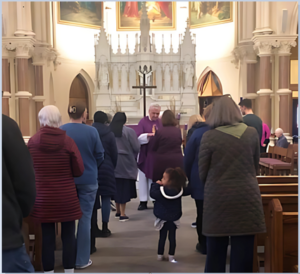
If Mom had realized that I was bringing her to a Catholic church, her mind would have been clouded by preconceived prejudices. But Alzheimer’s filtered out these biases as I led Mom into mass the following Sunday. She sat obediently beside me in the last pew.

As the organ played and the faithful stood to reverently make their way up front for Holy Communion, Mom was captivated. Sensing the deeply spiritual moment, she gazed upon those in line, and whispered, “Beautiful.”

The rhythmic words of the priest floated through the church, reaching us in the last row. “The body of Christ. The body of Christ. The body of Christ. The body of Christ.” The beauty, truth, and goodness of the moment penetrated through disease and reached Mom’s soul.

Thank you, Jesus, that within our brokenness you give us the miracle of Your broken body in Holy Communion.

Reflect: Has your loved one been to church recently?  Have you?


The above selection is Entry #29 in Part III: Eternal Spring of Minding Mom: A Caregiver’s Devotional Story by Lisa Livezey (© 2024, En Route Books and Media)

Minding Mom: A Caregiver’s Devotional Story by Lisa Livezey | En Route Books and Media

Bed Mime

Bed Mime

In peace I will both lie down and sleep. – Psalm 4:8 (RSVCE)

I didn’t know Mom was a stomach sleeper until the last year of her life.  At bedtime, I would walk with her to the bathroom sink and hand her a warm, wet washcloth with which she dutifully scrubbed her face. Next, I would load the toothbrush with toothpaste and give it to her. She diligently and vigorously gave her teeth a thorough brushing. Although she taught me how to brush my teeth as a child, I realized now my current toothbrushing pattern was cursory compared to hers.

Next, I’d assist Mom with her nightgown. A nightgown – not pajamas. In winter, it was a flannel nightie – usually white with a delicate floral blue pattern. In summer, it was a sheer, short-sleeved shift in pastel pink or green.

Once Mom was ready for bed, I would pull back the covers and watch as she climbed in, listening to her express how good it felt to get into bed. I would adjust the pillow and watch her turn and get settled on her stomach. There was a specific way she placed her right hand up near her face and slid her left arm down alongside her body. Once Mom positioned herself that way, I knew sleep would soon follow.

There’s an intimacy in knowing whether someone is a stomach sleeper, side sleeper, or back sleeper. These were things I’m sure Dad knew well, but now I was learning them about Mom.

Thank You, Lord, that You know our ways completely.

Reflect: What special things have you learned about your loved one while caregiving?  Cherish the intimacy and thank the Lord for the privilege of knowing.

The above selection is Entry #26 in Part III: Eternal Spring of Minding Mom: A Caregiver’s Devotional Story by Lisa Livezey (© 2024, En Route Books and Media)

Minding Mom: A Caregiver’s Devotional Story by Lisa Livezey | En Route Books and Media

Photo copyright: Canva

Divine Love

Divine Love

By Isabelle Wood

“Having loved His own who were in the world, He loved them to the end.”—John 13:1b (NRSVCE)

As Catholics, we are familiar with all types of devotions: devotions to Mary, Joseph, the saints, and Jesus. But sometimes, it can be easy to forget the meaning behind devotions when we become overly familiar with them.

The devotion to the Sacred Heart of Jesus can be one such devotion. It is one of the most popular devotions in the Catholic Church, and many Catholics keep an image of Jesus’ Sacred Heart in their homes. And yet, I think it’s easy to focus only on the steps for the First Fridays devotion and the promises Jesus made us, and to forget what’s at the heart of it all: Jesus’ burning love for us.

Jesus loves us so deeply that He gave everything He had, even to the point of death. Even to the end. And He thirsts passionately for us to turn to Him, to love Him in return . . . He longs to save our souls and all the souls of the world and for us to know just how much we are loved.

So, next time you look at an image of the Sacred Heart, remember that . . . and let it inspire you.

© Isabelle Wood 2025

Edited by Gabriella Batel

That I Could Imitate the Weed

That I Could Imitate the Weed

“As each one has received a gift, use it to serve one another as good stewards of God’s varied grace.”—1 Peter 4:10

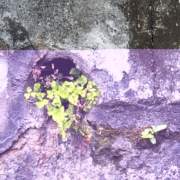
Years ago, waiting downtown for a passing train, I noticed a cluster of weeds peering from an impenetrable overpass wall. That day, I changed my mind about weeds as I considered how they took root and grew in nearly impossible conditions. I wanted to tug on them to see if they would yield to pulling, to study what circumstances may have led them to root in this place.

Weeds are a source of constant work if you care about keeping them at bay, yet they have a perfect purpose in God’s creation.  In nature, their job has been to try to repair damaged ground wherever the soil has been “broken.” They evolved to be tough and hardy, surviving all seasons. Early man ate “weeds” as crop plants.

I quit pulling dandelions from my lawn and purposely planted milkweed after that day. I tried dandelion greens in my salads and enjoyed Monarch butterflies munching on milkweed in the early morning before I left for work. They continue to grow back.

“Therefore, since we are surrounded by so great a cloud of witnesses, let us rid ourselves of every burden and sin that clings to us and persevere in running the race that lies before us.”—Hebrews 12:1

That cluster of weeds remained on the overpass for years but has long since been gone. I am certain its offspring grows exactly where it is meant to be, where the wind deposited it for someone else to draw strength and perseverance while considering the promise of weeds. 

I wrote the poem below in honor of the weed.


Weeds

persistent pests

and yet

promises of enduring return.


Their dandelion wishes

scattered by passing winds

sustain the soul 

while milkweed’s sacrifice of red and yellow pods

lures magnificent Monarchs.


That I could pluck resilience from the lowly weed!

Pull me through life’s ploughing field

so I can grow, again and again.

Caddy Back

Caddy Back


By Lisa Livezey

My lord, thou knowest that I have with me tender children.
—Genesis 33:13 (DRB)


Outside Mom’s house sat three vehicles. There was the 26-foot camper parked near the patio, the old gray Buick Century Sedan that Dad had used around town and kept running with duct tape and spit, and finally the tenth-generation beige Cadillac de Ville— reserved for more dignified occasions.

Soon after Dad died, my son—savvy with Craigslist—helped sell the Buick for several hundred bucks. As for the camper, winter wasn’t the best time to sell. Plus, I lacked the time and energy just then to clean and empty it out. Then there was the Caddy which offered a quiet, padded ride—like sitting in the lounge of a fancy hotel.

Despite the Cadillac’s availability, we had been chauffeuring Mom to daily activities in my car or that of her aide. But when riding shotgun, Mom was tense and frequently burst forth with exclamations of dismay at the mere passing of another car.

I discovered that if Mom sat in the middle of the Cadillac’s backseat, she would ride contentedly along in peace. Thus, I didn’t sell the Cadillac and began driving Mom around in the vehicle where she felt most comfortable. It was Mom’s car, after all, and hers to enjoy.

Lord, we are but weak children. Thank you for Your provision of tender care.

Reflect: Is there something in your loved one’s life that provides physical comfort? Is there a tangible way in which God shows His tender care for you? Take a moment to thank the Lord for His provisions.


The above selection is Entry #17 in Part II: Weathering Winter of Minding Mom: A Caregiver’s Devotional Story by Lisa Livezey (© 2024, En Route Books and Media)

Minding Mom: A Caregiver’s Devotional Story by Lisa Livezey | En Route Books and Media

Hopeful Peace

Hopeful Peace

“We love because He first loved us.”—1 John 4:19 (RSV)

I think that, deep down, we all long for peace. And maybe even more than external peace, we all want an internal peace. We want the kind of peace no circumstance in the world can take away. The peace the martyrs had in the face of death.

Jesus is the One who promises us this peace, and yet, if you’re like me, peace can sometimes still remain elusive, even when you’re doing the work God calls us to do as His disciples. Sometimes, we just seem to be wearing ourselves out no matter how hard we try, and when that exhaustion hits and swipes away our peace, our joy and ability to love others goes with it. Confusion steps in. If Jesus promised us peace in the face of all trials, then why does it seem to be snatched away in our efforts to do His work?

I think the answer lies in our perspective and our motivation.

If we only make the sacrifice to get up early and help out at the parish fundraiser on Friday because we are counting on getting to sleep in on Saturday, we’re going to be disappointed—especially if our kid wakes us up at five in the morning on Saturday and we think we’ve somehow been cheated out of the perfect schedule we’ve planned.

The truth is, if we do God’s work placing our hope on perfect rest and peace in this world, we’re going to be disappointed. We weren’t made for this world. All our longings for God will never be completely satisfied until we reach Heaven, and that homesick ache we want so badly to be filled will never fully go away in this world… because we’re not home yet.

In a wonderful paradox, once we realize that, once we bank our hope on Heaven instead of the next Saturday we can sleep in or the next family vacation, we finally find the peace of the saints.

And once we find that peace—once we can finally understand the depths to which God loves us—once we are finally quenching our thirst with the Living Well that never runs dry—then we can do the work God calls us to do. And love as He loves.

© Isabelle Wood 2025

Edited by Gabriella Batel

Freedom to Love

Freedom to Love

“For you were called for freedom, brothers. But do not use this freedom as an opportunity for the flesh; rather, serve one another through love.”– Galatians 5:13 (NABRE)

Our culture says many things about freedom. It says freedom is the ability to do anything we want. It says freedom is acting on our own selfish desires no matter how it affects others. It says that if we are not allowed to act on every impulse, then we are not truly free.

But as Catholics, we have a different definition. Freedom is the ability to do what we ought. It is knowing the right thing and choosing to do it, no matter the cost to us. It is controlling our sin-corrupted desires and surrendering to what God wants, not what we want.

At the heart, we can’t have love if we don’t have freedom—and vice versa. Freedom is a condition of love, but if we don’t choose to love, we’re not really free. If we want to be truly free—and say no to being enslaved to all the passing power, wealth, and pleasure the world offers us—we must have a deeper yes: the yes to love God and love others as He loves.

And God’s love isn’t the fleeting, pleasure-driven feeling the culture defines it as. God’s love is the nitty-gritty, self-giving, all-the-way-to-the-Cross kind of love. God’s love means sacrifice. . . so that’s how we are called to love: by serving others and sacrificing our own desires and selves to do so.

Because freedom means love, and love means sacrifice.

So, this Lent, how will you choose freedom over slavery? How will you choose to love God and love how He loves? What sacrifices will you make?

© Isabelle Wood 2025

Edited by Gabriella Batel

Balancing in Thin Air

Balancing in Thin Air

If you’ve never experienced vertigo, be thankful. It is unpleasant to say the least. Over the last few years, I’ve been grappling with recurring bouts of vestibular neuritis, a fancy word for damage to the inner ear system, causing severe spinning, dizziness, nausea, motion sensitivity, and loss of balance. New life phase, new challenge.

Before vertigo, I floundered to manage work and family responsibilities; before that, it was life as a newlywed, life in college, and high school days. Well, you get the picture. When my resources were spread thin and it seemed there was no air to breathe, finding spiritual equilibrium became even more critical than regaining physical balance.

Two lessons from my father gave me a better perspective during times of imbalance.

One prayer I learned from him—Lord, let me never stray far from You, but if I start to wander, pull me back—helped me visualize a lifesaving rope tied around my waist. I felt safe knowing that as long as I didn’t cut the rope, God was at the other end and would not let go of me. I didn’t need to walk a tightrope alone. Secondly, one of Daddy’s favorite scriptures helped me imagine that I was one of the birds Matthew spoke of and that God would always take care of me:

“Look at the birds of the air: they neither sow nor reap nor gather into barns, and yet your heavenly Father feeds them. Are you not of more value than they?”—Matthew 6:26

I’ve shared this verse many times and eventually wrote the poem below as I considered what it means to be the bird.

Life will always present situations that upset my current balance and sometimes whoosh the air from my lungs. When I remember these simple lessons from my father, attend Mass, and receive the sacraments, I find that I’m not suffocating anymore. I stand steady and straight. I can breathe again.


Become the Bird

by Paula Veloso Babadi

“Look at the birds of the air: they neither sow nor reap nor gather into barns, and yet your heavenly Father feeds them. . . ”—Matthew 6:26


When air is thin

breathe out

breathe in.


Breathe in

beauty

and truth.

Breathe out

despair

and fear.


Into thin air

disperse

your sighs,

and

out of thin air

become the bird.


Copyright 2025 Paula Veloso Babadi

Edited by Gabriella Batel

Vital Sign

Vital Sign


The LORD will give you a sign. – Isaiah 38:7 (GNT)


It was a September Sunday morning at 2 a.m. when I descended the hospital elevator and stepped out through sliding glass doors. Walking to the nearby corner, I bought coffee at the 24-hour convenience store. The warm cup soothed my palm as I continued around the block, taking comforting sips of the hot liquid. It seemed surreal that only a week ago Dad had been living his full, active life.

A woman stood on the opposite sidewalk tossing pebbles up against a second story window, trying to awaken the sleeper inside.There was a sleeper inside of me resisting all this change. What was I going to do with Mom and how could I manage everything on top of my own full life? I told Dad years ago that if he went first, I’d keep Mom at home where she was comfortable. But was that truly possible?

I rounded the corner and started up Main Street, lined with silent boutiques and artisan coffee shops. Suddenly ahead of me appeared a sign, brightly lit. In bold black letters were the words, FEAR NOT, I AM THE ONE WHO HELPS YOU. Was I dreaming, seeing this sign in the middle of the night? No doubt it was a message from God that He saw me and would help in the coming days. I took a picture, found courage in the moment, and headed back towards the hospital.

Thank you, Lord, for giving us signs–especially in times of desperate need. 

Reflect: What signs of encouragement has the Lord given you along your caregiving road?  Keep a watch this week for evidence of his loving care.


The above selection is Entry #8 in Part I: Unexpected Fall of Minding Mom: A Caregiver’s Devotional Story by Lisa Livezey (© 2024, En Route Books and Media)

Minding Mom: A Caregiver’s Devotional Story by Lisa Livezey | En Route Books and Media