“Un poco a riso”: The Joy of Dante’s Purgatorio

Last spring, in my final semester of my undergraduate studies, I covered the medieval period requirement of my literature program with a study of Dante. The Divine Comedy was a truly fulfilling way to finish out my three-year liberal arts degree. Dante’s incomparable work is a most shining example of literature’s interdisciplinary potential. One cannot study the literature of the Comedy without touching upon history, languages, philosophy, and theology. Dante, and literature in general, can be both a gateway into the other disciplines and a rewarding treasure that is available once the others have been studied in depth. Studying Dante in the semester in which I did, with a wonderfully mixed group of third- and fourth-year students, I was amazed at the beautiful intersection of all disciplines. Students majoring in history, Classical studies, or the theology buffs all brought great insight to the table because Dante has something for everyone.

I digress. Dante’s work is a rich harvesting ground for scholars, but my purpose is to appreciate his relevance for the Lenten pilgrim.

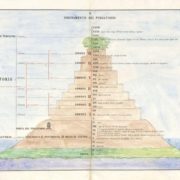
Having thoroughly enjoyed my semester with Dante, but mindful of the enduring value of the Comedy after many readings, I took up the Purgatorio again as a Lenten pilgrimage through holy purification for the soul. There is much to be gleaned from the depictions of sins and their various cures, but a few aspects of the work stood out in particular as fitting meditations in the season of Lent. The physical imagery and structure of the Mountain of Purgatory, with its seven levels – or “cornices” – corresponding to the Seven Deadly Sins, gives a wonderful and memorable visual depiction to help one tackle sin in real life.

First, and this is fitting to this Fourth Sunday of Lent – known as Laetare Sunday – Dante’s depiction of Purgatorio is touched with a deep sense of joy and peace. Be assured, there is much penitential sorrowing and prayers for mercy and forgiveness, but the attitude of the suffering souls is one of resignation to the saving work of purification, and a levity of spirit because they are assured of ultimate bliss in heaven. Near the end of Canto IV, Dante recognizes a soul among those in Ante-Purgatory (a sort of holding space before entering into the cornices of Purgatory proper) and smiles, saying, “no longer need I grieve for you” (Purgatorio IV.123). Dante has found his friend, one whose life had not been the most virtuous, in Purgatory, and this is cause for joy, despite the suffering and purification that still await him.

True, the suffering souls still yearn for heaven’s bliss; they are incomplete without it, but the souls in Purgatory are safe from eternal damnation. They may be sure that their suffering has a definite endpoint, and their deepest longing will ultimately be fulfilled. The souls one encounters in reading the Purgatorio brilliantly contrast with those of the Inferno in their willingness to undergo suffering, singing and praying to God throughout the experience. 

We, of Church Militant, might share the Suffering Souls’ joy in penitence. While our Lenten days can be tedious and painful, we can rejoice to know there is merit in suffering and that we might draw closer to God through the discomfort. We rejoice on Laetare Sunday to know that the end is in sight – that resurrection and redemption are at hand for us, as heaven is at hand for those climbing Mount Purgatorio.

Another aspect of Purgatorio which might serve one well on the Lenten pilgrimage is the use of Marian example as an encouragement against vice. Pride is combatted by the humble “Fiat” of the Annunciation; Sloth is rebuked with the reminder that Mary went in haste to visit her cousin Elizabeth; Lust is chastened with the Virgin’s words “I know not man”, to name a few. Prayer through meditation on our Blessed Mother is a powerful practice for both Purgatorial and Lenten pilgrimage. Of course, as Dante will show, mediation can also take the via negativa route, considering biblical examples of those who espoused vice rather than virtue. Both have a place – both can be beneficial in curing a soul of vice.

A final lesson one might take from Purgatorio and apply to the Lenten pilgrimage is the value of communal prayer, in union with the prayer of the Church, as a cure for human sinfulness. At each cornice of the Purgatorio, and even in the less structured realm of Ante-Purgatory, the souls are found in prayer together. In the specific cornices, the prayers are pointed and aimed towards conversion from the sin addressed in that area. Perhaps Dante’s selection of prayer for each sin could act as a meditative guide for readers fighting the seven sins represented in the purgatorial cornices! But, more importantly, Dante portrays the souls in Purgatory as incorporated into the prayer of the Church – the same prayers as should be familiar to those steeped in Catholic tradition. In our Lenten journey, much as the souls who seek purification after death, we must certainly depend upon the prayers which Holy Mother Church has handed on to us to be prayed in communion with our brothers and sisters.

So, let my encouragement to you at this mid-lent point be to take up Dante’s Purgatorio for yourself and find therein some inspiration for these last weeks of your pilgrimage. And, as writers, let us endeavor to steep ourselves in the wisdom of many disciplines, but most especially in the wisdom of our Faith, for inspiration in our writing.

May we each draw closer to God through our Lenten penitence! And, may the Souls of the Faithful Departed, through the mercy of God, rest in peace!


Copyright ©️ 2026 Maggie Rosario

Edited By Janet Tamez

The Intermediate Steps

Editor’s Note: We lost Jane’s December reflection due to website issues — now resolved — but can enjoy once again reading about the inspiration for her story that appears in the Catholic Writers Guild’s first anthology, Pilgrim Tales. 

The Intermediate Steps

How do you send an angel on a pilgrimage?

That was my first thought on reading the subject of the Catholic Writers Guild anthology, and no answer presented itself. I love writing about angels (ten of my books feature angels as main characters) and I would have jumped at the chance to write another one here.

Being pure spirits, angels are understood to move between Point A and Point B without traversing the intermediate space. You’re at 83rd and Park but want to see the ducks at Choate Pond Park? There you are. A friend calls for help? You’re immediately on hand. (Well, not “on hand” if you’re a pure spirit, but I’m human, and, well …)

A pilgrimage for an angel would go something like, “Well, I’m here. Cool.” I wasn’t getting five thousand words out of that.

An angel would, however, have to traverse the intermediate space if he were accompanying someone else who had to, though. So … a guardian angel of a human.

Even so, pilgrimages imply a spiritual journey as well as a physical journey. We accept that angels aren’t perfect (Job 4:18), and since God is mysterious and beyond even an angel’s comprehension, of course an angel would always be delighted to learn more about Him. For a creature who’s existed for thousands of years, though, conditions would have to be extreme to reveal a new aspect of God, or to draw him closer to God in a way he’d never needed to before.

And that’s why I sent my angel to Purgatory.

“Way Stations” begins with a guardian who’s still shaken by his charge’s last hours and the stress of her judgment. She’s saved, but she’s in Purgatory. She’s also “secluded,” meaning she can’t sense her own guardian. The Purgatory angels assure him she’s safe, and he can leave, but he refuses. He’s not leaving her side until she enters Heaven.

Purgatory is a wasteland, and his charge starts walking.

The angel, who up until now was secure in his identity and his job and his work, walks with her. For the first time, he feels useless and stalled out, and it’s in that position that he sees how his charge’s soul begins to respond to the Holy Spirit. It’s not easy.

I say, “But I’m not the one in Purgatory.”

“Look around.” The other angel snickers. “Traveling? Struggling? You most definitely are in Purgatory.”

Of course an angel would never sin, nor want to sin, but I suspect it’s possible to get “stuck” in one way of relating to God. Everything can be “good enough.” Except God isn’t interested in “good enough.” He wants all of us, and sometimes, that may mean taking a journey you never intended, through all the intermediate steps — even for an angel.

© Copyright 2025 by Jane Lebak

Feature photo: https://docs.google.com/document/d/1RCk-dg0blH4Z1O0BOv1JSSVEYau71gvYTB2MqOR9Wr0/edit?usp=sharing

Graveyard of the Atlantic: A Ghostly Encounter

Graveyard of the Atlantic: A Ghostly Encounter

Ghost stories tend to be relegated to October or similarly dark nights with a crisp edge to the air that makes you want to curl up safely in a blanket. But, just like ghosts remain transient, their stories don’t have to be fixed to a particular month. My family’s encounter with a spirit was on a warm June night off the coast of North Carolina, near the Graveyard of the Atlantic. I want to be careful and remain respectful as I tell you about my family’s recent encounter.
With any topic concerning what “lays beyond” I believe one should tread lightly. First, if whatever is haunting an area is truly a lost soul, they deserve certain considerations. The first step in any encounter is to pray for the happy repose of the soul who may not be able to be at rest until they receive intercessory prayer on their behalf. If, on the other hand, the haunting is of an evil origin, i.e. – a demonic spirit, the laity must use extreme caution as the demon’s only
desire would be the ultimate destruction of human souls. A priest of the Roman Catholic Church would provide the best guidance in those situations.

On a recent trip out to Hatteras Island in North Carolina, my family and I met up with dear friends at a beach house we had rented for a week. Hatteras Island is at North Carolina’s Outer Banks. Due to the thousands of shipwrecks and the unknown number of human lives lost in the area, the Outer Banks are referred to as The Graveyard of the Atlantic. The shallow sand banks along the coast are hard to see on a brilliant day. Add dark and formidable weather without high tech navigation systems and you have a recipe for disaster. Near our beach house, for
instance, lay the graves of a young couple. Captain Stephen Barnett and his wife Rebecca who, along with their baby boy, lost their lives when Captain Barnett’s schooner ran aground off of Ocracoke Island. It is a tragic story you can find here: https://www.ncgenweb.us/dare/cemeteries/index_barnettstephend.html

Several days into our trip, a squall hit the island as night closed in. The wind slammed against the outside walls and thunder boomed on both sides of the island. Being around 30 miles from the coast of North Carolina, storms feel ominous on an island. After talking late into the night with my friend, I finally headed to bed. Before settling in, I went down to the lowest level of the house to make sure the door was locked. As I turned from the door, I felt a presence very near to me. Deciding I was being silly and chalking up my prickling skin to the billowing storm
outside, I rushed up the couple flights of stairs to my bedroom.

Thunder continued to crash and the wind roared throughout the night.

The next morning dawned crystal clear. The island appeared freshly bathed and brighter after the torrential shower. Our family was the first awake. We headed to the topmost story of the house where the kitchen was located to make breakfast. My nine-year-old son greeted me with a hug and asked why I had been in his room the night before. The conversation went like this:

“Do you mean when I checked on you before I went to bed?”

“Never mind,” he responded, too sleepy to want to explain.

“No, I want to hear about it,” I encouraged. My skin was prickling again. “I gave you and your sisters a quick kiss and headed out of your room before going to my room. Is that what you mean?”

“You were standing by our door. Why were you standing there?”

My stomach felt suddenly heavy. I remembered the presence I had sensed in the downstairs entryway the night before and now my son had seen a form in his room. I kept my face blank and remained outwardly calm. I needed coffee before I could process what my son was asking me.

Mistaking my lack of response for disinterest, my son grew bored of the conversation. “Never mind,” he said, shaking his head and running off to play.

After we had eaten our breakfast and our friends were up and about, the two husbands took off with the children to explore the island’s shoals. My friend and I stayed at the house.

My friend asked, “Was anyone up last night during the storm?”

I froze. “What?”

“We saw someone at our door. I thought it was a child scared during the storm. When we called out, they didn’t come in. We got up to check but no one was there. Our kids said they stayed in bed.”

All I could do was stare. She had not heard my conversation with my son. Now two people had seen a presence. I told her I’d check with my children to see if they’d been up during the storm. When I asked my children later, none of them had left their beds.

Later, I approached my son again. “Can you tell me what the shadow looked like that you saw by your door last night?”

“Tall, short hair, very straight shoulders.”

His oldest sister chimed in, “That doesn’t sound like a description of Mommy. Why did you think it was Mommy?”

A thought struck me. Hesitantly, I asked, “Did the form look like what you’d expect a soldier or a sea captain to be like? The way it was standing so straight?”

“Yeah,” he nodded.

Looking nervous, my daughter broke in again, “Why, Mommy?”

I had one more question to ask my son, “Did you feel like the presence was nice and kind of watching over you during the storm or did you feel scared?”

“I wasn’t scared,” he responded with a shrug. “I think it was like someone was protecting me.”

When my husband and I discussed what my friend and our son had witnessed in the night, my husband reflected that there were gravestones speckled throughout the surrounding yards around the house. He wondered if the house had been built on a graveyard. A quick internet search showed us that, sure enough, the house may have been built on the site of the Zora Gaskins graveyard.

It seemed clear to me that whatever presence was seen during the storm could have been someone who died during a shipwreck, potentially during a storm, and meant no harm. As a Catholic, I believe that some souls are in need of intercessory prayer in order to be at rest. After explaining to our children what we might have experienced in the night and reminding them about the importance of praying for Holy Souls, we traveled to the local Catholic Church and obtained a bottle of holy water. Returning to the house, we offered prayers for the Holy Souls not only in the area but for all those who met their demise in the Graveyard of the Atlantic. We sprinkled holy water in each bedroom and at every threshold.

Even though we had a couple more stormy nights, we did not experience any more ghostly encounters. I pray our friendly ship captain is now at peace.

*One more note of caution: Do NOT seek encounters with spirits. Often, demons will pretend to be those that have gone beyond in order to trick us. The hatred demons have for humans is very real and they will do anything to lead souls astray. If you do experience an encounter, immediately pray something like the following and if the encounter does not cease, it’s time to call in a Catholic priest.

Eternal rest grant unto them, O Lord, and let perpetual light shine upon them. May their souls and the souls of all the faithful departed, through the mercy of God, rest in peace. Amen.

*Previously posted on my blog at www.eahensonbooks.com*

Copyright 2025 by Emily Henson

Edited by Maggie Rosario