“Un poco a riso”: The Joy of Dante’s Purgatorio

Last spring, in my final semester of my undergraduate studies, I covered the medieval period requirement of my literature program with a study of Dante. The Divine Comedy was a truly fulfilling way to finish out my three-year liberal arts degree. Dante’s incomparable work is a most shining example of literature’s interdisciplinary potential. One cannot study the literature of the Comedy without touching upon history, languages, philosophy, and theology. Dante, and literature in general, can be both a gateway into the other disciplines and a rewarding treasure that is available once the others have been studied in depth. Studying Dante in the semester in which I did, with a wonderfully mixed group of third- and fourth-year students, I was amazed at the beautiful intersection of all disciplines. Students majoring in history, Classical studies, or the theology buffs all brought great insight to the table because Dante has something for everyone.

I digress. Dante’s work is a rich harvesting ground for scholars, but my purpose is to appreciate his relevance for the Lenten pilgrim.

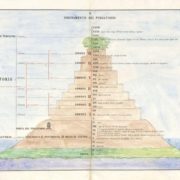
Having thoroughly enjoyed my semester with Dante, but mindful of the enduring value of the Comedy after many readings, I took up the Purgatorio again as a Lenten pilgrimage through holy purification for the soul. There is much to be gleaned from the depictions of sins and their various cures, but a few aspects of the work stood out in particular as fitting meditations in the season of Lent. The physical imagery and structure of the Mountain of Purgatory, with its seven levels – or “cornices” – corresponding to the Seven Deadly Sins, gives a wonderful and memorable visual depiction to help one tackle sin in real life.

First, and this is fitting to this Fourth Sunday of Lent – known as Laetare Sunday – Dante’s depiction of Purgatorio is touched with a deep sense of joy and peace. Be assured, there is much penitential sorrowing and prayers for mercy and forgiveness, but the attitude of the suffering souls is one of resignation to the saving work of purification, and a levity of spirit because they are assured of ultimate bliss in heaven. Near the end of Canto IV, Dante recognizes a soul among those in Ante-Purgatory (a sort of holding space before entering into the cornices of Purgatory proper) and smiles, saying, “no longer need I grieve for you” (Purgatorio IV.123). Dante has found his friend, one whose life had not been the most virtuous, in Purgatory, and this is cause for joy, despite the suffering and purification that still await him.

True, the suffering souls still yearn for heaven’s bliss; they are incomplete without it, but the souls in Purgatory are safe from eternal damnation. They may be sure that their suffering has a definite endpoint, and their deepest longing will ultimately be fulfilled. The souls one encounters in reading the Purgatorio brilliantly contrast with those of the Inferno in their willingness to undergo suffering, singing and praying to God throughout the experience. 

We, of Church Militant, might share the Suffering Souls’ joy in penitence. While our Lenten days can be tedious and painful, we can rejoice to know there is merit in suffering and that we might draw closer to God through the discomfort. We rejoice on Laetare Sunday to know that the end is in sight – that resurrection and redemption are at hand for us, as heaven is at hand for those climbing Mount Purgatorio.

Another aspect of Purgatorio which might serve one well on the Lenten pilgrimage is the use of Marian example as an encouragement against vice. Pride is combatted by the humble “Fiat” of the Annunciation; Sloth is rebuked with the reminder that Mary went in haste to visit her cousin Elizabeth; Lust is chastened with the Virgin’s words “I know not man”, to name a few. Prayer through meditation on our Blessed Mother is a powerful practice for both Purgatorial and Lenten pilgrimage. Of course, as Dante will show, mediation can also take the via negativa route, considering biblical examples of those who espoused vice rather than virtue. Both have a place – both can be beneficial in curing a soul of vice.

A final lesson one might take from Purgatorio and apply to the Lenten pilgrimage is the value of communal prayer, in union with the prayer of the Church, as a cure for human sinfulness. At each cornice of the Purgatorio, and even in the less structured realm of Ante-Purgatory, the souls are found in prayer together. In the specific cornices, the prayers are pointed and aimed towards conversion from the sin addressed in that area. Perhaps Dante’s selection of prayer for each sin could act as a meditative guide for readers fighting the seven sins represented in the purgatorial cornices! But, more importantly, Dante portrays the souls in Purgatory as incorporated into the prayer of the Church – the same prayers as should be familiar to those steeped in Catholic tradition. In our Lenten journey, much as the souls who seek purification after death, we must certainly depend upon the prayers which Holy Mother Church has handed on to us to be prayed in communion with our brothers and sisters.

So, let my encouragement to you at this mid-lent point be to take up Dante’s Purgatorio for yourself and find therein some inspiration for these last weeks of your pilgrimage. And, as writers, let us endeavor to steep ourselves in the wisdom of many disciplines, but most especially in the wisdom of our Faith, for inspiration in our writing.

May we each draw closer to God through our Lenten penitence! And, may the Souls of the Faithful Departed, through the mercy of God, rest in peace!


Copyright ©️ 2026 Maggie Rosario

Edited By Janet Tamez

Last Minute Gifts

Last Minute Gifts

by Paula Veloso Babadi

I am sure you have heard stories of faithful Catholics who have experienced the sweetness of our Spiritual Mother’s presence. I grew up in a family that said the Rosary almost every evening, with parents who were devoted to Mary. Still, as I left home for college and later started my own family, unlike my parents and sisters, I did not keep up that tradition. It took a while on my spiritual journey to understand how much Our Lady loves us and how eager she is to give us gifts that bring us closer to her Son.

Over thirty years ago, when one of my sisters relayed that she was going to Conyers, Georgia, where a housewife, Nancy Fowler, was reportedly receiving messages from Our Lady, she suggested it was not too late to meet up there with the rest of my family. I didn’t think it would be possible to get time off so quickly, but miraculously, I was granted vacation days and rushed home to prepare for the almost 350-mile trip. I wondered how on Earth I would find a place to stay or my family in a crowd of thousands. It was the days before GPS and cell phones.

“A great portent appeared in heaven: a woman clothed with the sun, with the moon under her feet, and on her head a crown of twelve stars.”Revelations 12:1

People flocked to Conyers to witness the wonders occurring there, and after what seemed like an eternity of “No Vacancy” signs, I found a place to stay the night. The next day, miraculously again, I found my parents and two sisters amid a sea of people gathered in a muddy field. With oohs and aahs, the crowd was taken in by the sun playing in the sky and a blue light bearing the resemblance of the Blessed Mother’s outline hovering among nearby trees—except me. I didn’t see what my family and everyone else seemed to have seen. How could I have missed it? Am I too skeptical?

“Then the disciples came to Jesus privately and said, ‘Why could we not cast it out?’ He said to them, ‘Because of your little faith. For truly I tell you, if you have faith the size of a mustard seed, you will say to this mountain, ‘Move from here to there,’ and it will move; and nothing will be impossible for you.’”Matthew 17:19–21

When the Rosary and other prayers finished, and people started joyously leaving the field, I was downtrodden. We approached the small farmhouse where Nancy Fowler had been kneeling inside, and I lingered as my parents and sisters moved ahead toward the parking area.

“I believe you were here, Mary, but I’m sad, I didn’t see your signs,” I said. “Please let me experience your presence.” People walked by, and with each one who passed me, I could smell perfume.  I finally stopped one young woman: “Are you wearing perfume?”

“No.” 

The scent continued; it was the sweet smell of roses, just like the heirlooms in my father’s garden.  

I ran to catch up with my parents.  “Did you smell roses when you walked by the farmhouse?”

“No.”

I broke down crying and told them what happened, at which they hugged me and said Our Lady had given me a gift.  Our Blessed Mother is ready to carry us closer to her Divine Son and to protect and console us in troubled times. 

When I arrived in Conyers, I was mildly doubtful, slightly hopeful after seeing the crowds in awe, and overcome with gratitude when I received such consolation at the slightest movement toward belief. People far more devout than I can attest to the beauty of devotion to Mary and the fruits of dedication to daily Rosaries.

Over the years, I became more mindful of praying the Rosary, but I wasn’t consistent.  As I remembered that gift so many years ago, just before Lent, I am committing to say the Rosary every day, just as we did when I was a child.

Copyright 2026 Paula Veloso Babadi

Edited by Gabriella Batel

Photo by ClickerHappy-3678 at Pexels

More Ups Than Giving Up

More Ups Than Giving Up


I, the LORD, alone probe the mind and test the heart,
To reward everyone according to his ways,
according to the merit of his deeds. (Jeremiah 17:10)

When our children were young, we always talked to them about Lent and how it leads up to Easter. We made sure they all gave up something and understood the sacrifice involved. One year, when they were very young, we even did the jelly bean Lenten activity. One thing I’m not sure we did adequately, though, was teach our children why we give things up. I don’t know that we really emphasized the point of the sacrifice, the point of going without, or the point of forty days of changed behavior.

As one who has never felt spiritually challenged or renewed by giving things up, I do know that I always tried to impress upon our girls that it’s not always about what you give up. The real point is what goes on within. That’s really what Lent is all about — a change from within.

To make up for lost time with my own girls and to help others who may still be struggling two weeks into Lent, here are things I feel are more important than giving up. These are the other UPs of Lent.

Lifting Up

Over the next forty days, instead of concentrating on giving up, why not concentrate on lifting up?

  • Lift up someone’s spirits by visiting them, calling them, or even sending them a note.
  • Lift up someone’s workload. Help someone with a daunting task, help clean the house of someone who is sick or overwhelmed, or help by sharing a heavy load: caring for a child or parent, driving to appointments, or cooking meals.
  • Lift up a hand to help a neighbor. Shovel their snowy sidewalks, offer a warm blanket, or help with their yard work. Always remember, “Truly, I say to you, as you did it to one of the least of these my brothers, you did it to me” (Matthew 25:41).
  • Lift up yourself and others in prayer. Pray for healing, comfort, mercy, understanding, forgiveness, guidance, or wisdom for yourself and for others.


Chalking Up

Lent is the perfect time to unload the things that weigh you down.

  • Chalk up your past. Realize your past does not define you. Spend these forty days working on a new you–a new outlook, new attitude, or new prayer life. C.S. Lewis said, “You can’t go back and change the beginning, but you can start where you are and change the ending.”
  • Chalk up your regrets. Your failures and regrets are not you and should not be what you focus on. St Paul wrote, “But [this] one thing I do: forgetting what lies behind and straining forward to what lies ahead” (Philippians 3:13). Stop holding onto regrets from the past, and start straining forward to create a better path ahead.
  • Chalk up lost causes. Put away those things that are holding you back mentally, physically, and spiritually. This includes the people in your life who bring you down or continually hurt you. You can’t change them. You can only change your reaction to them and how you live your own life.


Taking Up

The purpose of Lent is not to get rid of old habits or make over lifestyles. It is a time to reflect on the person you are versus the person you are meant to be.

Take up a new cause. Once you’ve left the lost causes behind, find something to pursue that brings you joy. What is missing in your life, and how can you find it? Often, we think, if I only had more (fill in the blank–money, time, things), but the question should be what will truly bring me joy? And I don’t mean this is in a Marie Kondo clean and organize your house kind of way. Not even close.

Joy is not something we can obtain through things or situations, or even people. What is joy? Saint Peter describes it as “inexpressible and glorious … the result of your faith [felt by] the salvation of your souls” (1 Peter 1:8-9). What cause can bring you true joy?


Picking Up

Lent allows us to discard the things we don’t truly need and discover the things that will bring us closer to God.

  • Pick up the broken pieces. Perhaps it’s a broken friendship or broken family or broken heart. How can you mend it? What can you do to gather the pieces and put them back together? It’s the first step that is the hardest, so take that step.
  • Pick up someone who is down. Whether they are down physically, mentally, or spiritually, reach out to someone in need. Try pairing this with one of the suggestions above. By making a difference in someone else’s life you can make a difference in yours!
  • Pick up the Bible. You can do this! You can find the time to read God’s Word. Is Leviticus too hard? Is Deuteronomy too daunting? Try Jeff Cavins’ Unlocking the Mystery of the Bible that allows you to read the narrative parts of the Bible and eases you into the harder stuff. Or follow along with Father Mike Schmitz and his Bible In A Year Podcast. It’s not too late to start.
  • Pick up the Rosary. It doesn’t have to be all at once. You can do a decade at a time. What matters is to do it.
  • Pick up your cross. We all have hardships; accept them. We all have sorrows; look for joy. We all sin; confess and overcome them. Do what you need to do to find salvation.


The Key to Giving Up is Letting Go

As you ponder the next forty days and what you will do with them, realize that the real key is giving up and letting go. Give up hatred, fear, selfishness, greed, and pride. Give up the things that don’t bring you joy. Let go of the people, things, and situations that take you away from the life you are meant to be living, the life God intends you to lead. Let go of your anger, hurts, distrust, and doubts. Allow God to change you. Allow Him to create in you a new person.


The Key to Letting Go is Letting God

When the rain came down for forty days and flood waters washed over the earth, the earth and its creatures were changed. They began new lives as children of God. When the Israelites spent forty years wandering, in search of the Promised Land, they were changed. God used those forty years to turn them into a people who relied on Him, prayed to Him, and set their sights on Him. When Jesus spent forty days in the desert, He emerged ready to begin His mission, ready to gather His flock, and ready to take up His cross. After Jesus’s resurrection, He spent forty days appearing to the Apostles and Disciples, giving them the courage and knowledge they needed to spread the Good News.

You may emerge from these forty days still bearing burdens, still living the same life with the same problems, and facing the same hardships; but you can emerge stronger, wiser, happier, and hardier. You can emerge a changed person, a person who thinks about others first, a person who lives without past regrets, a person who knows and understands true joy, a person who prays more, and a person who gives his or her trials to God, for He tells us, “Come to me, all you who labor and are burdened, and I will give you rest. Take my yoke upon you and learn from me, for I am meek and humble of heart; and you will find rest for yourselves. For my yoke is easy, and my burden light” (Matthew 11:28-30).

That’s what Lent is all about. Turning everything over to God and allowing Him to mold you into a new creation, ready to find rest in Him. What will you do with what’s left of these forty days?


Copyright 2026 Amy Shisler
Images: (top) copyright 2026 Amy Schisler, all rights reserved; (bottom) Canva

Between Valentine’s Day and Ash Wednesday: A reflection on “The Hound of Heaven”

A string of unfortunate and seemingly negative events might be stuffings for either a hilarious comedy or an ultimate horror or tragedy. One certainly does not first associate a string of Job-like trials with the romance genre. My recent rereading of Frances Thompson’s “The Hound of Heaven,” however, challenge me to wonder if there could be something of romance in a number of seemingly tragic losses in mortal life. Could the stripping away of creation’s comforts and beauties from a soul be a loving move on the part of God, whose ways are often very different from human ways? This Sunday, placed one day after the romance of Valentine’s Day and two days before the penitence of Ash Wednesday, seems an appropriate time to consider what God’s romancing of souls might look like.

“The Hound of Heaven” is overall an odd candidate for the “romance poetry” category. The language of the poem as a whole wonderfully blends the terror on the part of the fleeing soul with the calm, but relentless, theme of God’s pursuit. The author deliberately identifies God’s terrifying pursuit as that of a “tremendous Lover,” – making the whole poem a sort of mysterious courting. But God’s courting throughout the poem is far from welcome and is always perceived as rather devastating for the fleeing soul. 

The lengthy poem follows the soul as it flings itself into many mortal joys in an attempt to find meaning outside of God. No matter how the soul clings to the joys of human love or the glories of nature, created things are either snatched away in the end or quietly pointing towards God, not being sufficient in themselves. It is in the soul’s many attempts to capture mortal happiness that we see the string of losses which seems better suited to tragedy than romance. Why would a true lover, if bent on romantic pursuit and wooing, insist on removing simple, innocent joys from the beloved?

God’s pursuit in “The Hound of Heaven” would be something horrifying in the context of a human “lover,” and the poem’s romance would break down into a creepy stalker story. If it were a human whose “strong Feet followed, followed after” the fearful soul, we should probably not even try to categorize the poem as romance. But the reality of God’s love is so much more essential to human flourishing – yes, essential even to the very existence of man – than the mutual love of mortals for one another. We can only respond in gratitude that God’s loving pursuit is never abandoned. There is no selfish, stalker-like intention behind God’s “unhurrying chase” – he has nothing to gain from his pursuit, and yet he offers his beloved everything.

Ultimately, the romance behind the entire poem becomes clearer, though it remains rather baffling in its nature. Near the end of the poem, as God finally catches up with the fleeing soul, he chides the soul for fleeing so long, saying, “How little worthy of love thou art! / Whom wilt thou find to love ignoble thee / Save Me, save only Me?” God is the one true lover of the human soul, and the love he offers is ultimately more precious and real than any human bonds of affection. 

Perhaps more shocking, we find that the romance has, in a hidden way, been reciprocated the whole time. While God’s love is obvious because of his persistent, loving pursuit, the soul, too, was longing for God’s love, though it refused to recognize God as the true object of its love. After the chase is over, the revelation in the poem’s final lines is that it was always God “Whom thou seekest” in the varied distractions through life. It turns out that the salvation of the soul and final union with God is the greatest, though often most unrecognized, romance of life.

This Lent, we might take up our penances with a mind to see it as a romantic journey with the Hound of Heaven. Those things which we will give up for forty days are merely fillers in our desire for God. We might be stripped of a thing for a while, only to make us aware of a deeper desire for God. As God explains to the soul, the joy of created things is sometimes removed “Not for thy harms, / But just that thou might’st seek it in My arms.” So let us do away with some noise or faithless entertainment and find a better answer to our desires in God’s very self.

Let me encourage you, in these last few days before Lent, to read “The Hound of Heaven” and sit with the message of God’s tough love, which it presents. The poem stands far better on its own feet than in fragmented bits put to work in an article! But most importantly: enter into the romance of Lent and let your tremendous Lover lead you home into his heart.


Copyright ©️ 2026 Maggie Rosario

Edited By Janet Tamez

Photo By Lucy Rosario


Sources Used:

The Hound of Heaven by Francis Thompson

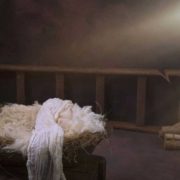
From Stable to Cross

Editor’s Note: We lost Isabelle’s December reflection due to website issues — now resolved — but upon entering this Feast of the Presentation and approaching Lent, we can recall how Christ’s birth led to His sacrifice on the Cross.

From Stable to Cross


 I fight for a crown; You gave Yours away.

I put gifts over family; You value the stray.

I wallow in comfort; You came in the cold.

I pile up treasures; You chose hay over gold.

I rage in the storm; You find peace in stars’ rays.

I crave treats that enslave; You were swaddled in rags.

I use people for gain; You love at all costs.

When I turn from Your stable, You take up Your cross.


© Isabelle Wood 2025

Edited by Gabriella Batel

Photo copyright Canva

Powering Down and Listening Up

Nature imparts the most beautiful noise to lull us into sweet silence. A leaf gently falling through branches to land softly among other leaves. The crunch of sparkly snow under a footfall. The snoring of your dog, curled up in his bed, during an afternoon nap. The early coo of the Mourning Dove and unexpected “chip, chip, chip” of a Cardinal all soften the edges of daily noise.

It’s the ugly noise we all want to escape: the sirens, the gossip, the nagging of bosses, the tattling of employees, the earsplitting horn of the driver behind you, the whining of children you don’t even know, the cursing for reasons that have nothing to do with you, the unceasingly shrill blabbing from all types of media … on it continues like demons on both shoulders yapping into your ears.

You just want to hear the silence. You just want to hear God’s voice.

Mother Teresa said, “God is the friend of silence.”¹ “We need to find God, and He cannot be found in noise and restlessness,”¹ she said.

If we spend all year wondering why God doesn’t answer our questions with clear direction and guidance, why do we expect to hear it during Lent by attempting to give up a vice and meat on Fridays? We don’t hear God not because He isn’t speaking to us, but because we can’t hear Him in the noise. Simply being in Lent isn’t going to cut it.

How can we overcome the noise and the restlessness to get to the point of hearing God speaking to us?

The desert mothers, ascetics of the early centuries, wrote and spoke of the value and necessity of silence and understood very well the demons that impede the goal. We have many steps to take to achieve the sweetness of silence. “Desert spirituality understood that the inner journey was one of warfare. Any weapon might be used against the seeker.”²

Know your demons.

We are all fighting demons. For some it’s substance abuse. For some, it’s dependence on others. Some need to shop  or be the center of attention. Others live in some kind of fear. That cold bottle of soda with its refreshing bubbles can be mighty stress-relieving during tense moments. Regardless, we are all fighting a greater fight.

Stop being the noise.

Unless you are in court, you don’t need to defend yourself. If you are in court, you pay lawyers to do so. Amma Theodora, a desert mother said, “A devout person happened to be insulted by someone, and replied, ‘I could say as much to you, but the commandment of God keeps my mouth shut.'” ² Do you need to contribute to every discussion? When a smile and nod will suffice, don’t add anything more.

Find the rhythm.

Have you ever fallen asleep to a loud movie? It isn’t necessarily because you’re so tired you can sleep through anything. Your body, on some level, has found the rhythm of the movie that the director created through the actors’ cadence, storyline flow, sound effects, and other nuances. Did the commercials wake you? They have disturbed the movie’s rhythm for you. Comforting sounds don’t come just from nature. Our bodies attune to a familiar pattern. We don’t hear the hum of a computer or the refrigerator’s motor until it stops or changes its sound. We turn on the fan in the summer, not just to keep us cool, but because its continuous whirring makes for a soothing composition. Lent comes early this year. Ash Wednesday falls on February 19 (Easter is April 5.)  Begin now. Practice filtering out the noise and finding the rhythm that moves us into silence and hearing God’s voice.

1. Hetzel, Whitney, “Why Silence Should Be Your Priority This Lent.” Good Catholic
(blog). Last modified January 14, 2025. https://www.goodcatholic.com/why-silence-should-be-your-priority-this-lent/.

2. Laura Swan, The Forgotten Dessert Mothers: Sayings, Lives, and Stories of
Early Christian Women. (New York/Mahway, NJ: Paulist Press, 2001), 48, 66.

Feature AI Image Created in Adobe Firefly by Mary McWilliams

© Copyright 2026 by Mary McWilliams


Edited by Rietta Parker

The Power of The Cross: Embracing Peace & Unrest

By Kimberly Novak


I don’t know about you, but this season of Lent felt very long to me. It could be because I gave up coffee, and I’m undercaffeinated. Quite possibly though, if Lent has felt long for you, it is most likely because, over the past several weeks, we have sacrificed and taken our sufferings to the cross.

As we prepare for the cross, our prayers are heavy, burdens are recognized and lifted, reconciliation is hoped for, and the realization of Jesus’ death is imminent. All of which are heavy, draining, and exhausting to our prayer life. 

But we made it, and today is Good Friday, a day in which some churches allow us to kiss our hand and touch the cross, paying our highest honor to our Lord for His love and sacrifice. This loving gesture enables us to leave our sufferings on the crucifix through our physical touch. Often, when we can bring into action spiritual symbolism, like touching the cross, it resonates deeper within us and brings us closer to God in that moment.  

Venerating the cross is an opportunity to accept a commission from the Lord in this blessed moment. If your church allows, kiss your hand and touch the cross; otherwise, you can whisper to God in your heart.  

Some ways this can be accomplished are:

  • If there is something you struggled to surrender during this Lenten season, “Leave it at the cross.”
  • Surrender any regrets of failed Lenten promises, and “Kiss or whisper them to God.”
  • Prayerfully share your deepest need at the cross and “Kiss or whisper it to God.”
  • Prayerfully accept God’s call and “Open your heart to God.”

Unfortunately, not all churches incorporate this gesture into the Good Friday service. In that case, a simple, imaginative prayer can be just as intimate. 

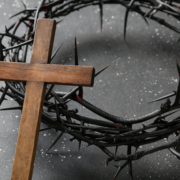
I’ve been anticipating this day throughout Lent, with an expectant wonder of where my emotions will take me. After I suffered a traumatic brain injury a year ago, God gave me visions of His crown of thorns, which both comforted me and brought me peace. I knew God had not left me alone in those first two days, and the visions were His way of letting me know He was there. Shortly after those visions, I met with my pastor to try to gain insight into why God blessed me so richly. His words of encouragement were to pray for discernment into what God wants me to do with it. 

Since then, when I see the image of Jesus’ crown, I can only wonder where God is leading me. Looking upon the crown brings me peace or unrest, depending on what is happening in my life. For example, when I am anxious or need God’s presence, looking upon His crown and the reminder of His sacrifice is calming. If the image of the crown is graphic, showing His blood, it brings a sense of unsettledness and anticipation, as if this is a sign that something not so pleasant is on the horizon. 

I’ll never forget the feeling of surrender when God showed himself to me through his crown of thorns. Feeling His love and peace in such a chaotic moment was a precious gift. Jesus’ gift to us on the cross signifies the acceptance of suffering, hope, and a willingness to bear burdens. The same is true for us when we are up against the sufferings of this world, just as I had been through that traumatic injury. 

I have not been given any lightbulb moments other than to take opportunities like this one and briefly share the experience when appropriate. I eagerly await my turn on Good Friday, placing my hand physically or imaginatively on the cross and offering up the blessing of my visions for God’s glory! I pray for the openness, vulnerability, humility, and courage to accept His call.

I pray for blessings on you and your family on this Blessed day. May you be open and willing to accept God’s call, bringing His light and love into your hearts and homes. May God richly bless you this Easter and throughout the year.  


Be blessed & Happy Easter,

Kimberly


©️ Kimberly Novak 2025


Edited by Janet Tamez

Consider The Flowers

By Kimberly Novak


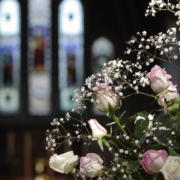
     Sitting in my church and admiring the altar recently, I was struck by the beauty of the flowers placed purposefully on either side. The flowers were specifically chosen to adorn the altar as an offering of a sacrificial act. The gardener who raised and nurtured the flowers had to make sacrifices to have the time and energy to do such a task. Then there is the sacrifice of the flowers themselves. 

     In his book, The Hidden Power of Silence in the Mass, Father Bonificace Hicks paints a wonderful picture of this sacrificial act. In a chapter devoted to the silence of sacrificial offering, Father Hicks brings light into the purpose of cut flowers in the mass:

The cut flowers continue to pour out their beauty as they die near the altar. From the moment they are cut, they are already dying. They use the remnant of their life to worship, shine forth in beauty, and direct our attention to the beauty of the Lord’s Eucharistic sacrifice. This is a great sign of how we are to enter into the sacrificial silence of the Offertory. We, too, are dying, already a day closer to death than when we first believed. (Rom. 13:11). And yet each one of us is also beautiful, a living reflection of the face of Christ. We each have some beauty left to offer, and we can allow our lives to be silently with Christ and point to His beauty, the source of all beauty.”

     My parish does a wonderful job of “flowering” the altar. Many times the flower arrangements adorning the altar are donated following a wedding or funeral service. This in itself is a sacrificial act from the families willing to part with and gift the flowers to the sanctuary. Some parishes may have a flower or garden committee, which has sacrificed their time. There are two times in the liturgical year when you will not see flowers on the altar. Father Hicks, explains why during Advent and Lent, the flowers are absent: The flowers which decorate the altar as a form of solemnity and a sign of joy are not to be used in Advent or Lent, and their absence is intended to evoke a sense of loss and longing.”  Therefore, as we continue on our Lenten journey and anticipate the heartfelt joy in celebrating the resurrection of Jesus, we can look forward to the outward beauty when the flowers once again adorn the altar. 

     Before being placed on the altar, the flowers lived as best they could, offering beauty and joy as their gift to mankind. God invites us to do the same. We are halfway through the 40 days of Lent at the time of this writing. It might be a good time to reflect upon the first 20 days and consider how your sacrificial act will transform your life or relationship with Christ. Reflective points to ponder might be: Am I living up to God’s standards and expectations? Have my decisions of abstinence been easy ones or Have I gone all the way and chosen a sacrifice that will foster a major life change? 

     However, it’s important not to overthink your sacrifices. God knows every part of our hearts and lives. That means he knows that sometimes, even the smallest sacrifices might be big ones, especially if the surrender renews and strengthens the relationship with God. I’m sure that Jesus, as he carried his cross, never once wondered if his sacrifice was easy or worth the effort. 

      I now have a new view of cut flowers and will treat them as holy. Admiring a freshly cut bouquet on my table in the sunlight will make me more respectful of the sacrifices that allowed me to receive their gift. Jesus is the flower at the altar, a reminder of the offerings I must make to honor His commitment to my life. Father Hicks states that  we each have some beauty left to offer, and I say, there is nothing more beautiful than a flower, chosen specifically for you.


“… there is nothing more beautiful than a flower, chosen specifically for you.”


With this knowledge, consider the flowers, and accept their beauty into your heart, for this is a gift from Jesus to be with Him always. 


God Bless! 


Quotes sited from, The Hidden Power of Silence in the Mass, by Father Bonifiace Hicks, OSB

©️ Kimberly Novak 2025

Edited by Janet Tamez

Freedom to Love

Freedom to Love

“For you were called for freedom, brothers. But do not use this freedom as an opportunity for the flesh; rather, serve one another through love.”– Galatians 5:13 (NABRE)

Our culture says many things about freedom. It says freedom is the ability to do anything we want. It says freedom is acting on our own selfish desires no matter how it affects others. It says that if we are not allowed to act on every impulse, then we are not truly free.

But as Catholics, we have a different definition. Freedom is the ability to do what we ought. It is knowing the right thing and choosing to do it, no matter the cost to us. It is controlling our sin-corrupted desires and surrendering to what God wants, not what we want.

At the heart, we can’t have love if we don’t have freedom—and vice versa. Freedom is a condition of love, but if we don’t choose to love, we’re not really free. If we want to be truly free—and say no to being enslaved to all the passing power, wealth, and pleasure the world offers us—we must have a deeper yes: the yes to love God and love others as He loves.

And God’s love isn’t the fleeting, pleasure-driven feeling the culture defines it as. God’s love is the nitty-gritty, self-giving, all-the-way-to-the-Cross kind of love. God’s love means sacrifice. . . so that’s how we are called to love: by serving others and sacrificing our own desires and selves to do so.

Because freedom means love, and love means sacrifice.

So, this Lent, how will you choose freedom over slavery? How will you choose to love God and love how He loves? What sacrifices will you make?

© Isabelle Wood 2025

Edited by Gabriella Batel

Offer it Up

Offer it Up

“Beloved, do not be surprised at the fiery ordeal which comes upon you to prove you, as though something strange were happening to you. But rejoice in so far as you share Christ’s sufferings, that you may also rejoice and be glad when His glory is revealed.”—1 Peter 4:12–13 (RSVCE)

Lent is approaching soon. As Catholics, it is during Lent—a season of penitence—that we often give up things we enjoy, or take on a little something extra: any little bit of suffering to help train us spiritually.

But sometimes we don’t need to go looking for trials. . . sometimes, trials find us. This is one of the world’s biggest issues with Catholicism: how could a loving God allow good people to go through hardship? The reason the world is so confused, though, is because that is the wrong perspective to have.

Even Jesus suffered while He was on Earth. But Jesus’ Suffering and Death on the Cross weren’t pointless—it was the price it took to win our souls back from the power of darkness and bring us back into the kingdom of light. And because of what Jesus did on that Cross, if we so choose to join our sufferings to His, every little cross Christ hands us can be the price for souls.

God doesn’t call us to pick out our crosses. He calls us to pick them up.

That doesn’t mean we shouldn’t give ourselves little penances, but it does mean we shouldn’t expect that to be the only suffering we ever have to face. And when unexpected and unasked-for trials do arise, we should thank God for the opportunity to help Him save souls. . . and then offer it up.

© Isabelle Wood 2025

Edited by Gabriella Batel