
Miles and Milestones
I’m sitting at a hotel lobby waiting for my Uber, and there’s this boy speaking loudly, saying his name over and over, with some other sounds, and his mother is shushing him. It brought me back to a night in Mexico when I was sitting at a park bench. Kids play late in Mexico, like there is no school the next day. Our children were playing together, and she asked how old my son was. I told her, and she got teary-eyed. She said her son was roughly the same age, but that she thought he was autistic. Quietly, she had been comparing their developmental milestones. What could I say? What word of encouragement could I offer this woman?
“Don’t worry,” I said, “Your son is going to live a happy life.” I don’t know why I spoke like a prophet. I guess I wanted to speak it into existence, to give her hope and peace of mind for her son’s future. The woman loved her son dearly, I could tell by how patient she was with him, how she let him run freely and bravely on the soccer pitch even with the drop off, and how she rushed to him when he was too close to danger. She let him test his boundaries.
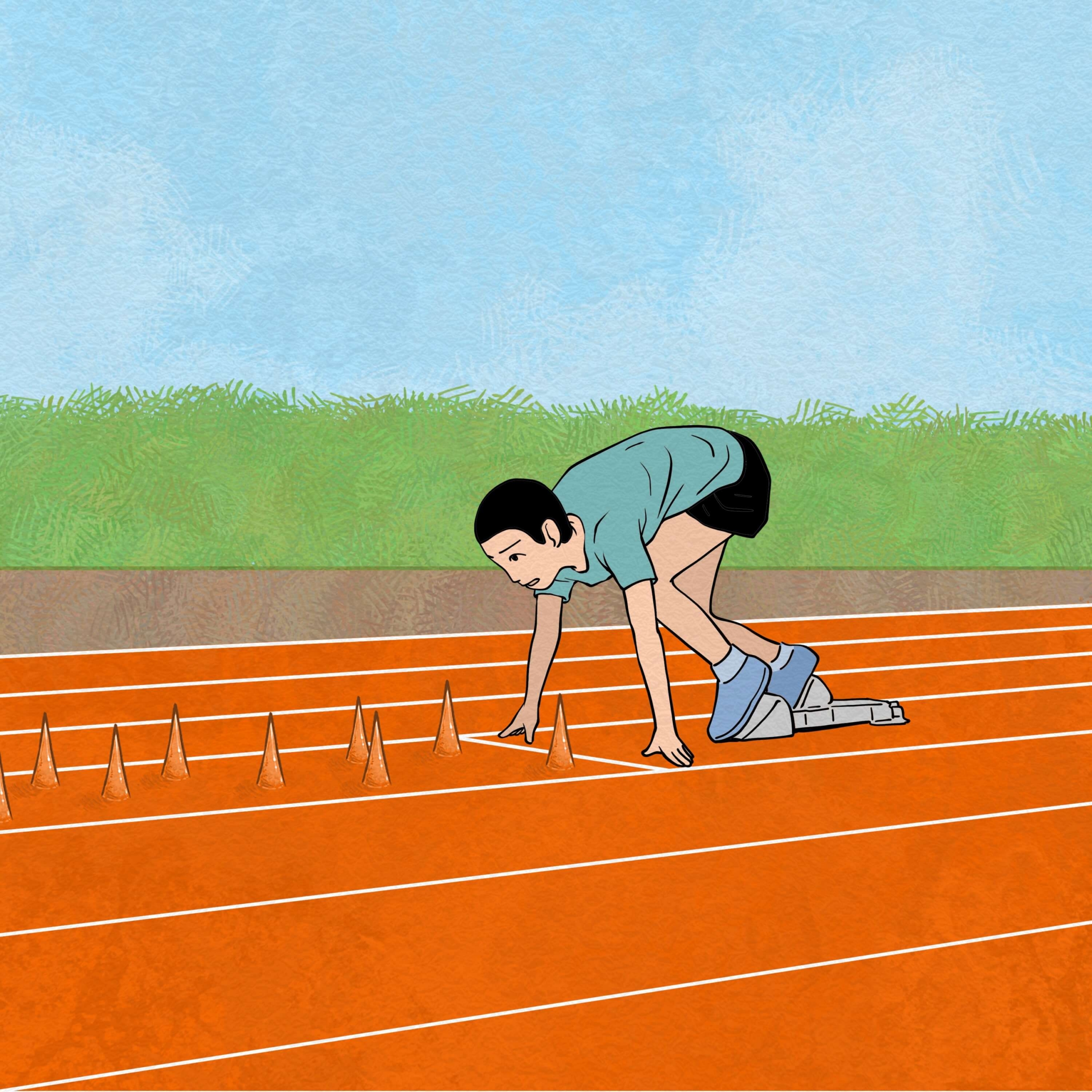
It made me think of a short story I once read with my sixth-grade students, called Raymond’s Run by Toni Cade Bambara. The story starts with a spunky girl from Harlem named Squeaky introducing herself and her main job in the family: taking care of her special needs brother, Raymond. Throughout the story, Squeaky is preparing for a race and has her brother tagging along as she travels through her neighborhood, stretching, doing breathing exercises, and even confronting her challenger, Gretchen, and her friends, who try to tease her brother. On the day of the big race, Squeaky notices how her brother mimics her: “bending down with his fingers on the ground,” getting in place. At first, she wants to yell at him, to correct him, but realizes it would waste too much energy before the race. She takes off and sees Raymond running beside her along the fence, “in his own way,” and thinks that he is a mighty fine runner. At the end, she doesn’t know if she won because of the commotion, but that doesn’t matter anymore; she starts to think of training Raymond. She believes he could carry on the family tradition, since their father is a runner, too. She realizes all her medals and ribbons don’t amount to anything if Raymond could win his own medal.
Like the mother in the lobby who shushes her child, or Squeaky who first wants to yell at her brother when he sets in place for the run, we can box people into how we think they should behave. Or literally put them in a baby swing to stay put, like Squeaky did to Raymond, so she could run her race. But Raymond got out; the story never says how, and suddenly he is running along the fence, beside her.
When I step outside to meet the Uber, the boy passes me, now holding his dad’s hand. He is smiling, looking up at the sky. It’s his dad’s love that speaks to me now. I watch him walking alongside his father, and I don’t worry about him or his future because he is loved.
I guess that is what I was trying to say to that mother in the park. To tell her that her love was bigger than a baby swing and wider than a soccer pitch. That it had the power to travel past miles and milestones to where I am now, pulling me into her story and toward the frustrated mother across the room, running beside me in its own way.
copyright 2026 Janet Tamez
- A Jealous Reader Finds a Hug - July 20, 2026
- Miles and Milestones - May 18, 2026
- Simple and a Little Looney: Making “Real Life” Characters - April 20, 2026


Leave a Reply
Want to join the discussion?Feel free to contribute!