
Write Your Memoir: Someone Is Waiting to Read It
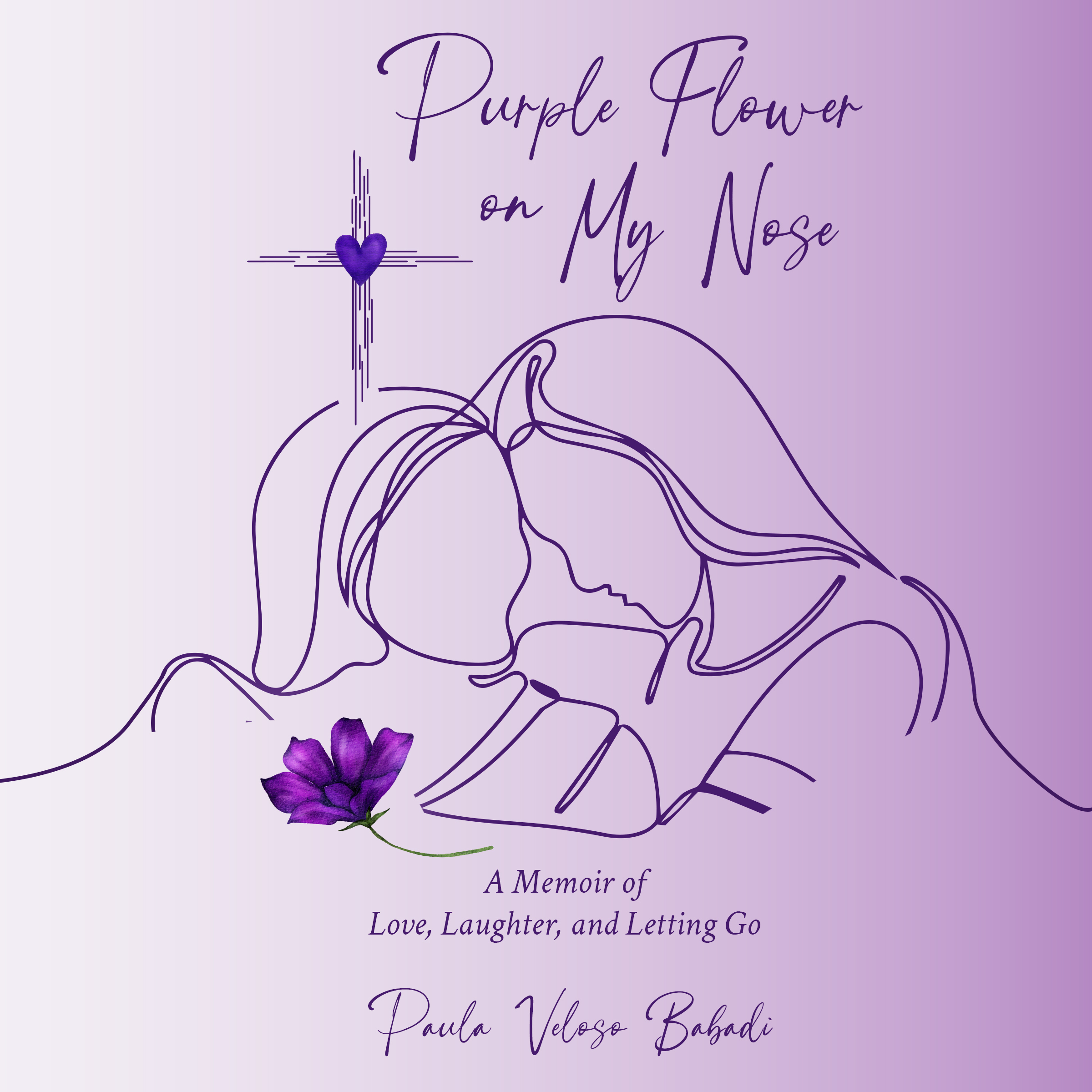
When my niece Jessica agreed to beta-read Purple Flower on My Nose, I wasn’t sure what to expect. She’s my sister Mary Frances’s daughter, and Violet’s granddaughter, but she grew up far from her Nanny and rarely saw her. I wondered whether the book would feel like a stranger’s story to her.
Instead, Jessica told me something I didn’t expect. She said reading “Our English Rose”—the wartime evacuation from London, the velvet gown, the courtship—was where she felt most “in” the story, and that it gave her a glimpse into her grandmother’s life she’d never had before. That’s when I understood something about memoir: done well, it can close a distance that circumstances never let two people close themselves.
But there’s a piece of craft I had to truly internalize to understand why that worked, one I learned from memoir coach Marion Roach Smith before I ever began writing. Her teaching is simple and, at first, uncomfortable: every memoir needs an argument, not just a story. Her formula, recently updated by her colleague Kyle Young, reads: This is about X (a universal truth), as illustrated by Y (something specific you lived), to be told in a Z (the piece itself), in service of W (a real, definable audience). As she puts it, the author is not the story—the author is the illustration.
For Purple Flower on My Nose, that argument became: This is a book about holy surrender (what is asked of us in the dark), as illustrated by my mother’s lifetime of faith and our family’s twenty-six-day caregiving vigil, told through a hospice journal, family memories, a eulogy, a funeral homily, and my mother’s own voice woven throughout in her letters and prayers, in service of the 63 million Americans currently serving as family caregivers, and the countless more who have grieved someone they loved.
Naming my own argument took longer than writing most of the book. I wanted to honor my mother, and it was hard enough just to define what the book was actually about, let alone whether I was writing toward anyone in particular. That last part, the W, came later, discovered only after the book was finished, while I was researching who it might actually serve. Knowing my argument changed something for me: I wasn’t writing into the void, hoping someone might relate—I was writing toward a real, countable audience that already exists, whether or not they’ve found my book yet. Once I knew that argument, I understood why Jessica connected with a grandmother she barely knew: she wasn’t just reading about Violet. She was meeting holy surrender itself, illustrated through a specific woman’s life.
Jessica confirmed as much herself. She told me the theme resonated with her even though she approaches faith differently from me. But the surrender in these pages reached her anyway. That’s the universal doing exactly what it’s built to do: crossing a boundary the personal alone never could have closed.
Here’s what the argument looked like in practice—the choices that let it actually reach a reader.
- Don’t sand down the specific details. A green velvet gown. A blue mug that unlocked her humor. A trip to the DMV to surrender a driver’s license. None of these details are dramatic on their own, but together they build a person a reader can actually picture.
- Draw from the whole life—but only what illustrates the argument. It would have been easy to let this book begin and end with the twenty-six days of hospice. But Part One exists because the argument needed more than a deathbed to illustrate it; it needed eighty years of her living out surrender in ordinary ways first. If you’re writing about loss, resist the pull to open there—but resist just as hard the pull to include everything. Every scene should serve the argument, or it doesn’t belong, however true it is.
- Let your subject speak in their own words. Some of the passages that moved beta readers most weren’t mine at all—they were my mother’s own journal entries, decades old, quoted directly. Your argument needs illustration, and nothing illustrates it more convincingly than the person’s real voice. If you have letters, journals, or even a single remembered turn of phrase, use them.
- Keep the humor amidst the sorrow. Grief memoirs can slide toward reverence, smoothing a person into a saint. I resisted that by staying real and keeping my mother’s actual humor on the page—naming her feeding tube after a Muppet (Miss Piggy), her deadpan threats, her firm veto on bathroom photography. A whole person laughs. Flatten that out of respect, and you’ve written a eulogy, not a memoir.
I wasn’t writing for Jessica specifically. I didn’t realize my niece would find her way back to her Nanny through these pages. That’s the strange grace of memoir done right: you write toward a universal argument, illustrated by the one life you actually knew, in service of an audience larger than you can picture—and sometimes it reaches someone even closer to home than you expected.
If you’re a Catholic writer sitting on a memoir you haven’t started, find your argument first. To me, that is the hardest part. What is this really about, underneath the events? And who, in real and countable numbers, is already waiting for it? You may be surprised, as I was, that someone in your own family may need exactly the connection only your specific illustration of it can rebuild. You may never know whether it reaches anyone. Write it anyway.
- Write Your Memoir: Someone Is Waiting to Read It - September 13, 2026
- The Faithfulness That Waited - August 9, 2026
- The Purple Flower and the Art of Letting Go - July 12, 2026

Leave a Reply
Want to join the discussion?Feel free to contribute!