Avoiding Holiday Hangover on Your Blog


You schedule things ahead of time, get yourself raring to go, and then you walk away from your virtual world for a while.

There’s nothing wrong with that, and I think it’s a good thing to do from time to time.
But have you noticed how you feel sort of hungover when you get back to the reality of regular blogging? It’s like Monday times ten.
Here are three of my strategies for dealing with holiday hangover on my blog:
1. Ease into posting.
This takes a variety of forms, including posting a picture or three, sharing lighthearted fare, and even scheduling a guest post.
Instead of jumping back in full-force, I find it’s better for me (just as it is with a cold swimming pool) to ease into the schedule of posting, whatever it is. I give myself permission to miss a day (or three).
2. Schedule some things BEFORE the holidays strike.
I like to have a few things in my line-up well in advance. (Note: I fail regularly at this.) Maybe it’s a “Happy {insert holiday name}” message or a quote that’s struck me recently. I might have a guest post that works well.
3. Pray. Smile. Repeat.
For those of you rolling your eyes, I know. I know! How is this a strategy? How is it helpful? Am I just desperately trying to find a third thing?
But here’s the thing: we’re all Catholic writers, and if we’re doing what we’re supposed to be doing, there is prayer involved, first and foremost. Nothing–nothing–is too small for God, and I would argue that your blogging–which probably takes up a fair amount of your writing time–should be something that’s in God’s hands.
So discuss this holiday hangover business with him. Ask for his guidance. Accept the graces and ideas that come to you from him.
How about you? I’d love to hear YOUR strategies for dealing with holiday hangover on your blog!
When Sarah Reinhard isn’t blogging at SnoringScholar.com, she can usually be found on Twitter and Facebook. She’s in denial about the amount of reading time she doesn’t have right now and has authored a number of titles, including her latest, Welcome Risen Jesus: Lenten and Easter Reflections for Families.


Blogging for Beginners: Terms & Concepts

First, we covered getting yourself a blog. This week, let’s talk vocabulary.

This is a starter list, so chime in if you have questions or you’re unsure about something bloggy.

Blog
Everyone says this is short for weblog. In five-plus years of blogging, though, I have never seen anyone who actually blogs refer to their site as a weblog. It’s like putting the “-” in e-mail (as opposed to writing it “email” without the hyphen). Your blog is where you write. It’s updated through RSS, so it’s changing. A blog is a kind of website. A website is not always a blog.

A blog is like a newspaper–changing frequently. A website that’s not a blog, on the other hand, is like a book, with content that’s not changing. Though you probably update your website, it doesn’t require a steady flow of new material day after day.

On a blog, you keep a frequently updated series of entries, providing news, commentary, or other content.

–Related terms:
  • Blogosphere
    The world of blogging. Is it a real word? Nah, probably not. Except that those of us who are completely entrenched in it don’t know that, so let us live in our little world of made-up words, wouldja? 🙂
  • Blog (the verb)
    The act of writing for your blog, as in “Sorry, can’t help you right now, I’m blogging!”
Post
An entry on a blog. What you are reading right now is a post.

–Related terms:
  • Category or Tag

    You have the opportunity to categorize your posts, depending on what kind of blogging software you use. I use WordPress on my personal site, so there’s a chance to use both categories and tags. This allows you to flag key words and specific content and organize yourself. For example, here on the CWG blog, I often tag my posts blogging. We have other bloggers who write about fiction.
  • Comments
    This is where the conversation takes place on blogs. Comments are the responses other people (or even the author) leave on a post.
Page
This is an unchanging portion of your blog. It’s a webpage, essentially, and it’s different from your blog feed because you don’t type a post to change it. For example, here on the CWG blog, the Blog Schedule is a page. And here I’m talking about a page within a blog, which is different than a webpage. (Confused yet? Sorry!)

–Information that belongs in a post versus on a page:
Blog posts highlight information that’s not going to be around forever. Eventually, it will be in archives (though you could link to it later, repost it, etc.). Pages, on the other hand, would contain information you want people to find and that doesn’t need to change. On my website, for example, I have a page for my speaking topics, which changes every so often but is mostly static.

Sidebar
Many blog designs have areas on the side. Those areas are called sidebars.

–Related term:
  • Blogroll
    A listing of links to other blogs, often found in a sidebar or on its own page within a blog or website.
Link
This is an example of a link. See how it’s a different color and when you hover your mouse over it you can click? That’s a link. It’s text or an image that takes you to another webpage or file.

–Related terms:
  • Backlink
    This is when someone links back to your blog or a post on your site.
  • Permalink
    Some posts have long and unwieldy links, or you’ll notice that the URL has extra junk at the end, because you were referred by somewhere else. A permalink is the permanent link for a post, one that does not change and always leads to that post.
Feed
This is what makes it possible for your blog posts to be delivered to people via email or different reader programs (i.e. Google Reader). There are a variety of feed types, such as RSS, Atom, or RDF.
Those who read your blog from a feed reader (like me!) have a different experience of your blog than those who actually visit your website. For one thing, they don’t see anything other than your post–no background, no fancy sidebars, no pretty header. Just the post. It makes it easier to take in a lot of information from blogs in one place.
If you want to know how it is for your readers, I suggest signing up for a feed reader (I like Google Reader) and subscribing to a few blogs. More details at this article, Feed 101.
Related term:
  • RSS
    Stands for “rich site syndication” and is one type of magic that makes your blog content appear in my feed reader (I use Google Reader, but there are lots of others). RSS allows web content that’s regularly updated to be delivered to people via different methods (as opposed to them having to always check back with the actual website). If you want to learn more, here’s a great explanation of what RSS is (and it’s written in English, too).
Stats
Statistics, including how many people are viewing your site, what posts are most popular, and what color you should wear. There are a variety of different programs and add-ons for this, and we’ll cover stats in more depth in a future post in this series.

Related term:
  • SEO
    Search engine optimization, or “how you get people to find you,” although that makes it sound more important than it is. Wait, it IS important. But it can also be distracting. Just like stats.
Further Reading:
Have I left anything out? What term or concept has you scratching your head and wondering? Ask away in the comments!

When Sarah Reinhard isn’t blogging at SnoringScholar.com, she can usually be found on Twitter and Facebook. She’s in denial about the amount of reading time she doesn’t have right now and has authored a number of titles, including her latest, Welcome Baby Jesus: Advent and Christmas Reflections for Families.

What you should know as a Catholic blogger

We interrupt the Blogging for Beginners series because, well, I have sick kids and didn’t manage my time well enough to get my second installment posted.

In the meantime, here are a few must-reads for all of you Catholic bloggers:
Jen Fulwiler shares from her extensive technical web-building knowledge and makes it easy-to-understand. She also gives us all a call to action.
I took away some good tips from this, and I’m betting you will too, even if you’ve been blogging and/or writing for a million years. Who knew that including links in your text can hamper readability? I do it anyway, but I like the idea of including a summary at the end of posts with a listing of what you’ve linked to.
I don’t subscribe to some of the negativity in this, but again, I think there’s room for each of us to take away some tips about this. I heartily disagree about keeping your personality out of your blogging, but I will spare you from my line-by-line critique of this post. I include it here in part because I don’t agree with everything in it…it gives you another viewpoint, right?
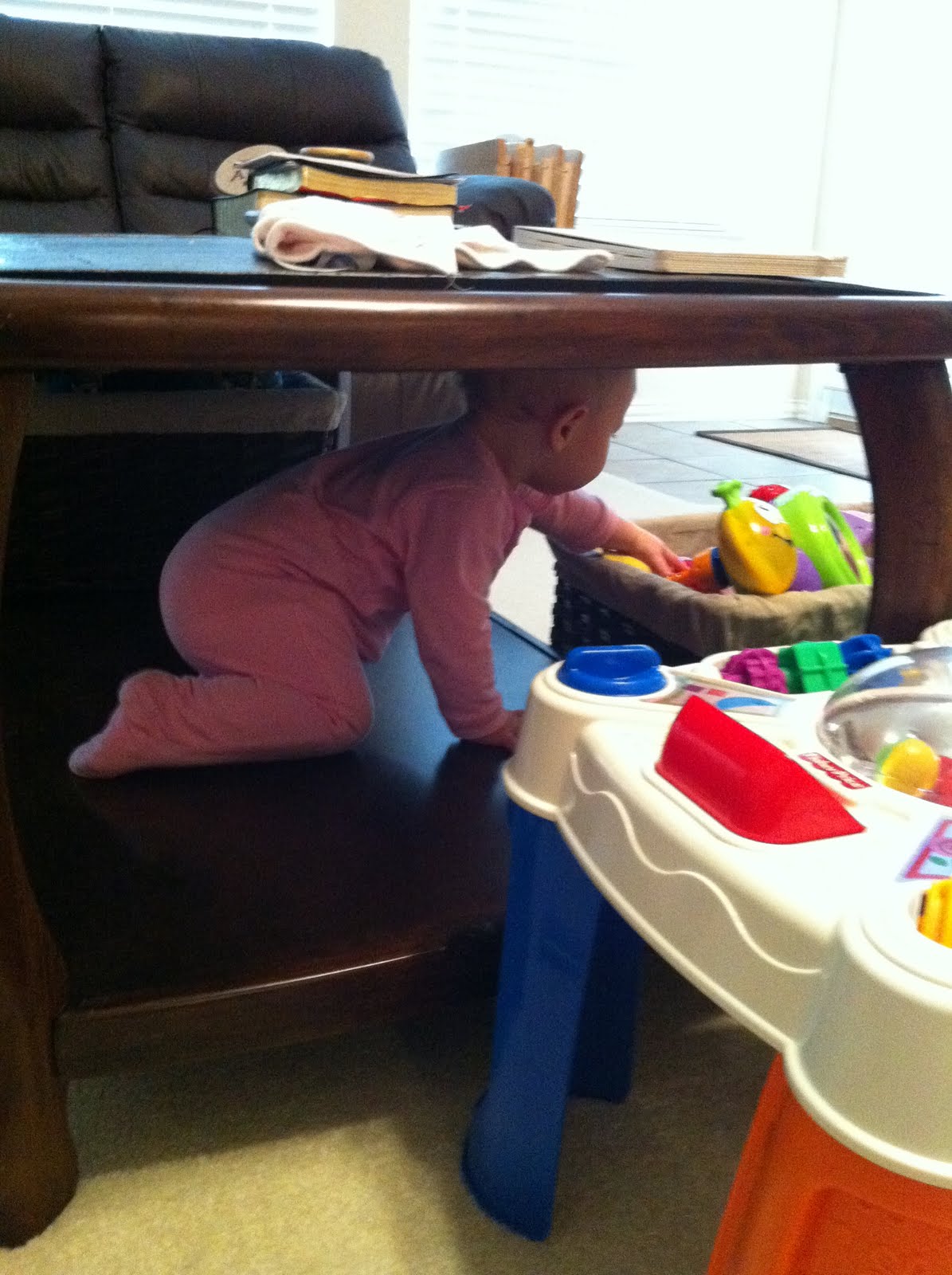
And with that, I have to go break up a fight, convince a baby to quit climbing on bookshelves, and continue my novena for an end to coughing and puking…here’s hoping you have a great week!
When Sarah Reinhard isn’t blogging at SnoringScholar.com, she can usually be found on Twitter and Facebook. She’s in denial about the amount of reading time she doesn’t have right now and has authored a number of titles, including her latest, Welcome Baby Jesus: Advent and Christmas Reflections for Families.

Blogging for Beginners: Get Yourself a Blog

You’ve decided that you want or need a blog, and now you need to wade into the waters of setting it up. This week, let’s cover how to do that.
1. Blogging Platforms
I’m going to mention the two I’ve worked with at length.

I spent many years on Blogger, and in fact, this blog is hosted on Blogger. It’s easy to use and easy to get started with. If you decide to move to another platform, it’s relatively easy to migrate your posts, but you could start and stay with Blogger, I think. It’s also tied in with Google, so there’s search engine optimization that happens automatically (or so they say).

Highly recommended for beginners and those who are technically-challenged.

WordPress has really become popular in the last couple of years, and it’s because it is a very versatile platform for websites in general. There are a lot of free templates to let you choose and customize how exactly your blog looks and a great community of helps and tips.

Highly recommended as a website solution. It will probably take a little getting used to and need you to read or watch tutorials.
  • Other Platforms

I don’t have any experience with any other blogging platforms, but TypePad always seems to make the top three lists and seems to be easy to use and to make a nice finished look. If you have other recommendations for blogging platforms, please include them in the comments!

2. Hosting and Such
Do you want to have your own website (which costs money) or just use the free service? If you want a custom website address (also known as a domain name or URL), you’ll have to spend some money for hosting.
You can register your domain name and do an installation of the full version of WordPress with both of these providers. You may also opt to have custom email (i.e. [email protected]) hosted as well.
In both of these providers, you have the option to have a “site builder,” which is a guided set-up process and helps you learn the ropes.
3. What Next?
Well, now you write! Yes, there is a bit more to it than just that, but only as much as you want there to be. You can have fancy sidebars with blogrolls and even widgets of content.
For more on this topic, take a gander at these resources I found online:
Next week, we’ll look at some terminology and jargon, so if that last paragraph has you scratching your head, never fear!
The comments are open for questions, as always, so ask away!
Sarah Reinhard has been blogging at SnoringScholar.com for six years and is also active on Twitter and Facebook. She’s the author of Welcome Baby Jesus: Advent and Christmas Reflections for Families.

Helpful Blogging Links

Are you a non-technical type? Are you new to blogging and feeling quite overwhelmed and unsure of where to start?

I found a few links and, since I’m tight on time this week, thought I would share them with you. Next month, we’ll dive into some blogging for beginners posts. Until then, this is your homework. If you’re confused about something specifically, feel free to leave it in the comments and I’ll do my best to field your questions.
– This has a lot of useful information and links. It explains some of the terms that I use rather freely (RSS, anyone?) and also outlines
– This post has some useful information in it, though it seems aimed at the travel industry.
– I know, by now you probably have a blog already. But sometimes I find it helpful to go back through the steps of something I don’t understand that well.
Seth Godin’s Free E-Book, Who’s There
– The link above opens a PDF file, but it’s worth your time. I found it as I was preparing this post, and as a fan of Seth Godin, I’m pretty sure I’ll learn something from it. I’m pretty sure, knowing Seth Godin, that you will learn something too. So let’s read it, and if anything strikes us, we’ll discuss it in the combox or a future post.
With that, I have to spank some deadlines into shape. Have a great couple of weeks, y’all!

Sarah Reinhard blogs at SnoringScholar.com and is also on Twitter and Facebook. She’s the author of Welcome Baby Jesus: Advent and Christmas Reflections for Families.

Let’s Talk Traffic


It never fails. I start talking blogging, and people want to talk traffic.

We’ve talked about this before, back when I shared some tips for gaining readers and more recently when we talked about judging blogging effectiveness.
Today, let’s talk traffic. That’s where the reality check is at, after all, right? That’s what’s important, right?

I have a tendency to be obsessive about things, and what better place to obsess than with the numbers? And how better to judge my effectiveness in this online world than by my numbers? Right? I have to remind myself, again and again, that no, this is not the case, at least not with the blogging I do.
I blog for me, because I felt like I had to. I can’t spend a lot of time with my stats, or I lose all focus for the real reason behind my blogging.
Why do you want traffic?
Are you trying to make money? Or do you want to establish a community around your blog? Or is it a pride thing, where you just want people to fawn over you and love you?
What are your reasons for wanting traffic? Spend some time with that. Dare I suggest you pray about your blogging efforts? Yes, and I even dare to suggest that maybe you shouldn’t blog.
How can you generate more traffic?
I’m turning to the experts (I am not one!) for help with this.
In a list I found recently at Problogger of 65 different ideas, I found myself thinking of some ways I could improve my traffic. Write a “5 ways to…” post is actually easier sometimes than anything else, and I needed the reminder.
My concern is often keeping traffic at my site once I have it, and there are tips here for not only getting the traffic, but keeping it once you have it.
If you’re looking for a step-by-step approach, try these five steps.
Offset all of that handy list with this post, which shares some blogging lessons we could all take to heart. But wait, I think that’s digression. We were talking traffic, right?
Consider engaging your readers and using some of these tips for doing that. Getting your readers engaged will likely get them talking about your blog, which will increase your traffic.
If traffic = popularity, then maybe you should consider how you can become more popular. There are a few tips (and action points) here, and I especially like how it encourages you to think about who your reader is. (Not so different from what you’d do in a book proposal, come to think of it…)
So what are you going to do first?
My plate is pretty full with other things right now, but I think I’m going to seriously consider putting some of this into action for my own personal blogging.
There’s always room for improvement, and whatever your blogging goals, traffic may be a way to measure your success. (I don’t think it’s the only way, mind you, but it is one way.)
What are you going to try? I’d love to hear your thoughts!

image source: Marketing Hackz

Sarah Reinhard blogs at SnoringScholar.com and is hopelessly active onTwitter and Facebook. She’s the author of Welcome Baby Jesus: Advent and Christmas Reflections for Families.

How Facebook Has Changed My Blogging


I have a love-hate-hate relationship with Facebook.

I much prefer Twitter, which is more like a crowded lunchroom, where you can pop in and out (or not) as you please. You can stick around and converse (or not) or browse around (or not).
I love Google-Plus, which is like a restaurant (at least the way I’ve been able to use it), where you can come all the way in and sit down or you can pop in and grab a drink at the bar.
Facebook is more like a living room, sometimes crowded and sometimes empty. It requires ongoing maintenance and the interaction can be unending.
(The “unending interaction” thing is true of all three, admittedly. I just find it harder to manage on Facebook.)
In the five years that I’ve been blogging, things have changed in the blogosphere, in part because of how I now use social media, particularly Facebook.
For one thing, I definitely get less comments on my blog. The comments come over at Facebook much more frequently (I have my posts published through RSS on both my personal wall and on my page).
For another thing, I tend not to blog the short snippet posts that I used to post to capture “kid moments” and those sorts of things. They are the things that I now use as status updates or tweets.
However much I may struggle with Facebook, there’s no denying that it’s changed my blogging.
How about you? How has Facebook impacted your blogging?

Sarah Reinhard blogs at SnoringScholar.com and is hopelessly active on Twitter and Facebook. She’s the author of Welcome Baby Jesus: Advent and Christmas Reflections for Families.

Being a Better Blogger: Judging Your Effectiveness


One step to being a better blogger is knowing the standards by which you judge yourself.

Oh, there are plenty of other people’s standards that you could go by. You could look at your traffic. You could measure number of comments and hot topics.
But all of that leaves a bad taste in my mouth and here’s why: I blog because a like it.
I’m a writer, and blogging lets me write. It’s a short and easy way to be published. It’s a way to interact with others, which is what I long for, many times.
Judging the effectiveness of your blog depends, first and foremost, on what standards you’re using. So let’s come up with some, shall we?
If you’re a writer, the writing should be good. Period.
If you need editorial help (some of us are better at self-editing than others), consider joining a group blog or a webpage where there’s an editor involved. Alternatively, you might ask someone to serve as your editor and to read/edit your stuff before you put it out there live on the internet.
Be passionate. Be interested. Be interesting.
Do people enjoy reading what you write? To some extent, this is an opinion, but there’s also a consideration here that’s worth your time.
If you are serious about writing–and since this is the Catholic Writers Guild, I gotta think you are–then it’s worth investing the time to be relevant and interesting to your audience.
Know who’s reading.
This isn’t meant to be tricky, but you should have an idea who’s reading your writing online. If you’re not sure, then compile a sample person.
Just as I do with a book proposal, I try to think of a specific person–or a couple of specific people–who I know are reading my blog. I even sometimes go so far as to name them: Sally, for example, is a sleep-deprived mom who has a baby on her hip and appreciates that I take the time to read books for her, so she doesn’t have to waste her time on them (not that I ever post a bad review, mind you), while George reads because he found my last article in the diocesan paper amusing and we both live in Ohio.
Don’t get me wrong: I write my blog for me, not for anyone else (and I know this about myself). It’s my outlet. But I still have an idea who reads. (It helps with those aforementioned book proposals, too.)
Now, I’m outta time for writing this post.

Your turn: how do you judge your effectiveness? What questions have I raised with this post?
image source: Sid’s Side

Sarah Reinhard is the author of Welcome Baby Jesus: Advent and Christmas Reflections for Families. You’ll find more of Sarah at her blog, SnoringScholar.com. You can also connect with her on Twitter and Facebook.

Being a Better Blogger: One Thing at a Time


Last week, we talked about being a better blogger through focus. This week, let’s talk about something that I’m struggling with even as I type: doing one thing at a time.

It’s no surprise that as I was looking for an image to go with this post, the word “multitasking” seemed synonymous with “stress.”

There’s a reason for that, and if I sit down for more than two minutes at a time, it’s clear why: I can’t get anything done when I’m multitasking!

Yeah, yeah, I know. Juggling is part of my vocation and part of who we are as a people. What I’m talking about here is a certain kind of multitasking, the kind that forgets my core purpose and reason.

I posit, though, that in our blogging, we need to concentrate on one thing at a time. You can drive yourself batty trying to build a perfect and complete blog all in one hour, one day, or one week.

Here are some of the “one things” I’ve considered over time on my blog:
– quality of writing
– guest posts
– linking to others
– design
– ease of use
– interacting with readers

Is it more important to do them all, or to do them well? It is a quality vs. quantity question, and both answers are correct.

For your sanity, I suggest you focus on one thing at a time. You’ll get to a point in your blogging, down the road, where you’ll be doing everything at the same time and you’ll be doing them well.

What’s your first goal? Great. Do that. Do it well.

When you’ve done it, ask yourself what’s next. Do that, and do it well.

Repeat. You may find that you are going back to revisit earlier goals…and that would make you normal.

Pretty soon, the package comes together. It may take hours, or days, or weeks, or months, or, for some of us, years. With time, it gets easier to juggle more than one task in the blogosphere. At the beginning, do one thing at a time.

As you get more comfortable with blogging, you’ll find yourself revisiting things. Just like the laundry, some of these things are never really done. For example, your design might need some attention, and you work on that this week. Then you move on to focus on some categories and then on to another goal. In a few months, you find yourself revisiting your design.

So what’s the one thing you’re going to focus on this week?
image source: Kylie Makes 3


Sarah Reinhard is the author of Welcome Baby Jesus: Advent and Christmas Reflections for Families. You’ll find more of Sarah at her blog, SnoringScholar.com. You can also connect with her on Twitter and Facebook.

Being a Better Blogger: Focus

A couple of weeks ago, I asked if you were making yourself a better blogger. In the comments, there was a resounding call for “tell us how to be better bloggers!”

So here I am. I’m not sure I’m the right person to do it, but I’ll tell you what I think. Just because I’ve lasted as a Catholic blogger for over five years and 2,400 posts doesn’t mean I know what the heck I’m doing any more than you do.

But that does make a point: you have to stick with it. For longer than a week or a month or even a year.

Let’s talk about focus.

I don’t mean picking a category or description for your blog (i.e., Mommy blog, Catholic apologist, life on a farm). I don’t mean setting aside certain days for themed posts (i.e., Mary on Monday, Wordless Wednesday, 7 Quick Takes Friday).

Those things might help you, and if they do, GREAT! DO THEM!

By focus, I mean setting your sights on the long view.

Ten years ago, when I was a newly-minted Catholic, a DRE convinced me to serve as a catechist. Then she shared this quote at the catechist meeting. I think it holds just as true for me as a blogger as it did for me as a catechist.

It helps, now and then, to take the long view.

The kingdom is not only beyond our efforts, it is beyond our vision.

We accomplish in our lifetime only a tiny fraction of the magnificent enterprise that is God’s work.

Nothing we do is complete, which is another way of saying that the kingdom always lies beyond us.

No statement says all that could be said.

No prayer fully expresses our faith.

No confession brings perfection.

No pastoral visit brings wholeness.

No program accomplishes the Church’s mission.

No set of goals and objectives includes everything.

This is what we are all about.

We plant seeds that one day will grow.

We water seeds already planted, knowing that they hold future promise.

We lay foundations that will need further development.

We provide yeast that produces effects beyond our capabilities.

We cannot do everything, and there is a sense of liberation in realizing that.

This enables us to do something, and to do it very well.

It may be incomplete, but it is a beginning, a step along the way, an opportunity for God’s grace to enter

and do the rest.

We may never see the end results, but that is the difference between the master builder and the worker.

We are workers, not master builders; ministers, not messiahs.

We are prophets of a future not our own.

Archbishop Oscar Romero


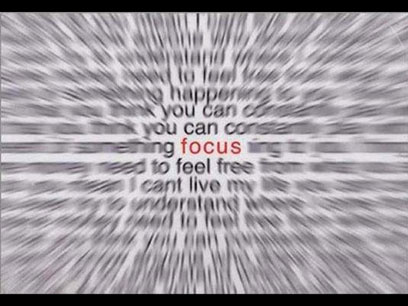
FOCUS
.

It’s easy to get burned out in this new media world, especially as it gets crowded with more good stuff. It’s easy to feel discouraged by the fact that you’re putting a piece of yourself out there for people to see and they don’t comment.

Does it help you to think about who your audience is? Or does that distract you from doing what you opened that blogging window for in the first place? (That’s writing a blog post, and then writing another one, and another, and on and on.)

Do you find yourself inspired by someone else? What do they do well? How might you put their underlying practices to use?

What’s your passion? What interests you? What do you know about, or wonder about, or think about?

Want to hear what others have to say about it? I found these articles interesting, and if you’re struggling with blogging and focus, give them a read:

YOUR TURN: Let’s talk about focus.
How do you use focus?
How can you use it to help yourself grow as a blogger?
What further questions does this inspire?

I find that focus is a version of Dory from Finding Nemo, singing “Keep on posting, keep on posting…”

RELATED:

image credit: The Fordyce Letter


Sarah Reinhard is the author of Welcome Baby Jesus: Advent and Christmas Reflections for Families. You’ll find more of Sarah at her blog, SnoringScholar.com. You can also connect with her on Twitter and Facebook.